
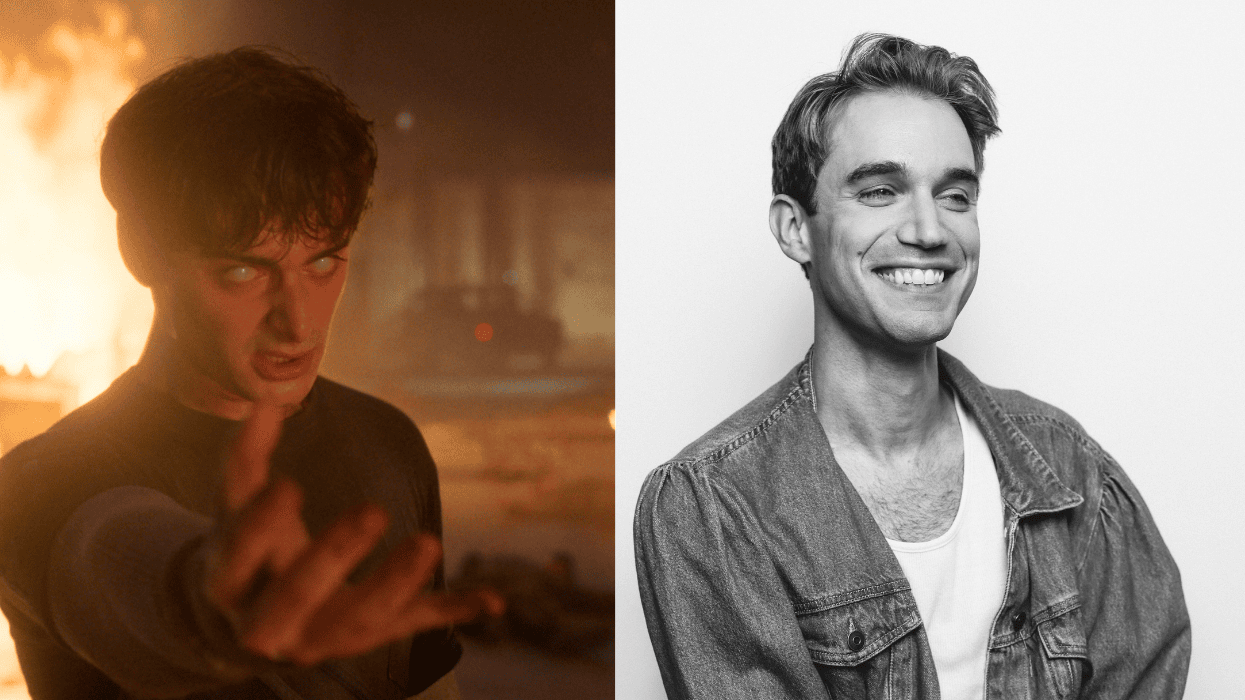
When it was announced that Will Byers would reveal supernatural powers in the final season of Stranger Things, I had two immediate reactions. First: the emotionally damp gay guy is ascending. Good for him.
Second: The internet is about to explode with think pieces about gay power.
The only thing gay men love more than sex is discourse.
Which, don't get me wrong — I love. I am pro-gay power. Put it on a T-shirt. Sell it at Urban Outfitters so queers in Bushwick can crop them, perform interpretive sorrow on TikTok, then set them on fire for performance art. But watching the moment Will used his powers hit me in a weirdly emotional way, because I never saw a gay guy get superpowers before. The only queer-coded hero I knew was the popular girl in my middle school sex-ed class who bravely asked after a terribly vague description of sex, "What about butt stuff?"
That's precisely why I created my first gay superhero: Fagman. In my series, Ransom is a queer comic-book artist in Fargo, North Dakota, who decides to draw the world's first unapologetically gay superhero. Not coded. Not implied. Not wink-wink representation. A full-volume, out-loud, camp, chaotic gay hero whose very existence is a middle finger to the slur he grew up being called.
Ransom is emotionally undercooked. His dating history is filled with villains that make the Joker look like Prince Charming. He sabotages job opportunities, steals from people trying to help him, and self-medicates with substances and spectacularly ill-timed jokes. He wants to feel brave, but only finds the courage to confront people who steal his vape. Fagman becomes his alter-ego fantasy: the version of himself who is fearless, expressive, and confident — everything he isn't yet.
And that's what the show is really about. Heroism isn't just about power. It's about repair.
Growing up queer in North Dakota (a famously chic experience), the idea that queerness equaled actual power would've sounded insane. Queer kids are often told we're powerful: emotionally intuitive, resilient, unusually good at reading rooms. Qualities that are perceived as survival skills that are part of some kind of mystical upgrade pack. In the boys' locker room at Discovery Middle School, though, those "powers" felt like liabilities.
I escaped into comics and superheroes because in fantasy, problems were simple and identity was confident. What I wanted wasn't a coded metaphor for queerness. I wanted a hero who actually felt like me. Someone mid-breakdown, mid-boner, mid-identity crisis, but still unquestionably the main character. I wanted a hero who did poppers.
However, creating what I believed to be the first gay superhero required research. Before Fagman, there was Northstar, Marvel's first openly gay superhero. He debuted in the late '70s and finally came out in 1992 (Alpha Flight #106) with the bold energy of an actual press conference. He had light powers, super speed, and flight. He was also famously vain, sarcastic, and reckless, which honestly made him our first emotionally accurate gay hero. Northstar cracked open the door to representation and eventually even got married in the comics, which was historic. But he still lived in that glossy superhero realm of confidence, composure, and packaging. I wasn't looking for a polished symbol. I needed a hero who felt like he was unraveling mid-panel, which is how Fagman was born.
In the series, Ransom doesn't create Fagman to save the world; he creates him to see himself as a good guy. Someone worthy of celebration, admiration, and respect. If he can make a superhero who is gay, who is flawed, who messes up but prevails and ultimately remains a hero at the end of the day, then maybe he might see himself.
So, when Will Byers finally stepped into his power, it clarified something I'd been feeling for years. The fantasy we're often sold is that power is the queer arc. Be sensitive. Survive hardship. Then unlock greatness. Queerness is the emotional equivalent of a radioactive spider bite that eventually turns you into an icon. Suffering becomes a prerequisite for specialness; pain becomes destiny.
The message is subtle but piercing: if queerness hurts, it must be because you're becoming powerful.
A comforting thought, but not always the truth. The reality we live in is simple. Being queer isn't about becoming strong. It's about staying alive. And yes, we are battling monsters, but the greatest super villain is shame. Powers are an excellent tool for cinema, but being able to levitate isn't going to help you emotionally evolve when half of your adolescence was spent hiding instead of developing.
I wish I could've seen a hero who showed me that strength isn't the absence of mess — it's the willingness to face it. A lot of us never needed magic powers. We needed permission to be ordinary and still be seen as heroic. Since leaving Fargo and building this show, I've realized something quietly radical: Being alive is the first heroic act.
Healing is the second.
I'm thrilled that Will Byers got powers. I'm delighted that Northstar existed. But I created Fagman because my hero can't shoot lightning or open portals. Sometimes the bravest power of all is not saving the world, but learning how to live in it. That's the hero I grew up wanting.
That's why I created my own.
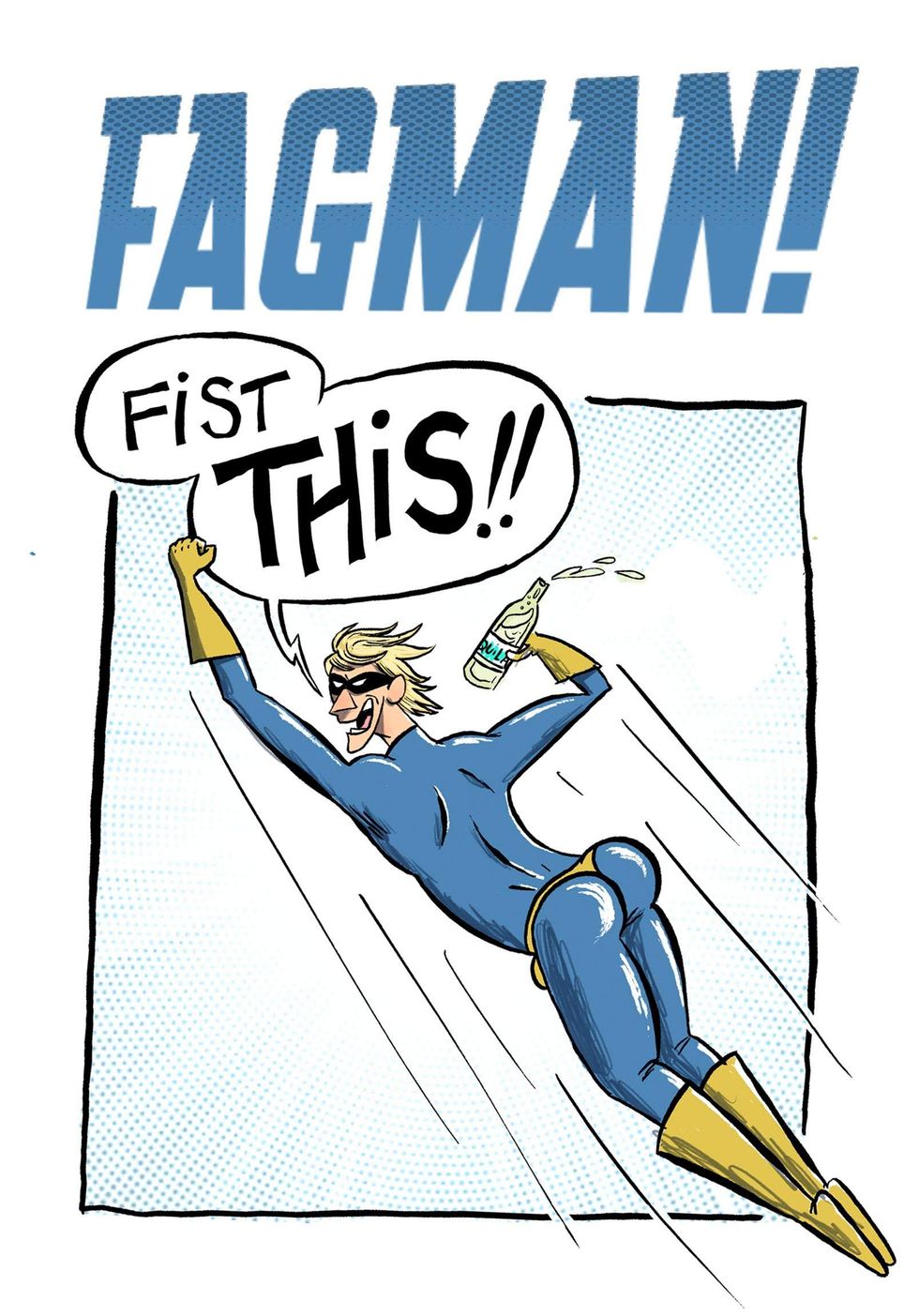 Drew Lausch's 'Fagman'.Devon Manney
Drew Lausch is a queer writer, actor, and comedian from Fargo, ND, based in Los Angeles, CA.
Opinion is dedicated to featuring a wide range of inspiring personal stories and impactful opinions from the LGBTQ+ community and its allies. Visit Out.com/submit to learn more about submission guidelines. We welcome your thoughts and feedback on any of our stories. Email us at voices@equalpride.com. Views expressed in Opinion stories are those of the guest writers, columnists, and editors, and do not directly represent the views of Out or our parent company, equalpride.