

Before Don Lemon was taken into custody by federal agents in Los Angeles, the country had already witnessed something far more alarming.
In Minneapolis, federal officers shot and killed two protesters in separate incidents, including ICU nurse Alex Pretti, who was killed by federal agents during enforcement activity that sparked widespread outrage.
In both cases, outrage over the killings has not yet translated into meaningful investigations by the Justice Department. Instead of accountability, federal authorities shifted their attention toward activists who interrupted a church service to protest immigration enforcement, and now toward a journalist who documented those protests.
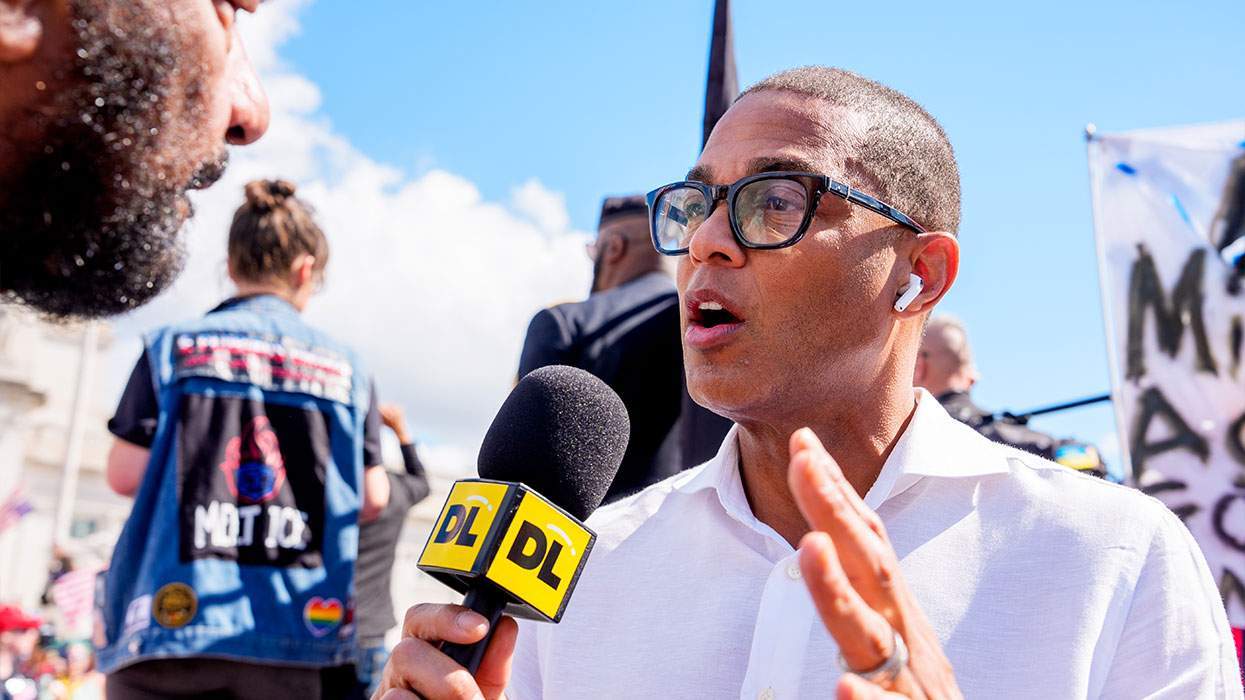
Don Lemon and local journalist Georgia Fort were arrested by federal agents in Los Angeles on January 29 after reporting on an anti-ICE protest at Cities Church in St. Paul, Minnesota, where demonstrators disrupted a service led by an ICE field office leader. Lemon was in Los Angeles covering the Grammy Awards when he was taken into custody, his attorney said.
The charges stem from Lemon's presence at the protest, an event he says he documented as a journalist, raising grave questions about press freedom.
This is not random. It is strategy.
First came the violence. Then came the smears. Now comes the scalable tactic of chilling coverage, intimidating witnesses, and signaling that documenting dissent can itself become a crime.
The Constitution protects freedom of speech, freedom of the press, and the right of the people to peaceably assemble. These are not conditional liberties reserved for moments the government finds convenient. They are foundational principles meant to safeguard democracy precisely when power is being challenged.
Yet the Justice Department’s pursuit of Don Lemon, a journalist with a 30-year career covering public life, raises urgent questions about how those protections are being honored. Lemon’s attorney, Abbe Lowell, condemned the arrest as an unprecedented attack on the First Amendment and said Lemon was at the church only to document what was happening.
Prosecutors are now invoking laws designed to protect access to religious worship. These were statutes originally meant to protect civil rights and clinical access, to justify charging someone for reporting on a protest that happened to overlap with a service. In effect, presence becomes participation and coverage becomes conspiracy.
This year alone, groups tracking press freedom have documented more than 30 cases in which journalists were detained or charged while covering protests, with a majority connected to immigration enforcement or public dissent.
Reporters have been seized, held, and even assaulted simply for doing their jobs. These are not isolated blips but warning flares that something fundamental is shifting in how authorities engage with the press.
Authoritarian movements have always understood that controlling violence is only half the work. The other half is controlling who gets to tell the story.
In Nazi Germany, independent journalists were among the first targets — arrested, silenced, or forced into exile as the regime consolidated power. The goal was to eliminate witnesses, control narratives, and allow brutality to operate without scrutiny.
That history feels uncomfortably close when we consider the broader federal response in Minneapolis. The controversial Border Patrol commander who oversaw immigration enforcement operations in the city became a symbol of those hardline tactics. Under his command, agents used aggressive measures that culminated in multiple deadly shootings and mass federal deployments. Facing public outrage, he was removed from his post and will return to his prior assignment, while federal authorities reshuffle leadership in Minneapolis.
Press freedom is not just a line in the Constitution. It is the mechanism by which the public learns what power is doing in its name. Long before the United States was a nation, colonial authorities arrested John Peter Zenger for printing truths they wanted suppressed. His eventual acquittal became a cornerstone of American press liberty, establishing that punishing those who reveal uncomfortable truths is not the preservation of order but the preservation of power.
This year alone, the U.S. Press Freedom Tracker documented more than 30 instances in which journalists were detained or charged while covering protests, nearly 90 percent of them connected to demonstrations against immigration enforcement. Reporters have been seized, held, and even assaulted simply for doing their jobs. These are not isolated blips but warning flares that something fundamental is shifting in how authorities engage with the press.
These issues are not abstract. The country has watched high profile cases leave deep doubts about equal justice under the law. Kyle Rittenhouse was acquitted after killing two people during unrest in Kenosha, sparking national debate about whose violence is excused and whose is criminalized. George Zimmerman walked free after killing Trayvon Martin, further eroding trust in a system that too often delivers different outcomes based on race, politics, and narrative framing. Those fractures only widen when people who document public unrest are treated as defendants rather than observers.
Queer communities know this playbook by heart. We have watched the state raid our spaces, surveil our activists, and criminalize our visibility in the name of order. During the AIDS crisis, silence was enforced through stigma, neglect, and fear. The message was always the same: Disappear quietly or face consequences. Today’s arrests of journalists and protesters are not a break from that history. They are its continuation.
Journalism has always carried risk, but the current pattern is something else entirely. Nearly 50 journalists were arrested or detained in 2024 alone while covering protests, according to the U.S. Press Freedom Tracker. Some charges were later dismissed, but the damage was already done. Arrest becomes punishment. Court appearances become punishment. Public smearing becomes punishment. The chilling effect lingers long after cases quietly fade away.
The legal arguments about whether Lemon’s presence constituted participation or reporting will play out in court. But the broader signal is already unmistakable. When the state prioritizes prosecuting protesters and journalists over investigating deadly force used by its own agents, it erodes faith in equal protection under the law. When the government treats coverage as culpability, it undermines the very liberties that define democratic self-government.
If democracy is a living idea, its first kill shot is silence. And when the government starts treating reporters and protesters as interchangeable threats, it is not defending the Constitution. It is decimating it.
Josh Ackley is a political strategist and the frontman of the queerpunk band The Dead Betties. @momdarkness
Voices is dedicated to featuring a wide range of inspiring personal stories and impactful opinions from the LGBTQ+ community and its allies. Visit out.com/submit to learn more about submission guidelines. We welcome your thoughts and feedback on any of our stories. Email us at voices@equalpride.com. Views expressed in Voices stories are those of the guest writers, columnists, and editors, and do not directly represent the views of Out or our parent company, equalpride.