
The assassination of Charlie Kirk is being used for more than grief. It has become political fuel. In the days since, the Trump administration and its allies have leaned on the event not simply to mourn but to consolidate control: to fundraise, to weaponize narrative, and to punish dissent. Educators, journalists, and ordinary workers have lost jobs for comments that diverge from the sanctioned line.
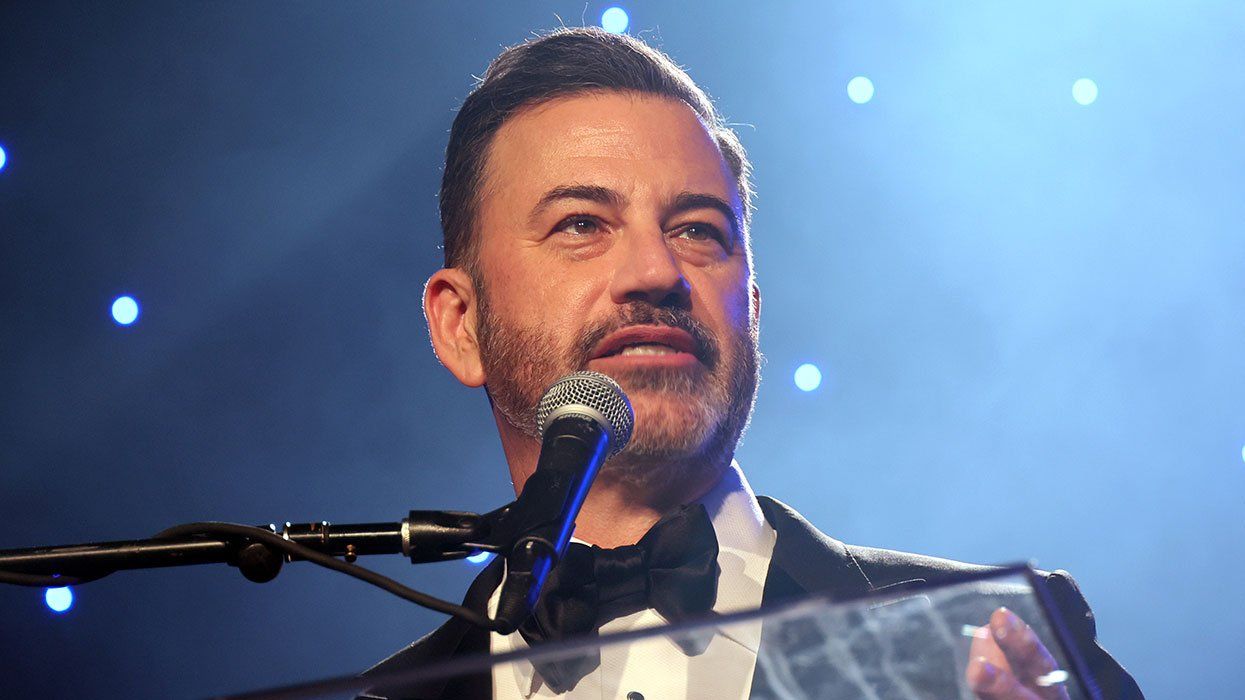
Now, the assault on speech has escalated further — not only in workplaces and classrooms, but on the airwaves themselves. On September 17, ABC pulled Jimmy Kimmel Live! off the air indefinitely after Kimmel criticized political actors for exploiting Kirk’s killing. Local stations, prodded by Nexstar and Sinclair, led the charge — but the pressure echoed from Washington, where the administration and the FCC hinted at regulatory consequences.
This is not a media spat. It is a demonstration of how censorship migrates from cultural policing to formal suppression — how dissenting voices are muted not by accident, but by design.
For queer people — and for anyone who is not straight, white, and Christian in this country — the implications are terrifyingly familiar. Our histories have always involved erasure, forced silence, punishment for being visible. Today’s wave of censorship is not an aberration. It is part of a continuum: bans on queer books, attacks on trans youth, the criminalization of drag performances. It is all the same project — the narrowing of who is allowed to speak, who is allowed to exist.
I know what that erasure feels like. Growing up queer in a conservative New Mexico town, I was targeted with violence until I had to leave school for my own safety. Music became my lifeline; artists like Tori Amos, Skunk Anansie, Kathleen Hanna, and Courtney Love modeled defiance and survival when few queer elders were left to do so. They showed me that rage could be sacred, that survival could be loud.
That is why I still believe in making art that resists silence. But the point isn’t just the music. It’s the refusal to be quiet, the insistence on being heard at a time when suppression is becoming policy.
The Trump administration’s response to Kirk’s death reveals a dangerous trajectory: tragedy becomes justification for silencing critics, narrative becomes property of the state, mourning becomes compulsory. That is not democracy. That is authoritarian conditioning.
Those who argue that Kimmel’s removal was a private, corporate decision miss the deeper pattern: when institutional platforms are weaponized to enforce ideological conformity, that is censorship even if it lacks a formal mandate. And when a late-night host — someone meant to provoke, to skewer power — is pulled from the air for stepping over an invisible line, that should terrify every believer in free expression.
We’ve seen this before. In the 1950s, McCarthyism and the Hollywood blacklist created a climate where deviation from the accepted script was treated as disloyalty. Writers and performers were silenced, often on rumor or suspicion alone, and institutions capitulated to fear. The effect was chilling: generations of artists and citizens learned to censor themselves. Today’s moment echoes that era. The tactics have shifted, but the aim is the same — to shrink the space of public life until only sanctioned voices remain.
The responsibility of artists — and of all citizens who still believe in pluralism — is not to whisper around that fact. It is to say it plainly, and to resist. The point of free expression is not to soothe power but to check it.
If silence becomes the default, only the sanctioned survive. And those of us who know what silence feels like, who have lived through it, must roar back.
Josh Ackley is a political strategist and the frontman of the queerpunk band The Dead Betties. @momdarkness @thedeadbetties
Voices is dedicated to featuring a wide range of inspiring personal stories and impactful opinions from the LGBTQ+ community and its allies. Visit out.com/submit to learn more about submission guidelines. We welcome your thoughts and feedback on any of our stories. Email us at voices@equalpride.com. Views expressed in Voices stories are those of the guest writers, columnists, and editors, and do not directly represent the views of Out or our parent company, equalpride.