
Tyra, girl, you’re done.
The internet is begging you, do not make that new cycle.
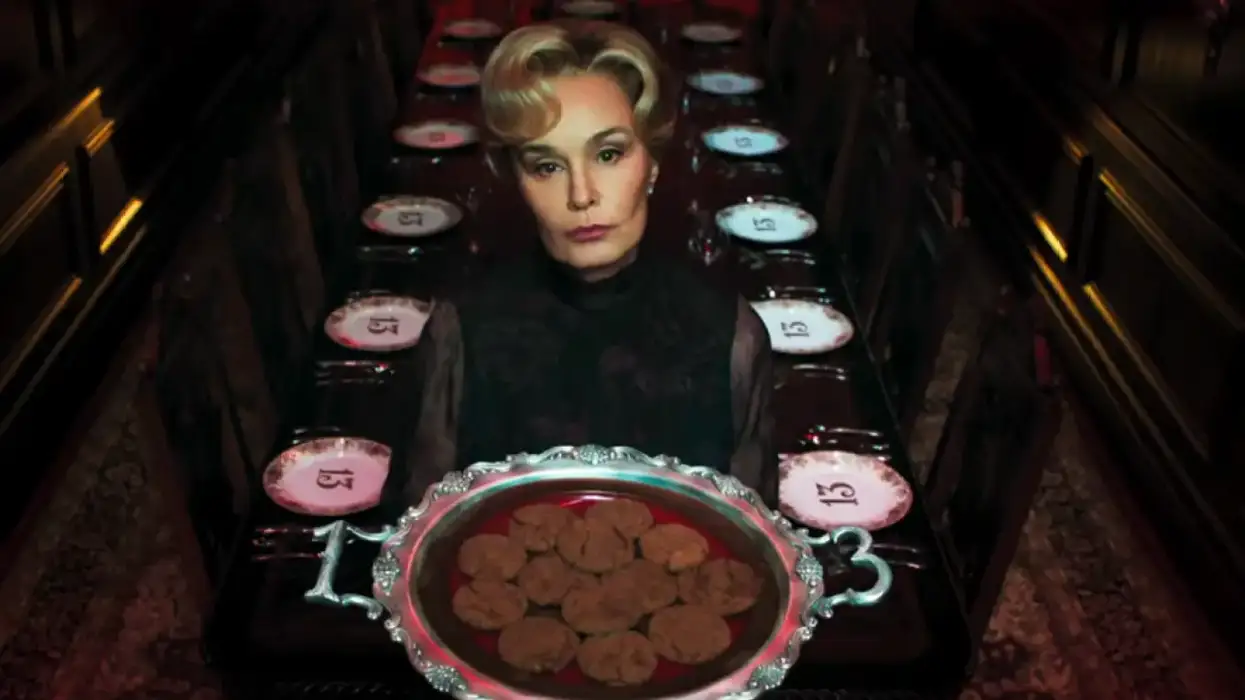
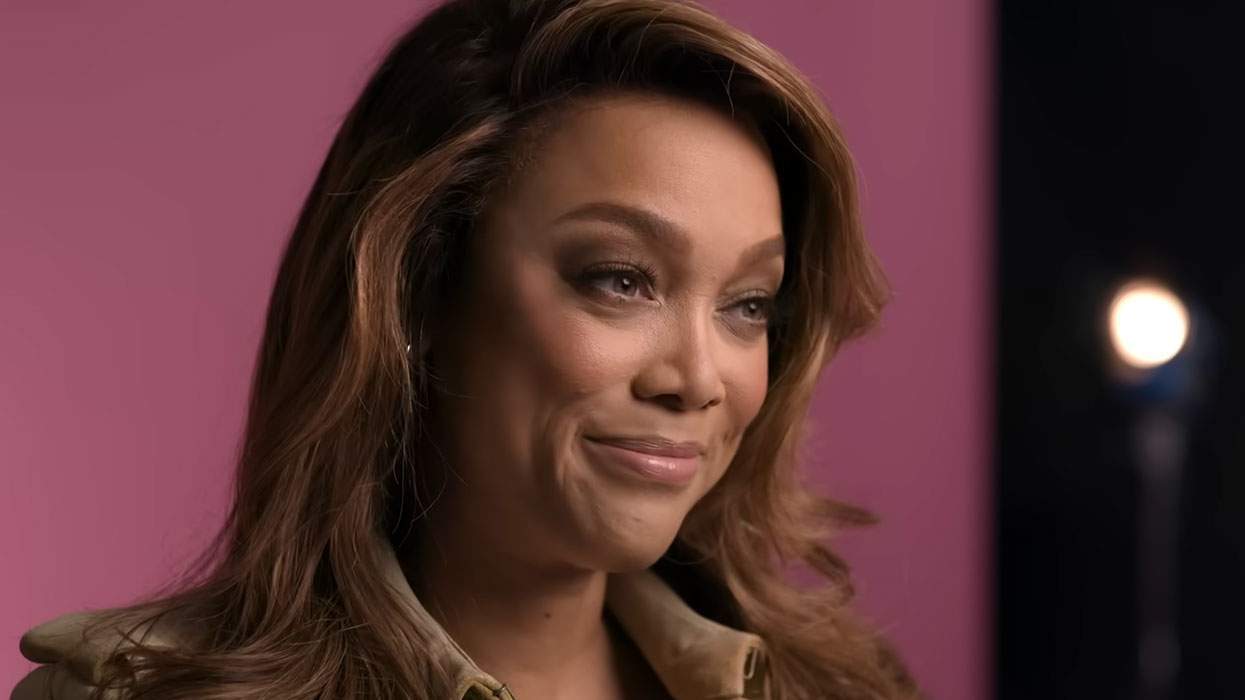
In the new Netflix docuseries, Reality Check: Inside America's Next Top Model, dedicated fans expected to find accountability for the abuse Tyra Banks inflicted on contestants cycle after cycle. Instead, we found the once and future host in a Carmen Sandiego trench coat promoting the next cycle of America’s Next Top Model.
Let’s be clear about two things before discussing the series.
First, Banks claims she built this Top Model empire with the intention of reshaping the standards of fashion and modeling. She constantly brought up the fat-shaming and racism she endured during her early career and how that impacted her heavily. So, as outlined in Reality Check, she ostensibly set out to create new, more inclusive standards for the industry. Counter to this intention, Banks proceeded to reinforce the worst pressures onto these contestants through both the challenges and problematic judges like PR mogul Kelly Cutrone and supermodel Janice Dickinson.
Second, this Netflix docuseries reviews the worst moments of the show but offers no real apology for them. While the harm of ANTM may not have been apparent when it originally aired from 2003 to 2013, this revisitation makes it painfully clear. And it's quite a train wreck. As soon as the docuseries aired, I sat on the couch until three in the morning, eyes glued to the screen to see what had been wrought upon these young women and our culture.
Along with my 8-year-old self, I patiently waited for the moment Banks, or any one of the other masterminds behind ANTM — the reality competition was cocreated by Banks and executive producer Ken Mok — would take any type of accountability during its three episodes for the pain and torture they inflicted on the contestants and an entire generation of girls that would internalize these dangerous lessons after each new cycle (the show's name for a season).
Top Model didn't feel this cruel when it first aired. For thousands of young girls, gays, and gender-bending baddies, ANTM was more than a TV show. For some of us, it was a window into the fashion and modeling worlds – for those who felt they were too short, poor, or ugly to access. ANTM became a window of opportunity for those who believed they would have never made it into the industry. For these dreamers, Banks appeared as a safe haven, a savior – and they worshipped her like one, some even dropping to their knees in tears when she would enter a room they were in.
To my older sister and me, ANTM was the first place where we learned about posing, photography, fashion, and some of the most influential people in the industry (it's amazing to see a roster of legendary guest judges like Twiggy, André Leon Talley, and Kimora Lee Simmons). We learned about new places all over the world where the models would go on the nerve-inducing, timed go-see’s with the modeling agencies. Hello, Milan Fashion Week!
The queer representation, almost nonexistent at the time ANTM premiered, was also impactful. As a judge and runway coach, Miss J Alexander became one of the first (other than Elmo) to make me question rigid gender norms. I thought he looked just as stunning and iconic dressed in what the industry would term "men’s clothes" as he did in "women’s." As a gender-nonconforming child who was being raised as a Jehovah’s Witness during that time, ANTM was the screen I turned to, to watch icons like Talley, Miss J, and contestants like Ebony Haith, who was the show's first lesbian contestant.
ANTM was where I learned about magazines that weren’t made up of religious text. Where I was first exposed to the stakes involved in booking front covers for Elle, Marie Claire, and Vogue.
Now that we’ve established my personal stakes in eagerly awaiting this docuseries, let’s delve into some of the most incredible moments from Top Model's history that deserve accountability — yet received none from those involved in Reality Check.
THE INFAMOUS SCENE
The docuseries began with the audio of the most infamous and historic elimination scene in ANTM history: when Banks exploded at contestant Tiffany Richardson.
Those of us who grew up watching this show have the encounter permanently imprinted in our brains from cycle 4, episode 7. It was the moment Banks had everyone holding their breath while she went off on Richardson: "I was rooting for you! We were all rooting for you!"
We all wanted to know what happened to Richardson after being on the show. And more than that, we wanted to hear Banks address the outburst. Or maybe apologize for telling Richardson to "go back to sleeping on the floor with [her] son," after getting kicked off the show.
What made for great reality TV is, in hindsight, a scene that comes off as truly abusive. On screen, Banks yelled: "When my mother yells like this, it’s because she loves me!" I hate to say it, but that is an abusive parent, and that is absolutely not love.
Jay Manuel, Top Model's photo shoot director and a prominent talking head in Reality Check, said Banks was particularly disappointed in Richardson's reaction to the elimination, when she seemingly joked about being sent home. Richardson, however, tried to explain to Banks that she was just tired of crying and being disappointed. Still, Banks doubled-down and production had to remove Banks from the set.
“I went too far. You know, I lost it,” said Banks in hindsight.
According to Banks's account in the docuseries, this moment struck a chord with her because Richardson stopped believing in herself and gave up. “That’s some Black girl stuff that goes real deep inside me,” she continued.
Actually, let’s stop here.
If Banks went through some of this hardship and dealt with the microaggressions of the industry as a Black girl, why wouldn’t she do everything in her power to ensure that the industry doesn’t continue to operate this way? Why would she continue to perpetuate the same abuse that she experienced in the industry? It boggles the mind.
TYRA APOLOGIZES… WELL SORT OF
In Reality Check, Banks came on screen dressed in an alarmingly tight trench coat, looking like she’s ready to flash us with the truth. But in a disappointing turn of events, Banks instead said, “I feel like my work is not done. You have no idea what I have planned for cycle 25.”
Girl, what? You have done more than enough.
She then went off on a long monologue about evolving after fans called her out. She started off her supposed apology by mockingly voicing her fans' concerns, then pivoting to thanking us for the opportunity to be better. “I thank you for that. That is the only way to change. That is the only way to get better – by someone calling you out on your shit,” Banks said.
And when the docuseries producers asked her about what happened between her and Manuel, she simply said, “Nah.” I wish I were kidding. Play it back. As Manuel outlined in his confessional, his friendship with Banks — he was her longtime makeup artist even before Top Model — experienced a rift after word got back to her that he was ready to leave the show. Years later, it seemed they were never able to reconcile.
BLAMING PRODUCTION
It was disappointing to hear Manuel say he “had no control” over some of the photo shoots he conducted on Top Model or how the contestants were treated. Furthermore, he stated that he did not “want to participate in” and was asked to be excused from the infamous race-swap episode where contestants were transformed into a race different than their own.
I’m sorry, but who did have the control if it wasn’t the show's own creative director? Episode after episode, we watched Manuel direct each shoot, so what do you mean he had no control?
Hard eye-roll.
In fact, throughout the series, Manuel and Banks both blamed production — not themselves. “I had no idea what was going on. I didn’t work in production,” said Banks.
Reality Check clocked that, even after the backlash, Top Model would repeat the race-swap challenge in cycle 13, this time with Banks as photographer.
MISS J’S STROKE
Bless Miss J Alexander. Not only did he teach us face, pose, walk, and talk, but he also filled our living rooms with laughter as he roasted some of the contestants who had apparently just taken their first steps on Earth right before showing up to audition.
Miss J is also the most sympathetic person in the docuseries, where he opened up about the stroke he had five years ago that took away his ability to walk. It has taken him years to recover, and he is seemingly still on that journey, which left many viewers in tears – including myself.
The most shocking part of this story was that Miss J said Banks never came to visit him since having the stroke. That's a reveal in and of itself.
OUTING EBONY
In episode one of Top Model, Ebony Haith addressed the casting call where she met Banks. According to Haith, Banks outed her on national television during the audition.
“We see that you’re a lesbian. How do you feel about expressing that on national television?” Banks asked in the casting tape.
The next scene in the series features Haith explaining that this was how the world found out she was a lesbian.
“That was kind of how the world found out I was gay and how the world met me,” said Haith. “I hoped that they would at least pull me to the side and ask me, ‘How do you want to approach this?’ They forgot the danger in [being outed].”
It is truly saddening to hear that the people on TV that I felt so safe with as a child turn out to be as careless and incompetent as the people I was dealing with in real life during that time.
Not to mention that Haith also brought up the blatant colorism, microaggressions, and anti-Blackness that she and others endured during the time they were on the show — even mentioning that, at one point, Banks brought her in to reprimand her for her skin being too ashy.
DANI’S GAP
Danielle Evans, cycle 6, spoke openly about her experience on the show. Evans was cast for the cycle and then told by Banks that if she wanted to stay in the competition, she had to undergo a dental procedure to close the gap between her two front teeth. Banks claimed that it was unmarketable for her to keep it the way it was.
The irony mentioned here is that Chelsey Hersley, cycle 15, was then told by Banks that they would widen her tooth gap to make her look more like a model that already had that exact same look.
The issue here then becomes about one girl being white, while the other being Black. One girl, according to Banks's judgement, being deemed attractive and more marketable for her gap, while the other one diagnosed with a shortcoming that needed to be fixed.
“Bull-fucking-shit,” said Evans. “She knew what she was doing. [She] was making good TV at my expense.”
SHANDI’S STORY
Shandi Sullivan’s story also pointed out the sexism and misogyny ingrained in the show — and internalized in so many of the contestants themselves.
During cycle 2, the Top Model contestants were taken to Milan, Italy. This is where Sullivan said she was sexually assaulted while producers continued filming. Even after she woke up the next morning and was taken to the hospital, they continued filming.
When confronted today about Sullivan, Banks said she only “remembers” what happened, but never apologized for how any of it went down, or for not creating a safer space for women.
“Uh, I do remember her story. It is a little difficult for me to talk about production because I’m not... That’s not my territory,” said Banks in the docuseries.
Not only did producers continue filming far past the point that was ethical, but they also went on to name the episode "The Girl Who Cheated,” where they aired the disturbing footage and framed it as an infidelity; she had a boyfriend at home, and the show even aired a harrowing phone call to him. In the episode, Banks does a "big sister" talk with the girls, where she talked about being cheated on and how much that hurt her.
The slut-shaming began. Fans took to the internet after the episode's original airdate and again in 2020, when the show had a COVID-fueled surge in viewership, to call Sullivan a cheater. Production and Banks are all responsible for what happened to Sullivan during filming and how it destroyed her life after it aired. Sullivan said she was assaulted, blamed, and humiliated on national television, and left emotionally destroyed. She even stated that following the incident, she was still not allowed to go home.
Sullivan was not a cheater. She was a victim of a horrible act, then humiliated on television for what she sadly said “made for good TV.”
WHAT THEY LEFT OUT
If you’re an ANTM historian like me, you might remember a contestant who they conveniently left out of the docuseries. Angela Preston first appeared on cycle 12, then came back for cycles 14 and 17, where she was announced as the winner and then was later disqualified. The reasons behind the decision to disqualify her were rumored at first, but then, in an interview with the Daily Mail, she revealed that she was disqualified because she had worked as an escort shortly after filming cycle 12. Preston then sued Banks and ANTM for $3 million, and to this day, the ruling of the case is not public.
REALITY CHECK
This exposé is far from over, as many past contestants continue to surface on social media to tell their sides of the story. What is disappointing, however, is that a show that purportedly aimed to be progressive — that in many ways inspired me as a younger queer person — could be so harmful in retrospect. And instead of contrition, we learn in this Reality Check that the cycle will continue.
Gisselle Palomera, a Future of Queer Media fellow, was raised in East Los Angeles and holds a B.A in Journalism, with a minor in Cultural Anthropology. They currently do research on artificial intelligence through the Pulitzer Center to learn how to report on AI from the human impact angle. Previously, Gisselle was the Local News Editor at Los Angeles Blade, working in collaboration with CALÓ News after a prestigious Media Innovation Fellowship at the Wall Street Journal. Gisselle is a native Spanish speaker and reports on news, culture and entertainment. When they are not busy writing or editing, they love to roller skate at the beach and cook for their partner.
This article was written as part of the Future of Queer Media fellowship program at The Advocate, which is underwritten by a generous gift from Morrison Media Group. The program helps support the next generation of LGBTQ+ journalists.
Opinion is dedicated to featuring a wide range of inspiring personal stories and impactful opinions from the LGBTQ+ community and its allies. Visit Out.com/submit to learn more about submission guidelines. We welcome your thoughts and feedback on any of our stories. Email us at voices@equalpride.com. Views expressed in Opinion stories are those of the guest writers, columnists, and editors, and do not directly represent the views of Out or our parent company, equalpride.