

There’s a palpable sense of anxiety and paranoia throughout writer-director Carmen Emmi’s debut feature film, Plainclothes. It’s the kind of tension that could cause a viewer to hold their breath while gripping the arm of their seat. When the movie reaches its conclusion, the relief is cathartic.
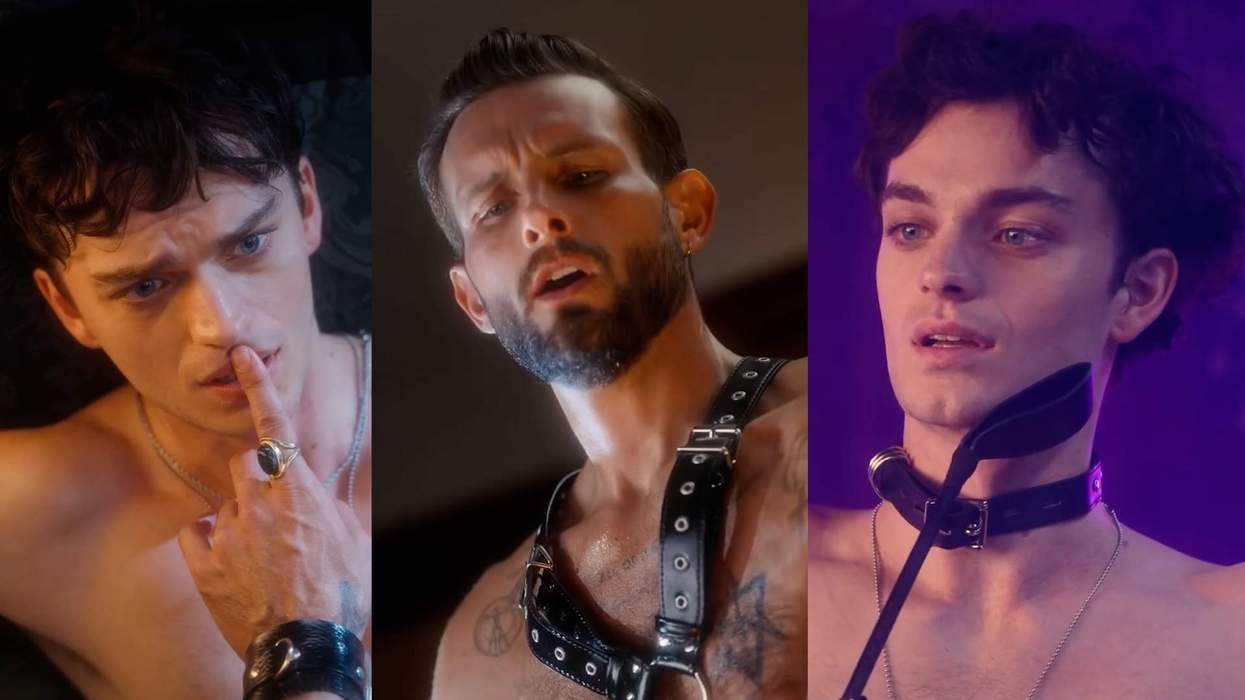
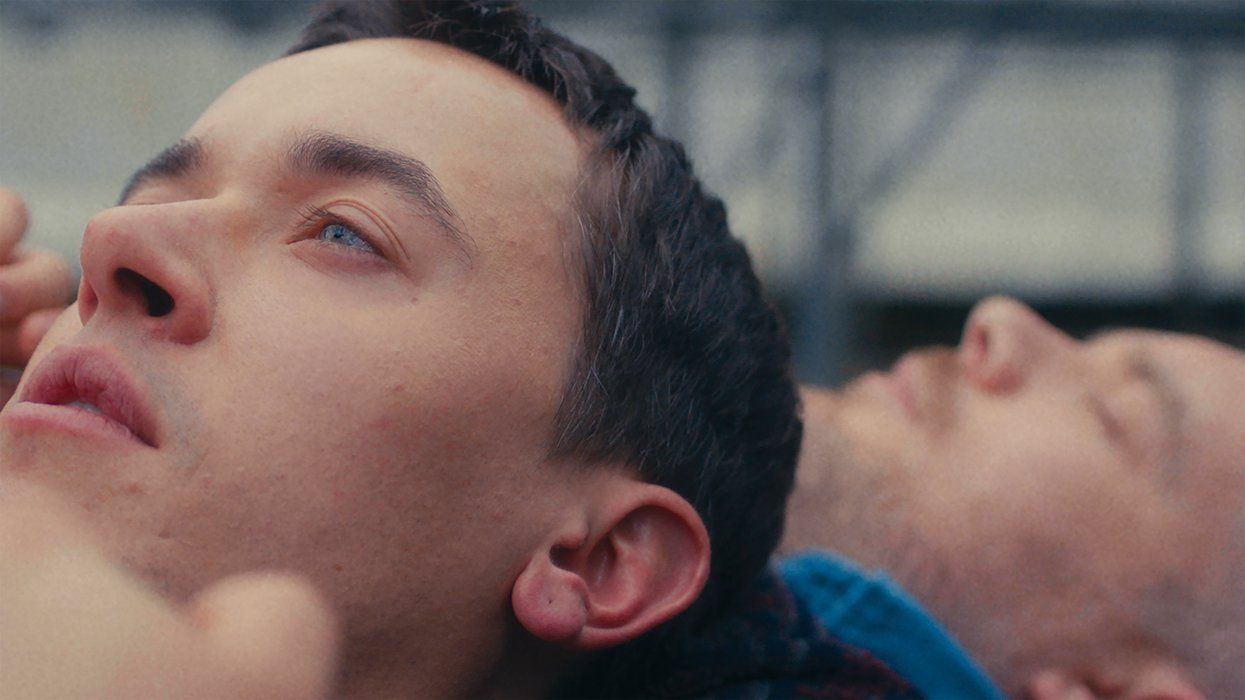
The 1990s Syracuse, New York-set Plainclothes stars Tom Blyth (The Ballad of Songbirds & Snakes) as Lucas, a handsome, young, and closeted police officer tasked with going undercover at local cruising spots to arrest men who attempt to have sex with him. When he meets an older, more experienced man named Andrew (Russell Tovey), he finds himself developing feelings for someone he was assigned to target.
For filmmaker Emmi, Plainclothes is personal. Growing up with a brother who was a police officer, Emmi experienced the anxiety of feeling trapped while struggling with being queer. He drew from someone in his life for the character of Andrew. Emmi says he first thought of out actor Tovey for the character in 2020 when he saw the streaming version of Angels in America, in which the actor plays gay lawyer Joe Pitt. Emmi “was always subconsciously writing the role for Russell without really knowing it,” he says. When Blyth joined the cast and suggested Tovey for the role, Emmi knew it was “one of those universe moments” when everything fell into place.
“I’d had a massive talent crush on Russell for years, and that was part of why, when Carmen said, ‘Who do you imagine playing Andrew?’ And I was like, ‘Russell Tovey,’” Blyth recalls. “I met Russell, [and] I just converted it into an on-screen real crush, I think.”
Regarding his relationship to Tovey’s work, Emmi says, “He’s an amazing actor, legendary in the queer community especially.”
Tovey, who has been out to his family since age 18, has portrayed gay characters in shows like The Flash, Legends of Tomorrow, Years and Years, American Horror Story: NYC, and most notably, in the groundbreaking Jonathan Groff-starring HBO show Looking, which followed a group of gay men living in modern-day San Francisco.
“Looking is a show that meant a lot to me when I was coming out,” Emmi says. “That was my first time experiencing, seeing what my life could be like as an out man. And so those characters in that show mean a lot to me. And I think I was just nervous about asking Russell because I didn’t want him to say no; then I would never be able to watch Looking again.”
Thankfully, Tovey was happy to embrace the role, which allowed him to lean into what’s become his Daddy image. Andrew is a father, a pastor, and old enough to be Lucas’s dad. That last part is especially significant in their relationship, as Lucas’s father recently died. “Yeah, I embrace Daddy,” Tovey says. “I mean, Pedro Pascal says, ‘Daddy is a state of mind,’ but also I think realistically, I’m a dad age, so state of mind and state of play.”
“I’ve been doing this [acting] for years. I think we sort of transition into all these other roles, and now I’ve got children — on-screen children, not off-screen, [that] I know of,” he laughs.
Even as intensity rises in the plot, Blyth and Tovey felt an ease with each other on set. They credit Emmi with creating a “zen-like” atmosphere. “We felt safe, everybody felt safe, and everybody wanted this to be something beautiful,” Tovey says. “And you could feel that as soon as you walked on, that everybody was sort of singing from the same hymn sheet.”
Blyth adds that while he thinks Tovey “can have chemistry with a brick wall,” feeling like the set was a safe space allowed them to click.
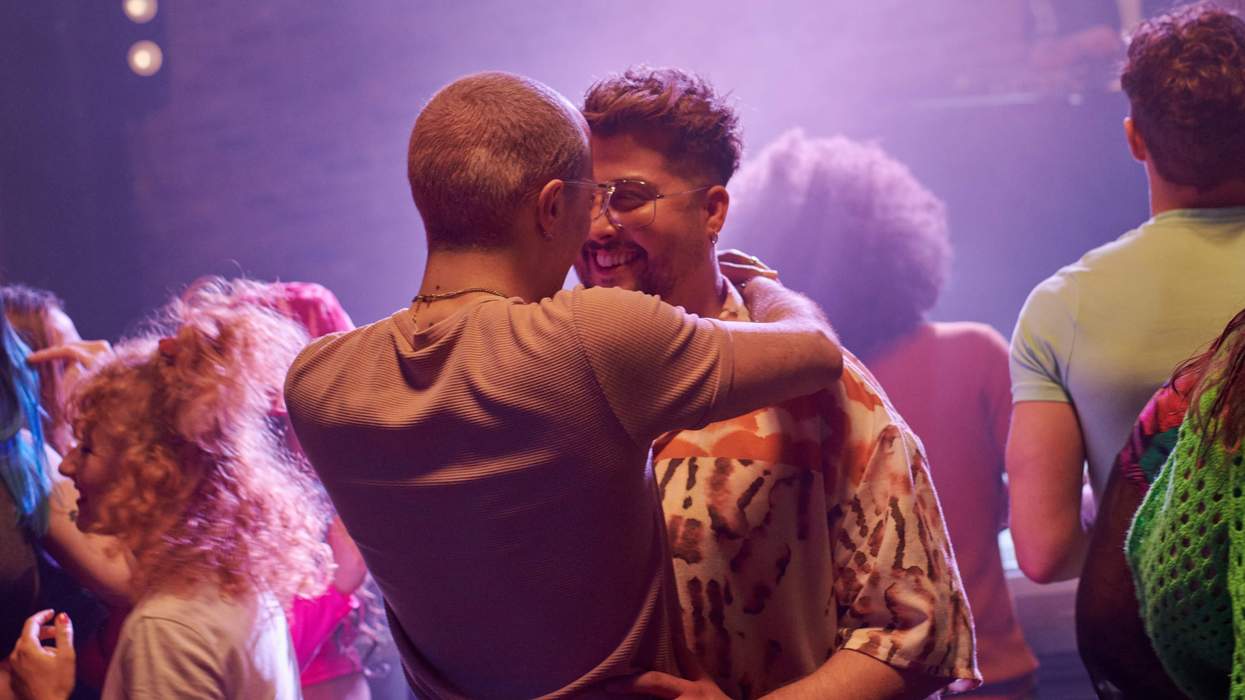
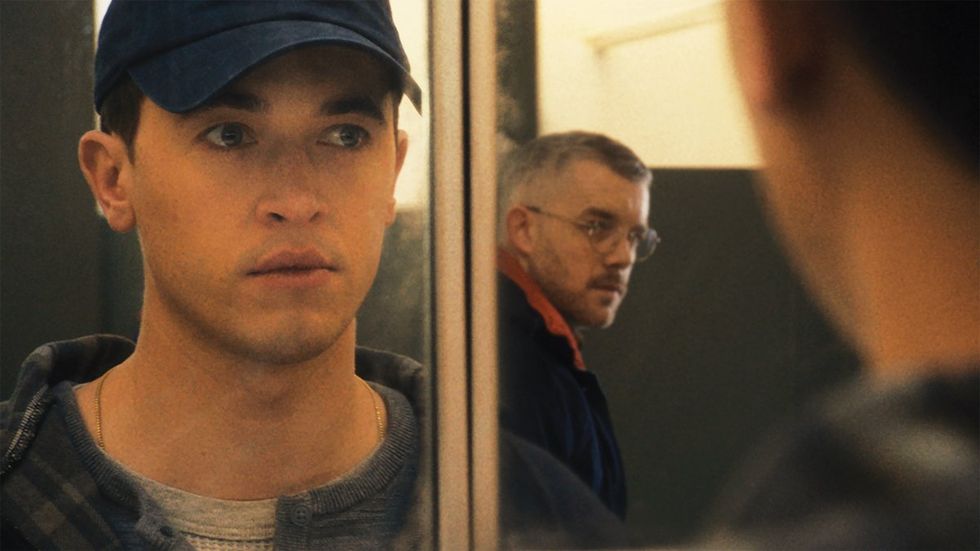 In 'Plainclothes,' a closeted cop wrestles with his feelings for an attractive older man.Courtesy Magnolia Pictures
“You really can allow yourself to go into that full empathy space with your character when you don’t feel in danger [in] any way, in the set or in the process,” he says. “And credit to Carmen and all our producing team. They were amazing. They just made it feel like you can really be brave with it and lean in and go there.”
While Plainclothes is a personal and intimate look at coming out, another of its darker themes has sadly become universal again. In the United States and the United Kingdom, public life for LGBTQ+ people is becoming increasingly scrutinized and criminalized, with attacks on queer and trans folks in particular.
Emmi says he wrote the film as a period piece, based on his memories of the culture at the time, and is devastated to see parallels today, especially for the trans community. Plainclothes takes place not only before same-sex marriage was legal in the U.S., but while gay sex was still illegal in many states. The Supreme Court had recently decided there were no constitutional protections for acts of sodomy (which included anal and oral sex, among other practices) in the 1986 case Bowers v. Hardwick. It wasn’t until 2003’s Lawrence v. Texas that the decision was overruled and laws banning sodomy were found unconstitutional.
Blyth agrees and hopes that the film can be used a bridge-building tool for people who may not have empathy for the queer community.
“This is such a humanizing script of an experience that maybe not everyone understands, but everyone should understand more than ever,” he says. “You always aim to make a story where, if one audience member leaves the theater looking at their neighbor or looking at their friend or looking at someone in the street and just empathizing with them a little bit more, you’ve kind of done your job, I think.”
The actors and filmmaker have received “dozens, if not hundreds” of messages from people who have already seen the film at festivals and said it made them feel “extremely seen” and “loved by the filmmakers,” Blyth says.
“The DMs have been incredibly rewarding, and talking to people after the screenings and having people open up is not something I expected would happen, but it’s been incredibly meaningful,” Emmi adds. “I just think back on eight years ago when I started this process, if I could see and feel how this experience has been, it would’ve certainly made some of the tougher writing days a lot easier or [more] motivating.”
For Tovey, the film couldn’t come at a more vital time. “It’s more important than ever to keep making queer content and keep being visible and incredibly vocal and amplify stories and prove that queer people exist wherever we settle in the community,” he says.
Plainclothes opens in theaters on September 19.
Watch article author Mey Rude discuss the film and interview on Out Now with Stephen Walker:

This article is part of Out's Sept-Oct issue, now on newsstands. Support queer media and subscribe — or download the issue through Apple News, Zinio, Nook, or PressReader.