


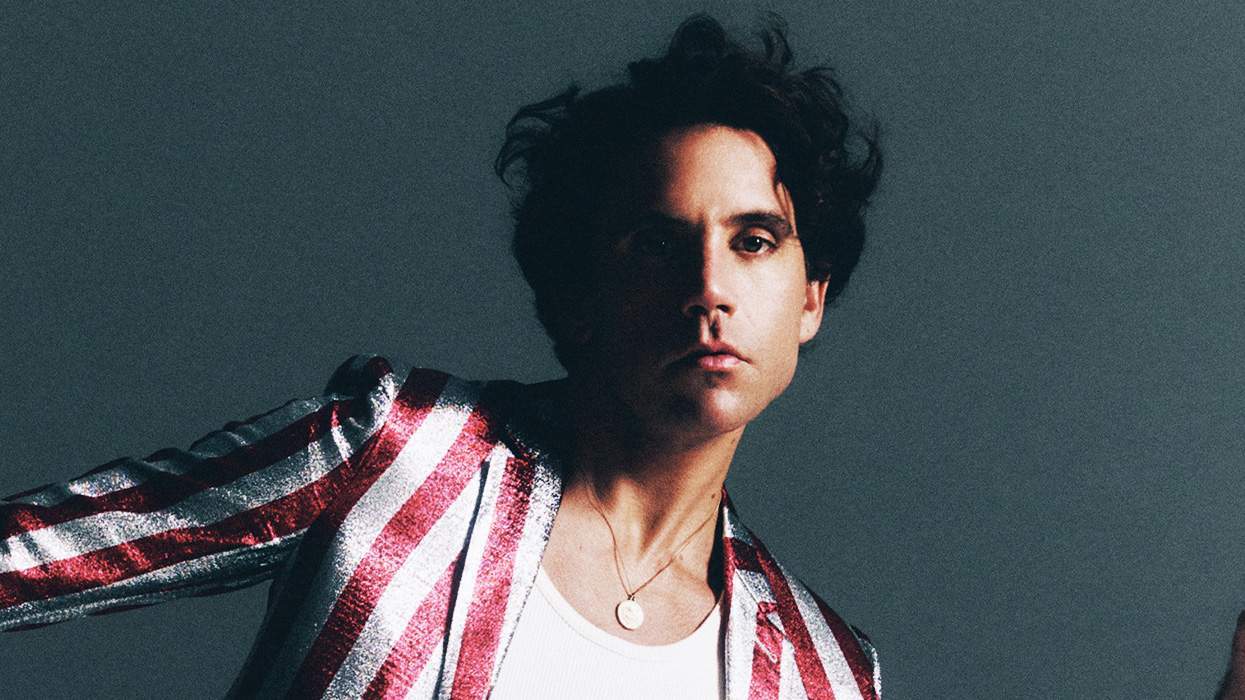

Shortly after seeing the musical Wicked for the first time on the invitation of Stephen Schwartz, piano pop diva Mika went out to dinner with the legendary composer. Schwartz caught him daydreaming and asked what he was thinking about, Mika says.
“I’m like, ‘No, I really liked your show.’ I was like, ‘But there’s this thing, the best melody in the show, for me, is sung by the wrong person. Why did you give it to the nasty one? You should have given it to the loser. The loser should be singing that song.’”
That idea became “Popular Song,” Mika’s 2012 duet with a young actress just beginning to dip her toe into the music world, Ariana Grande.
“You just have to sit in a session with her and work with her for even just a day or two, and you would find it completely logical,” he says of Grande and her vertiginous rise to stardom, which includes an Oscar nomination for playing Glinda in the first Wicked film, where she sings “Popular.”
The concept of popular — and who gets to be heard — resonates with the gay artist. Despite topping the U.K. singles chart with his 2007 single “Grace Kelly,” many in the music industry initially doubted Mika, saying his “brazen” style was “too gay” for the radio. Ignoring the criticism and defying expectations, Mika has never toned himself down and has stayed true to himself across six studio albums, four live albums, and over 20 million records sold.
 MikaSacha Cohen
Now, that undying love for an underdog fighting against the odds is overflowing out of his new album, Hyperlove, the Lebanese-born musician’s first English-language album since 2019. The album is a response to the “hyper living, burning through everything, leaving nothing” that so many are doing in modern times.
“Yet, as destructive as it is powerful, we must every once in a while ask ourselves a fundamentally simple question: What is love and do we truly think it exists?” Mika says.
“The album is a question and a howl — or a scream — to feel contact, feel intimacy, to feel more connected,” he adds. “It is not a solution. It is a screaming desire.”
That desire for connection comes through clearly on songs like “Science Fiction Lover” and “Take Your Problems With You.” He cites the Charlie Chaplin film that shares a name with his song “Modern Times” and its message of “the human being just becoming a cog and losing their place emotionally” as inspiration.
To counter an overwhelming world, Mika is focusing on remembering “that the small is important, and that out of the small come these enormous possibilities.”
“It’s readdressing that sense of scale … in order to identify the most minute … unimportant, invisible emotion that can change your life and change the way you interact with the world and the way you live within it,” he says.
One of those seemingly small but vital things in Mika’s life is his beloved golden retriever, who inspired the album’s final track, “Immortal Love.” When the song idea came to him, it was a “revelation,” he says.
“Why am I overcomplicating this? Look at this dog. Look at this dog. It’s just energy,” he remembers thinking.
He’s also centering his life around community. And his concerts, which he calls “alternative, crazy people church,” are a perfect example of this shift. “In the most joyful, irreverent, loving, community feeling-based thing,” he says. “It’s like a mixture of a rave and a crying club. And it has always been like that, but actually it’s gotten more and more like that over the past few years.”
This vibe is “mostly created by the people that show up,” he continues. “And the fact that it’s selling out all over the world, and it’s almost sold out in most places, it’s just this amazing, amazing feeling. Because it always takes me back when I see that it’s actually working. I’m like, ‘Oh, that’s cool. OK, good. The crazies are still there. Let’s go see our family.’”
Ultimately, Mika says that if people are going to survive these modern times, they must reconsider the importance of community. “I think we undervalue what community is. And I think even within the queer, LGBTQIA+ community, we say community, but we don’t have enough places that just represent community that we can just be at or within,” he says.
Mika says he only got to where he is “thanks to the support that I got from people who allowed me to be myself and not be ashamed of myself.” Now, he wants to be that person for others.
“I’m also here thanks to music. And the community that made me feel that there was light even in the most difficult moments of my life,” he says. “And I think that we need to encourage that. We need to help create that feeling for someone who might need it. And I think that’s going to be my next project.”
Mika’s Hyperlove is out January 23. Learn more about his album and tour on yomika.com.
This article is part of OUT’s Jan-Feb 2026 print issue, which hits newsstands January 27. Support queer media and subscribe — or download the issue through Apple News+, Zinio, Nook, or PressReader.
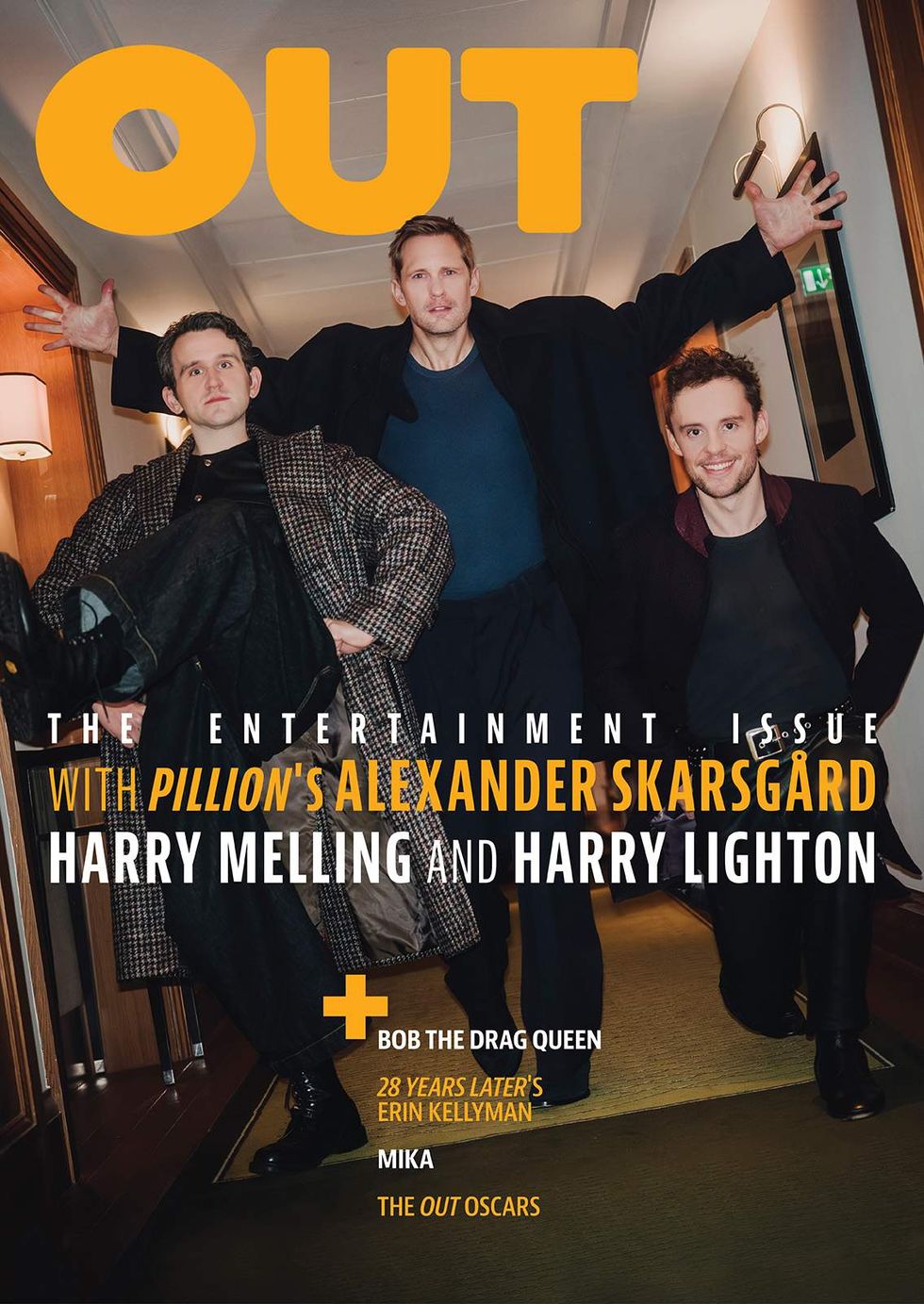 The cover of Out's March/April issue featuring 'Pillion.'Sam Waxman