

In the column Straight Nonsense, columnist Moises Mendez II takes a queer eye to the insanity of straight culture.
My original idea for this column was to write about JUST the insanity of straight culture and completely remove queer people from the equation because, as an LGBTQ+ publication, if there's a queer angle, we'll most likely cover it elsewhere. And trust me, there was a lot of straight nonsense to go around this week, from President Donald Trump bulldozing an entire wing of the White House for his new ballroom to the Sombr concert drama. That's where a 25-year-old patron was essentially called chopped and unc because she couldn't get behind the brain-rot commentary during the show attended by tween fans. But I had an experience on Saturday that I can't stop thinking about, which was centered around queers, but still has to do with straight people. I need to get these thoughts off my chest.
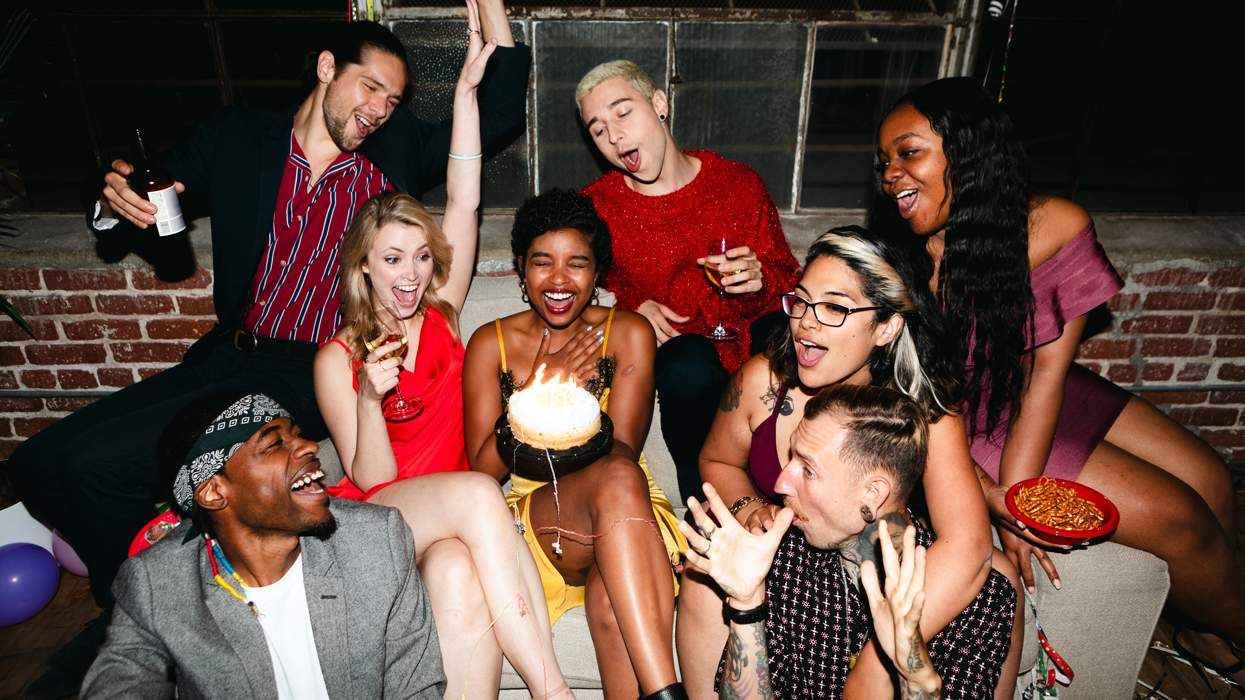
Straight people need to learn to read social cues and understand when they are not welcome in queer spaces. Growing up as queer person, most of us learned to read body language and facial expressions to know when we're not wanted. It's time straight people do the same. There are myriad instances of straight people invading LGBTQ+ spaces — bachelorette parties, straight men going to gay bars for the sole purpose of hitting on women, and freshly 21-year-olds crashing our spaces "for the bit."
Living in New York City, there's no shortage of parties, events, or bars that consider themselves queer spaces. I attended a party in Brooklyn called BearMilk, a monthly gathering of mostly Black and brown bears and their admirers, considered an underwear party with a darkroom. Gay bars in the city, mainly Manhattan (more specifically Hell's Kitchen and the West Village), cater to a much more white, conventionally attractive twink or muscular body type, meaning those are the usual attendees, and they (whether intentionally or not) rarely create a welcome environment for people who don't look like that. Oftentimes, I don't feel in community with these people. It was an issue for me until I entrenched myself in the bear community here in New York City.
The more you go to these sorts of events, the more you'll see the same people and even start to make friends with some of the attendees and hosts. BearMilk is one of these events I frequent, so I feel protective of the space I've come to love. Not only are the patrons mainly husky people of color like me, but they are taking the space to be fully themselves. So it was a shock to the system when a group of young, seemingly straight college-aged people came into the space: two men, a tall blonde with a middle part and the bravado of a frat bro, and a meeker brunette man, who stayed close to their two female guests, also blonde and brunette. The foursome appeared uneasy and gawked at the attendees in their underwear as they made out with one another and danced without a care in the world.
It felt like a violation. This group of young people, who looked like they belonged in the Lower East Side and whose names are probably Brad, Chad, and Jessica, fully realize that they are in a space that's not meant for them, but remain amidst the sea of dirty looks from the bears in attendance. It goes without saying that queer spaces are sacred, especially in today's political climate, on top of the fact that there are thousands of straight bars or activities where you, straight offenders, can spend your time. Still, you'd rather accost queer people of color with your presence in a space that they get to enjoy once a month, if that.
I take issue with the idea that these people were still in attendance, no matter their stance on queer rights or who they plan to vote for in the upcoming mayoral election. I get it may be unfair to assume anything about these young people. But I want to go out to West Village bars without worrying about some guy who doesn't acknowledge my 6-foot-7-inch body, even as he's pressing his against mine while scrambling for a drink. Because to him, I don't exist. Why should I be so willing to share space with them in the spot where I feel most liberated and enjoy myself and my body when they have everywhere else?
We can make arguments until our face turns blue about who belongs in what space, but I'd like to think of myself as a perceptive person. As I made my way past them the other night, I saw one of the young women point at a bear in a jockstrap, turn to her friend, and giggle, as if she had witnessed anything remotely funny. I bit my tongue and made my way to the bathroom, three tequila pineapples deep (which is the point of the night, where I am willing to talk to anyone), but the group of people irked my soul. It was clear they weren't there to dance with the other partiers or to let loose. They kept their jackets on, huddled up together in the middle of the dance floor, visibly uncomfortable, and unwilling to take the hint that they might not have been welcome. After they guzzled down their drinks, they finally left, and the weight of their discomfort (as well as that of many others) was lifted, and it was business as usual.
Yes, there's the conversation that allies are welcome in queer havens, and I've seen a shirtless bear or two bring their girl friends for support. I welcome that fully. It's the intention with which you step into the space and the respect you show for the patrons around you. It was clear that one of the interloping guys wanted to stay "for the bit" (the one who got the drinks for the group), but the others did not. I spoke to some friends and other partiers that night, and the responses were mixed. One person had the same reaction I did when they walked in. "Are you lost?" I heard them say out loud behind me as we watched them enter. Where another patron — a friend of mine who is a drag queen and didn't seem to mind — said, "As long as they paid the cover, who cares?" I agree — let's consider it a donation to the community, and we can sign off on that as their allyship for the weekend.
But a real ally wouldn't completely ignore the social cues and insist on trying to fit themselves into this space just because they want to. Entitlement does not go far in the queer community, especially amongst the queer people of color who don't have the privilege of entitlement, especially in today's political landscape, where we can get snatched off the streets at any second. There is more than enough space for us to share with people who want to be in community, but don't pull a Trump — force your way in and refuse to leave. When the patrons of an establishment for marginalized groups make it clear that this may not be the space for you, take the hint.
Moises Mendez II is a staff writer at Out magazine. Follow him on Instagram @moisesfenty.
Voices is dedicated to featuring a wide range of inspiring personal stories and impactful opinions from the LGBTQ+ community and its allies. Visit out.com/submit to learn more about submission guidelines. We welcome your thoughts and feedback on any of our stories. Email us at voices@equalpride.com. Views expressed in Voices stories are those of the guest writers, columnists, and editors, and do not directly represent the views of Out or our parent company, equalpride.