

Halloween is the one time of year when everyone and anyone can dress up like, well, everyone and anyone with nearly no recourse (costume depending). Historically speaking, when homosexuality and cross-dressing was still very not-legal, Halloween gave the queens and queers alike permission to dress to express – corseted, contoured, and blended in with everybody else. And that has never changed.
For generations of young queer people, Halloween has been the perfect gateway for taking their first step toward queer identity; countless tales of someone’s “first time in drag” or “first time going to a gay bar” happen on Halloween. You might consider Halloween the queer hall pass of holidays.
It’s no mistake that the UpStairs Lounge opened its doors on Halloween night of 1970, 55 years ago this Friday. The discrete second-floor gay bar quickly became a safe haven in the French Quarter. It was a second home to its regulars, a place for them to be free in a world rampant with discrimination. It was also the only gay bar in the Quarter to have had a dancing license; it was also never raided by police and happily catered to a mix of patrons who were not just gay, but also straight, trans, and people of color.
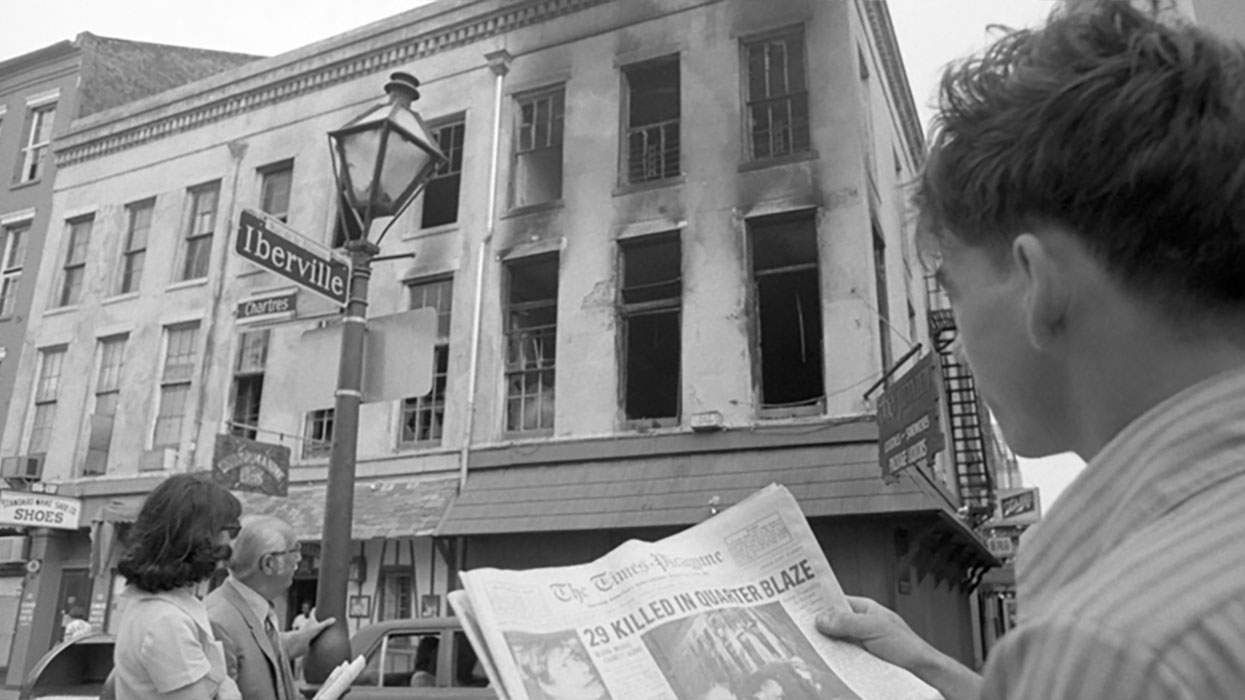
Unfortunately, less than three years after it opened, on June 24, 1973, someone doused the entrance of the bar in lighter fluid and lit it on fire, causing a blaze that would claim 32 lives. In the hours after the fire, shock spread through the city, but as it became clear the victims were almost entirely queer, the city turned a blind eye. There was no day of mourning, churches refused to hold services for the deceased, and some bodies even went unclaimed by families, for fear and shame of claiming a dead gay son.
Thanks to a small, dedicated group of storytellers over the years who have given us a handful of heavily researched books and documentary films, we’ve been able to get a sense of what kind of a place the UpStairs Lounge was. Because, for decades, this story has all but slipped through the cracks of queer oral storytelling.
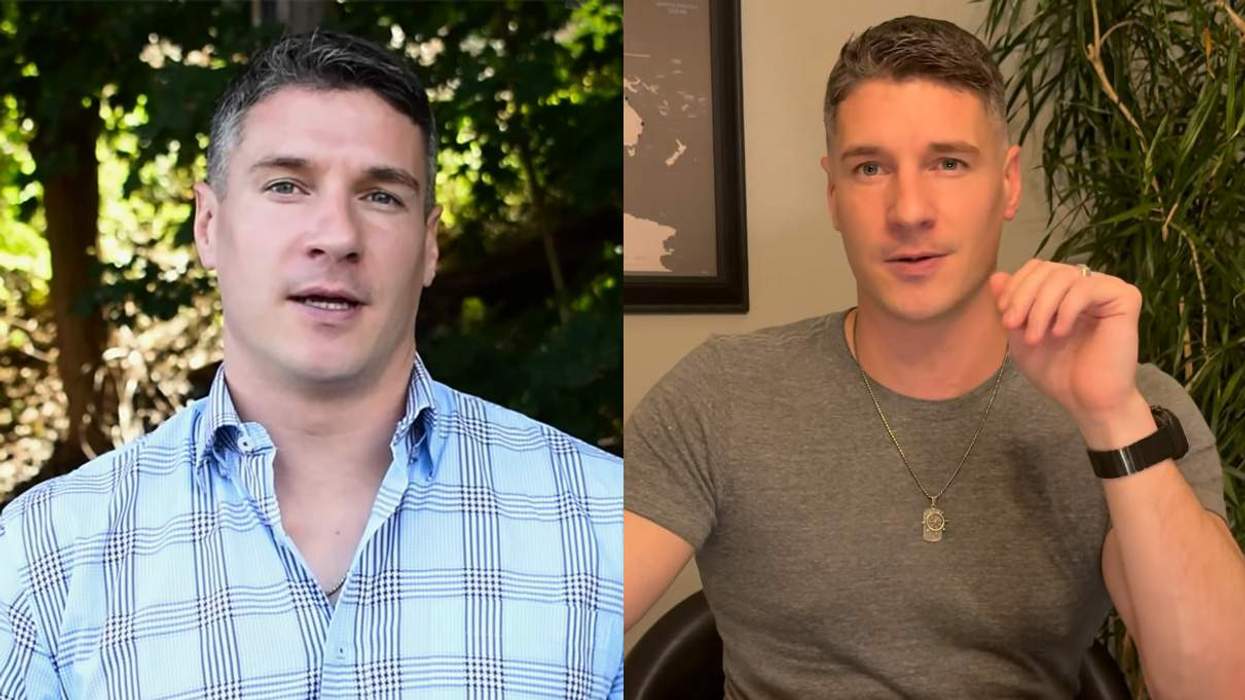
As Halloween approaches and LGBTQ+ History Month comes to an end, the creators of The Fire UpStairs podcast, Joey Hardy Gray and Ryan Killian Krause, sat down to discuss why they decided to make the show and why two years after its release, they’re more dedicated than ever to amplifying lesser-known queer stories.
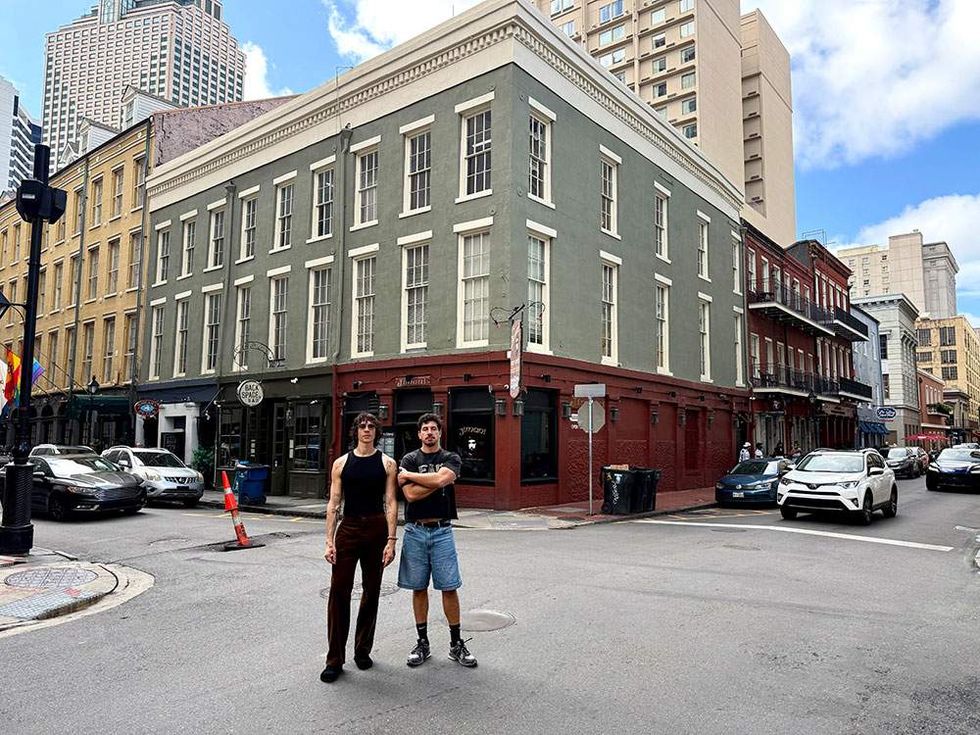 Joey Hardy Gray and Ryan Killian Krause in front of the UpStairs Lounge site in 2025Ryan Killian Krause
Joey Hardy Gray: When I first learned the story of the UpStairs Lounge and the horrific arson that happened, my first thought was — How could I not have known about this? Why hasn’t anyone in our community told me before? Why weren’t more people talking about what happened? Do people even know what happened?
Ryan Killian Krause: I mean, I didn’t know about this story until you approached me about making this show. And most people I’ve told about it since — besides the people who have a connection to New Orleans — haven’t known about it. I think that’s what drew both of us to this story.
JHG: From the first moment I saw the cover of Johnny Townsend’s book, Let The Faggots Burn, with that hand reaching up, engulfed in flames, I haven’t been able to shake the compulsion to tell people about it. And since then, we’ve gotten Clayton Delery Edwards’s book The Up Stairs Lounge Arson, [Robert W. Fieseler’s] book Tinderbox, Robert L. Camina’s documentary Upstairs Inferno, and a bunch of other contributions… and still, most people I ask have never heard about what happened.
RKK: There’s just so much to know and it’s not like we’re taught any of it. I still remember the years right after I came out as I started learning more and more about queer history and, frankly, how stupid I felt for how much I didn’t know and how much there was to learn. It set me off on a journey of self-education where I’ve been trying to learn as much as I can. And here we are 10 years later, and I still feel like there’s still so much to learn.
JHG: I didn’t realize it’s been 10 years for you… I only stumbled onto the UpStairs Lounge story 10 years ago. And then if it hadn’t been for the Pulse shooting a year later and the tragic connection between the historic death toll of the two events that recirculated the UpStairs Lounge in the news cycle, I’m sure even fewer people would know about it now.
RKK: And how fucked up is it that it took another mass murder for us to dig back into our past and start talking about the Upstairs Lounge again? I mean, this is exactly why we’re both so passionate about telling queer stories. It’s so easy for them to be lost as time goes on.
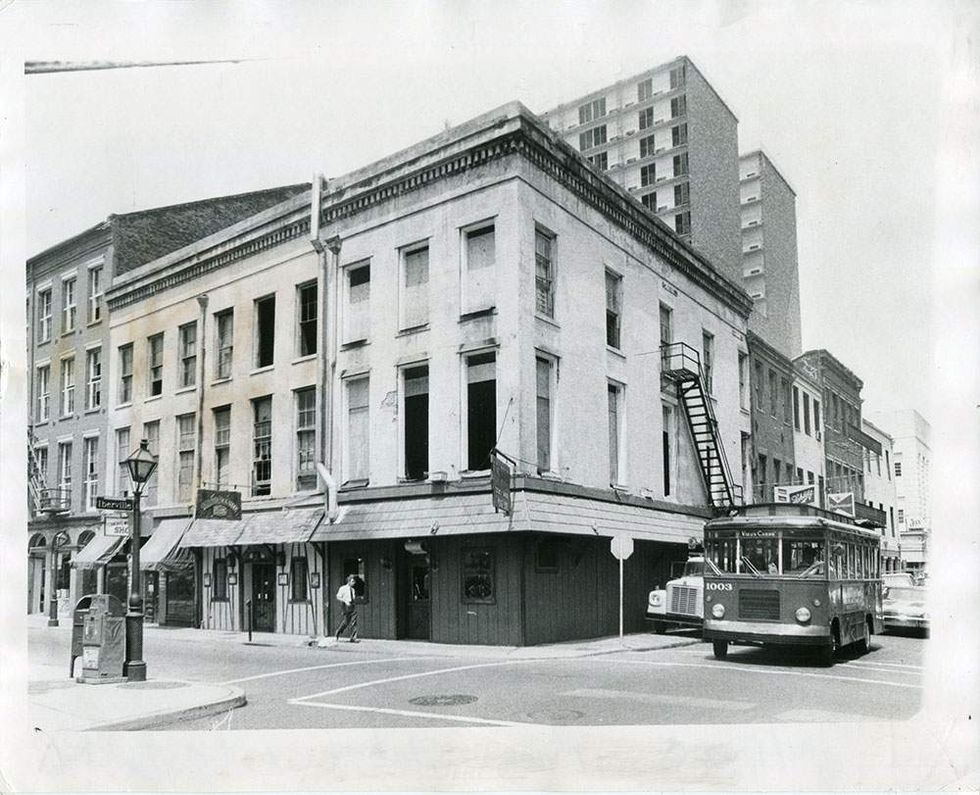 The Upstairs Lounge site in 1974The Times-Picayune New Orleans
JHG: It’s true. I think stories can only be passed down so far without being canonized. That’s why I’ve been trying to make my feature film about the UpStairs for the last few years. It’s like what Dustin Lance Black was able to do with Milk. Everyone knows the story of Harvey Milk now, if not from the documentary that came before, definitely from having seen his movie.
RKK: It makes me think of what Sarah Schulman did with the history of ACT UP. She’s written the definitive history book, of course, but she also sat down and recorded interviews with the pioneers of that fight so that there would be some record of what happened. No one else was doing it and one day everyone who was there would be dead. It’s very “if you want something done well, do it yourself” energy.
JHG: That’s exactly what Johnny Townsend was doing when he went around interviewing people about the UpStairs Lounge history. No one asked him to write and self-publish the first book about the fire, but he knew it was important and he took on the responsibility. I’m so grateful for the people like them in our community.
RKK: Right, that’s why I really wanted to make this show with you —to contribute to telling our queer stories through our own queer voices. And, you know I hate the phrase “now more than ever,” it’s like one of those email blasts from the DNC with the subject line, “well, we’re all going to die unless you give $5, Ryan.” But it’s hard to deny its growing relevance as our world shifts.
I think there was a period of time where everyone thought that because we had access to all this information, people would just know what was true and what happened. And that’s just not where we are. I mean [the conservative media group] PragerU is approved educational material in multiple states. The truth is out the window. And, on top of that, I just saw a whole discourse on Twitter from younger queers about why they don’t need PrEP. Shit’s bad.
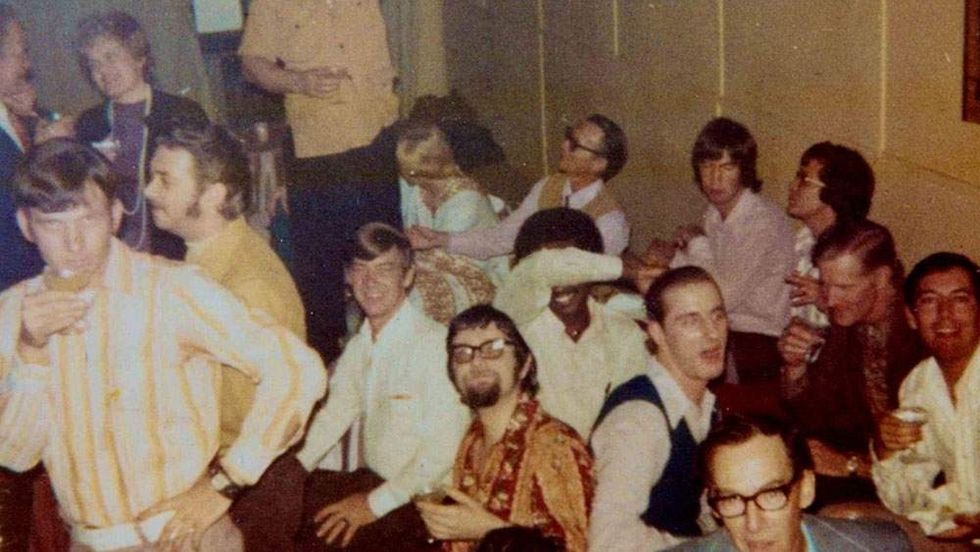 Patrons at the Upstairs LoungeCourtesy of Johnny Townsend
JHG: That’s why I’m not on Twitter! But before social media and online communities, we had to go find real communities… and those were in gay bars. And actually the first time I ever went to a gay bar was Halloween. Shout out The Avalon in Boston. RIP.
RKK: Bring it back to the Upstairs Lounge, baby! But actually, I do often think about gay bars and all the people inside of them and all the stories they have to be told. Generations of queer people who’ve lived these really rich, beautiful lives. And I remember realizing years ago how weird it is that so many of our elders are gone and how sad it is that we’ve lost their stories.
JHG: Absolutely. There’s a passage in Jeremy Atherton Lin’s Gay Bar: Why We Went Out that really stuck with me since I first read it: “There’s not just a gap, but a chasm between generations that AIDS created. Their absence is felt by those of us who are old enough to feel it. But the younger ones are never going to know about them unless we tell them [...] We went out to be told. We went out to feel it. We went out to experience how it used to be.”
That sentiment was one of the main reasons I wanted to make our show. Because in the absence of gay bars, queer spaces, and physically having places to go out to, we all have a responsibility to keep our histories alive by sharing them with one another, and with younger generations.
RKK: No one else will tell our stories if we don't tell them for ourselves.
JHG: And that’s why we have to keep doing what we’re doing.
Stream The Fire UpStairs wherever you get your podcasts. Learn more about the show and contribute to future episodes here.