
Hi Alexander!
I write to you after reading “I'm 42, gay, never had a bf, and hate apps. What do I do?” in Out magazine.
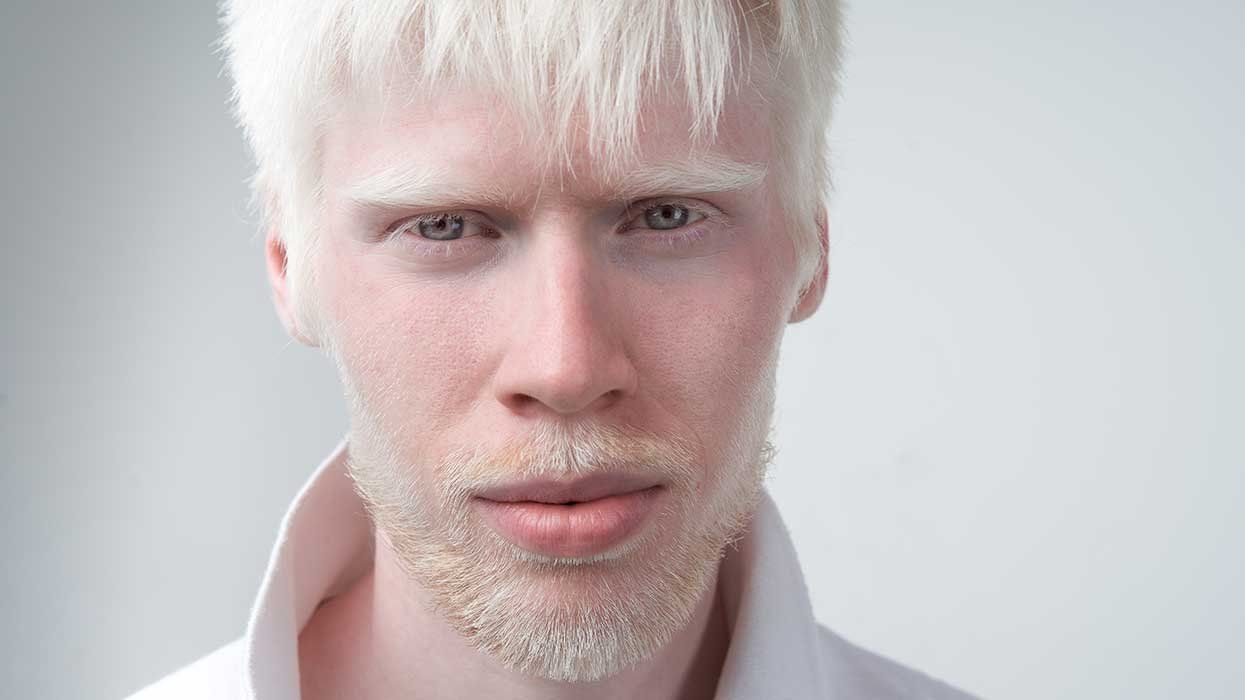
I am in a similar situation; however, I am 36, live in Australia, and have a disability, albinism. Yes, pure white hair (everywhere) and skin, along with a vision impairment, but you wouldn’t know that from just looking at me.
I admit I am a large guy, which I am working on; however, that doesn’t seem to be the issue I face. I find I am getting ignored, turned down, and at times harassed for being too white. I have had guys go out of their way on Grindr to tell me I need to get a tan and color my hair. This is what hurts me most, as these are things I cannot change about myself, especially getting a tan. The only thing I can medically do is get sunburnt and turn red.
I don’t know where I fit in within the gay community. I want friends, I want a relationship, I want to be accepted for who I am, but people see me and avoid me. The community doesn’t accept people as much as it likes to say it does. I feel more accepted by the straight community than I do by the gay community (I choose to use the “gay community” term as that is where I want to make connections for obvious reasons, but this does in general mean the whole LGBTIQA+ cohort).
I make friends so easily, so I don’t think it is a personality problem. I don’t drink alcohol, so I do get ostracized/shamed for that too, but I can deal with that one as I agree it is odd for an Aussie not to drink! I am really at my wits' end trying to work out where to turn next. Maybe you have some fresh ideas?
Cheers,
Ben
Hey Ben,
Your message is a good reminder to everyone that — despite what some advertisers, showrunners, and social media (and even, to some extent, LGBT magazines) make us think — there is no monolithic picture of gay life.
I’m a media person, so I have to navigate the horrible world of stock image sites. When I search “gay men” or “gay couple” on these sites, nearly all the photos are of white, traditionally fit, able-bodied, cisgender men in their 20s and 30s. Almost none show older or even middle-aged men.
That’s just one small example of a bigger problem — one your message tackles directly. I see the “stock images” facet of this problem in my work, and you see a different aspect of it in your sex and dating life. The problem is a strange homogeneity that exists purely in the public perception of what it means to be gay.
This homogeneity does not exist in the real, lived experience of gay men but rather in the public ideation of us, and the ramifications of this are far-reaching and brutal for anyone who exists outside that norm. It makes dating and sex harder for anyone who is gay but doesn’t fit the social image of “gay.” This homogeneity is, in part, what led to a social schism in the fabric of gay identity — what, in effect, led to “queer,” queer culture, the queer scene. And that’s where I’d tell you to play. “Queer” is not perfect, but it can be friendlier.
I know I’m painting with a broad brush here. But, yes: Gay circuit parties and gay bars and gay hookup apps might not be the most welcoming arena for a non-normative body to beat loneliness in. That’s why queer festivals, queer raves, queer sober meetups, and queer spaces exist — to be more welcoming, more FLINTA*, more open.
“Queer” still has its issues. In general, it mandates a vaguely defined leftist political didactism attached to one’s base sexuality, and some people (like me) simply don’t like the idea of a single term defining both their politics and their sexuality. “Queer” tends to get cloyingly academic: It absorbs ideas like anticolonialism and antiracism and makes them a composite part of the queer identity. Many queer people would argue that a person with conservative politics can be gay but never queer.
Still, the benefit of looking and playing in queer spaces is that they can feel closer to the “island of misfit toys” idea that gay culture was at its best — and that, on rare occasions, it still is, sometimes. These days, “queer” often feels more like the “come as you are,” “all are welcome” counterculture I first fell in love with and that I sorely needed when I first came out.
Many people reading this will vehemently disagree with this. Nothing inspires more anger and indignation in our community than the discourse between “gay” and “queer.” And in a way, that makes sense: A great deal of lived, real hurt lies between these two terms and the cultures they attempt to define.
Speaking for myself, I don’t feel fully at home in either of them. However, I offer this advice — to play in a queer crowd — from my own lived experience. When I started doing steroids and getting serious at the gym — when I started looking more “traditionally attractive” — I did better in a gay crowd. But when I want to play with my gender, or — I admit — when I feel less confident about my looks, less traditional, softer, stranger, more punk, more rock-and-roll, I do better in a queer crowd.
This means I have to build up my strength for a gay crowd, while a queer crowd takes me when I’m not feeling so strong. I’ve never fully committed to either scene, but I recognize this lived experience as an indicator of which one feels safer. And it tells me which scene I trust to be kind to my friends who don’t look traditional — who are disabled, transgender, nonbinary, or curvy. I know the scenes, parties, events, and spaces I’d feel better taking these friends to. And that’s just a fact. It’s not a glorification of “queer” as a philosophical idea but just a recognition of which spaces feel safer — and, if anything, that’s an indictment of all of us.
I still more readily call myself “gay” rather than “queer,” but I’m not happy with how unfriendly and unwelcoming we’ve become, and I wonder how complicit I am in that.
So: Fiind queer book clubs, queer cafés, and queer community groups. Get involved in your local queer charity or queer activist group. There are many ways to meet queer (and gay) men outside of bars and clubs, but they may involve committing to a weekly meetup, hosting a gathering of film nerds, or joining an existing group. But I find that once you start looking for these things, they appear, and they are beautiful to discover every time.
For what it’s worth, I’m glad you’re part of my community, Ben — no matter what we choose to call it.
Hey there! I’m Alexander Cheves. I’m a sex writer and former sex worker—I worked in the business for over 12 years. You can read my sex-and-culture column Last Call in Out and my book My Love Is a Beast: Confessions, from Unbound Edition Press. But be warned: Kirkus Reviews says the book is "not for squeamish readers.”
In the past, I directed (ahem) adult videos and sold adult products. I have spoken about subjects like cruising, sexual health, and HIV at the International AIDS Conference, SXSW, the Icahn School of Medicine at Mount Sinai, and elsewhere, and appeared on dozens of podcasts.
Here, I’m offering sex and relationship advice to Out’s readers. Send your question to askbeastly@gmail.com — it may get answered in a future post.