


Queer people deserve to live wealthy lives. And when I say wealthy, I don’t just mean the balance in your bank account. I like a more holistic interpretation of wealth, one in which being rich means having the time and freedom to nourish ourselves, our relationships, and our passions (like going down pop culture rabbit holes whenever I want). When we cultivate different aspects of our lives, we learn more about who we are and what we want out of the time we have on this Earth, and this inner work creates a strong foundation for healthy personal finance.
One of these passions is sex, and like it or not, you’re hardwired to have it on your mind all day, every day. For many of us, our quest to be more sexually desirable dominates our lives — and bank accounts. We spend hundreds or even thousands of hours developing our physique, visage, and personal style to appear more attractive to others. And let’s not even get into how much money it all costs. When left unchecked, these overcompensation behaviors can become financially and emotionally destructive.
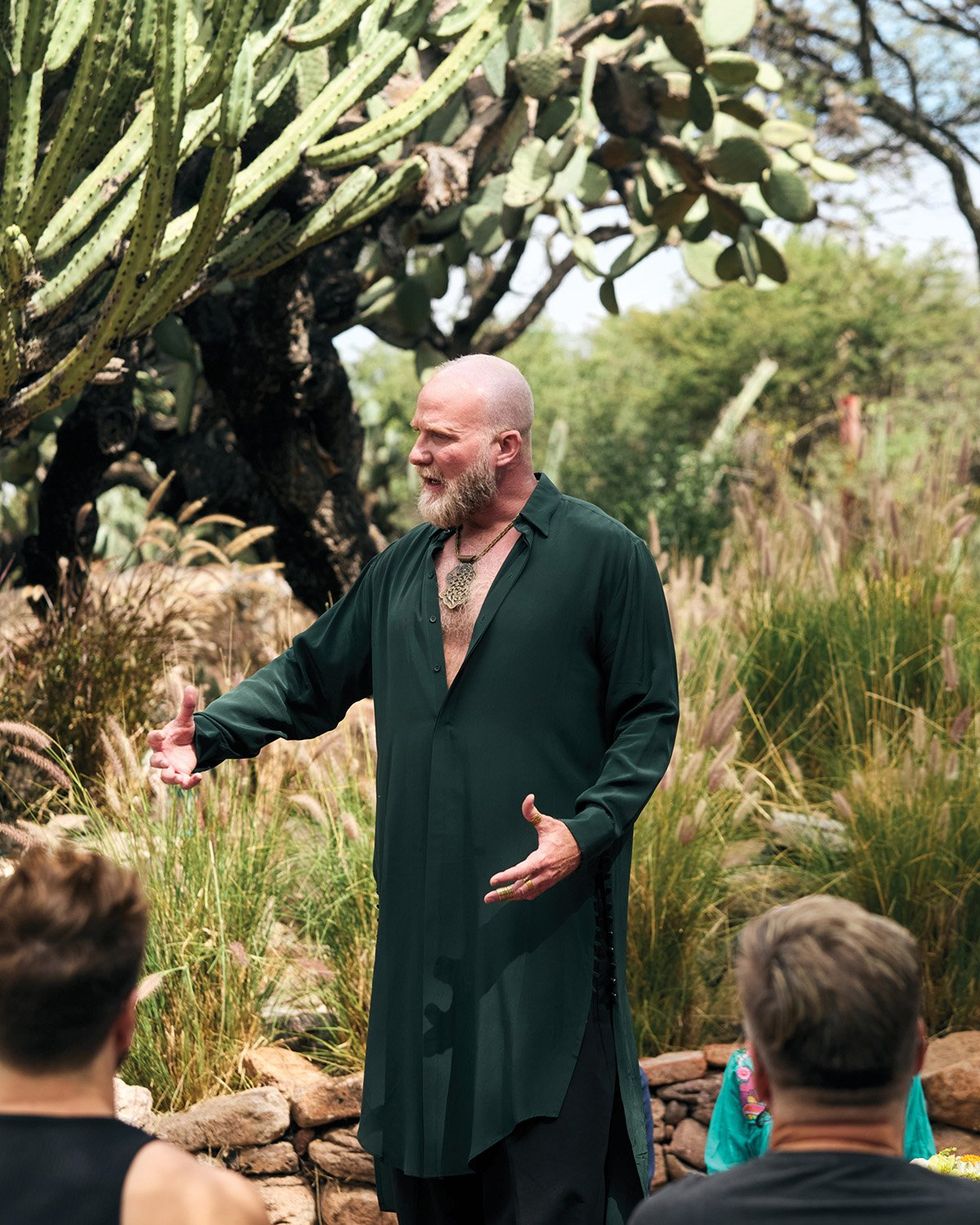 Court Vox is a somatic sex educator and surrogate partner. Ramon Christian
There are the sensationalized visuals of sex, the pornographic, and then there are the more emotional and energetic aspects, the erotic. Many of us are imbalanced toward the former. So I spoke to a couple experts about the latter. As state and federal governments increasingly fixate on regulating our bodies, taking the time to define and explore a wealthy sex life for ourselves can help us take back our bodily autonomy when political villains try to dictate our existence.
Erotic Wealth
Erotic is very different from pornographic, says Court Vox, a somatic sex educator and surrogate partner whose previous career was in digital media. He explained to me that we understand the pornographic more deeply than the erotic because pornography is what is presented to us visually, both overtly or covertly, in things like advertising, media, and mainstream discourse.
“We’ve been taught our relationship to sex through pornography,” Vox says. “The erotic is really about feeling. It’s about senses, intuition, knowing your body and other bodies, and attunement. That’s what people really desire; they want to feel connected, a sense of oneness, a sense of not having to think. And yet we are trained in the pornographic, which has nothing to do with any of those things.”
 Court Vox leads sexual wellness retreats with one-on-one sessions and group work.Ramon Christian
One of Vox’s offerings is surrogate partner therapy, a modality that involves both a surrogate and a sex therapist. Sex therapists can’t touch their clients, per the boundaries of the licensure, so in surrogate therapy’s triadic setup, a therapist and a surrogate work together with a client, usually over a retreat-length time period that has daily debriefs. The intensive is designed to have a clear beginning, middle, and end to simulate the structure of a relationship for a client, and may or may not involve physical touch. The price tag on Vox’s multiday intensives starts in the high four figures, and he says he caps one-on-one work at one to two clients a month to give it the attention it requires.
“Most of my clients have had ample amounts of therapy and have come to a point where they’re like, ‘I’m really done talking about it,’” he says. “They have no outlet. From a physical perspective, it would be like talking about playing soccer, holding the ball, and being good at the analytics, but never having teammates to scrimmage with and practice.”
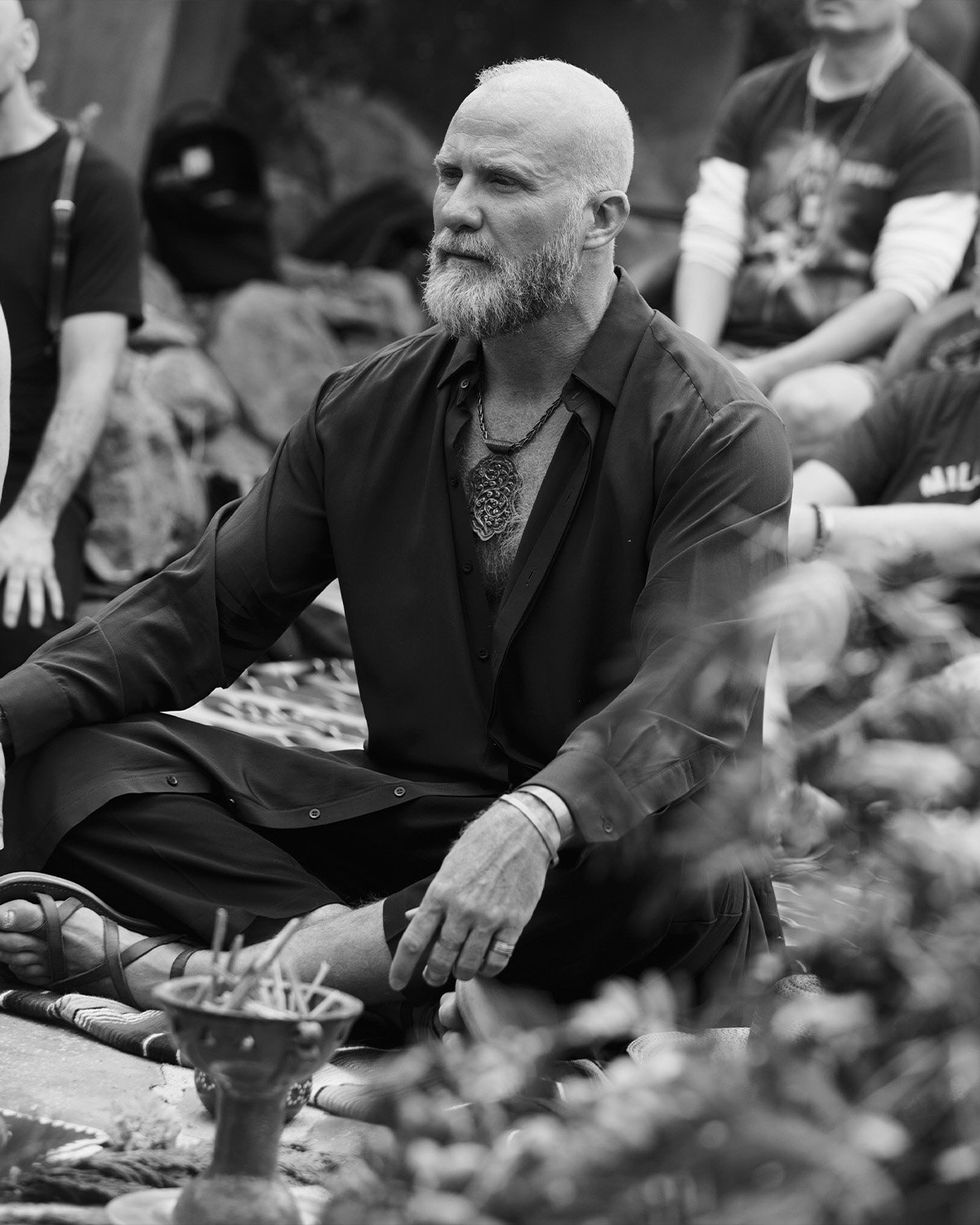 Ramon Christian
As we spoke at a coffee shop off Melrose Avenue in Los Angeles, I thought about my own skepticism around sexuality. It was easy for me to write off the idea of surrogate therapy as sex work with good marketing and a dollop of trendy therapy-speak. As I heard about more cases — people working through sexual trauma, performance anxiety, trans people learning to navigate their bodies after gender-affirming surgery — it seemed like the investment could be meaningful for people who want to unlock a more erotic approach to sex but aren’t sure how to start.
Less than a year after Vox launched his business, the COVID-19 pandemic arrived. “I thought to myself, Fuck, what am I gonna do?” he says. Once interaction became safe again, though, people kept reaching out about his services.
“They had time, they had money, and they were in
this place of ‘Well, I might die, but I’m still here, so now’s the time.’”
 Ramon Christian
A Rising Priority
Demand for both traditional and hybrid therapies is growing. The number of Americans who’d received mental health treatment or counseling in the previous year increased by over 50 percent from 2018 to 2023. Other hybrid modalities like MDMA-assisted therapy and ayahuasca have become more mainstream, and some psychedelics are in advanced clinical trials, attracting the attention of venture capitalists. Approaches like surrogate therapy are unusual in that they involve another person’s body and consent, and they have been around in one form or another since the ’70s.
Good ol’ fashioned sex therapy is on the rise too, and the challenges both single and coupled queer people experience could be opportunities to explore erotic identity, says Dr. Lee Phillips, a sex therapist based in New York City.
 Scenes from Court Vox’s sexual wellness retreats.Ramon Christian
“We all have an erotic self in us. We have things that drive us and motivate us erotically. Sometimes we just need to go in and talk to someone for them to pull that out,” he says. He’s also seen how financial factors like inflation and the rising cost of living are affecting people’s mojo.
“There’s been a shift. People are very stressed because of the economy,” he says. “They feel they have to perform. When you’re always on the go and hustling, it creates a lot of anxiety. You’re taught that you have to be the best of the best. That puts a lot of pressure on people, and then they take that pressure and bring it into the bedroom.”
Phillips helps clients move away from sexual performance being their only metric for success and more toward pleasure. This requires expanding one’s vocabulary and definition of pleasure in the first place. “We talk about what brings them pleasure and how they can connect more with their body instead of feeling like they have to have this really big, hard erection or be the best bottom in the world,” he says. “We try to normalize pleasure.”
 In surrogate therapy, clients work through sexual trauma and performance anxiety.Ramon Christian
Unlocking Erotic Wealth on a Budget
Exploring this side of yourself doesn’t have to break the bank, Phillips says. He suggests seeking out books, podcasts, and online groups or forums that create opportunities for dialogue, and he cited a classic, Charles Silverstein and Felice Picano’s The Joy of Gay Sex, as a good starting point for exploring erotic curiosity. Some sex therapists also offer sliding fee scales.
“I think we need more literature out there that helps people become more familiar with their bodies,” he says. “A lot of gay men really want to be in a serious relationship. It’s a myth that all gay men go out, party, and sleep around. I see so many men who are lonely. They really want to find someone.”
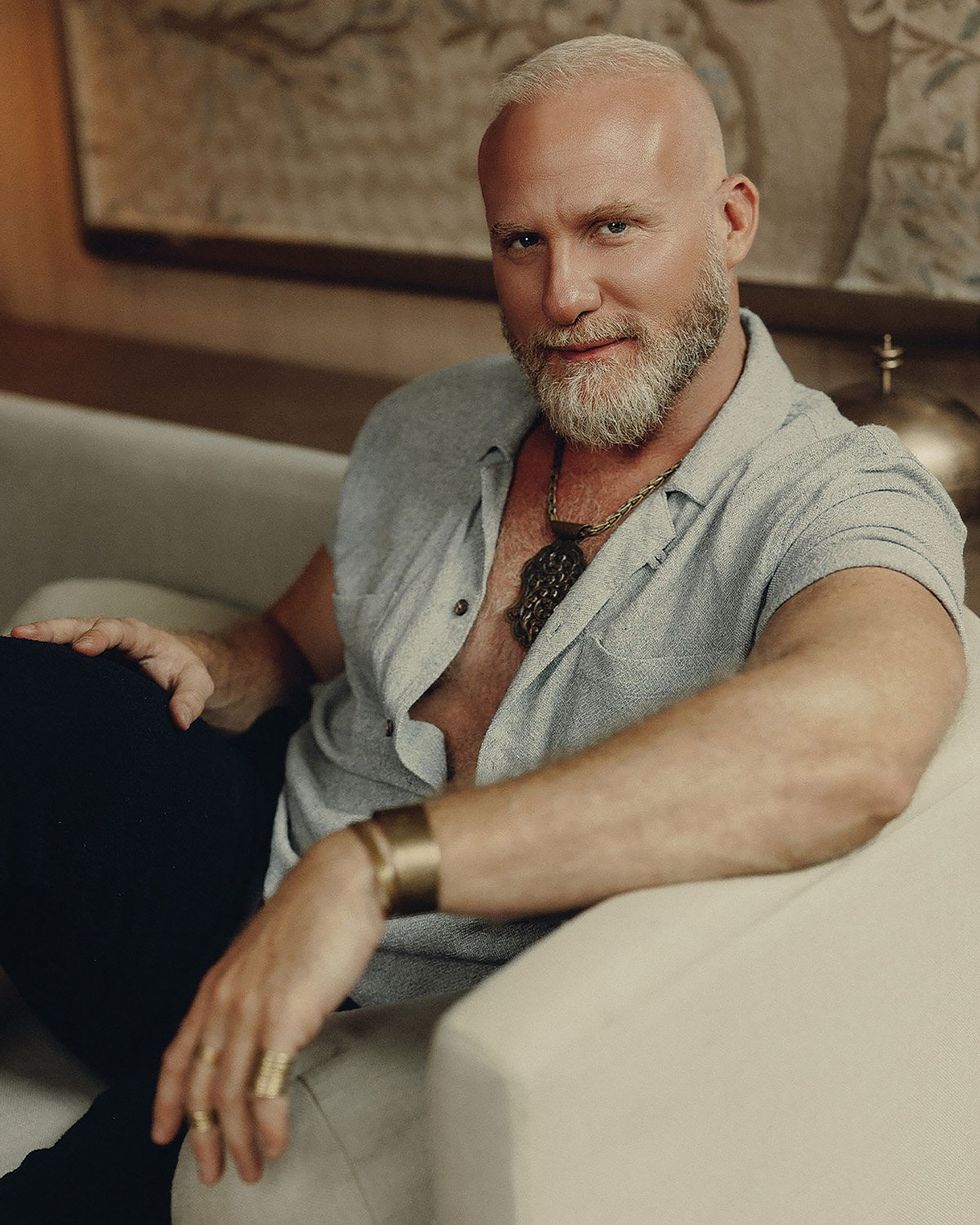 Somatic sex educator and surrogate partner, Court Vox.Sequoyah Images
Vox agrees and points out that we’re often expected to be innately good at sex, but most of us are still working with the skill sets we developed when we had our first sexual experiences. “I do believe pleasure is our birthright, having access to our bodies is our birthright, and that our society intentionally strips us of that when we’re young,” he says. “It’s so much easier to control empty bodies. We see it happening now with stripping women of their rights. It’s just a new form of colonialism.”
Whenever I write about personal finance, there always comes this inflection point where we stop obsessing over your budget and start looking at your life holistically. If your bank account is stacked but you’re just a big ball of shame all the time, is that a life well lived? Numbers aren’t everything.
Spend some time learning about what the many pleasures your body and heart can provide. You might discover new aspects of pleasure and queer joy you never knew you wanted.
Nick Wolny is Out magazine’s finance columnist. He writes Financialicious, a personal finance newsletter tailored toward queer readers, and is working on his first book, Money Proud, which releases later this year. NickWolny.com @nickwolny
This article is part of Out's July/Aug 2025 issue, which hits newsstands July 1. Support queer media and subscribe — or download the issue now through Apple News, Zinio, Nook, or PressReader.