


Thirty-five years after its release, the cultural impact of Jonathan Demme's Oscar-winning horror film, The Silence of the Lambs, can still be felt.
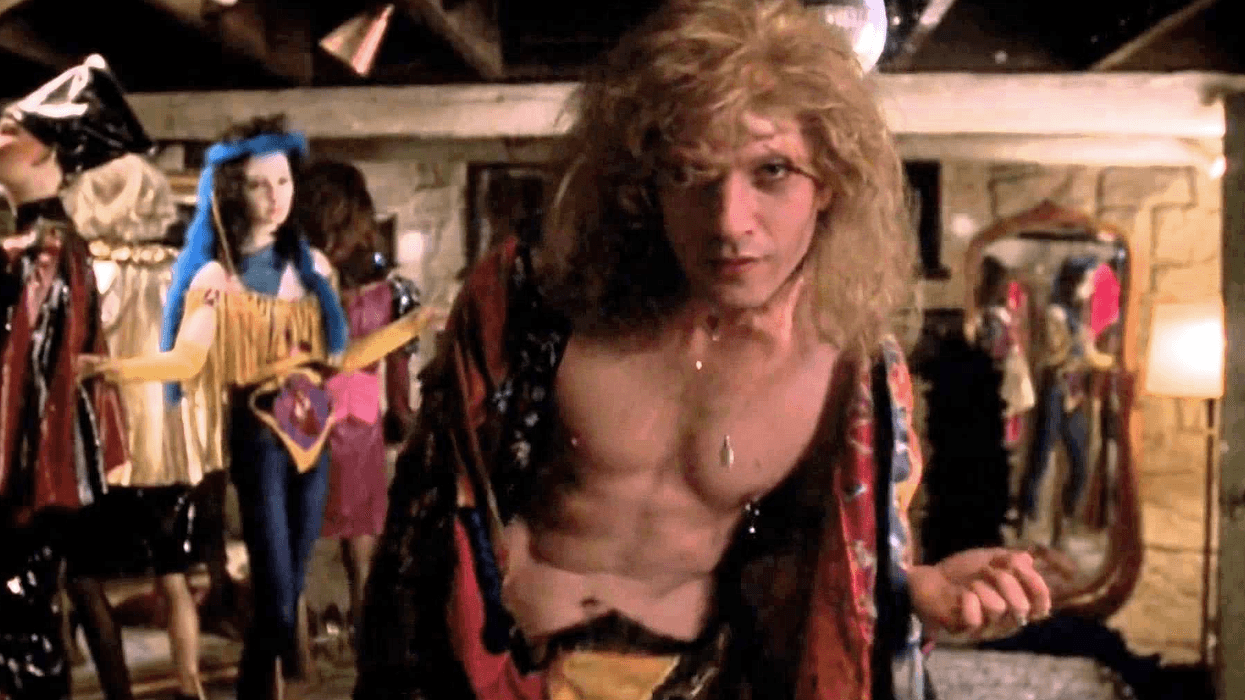
The film follows a young FBI trainee named Clarice Starling (Jodie Foster), who must work with depraved inmate and cannibal Dr. Hannibal Lecter (Anthony Hopkins) to stop the film's true villain: the serial killer Buffalo Bill (real name Jame Gumb), played by Ted Levine.
Buffalo Bill is still one of film's most indelible examples of the Trans Villain trope. Now, on the film's 35th anniversary, Levine has commented on the film's transphobic legacy.
In the movie, Gumb is said to have gone to doctors to try to get sexual reassignment surgery, and after being rejected, starts murdering women and skinning them to make a skin suit he can wear.
In one scene, when Clarice realizes what Buffalo Bill is doing, she tells Lecter, "There's no correlation in the literature between transsexualism and violence. Transsexuals are very passive."
"Billy is not a real transsexual, but he thinks he is. He tries to be," Lecter tells her, adding that he "hates his own identity, you see, and he thinks that makes him a transsexual. But his pathology is a thousand times more savage and more terrifying."
"There are certain aspects of the movie that don't hold up too well," Levine says to The Hollywood Reporter. "We all know more, and I'm a lot wiser about transgender issues. There are some lines in that script and movie that are unfortunate."
While he did not have issues at the time of the film, and says he didn't play Buffalo Bill as "gay or trans," saying, "I think he was just a fucked-up heterosexual man. That's what I was doing."
"Just over time and having gotten aware and worked with trans folks, and understanding a bit more about the culture and the reality of the meaning of gender, it's unfortunate that the film vilified that, and it's fucking wrong. And you can quote me on that," Levine adds.
Edward Saxon, who co-produced the film with director Jonathan Demme, says that "there was just no question in our minds that Buffalo Bill was a completely aberrant personality — that he wasn’t gay or trans. He was sick. To that extent, we missed it. From my point of view, we weren’t sensitive enough to the legacy of a lot of stereotypes and their ability to harm."
"There's regret," he adds. "But it didn't come from any place of malice. It actually came from a place of seeing this guy. We all had dear friends and family who were gay. We thought it would just be very clear that Buffalo Bill adapts different things from society, from a place of an incredibly sick pathology."
As writer, actor, and activist Jen Richards, who was featured in the documentary Disclosure, said, for many people, Buffalo Bill was their first introduction to trans people.
"Right prior to my coming out as trans, I started to delicately tell a few friends and colleagues I was thinking about transitioning," she told Variety in 2021. "Kind of treading water to see if I could do it successfully, and one looked at me and said, 'Do you mean like Buffalo Bill?'"
This idea that trans people are monsters, predators, and perverts continues today. Phrases like "groomer" are attached to queer and trans adults who work with children or youth, trans people are banned from public bathrooms, and many conservatives, including President Trump, claim that liberals want "transgender for everybody" and to force people to transition.