

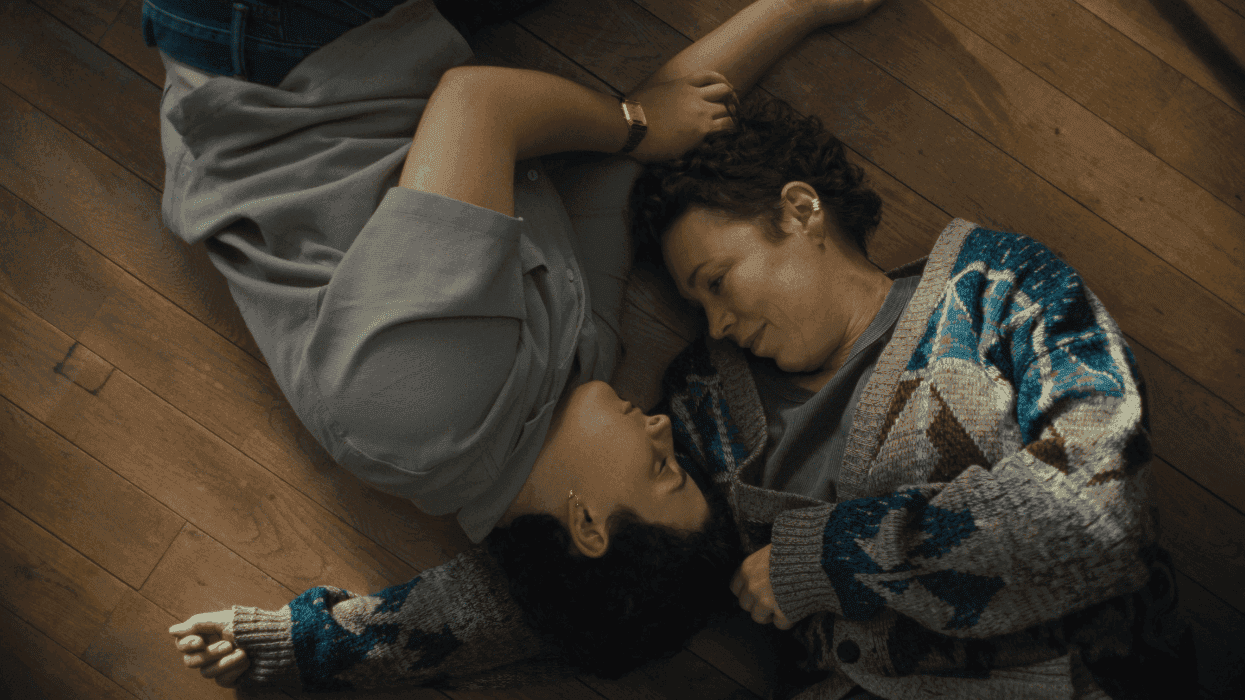
In the year since director and co-writer Sophie Hyde's queer family drama Jimpa premiered at the Sundance Film Festival in January 2025, the movie's themes of acceptance, coming together, and community hit even harder.
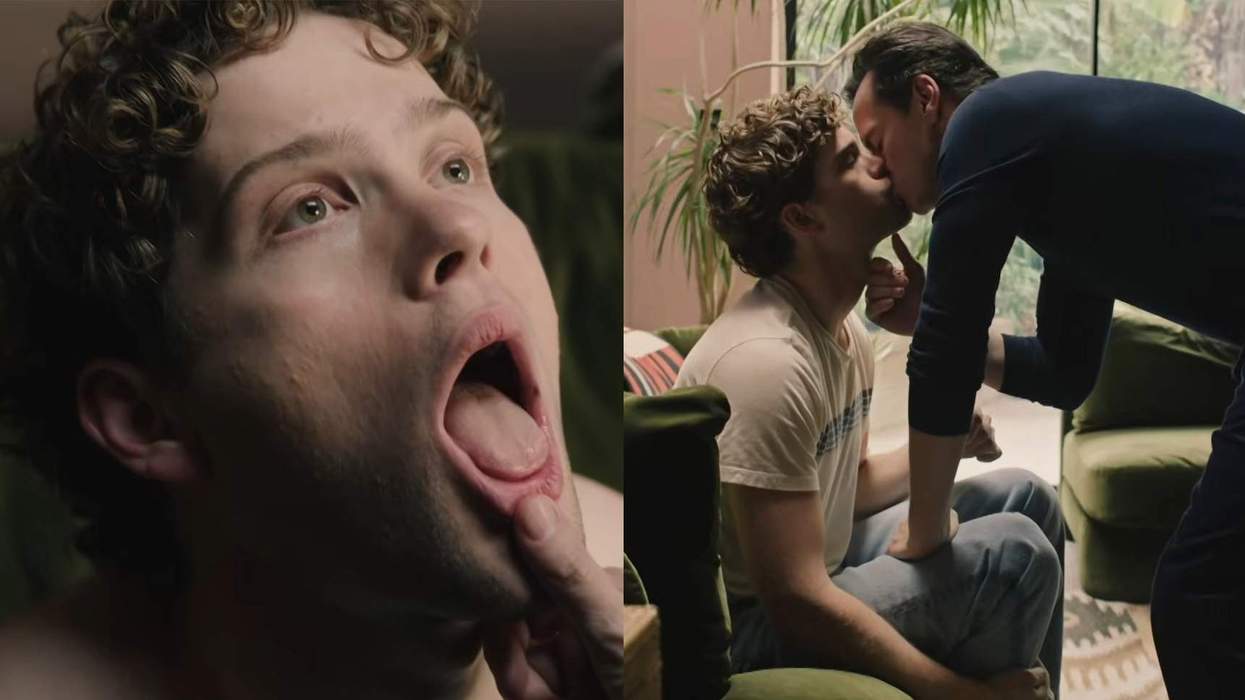
Jimpa is based on Hyde's own relationship with her gay father and nonbinary child, with Olivia Colman playing a mother who takes her nonbinary child, Frances (played by Hyde's own child, Aud Mason-Hyde), to visit their gay grandfather, Jim (John Lithgow), in Amsterdam. While the movie, which releases in limited theaters on Friday, February 6, is a personal and deeply intimate portrait of a family, the subject matter of trans youth has become deeply politicized in recent years. 2025 was especially incendiary.
Mason-Hyde says that seeing their personal story turn into political fodder is "really familiar" for trans people everywhere.
"I've spent a great portion of my short life being a young trans person in a public space and talking about it in small and big ways. And it continues to be quite shocking how politicized our bodies and our lives are," they say. "No matter how minute and personal and intimate we make the portraits, no matter how small the details, no matter how kind of palatable actually each of us can be, or a particular movie can be, or a particular story can be, to be trans right now in the world is a political thing."
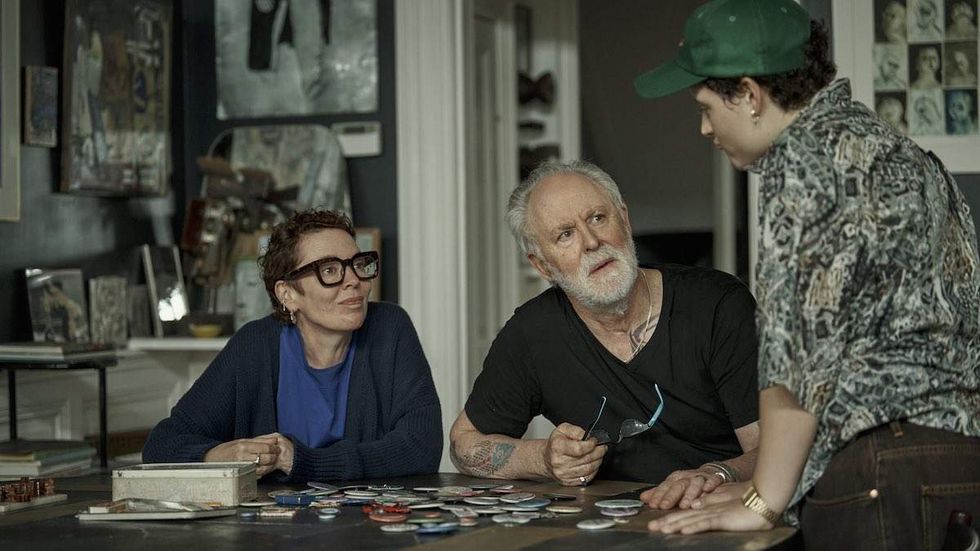 Olivia Colman as Hannah (L) John Lithgow as Jim and Aud Mason-Hyde as Frances in Sophie Hyde's 'Jimpa'Kino Lorber
Hyde, who is also queer and uses she/they pronouns, says she's always "been really in awe" of people like her child and her late grandfather, the real Jim, on whom the film character is based, who are "politicized before they even start."
"Their bodies are on the front line, and sometimes I think it's like a big and amazing choice, and I've always been really in awe of it, but I've also recognized that it's most often not a choice," she says. "And yet I also think that in my life, they're the people who have been, who've had a reckoning with themselves and with the world that I find quite amazing, and they've taught me a great deal."
"I've made the choice to continue to be as most authentically myself as possible, and it's been hard and so many of us make that choice on a day to day," Mason-Hyde says. "And it's a choice that I feel the real Jim and the Jim in the film made, and a really brave and bold choice."
"But I also think that it is in service of the people around us. It's not actually a selfish choice because I think that the most cowardly politics is the politics that pretends it's not personal, and that pretends that policy is in the abstract, that infrastructure is in the abstract, when actually these are the things that inform our everyday lives," they continue. "These are the things that give us access to the world and to each other and to survival."
Hyde says she wanted to make a film with a trans teen where the teen's transness isn't a problem. That idea "doesn't feel truthful in any way" to Hyde.
"In fact, my experience has been that Aud's transness is one of the greatest things about them and that I love and adore," she says. "It's been really liberating for so many of us, so many of the people in our family to have somebody who shows us that that real binary position of gender is really problematic and is really limiting, I think."
Mason-Hyde says they are proud to be in a movie about a community that is "chosen family as well as biological family."
"So often, particularly in our queer adult stories, when we watch queer people finding chosen family, it's in opposition to their biological family," they say. "And so often, we see these stories of young trans people at odds with their biological family in order to be themselves as if those things have to oppose one another. And so often they do. That is so many people's experience, which is really hard if you want to portray reality, but for us, the reality is that we are a really big mixed, often quite queer family."
"My grandpa was gay and there is queerness in multiple generations of our family. You and I are chosen family, as well as biological family," they say to Hyde. "And I think that there's a really beautiful alternative model there that we are trying to show, which is asking what if you chose each other and chose to continue to show up for each other, not out of obligation because of your biological relation, but because you care about each other and because you want to know each other?"
In the end, the pair is proud to have a movie that showcases the values their family has had for generations. A personal story becoming political fits perfectly with how Hyde's real father lived his life.
"I also think in a more spiritual, personal way, I think this is [the real] Jim smiling down on us, teaching us the lesson, again, that the personal is always political," Mason-Hyde smiles. "And I think it's one of the great lessons of the movie. I think it's one of the great lessons that the real Jim taught each of us in his life. I think in a lot of ways that's his legacy. His personal lived reality was always political. And so I think he's kind of looking down at us like, 'Yeah, come on, it's political. Of course it's political.'"
Jimpa releases in limited theaters on Friday, February 6.