

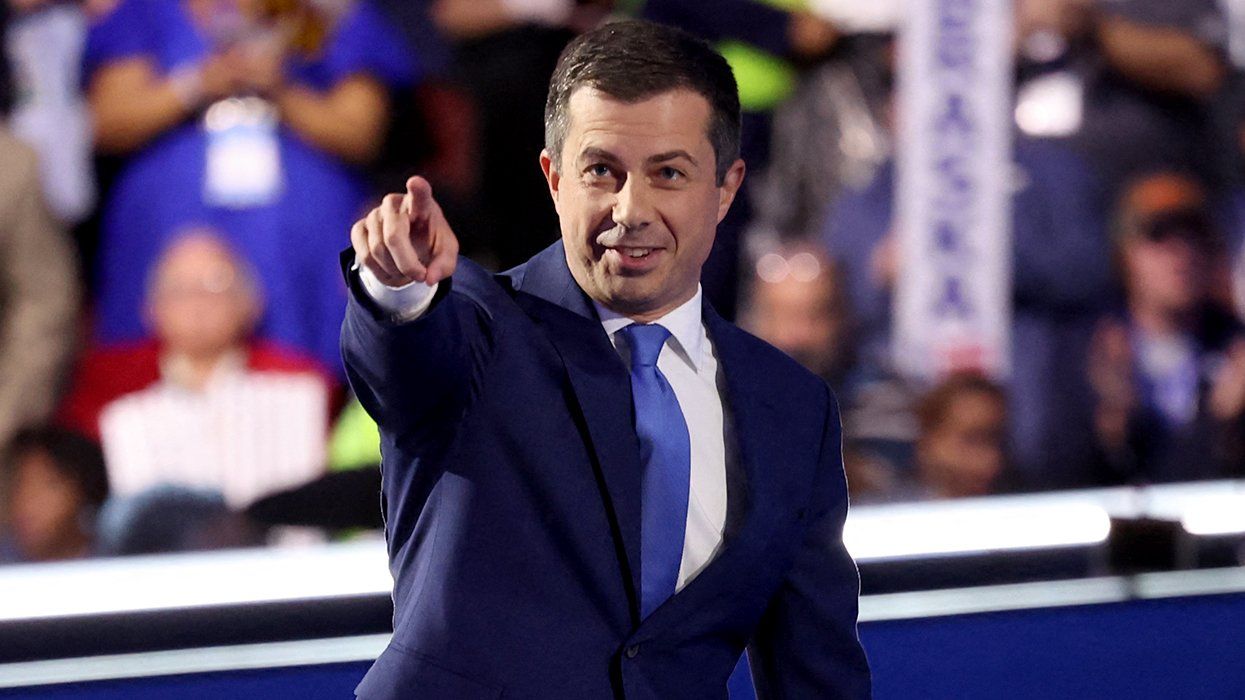

Kamala Harris says the running mate she most wanted in 2024 was Pete Buttigieg. But in her new memoir 107 Days, the former vice president concedes that the idea of putting a Black woman and an out gay man on the same ticket was, in her words, “too big of a risk.”
Related: Kamala Harris: Our One-on-One With the Vice President
“I love Pete,” Harris writes in an excerpt obtained by The Atlantic. “I love working with Pete. He and his husband, Chasten, are friends. But we were already asking a lot of America: to accept a woman, a Black woman, a Black woman married to a Jewish man. Part of me wanted to say, Screw it, let’s just do it. But knowing what was at stake, it was too big of a risk. And I think Pete also knew that—to our mutual sadness.”
Harris instead tapped Minnesota Gov. Tim Walz, who brought Midwestern pragmatism to the ticket. The choice made strategic sense to her campaign, though the Harris-Walz ticket ultimately lost to Donald Trump and JD Vance.
A candid calculation
The memoir, which is set to be released on Tuesday, offers a rare, unvarnished glimpse into the political calculus behind one of the most consequential decisions of Harris’s career. Buttigieg, Harris notes, “would have been an ideal partner—if I were a straight white man.” Her words reflect the enduring tension in Democratic politics between pushing the boundaries of representation and fearing voter backlash.
Related: Pete Buttigieg ‘excited’ about Tim Walz as Kamala Harris’s VP pick
Buttigieg’s appeal was obvious. A Rhodes Scholar, former naval intelligence officer, and the first out gay Cabinet member confirmed by the Senate in U.S. history, he had already proven himself one of the party’s most effective communicators. As secretary of transportation, he weathered airline meltdowns while still maintaining a national profile. And during the campaign, he was willing to face skeptical audiences on conservative outlets, offering Democrats a messenger who could cross divides.
Yet Harris concluded the barriers were too high. Allies hoped Buttigieg might energize younger voters and underscore a generational contrast with Trump, but Harris feared Americans weren’t ready to elect such a ticket. Harris has been a staunch ally of the LGBTQ+ community for years, performing some of the first same-sex weddings in California more than 20 years ago. She told The Advocate in a 2023 interview that the experience of seeing the joy shared by gay and lesbian couples has remained with her.
Walz’s record on LGBTQ+ rights
Walz, for his part, came with a résumé rooted in both progressive policy and Middle America. As The Advocate reported at the time, his long history with LGBTQ+ issues included advising a high school gay-straight alliance, backing marriage equality during his 2006 congressional run, and working in Congress to repeal “don’t ask, don’t tell.” As governor, he moved to protect gender-affirming care and expanded state-level protections for LGBTQ+ people.
Related: Minnesota governor Tim Walz selected as Kamala Harris’s running mate; here’s his LGBTQ+ record
That record made him a reassuring figure for progressives even as Harris weighed the risks of picking Buttigieg. And when Harris ultimately announced Walz as her choice, Buttigieg was publicly gracious, saying he was “really excited” about the ticket and drawing a sharp contrast with Vance, the Republicans’ choice.
The party’s unfinished debate
Harris’s reflections arrive as Democrats continue to wrestle with whether emphasizing “firsts” has cost them in recent elections. Former Secretary of State Hillary Clinton’s historic candidacy fell short in 2016, and Harris herself lost eight years later. Trump’s team leaned into culture war themes, and one ad highlighting Harris’s defense of transgender rights was credited by pollsters with helping him chip away at key blocs of Black and Latino men.
By publishing her account, Harris reopens that debate inside a party already preparing for 2028. Walz has announced a third-term bid for governor. Buttigieg, who is raising his young twins with his husband in Michigan, remains one of the most prominent voices in the party, often floated as a future contender. And Harris, while telling confidants she may not run again, has left the door ajar.