

I’ve spent a good portion of the year in a Broadway theater. So much so that by the end of the year, when I’d seen the last show I was scheduled to attend, I was ready not to step foot in the theater district for a while.
My time wasn’t only spent at Broadway shows; I’d also seen some spectacular off-Broadway shows. The second half of this year was packed with new shows, some exciting revivals, and immersive experiences. So if there's anyone to tell you which shows were the best of the year, it definitely would be me.
There were a number of new shows that deserved a longer run — but for whatever reason, had to close: John Proctor is the Villain, Gypsy with Audra McDonald as Mama Rose, and Boop (sue me, I like a bit of fun!). But at least we still have some shows that have stood the test of time, Operation Mincemeat (love those incredibly talented weirdos) and Just in Time (Jonathan Groff demolishes the role of Bobby Darin).
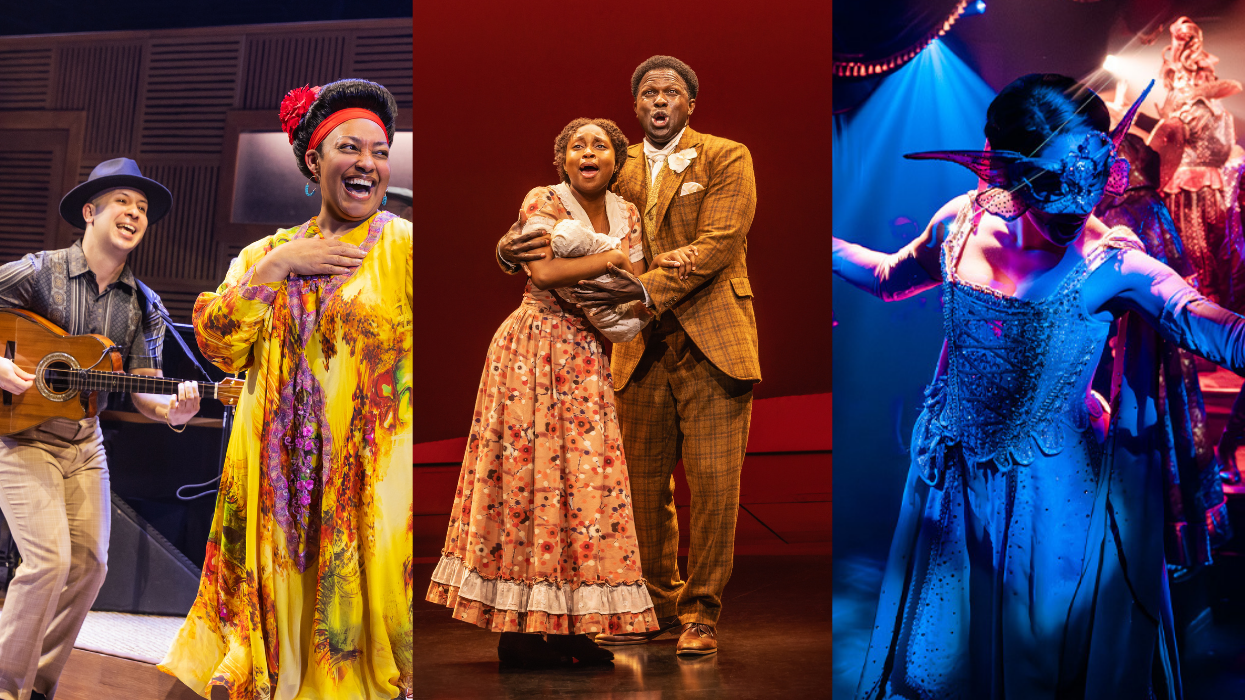
There's also a number of new shows that have made their way to the Broadway stage, like the arresting production of Ragtime and Liberation, a show about a women's liberation group in the 70s, as well as some incredible off-Broadway shows like Masquerade.
Here's my list of all the best shows I've seen on and off-Broadway this year.
'Liberation' is a revelation
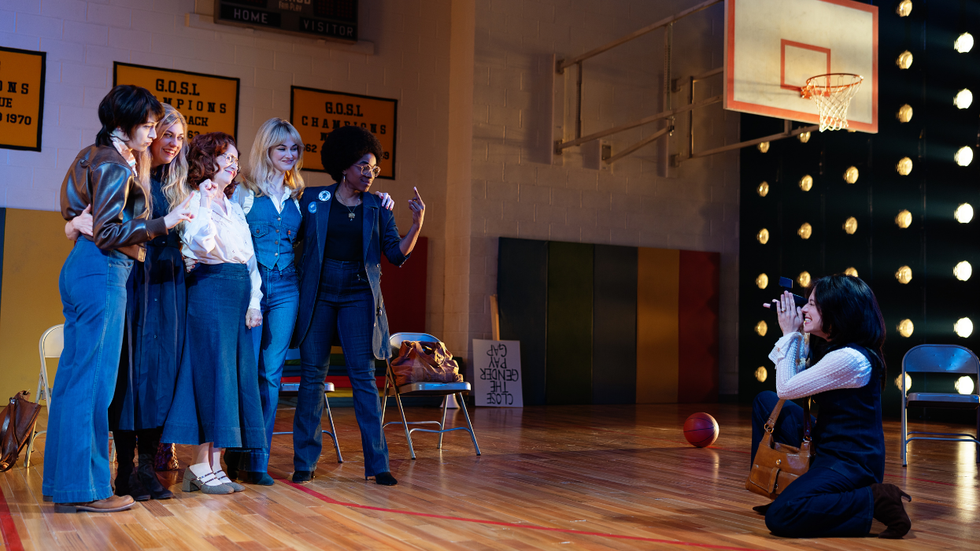
(L-R): Adina Verson, Susannah Flood, Betsy Aidem, Audrey Corsa, Kristolyn Lloyd and Irene Sofia Lucio in "Liberation" on Broadway
Little Fang
I’ve gone long on the issues I have with shows that talk about feminism or women’s rights on Broadway and how they rarely scratch the surface of saying anything remotely more impactful than “Women can do anything a man can do.” This show shatters that idea into a million little pieces without ever feeling like a heavy lift.
The memory play traces one woman’s attempt to gain a better understanding of her late mother by examining her work with a women’s liberation group in the early 1970s, so she literally steps into her mother’s shoes to do so. Throughout its two-hour-plus runtime, the group of women begins the conversations of what equality for women can and should look like, but acknowledges that words don't mean much without action.
The show’s narrator and lead character, Lizzie (Susannah Flood), breaks the fourth wall to ground the audience in different scenes. In the second act, she acknowledges that it would be impossible to speak for all types of women in a show like this (while apologizing about not feeling like she's doing enough for the underutilized Black character, who says as much), which is a brilliant writing choice to exemplify the lack of intersectionality in early feminist movements. The second act also starts with an incredible feat that deserves to be studied in drama classes for years to come.
After leaving the show, I never felt like I was being preached to. I came away with more empathy for the women who wanted to start the conversation, no matter how imperfect it may be, because they just knew they had to start somewhere.
'Buena Vista Social Club' drew prideful tears
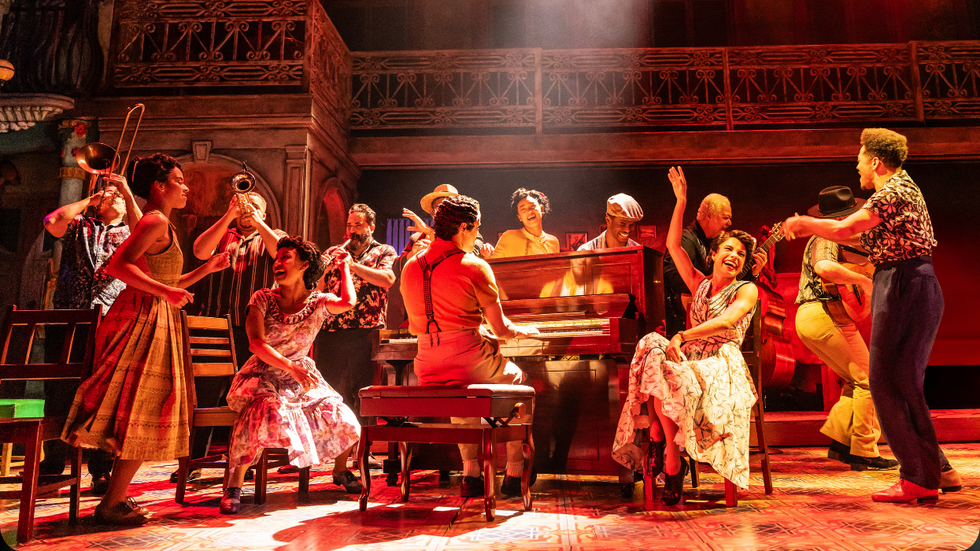
"Buena Vista Social Club"
Matthew Murphy
I had a lump in my throat the entire time I watched Buena Vista Social Club. The show was an explosion of the best of Latin culture on stage — a live band playing salsa that filled the theater with electricity, the powerhouse vocals of Tony-winner Natalie Venetia Belcon as Omara Portuondo, and astonishing choreography that came together to create a visual and sonic feast.
I’m not Cuban, but I am Dominican, so our people share roots in the Caribbean. It was the first time I’d ever seen the beauty of Latin culture put on stage in this way, and it reminded me how special it is to see your community represented on such a culturally relevant stage. Buena Vista Social Club highlighted the best parts of my people's heritage: resilience, music, and dancing, all of which kept a smile on my face throughout the show.
'Masquerade' leads audiences through a labyrinth with a surprise in every room
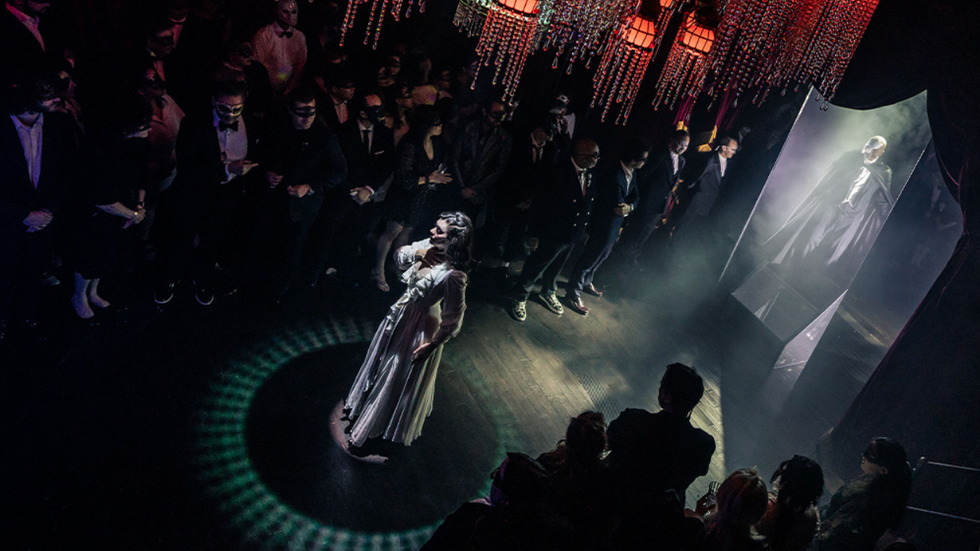
"Masquerade"
Matthew Murphy and Evan Zimmerman
The Broadway community was sad to see Phantom of the Opera leave the Majestic Theater after 35 years. It was an institution where people brought their children and introduced them to the musical theater world. But fear not, fans of the Andrew Lloyd Webber classic: the show was reimagined as an immersive experience off-Broadway, not far from the theater district, and it requires a healthy amount of audience interaction.
The new version of Phantom takes place in a warehouse, and attendees are assigned a time to arrive for their showing and must wear masquerade masks and cocktail attire. Once inside, you're plunged into the Opera Populaire in Paris and guided up and down stairs through different rooms to watch the actors play out different scenes in the show. Whether you know the show or the music, you'll have no trouble falling in love with this production.
'Ragtime' is a chill-inducing indictment of the American dream
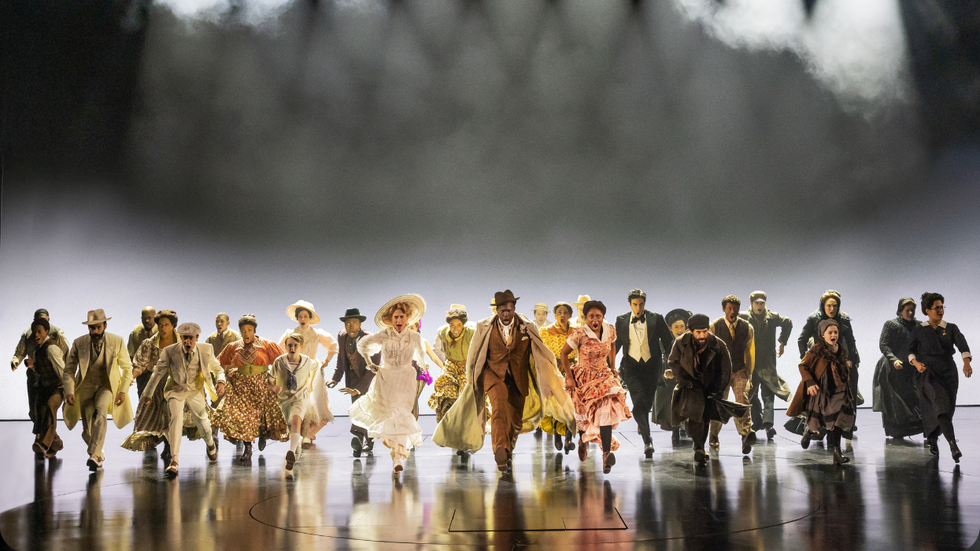
The company of "Ragtime" on Broadway
Matthew Murphy
It's impossible to watch the company of Ragtime make that formation towards the end of the opening number, singing in perfect harmony, and not get chills. The power with which each actor projects their voice across the Vivian Beaumont Theater is stupefying. I've seen the show twice, and both times, I was overcome with emotions.
It tells the story of three different classes of people in the early 20th century: upper-class white suburban residents in New Rochelle, New York; Black residents of Harlem; and Latvian/Eastern European immigrants, all chasing the American dream. Some get it, and some don't.
The show's stars are Joshua Henry (start engraving the Tony now), Nichelle Lewis (an otherworldly talent), Caissie Levy (a commanding presence), and Brandon Uranowitz (who is making a remarkable return after playing the "Little Boy" in the production's world premiere in Toronto in 1997). Every song is even more potent than the next, but the number that took my breath away was "Til We Reach that Day," led by Sarah's Friend (played by Alison Blackwell). If there's one show to watch this year (and preferably more than once), it's this one.
'Prince Faggot' raised some interesting ideas
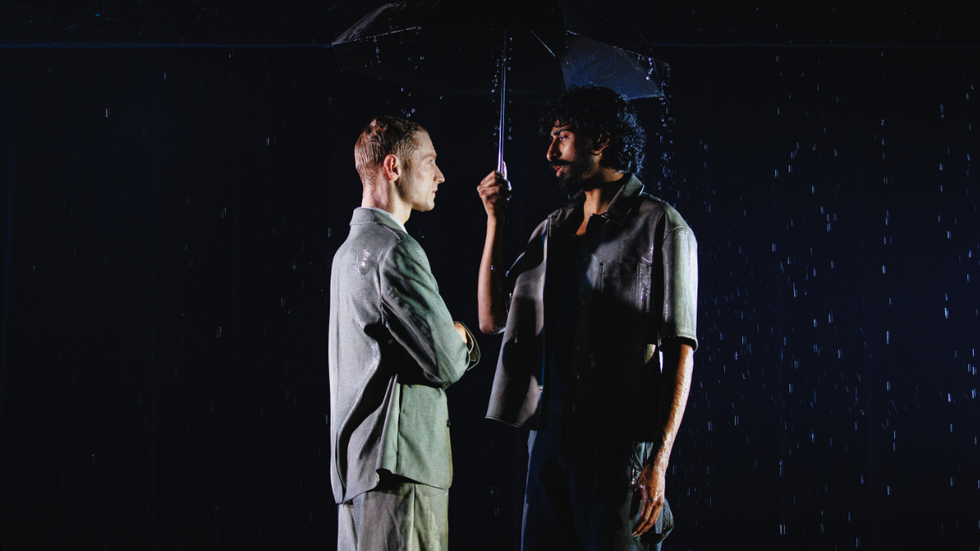
(L-R): John McCrea and Mihir Kumar in "Prince Faggot"
Marc J. Franklin.
Prince Faggot — and for those who should not be calling this show by its government name, Prince F — posits the question: What if Prince George, the heir to the British throne, turned out to be a gay man?
How would the Royal family react? How would the public react? What if he dated a South Asian man from a humble background, who plays into Prince George's fantasy of being a sub?
That's what gets investigated in this cleverly constructed play from the playwright Jordan Tannahill. The play opens with a fourth-wall break featuring all five performers, including a monologue by Mihir Kumar. Throughout the show, we're treated to monologues from the other cast members, ending on a stimulating soliloquy from N'yomi Allure Stewart. It definitely answered the questions it posed, presenting the audience with a new way to view public figures, as well as the kink community at large.
'Two Strangers (Carry a Cake Across New York)' came at the perfect time
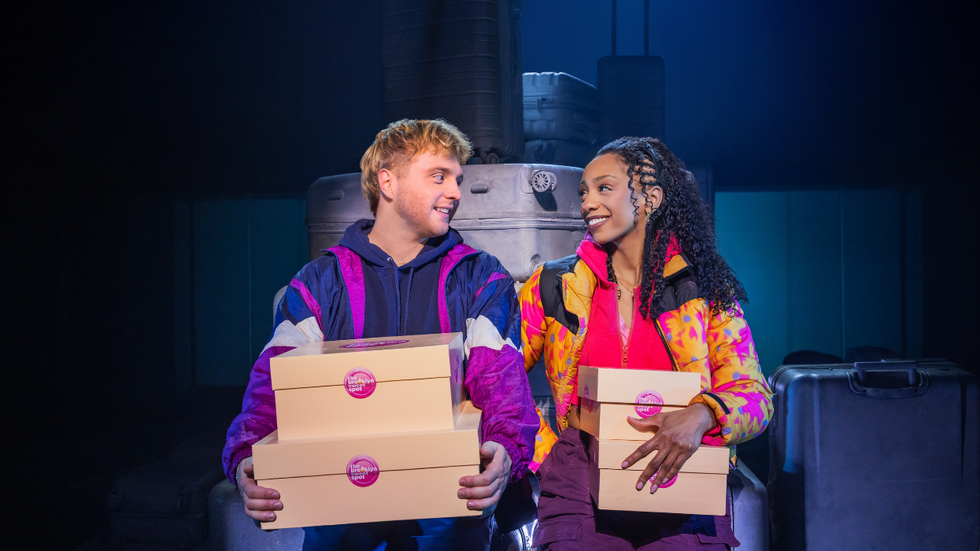
Sam Tutty and Christiani Pitts in "Two Strangers (Carry a Cake Across New York)" on Broadway.
Matthew Murphy
The title of this show, Two Strangers (Carry a Cake Across New York), is a mouthful, but you will also leave this production with your heart full. Sam Tutty and Christiani Pitts play Dougal and Robin, respectively. Dougal is visiting New York City for the first time to attend his dad's wedding, and Robin (a jaded New York native) was tasked by her sister, the bride, to make sure he gets to his hotel.
This show quickly devolves into a buddy musical comedy that Robin desperately tries to avoid, but as the pair trek across New York City together during the Christmas season, they form an unforgettable connection. Tutty, who helmed the titular role in the West End production of Dear Evan Hansen, brings the perfect boyish charm to this role and the songs. At the same time, Pitt's acting and singing expertly balance the tough exterior of a seasoned New Yorker with the girlish desire to be loved. Both of them bounce off each other's energies perfectly, and I went into the show blind but came out with a new favorite production on Broadway.
'Marjorie Prime' is the show we need in this AI age
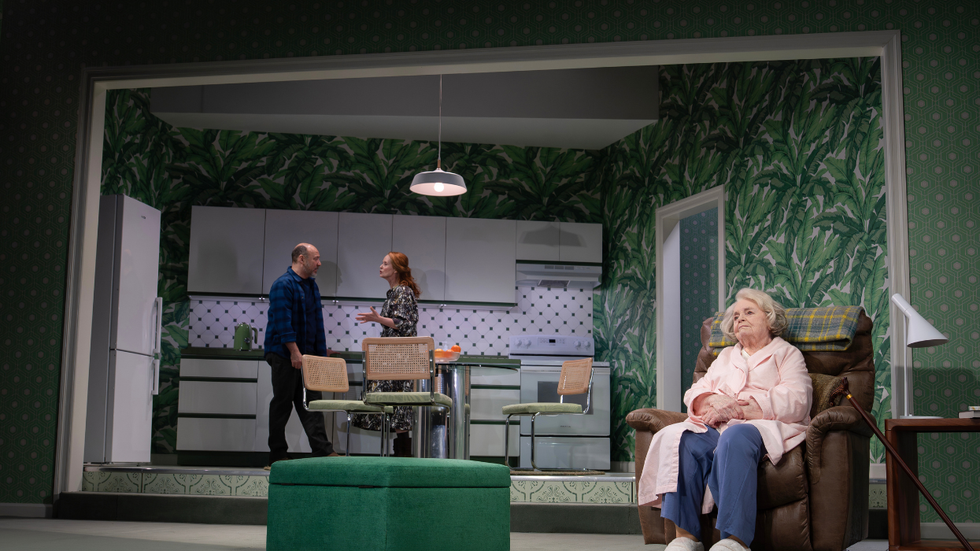
Danny Burstein, Cynthia Nixon, June Squibb in "Marjorie Prime"
Joan Marcus
I've written about my disdain for AI in the past, and this show did not change my mind (nor was it trying to). It actually vindicated my feelings on the technology that is actively destroying our brains and the environment. Marjorie Prime is a 2015 Pulitzer Prize finalist from the mind of Jordan Harrison. It tells the story of an elderly woman named Marjorie (played by June Squibb) who is finding comfort in a younger AI "Prime" version of her deceased husband Walter (Christopher Lowell), whom she talks to and helps learn more about her former lover. The show also features Cynthia Nixon as Tess, Marjorie's tightly wound daughter, and Danny Bernstein as Jon, Tess's husband.
The "Primes" are meant to serve as companions for those who have lost loved ones, and this raises an ethical question we are currently facing amid the surge in AI utilization: Is this technology helping or hurting us? The answer seems to be different for everyone. But this show and AI will change our brain chemistry forever.