

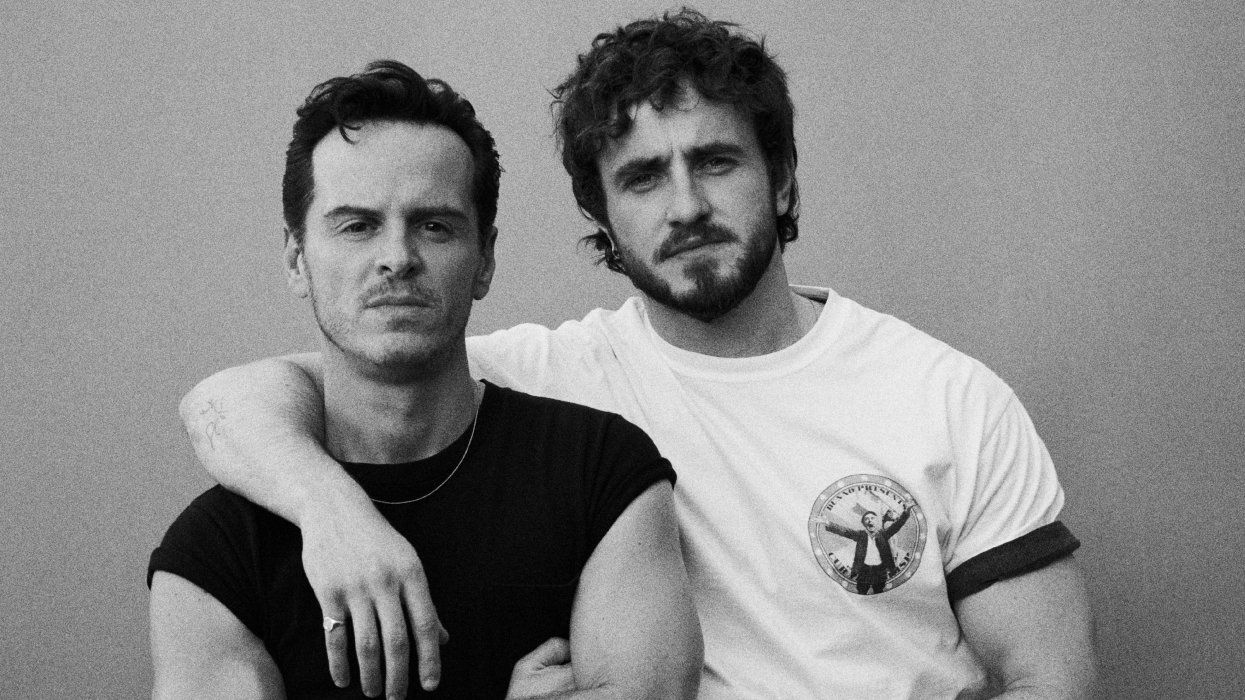
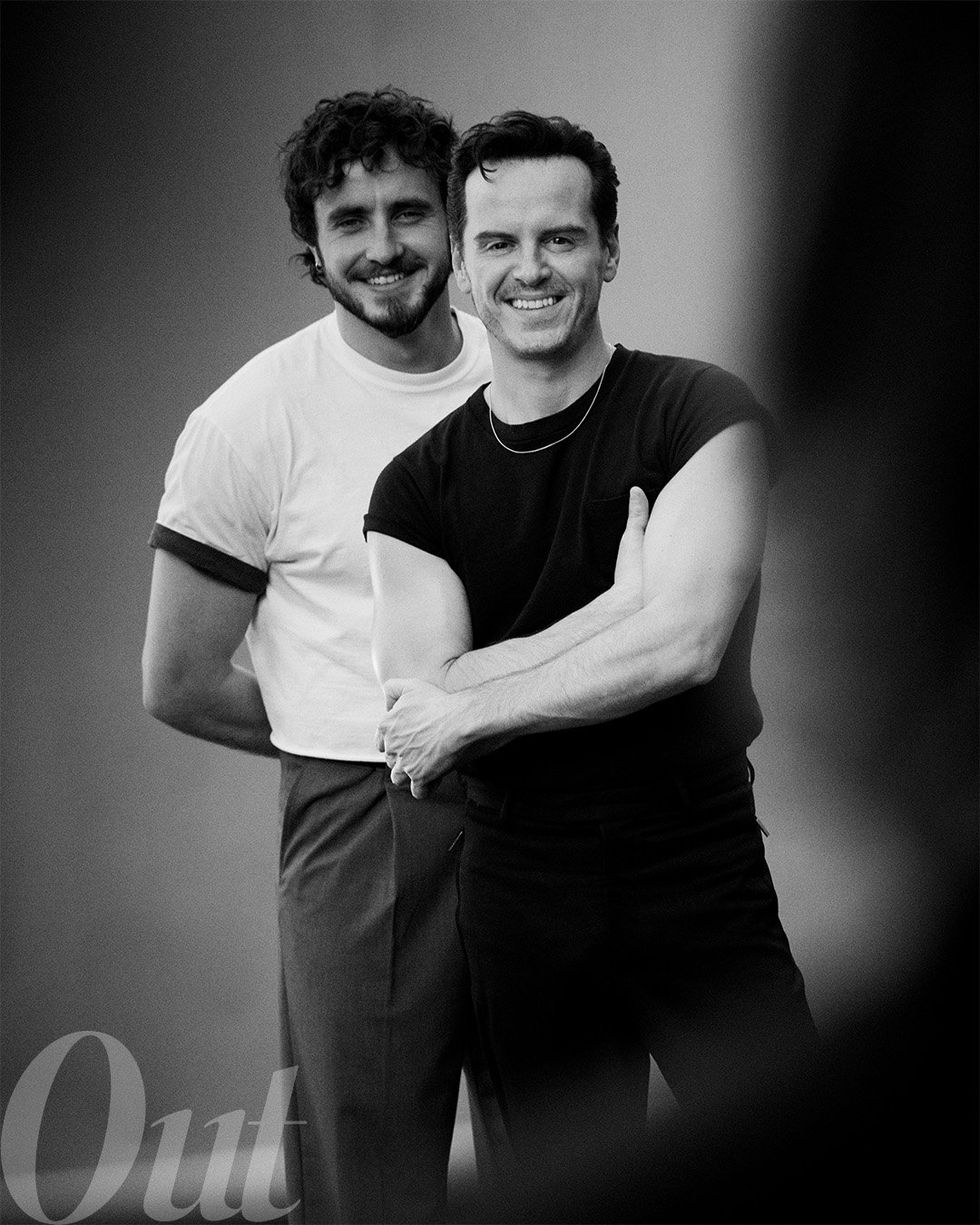
Andrew Scott and Paul Mescal are no strangers to the “internet boyfriend” phenomenon — a term used to describe a collective crush by social media users. And they are perfectly fine with being in a league that includes Timothée Chalamet, Pedro Pascal, and Oscar Isaac.
“It’s a mark of respect,” Mescal says on a warm November afternoon in Los Angeles during their Out photo shoot, shortly after the pair posed together and cracked inside jokes like, well, actual boyfriends might. The 27-year-old says that “to be admired for your work is a great privilege, and to move people, it’s an amazing thing to be able to say.” (Mescal, for his part, says he has “a massive talent crush and admiration for [Triangle of Sadness star] Harris Dickinson.”)
In recent years, the two Irish actors have gained international followings (and crushes) for their roles. Scott, an out actor, was beloved for playing James Moriarty on Sherlock before rising to critical acclaim as the “hot priest” on Phoebe Waller-Bridge’s Emmy-winning Fleabag. Mescal, who is straight, established himself as the indie It Boy in projects like Normal People and Aftersun, the latter of which garnered him an Oscar nomination last year.
It was only a matter of time before these stars collided, and that clash resulted in some of this season’s most alluring and haunting performances in All of Us Strangers. It’s not just the internet that’s smitten; the film has been a darling of awards season, with Oscar buzz surrounding the leads as well as Andrew Haigh for his direction and screenplay.
Jason Hetherington
Based on Japanese author Taichi Yamada’s 1987 novel, Strangers, the newest project from Haigh — beloved for gay productions like Weekend and Looking — is part ghost story, part family drama, and all steamy romance. It follows a lonely London screenwriter named Adam (Scott) who meets and falls in love with his neighbor Harry (Mescal) while reconnecting with his parents (Jamie Bell and Claire Foy) in the suburban home he used to live in 30 years prior. The catch? Adam’s parents have been dead for quite some time.
While the soul of the supernatural AOUS may be Adam’s journey of reconciling with these ghosts after years of solitude, the beating heart of the film is his blossoming relationship with Harry, which will get many fans’ own hearts racing.
Awash in romantic chemistry, Adam and Harry’s dynamic reads like a dream come true to many urban-dwelling queer men who likewise yearn for connection. A sexy, mysterious neighbor comes knocking at the door. You may play coy at first, but you slowly let him into a routine of passionate sex, all-night dancing, quiet afternoons spent reading, and general domestic bliss. Mescal and Scott fall into this rhythm so easily that it’s easy to forget that one of the actors is straight. But Mescal is no stranger to queer culture.
“A lot of the things that Harry’s experiencing, I knew and understood,” Mescal shares. “The party culture side to Harry is like a tool that he uses to escape, but in terms of queer culture and in terms of learning…I have a proximity to that in my own life, so it didn’t feel like that part of it wasn’t necessarily eye-opening or anything to me personally.”
“Our job as actors is to build, to service this extraordinary, amazing relationship that Andrew [Haigh] created, and it was really, really easy for us to do that,” Scott says of their chemistry. “I think both of us are really interested in playing romantic love. I think it’s something that we both really take pleasure in acting, so it was very, very, very easy for both of us.”

Jason Hetherington
The lovers' bond wasn't the only one that captivated AOUS audiences. The film’s fantastical way of bringing Adam’s Mum and Dad back to life, if only for a few brief moments at a time, is cathartic for anyone seeking another chance to reconnect. These parents aren’t perfect, and their reactions to Adam’s sexuality reflect the attitudes people had of queer folks during the time they passed in the ’80s. But Bell and Foy’s performances give life to a realistic and loving family dynamic.
“For the queer experience, a lot of the time it’s not outward rejection nor is it all-embracing acceptance,” Scott says of his moving coming-out scene. “For a lot of people, it’s a sort of thorny time where your parents or members of your family ask you questions that are clumsy and sometimes unwittingly cruel and upsetting. There has to be a period of adjustment, and I think that’s a more common experience for people. And I think it’s really important that that’s represented as well, that some of these questions that our parents ask us, they may be out of fear, but they’re also out of love.”
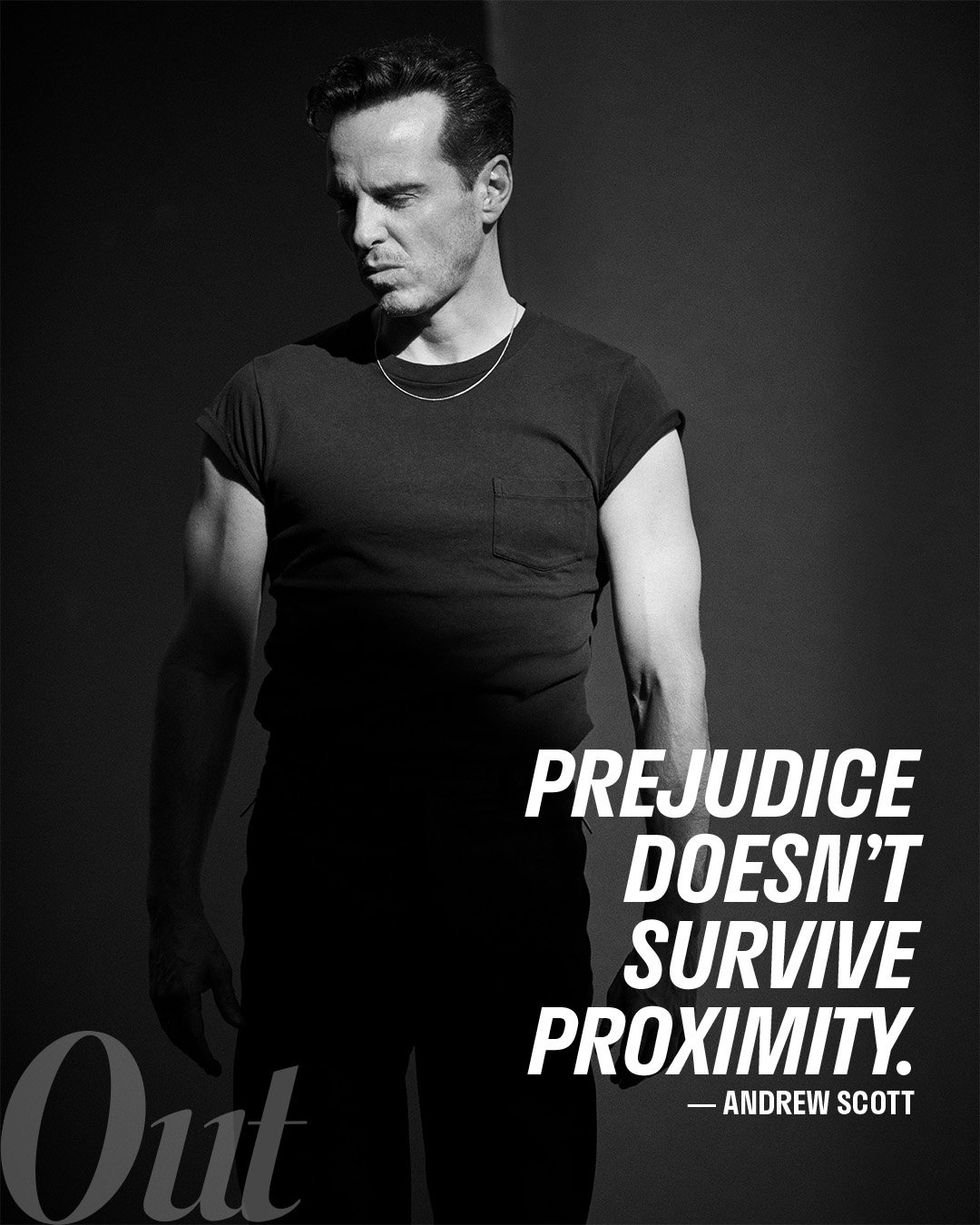
“Looking at the 1980s, this is why our media is very important,” he continues. “I remember when we were researching Pride and looking at the way gay people were spoken about in the press, and it was absolutely shocking. They could literally call people perverts, and it was just fear-mongering and really, really grotesque. So of course, if somebody’s going to come out in the 1980s to their parents, the parents are going to be, almost wisely, a little bit cautious because that’s what they’ve been fed by the media. But once the media stops feeding them that stuff, then, as I think is beginning to happen now, we go, OK, it’s an option if my son or daughter or child is gay. That’s an option because prejudice doesn’t survive proximity.”
Jason Hetherington
For Haigh, it was important to revive these old ghosts of prejudice for modern-day viewers. “There’s no point pretending that everything is always fantastic and great and we’re all happy all the time, so I think it’s important to look at some of the issues, and this film, for me, was very much about a certain generation of queer person, especially one who grew up in the ’80s, and how they came into their sexuality,” Haigh said at a special L.A. screening in December. “That hasn’t quite been a story that I’ve seen too much about in terms of how that past has affected a lot of us in the present. And that was what was really interesting to me.”
“We could all understand that we might want to go back in time and recalibrate our relationships with our parents,” Haigh continued. “Especially when you’re [a] queer person, they’re not always easy. There’s a lot of things that have been unsaid. For me, [All of Us Strangers] is so much about how easy it is as a queer person to drift away from your family. That’s one of the saddest things — I think sometimes about when you are different in the world, you can feel like you are alone in that difference. This was really a chance of togetherness, again, within the family.”
Jason Hetherington
Of course, it wouldn’t be an Andrew Haigh project with a fairy-tale ending. Though Adam was able to reach a loving resolution in his metaphysical reunions with Mum and Dad, the new family he finds in his boyfriend Harry — one that audiences are led to believe can last the test of time (even Mum is on board) — isn’t quite what it seems. Harry is also going through his own struggles with loneliness, particularly estrangement from his biological family, leading him to knock on Adam’s door in the first place.
“I think there’s great tragedy in not seeing somebody sad but seeing somebody fight against being sad or being perceived to be upset or lonely. And I think Harry, for the most part, encounters people who facilitate that,” Mescal says. “He meets Adam, who doesn’t facilitate that, who doesn’t allow him to simply go, ‘I’m all good, let’s go take ketamine at the club. I’m all here. I’m happy.’ I mean, they do that as well. And that’s why I think the film is so brilliant. It balances it out in that regard.”
“I wouldn’t have played this part if I was just a representation of a sad gay man or the happy party,” Mescal continues. “It’s the fact that both of those things exist beside each other.”

Jason Hetherington
Yet Adam and Harry’s story can impart many lessons to audiences, the most important being that everyone deserves love during their lifetime — and beyond.
“I think Harry is both serving as a warning and a celebration of what it is to be loved,” Mescal says. “He serves as a warning to parents of the damage you can do with the casual cruelty that you present to a child if you’re not careful with the information that you give them. But also, even when you do that, if you receive true love from somebody, it can save you.”
“The whole point of art is to increase our empathy, that we’re the same as people who don’t look or act or fuck like we do,” adds Scott, who was overjoyed to learn from some AOUS audience members that they hugged their kids, LGBTQ+ and otherwise, after screening the film. “That’s the thing that I really would want to hold on to.”
This digital cover story is also part of the Out January/February print issue, which hits newsstands on February 6. Support queer media and subscribe — or download the issue through Amazon, Kindle, Nook, or Apple News on January 23.
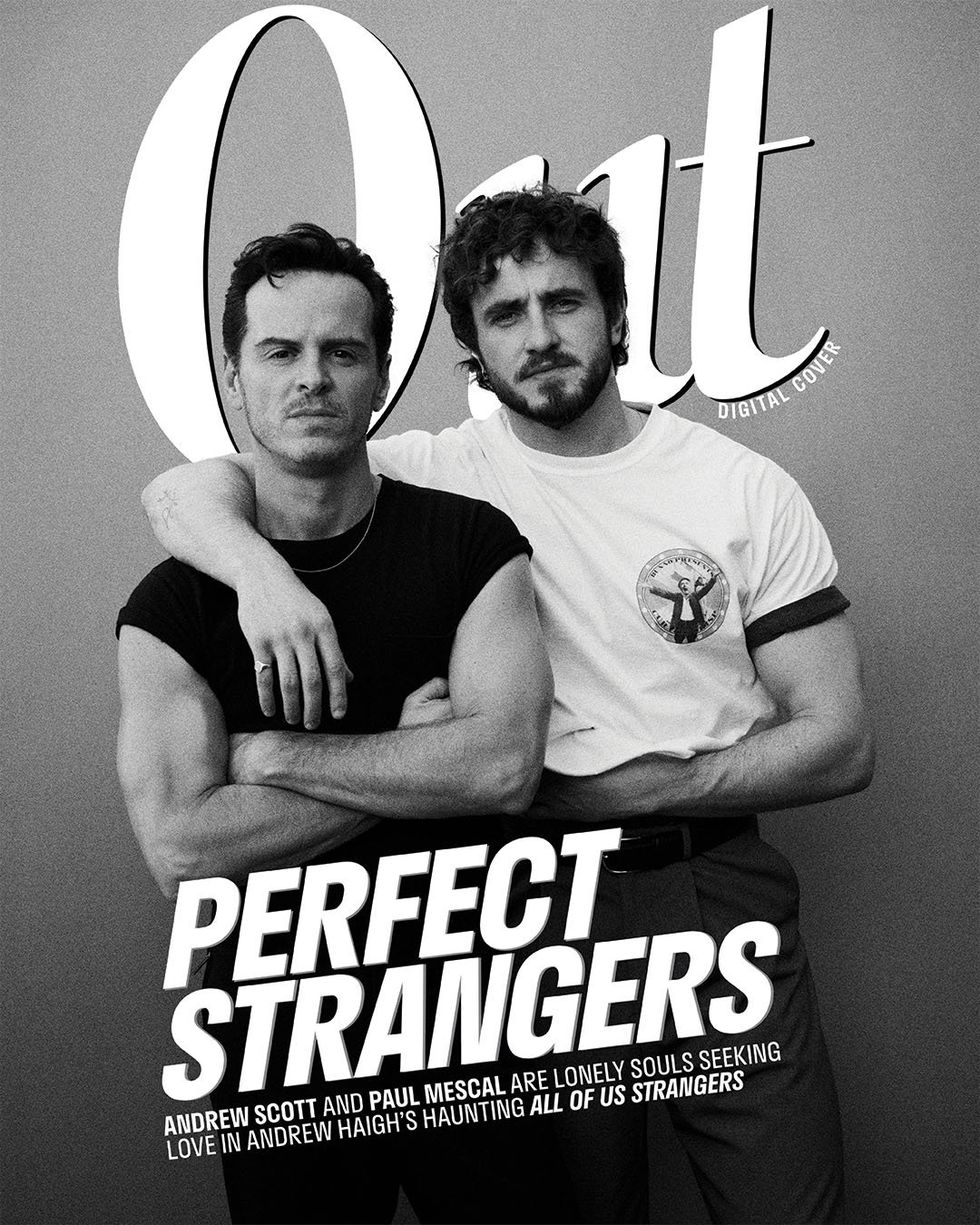
Image Credits
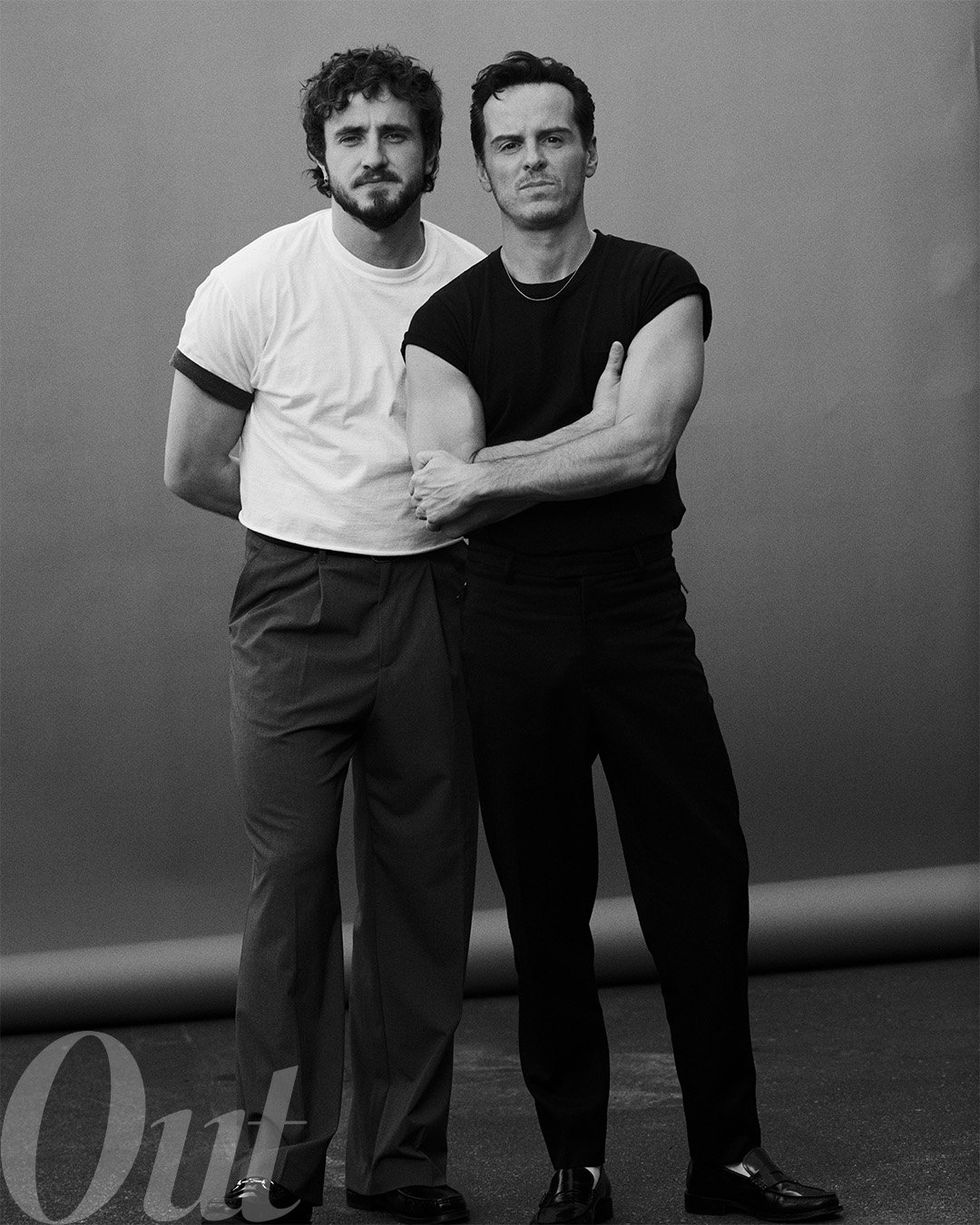
Andrew Scott wears Armani pants and a vintage Levi's t-shirt.
Paul Mescal wears Weekday pants, a vintage Dunno t-shirt, a vintage belt, and Gucci loafers.
Photographer: Jason Hetherington (@jasonhetheringtonstudio)
Photographer’s assistant: Liv Wagner (@livrw_)
Digital tech: Alfie Bungay (@alfie_bungay)
Cover design: Mariusz Walus (@w_mariusz__)
Andrew Scott's stylist: Warren Alfie Baker (@warrenalfiebaker)
Andrew Scott's grooming: KC Fee (@kcfee)
Paul Mescal's stylist: Felicity Kay (@felicitykay)
Paul Mescal's grooming: Josh Knight (@knightjosh)
Location: Line 204 Studios (@line204)
All of Us Strangers is now playing in select theaters and will expand nationwide on January 19.