

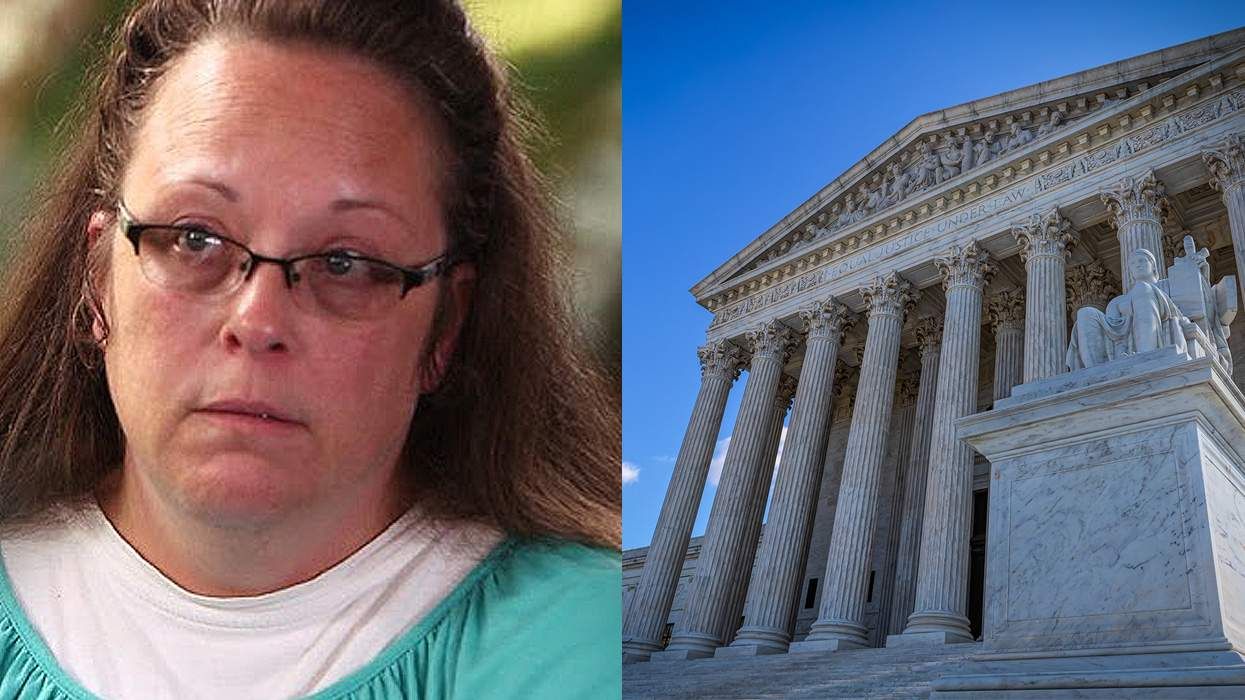

As the U.S. Supreme Court prepares to decide whether to hear former Kentucky clerk Kim Davis’s appeal, LGBTQ+ advocates are weighing what the case could mean for marriage equality a decade after Obergefell v. Hodges. Here’s what you need to know.
Keep up with the latest in LGBTQ+ news and politics. Sign up for The Advocate’s email newsletter.
Who is Kim Davis, and why is her name back before the Supreme Court?
In 2015, after the Supreme Court’s Obergefell decision legalized same-sex marriage nationwide, Davis, then the clerk of Rowan County, refused to issue marriage licenses to same-sex couples, citing her religious beliefs. She not only denied licenses herself but also ordered her staff not to issue them.
Related: Kim Davis is back in court because she doesn’t want to pay a gay couple
Several couples sued Davis, arguing she had violated their constitutional rights. A jury ultimately awarded emotional distress damages to two of those couples. Davis appealed, claiming she was immune from personal liability as a government official. The Sixth Circuit Court of Appeals rejected her arguments.
Now, Davis has petitioned the Supreme Court to review the ruling. Her lawyers have gone further, asking the Court to reconsider Obergefell itself.
What is the Supreme Court deciding right now?
The justices are not yet hearing arguments. On November 7, they will meet privately to decide whether to grant certiorari, meaning whether to take up Davis’s case at all.
GLAD Law legal director Josh Rovenger, whose organization was part of the team that argued Obergefell, told The Advocate that the case centers on “a narrow question” about emotional-distress damages and qualified immunity, not on the underlying right to marry.
Related: Kim Davis is trying to get marriage equality overturned by the Supreme Court
“It would really be anomalous for the Court to take a case with such a narrow fact pattern and use it to revisit Obergefell,” Rovenger said.
Even if the Court were to accept the case, he explained, it could choose to review only those limited issues, not the broader constitutional question.
Could this case overturn marriage equality?
While anxiety is understandable, legal experts say it is unlikely. “Attorneys who want to overturn Obergefell are trying to shoehorn that into a very narrow case,” Rovenger said.
He emphasized that even in the current political climate, the court has “extraordinary discretion” in deciding which cases to hear and how broadly to interpret them. “This case would be a strange vehicle for the Court to use to address Obergefell,” he said.
Related: Southern Baptists urge Supreme Court to overturn marriage equality
Rovenger also noted that when the court has reversed precedent in the past, it has often pointed to “reliance interests,” how people structure their lives around existing rights. “When we talk about marriage,” he said, “there are obvious reliance interests that apply: families, children, benefits, and legal protections built on the expectation that marriage equality is settled law.”
What about the Respect for Marriage Act — doesn’t that protect marriages?
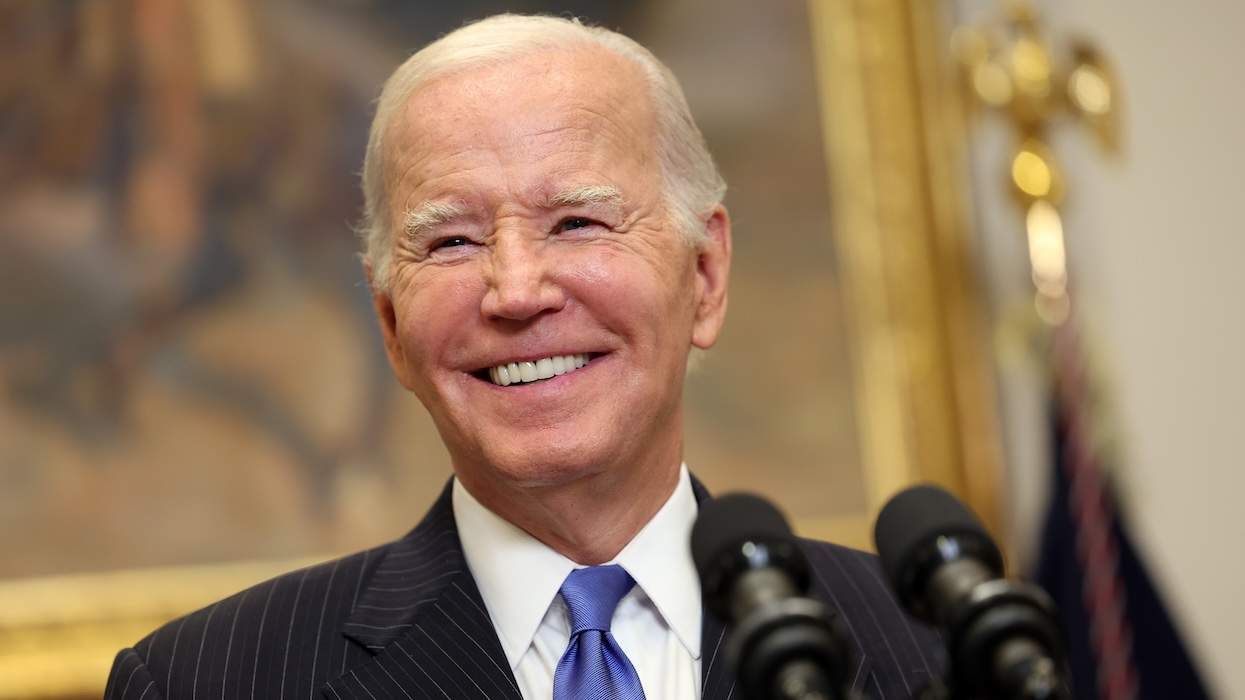
The 2022 Respect for Marriage Act, signed into law by President Joe Biden, ensures that same-sex marriages performed in one state are recognized by all other states and by the federal government. But the law doesn’t require every state to issue marriage licenses if Obergefell were overturned.
Related: Kim Davis is petitioning the Supreme Court to overturn marriage equality
In that scenario, states with bans still on the books could again deny licenses to same-sex couples. Rovenger told The Advocate that such a patchwork outcome would mark a sharp step backward. “A federal recognition of marriages is different from an overarching decision that says marriage equality is the law of the land,” he said.
Why are people still worried?
For Jim Obergefell, whose name is synonymous with the 2015 ruling, the concern is both legal and moral. He told The Advocate that he’s “disgusted” by what he sees as a distortion of religious liberty. “This modern version of religious freedom — this belief that one’s personal religion trumps everything else — is a twisting and perverting of what our founders intended,” he said.
Obergefell warned that if Obergefell were overturned, some states would quickly stop issuing licenses to same-sex couples. “Ohio still has a Defense of Marriage Act on the books,” he said. “If Obergefell is overturned, Ohio can immediately say, ‘no more marriage licenses for queer couples.’”
Related: Amy Coney Barrett, conservative panelists discuss overturning marriage equality
He said that the Court’s reversal of Roe v. Wade in Dobbs v. Jackson Women’s Health Organization proved how fragile precedent can be. “If they were willing to overturn Roe after saying it was settled law,” Obergefell said, “why on earth should I believe anything else they say?”
What happens next?
If the court declines to hear the case, the lower-court rulings against Davis stand, and marriage equality remains intact. If it grants review, the case will proceed to briefing and oral arguments, with a decision likely by the end of the Supreme Court’s term next summer.
Rovenger said advocates are watching but not panicking. “We’re prepared for all possibilities,” he said. “Even in a hypothetical world where the Court accepted the Obergefell question, which we don’t think is likely, we’ll meet that moment.”