

When Dr. Bobbie Glass went into so-called conversion therapy, she found it "did not do anything to get rid of my transness,” she says in a new episode of the Trevor Project’s Sharing Space series. “It made me feel super ashamed. It made me depressed. It sent me into clinical depression and years of antidepressants and suicidality.”
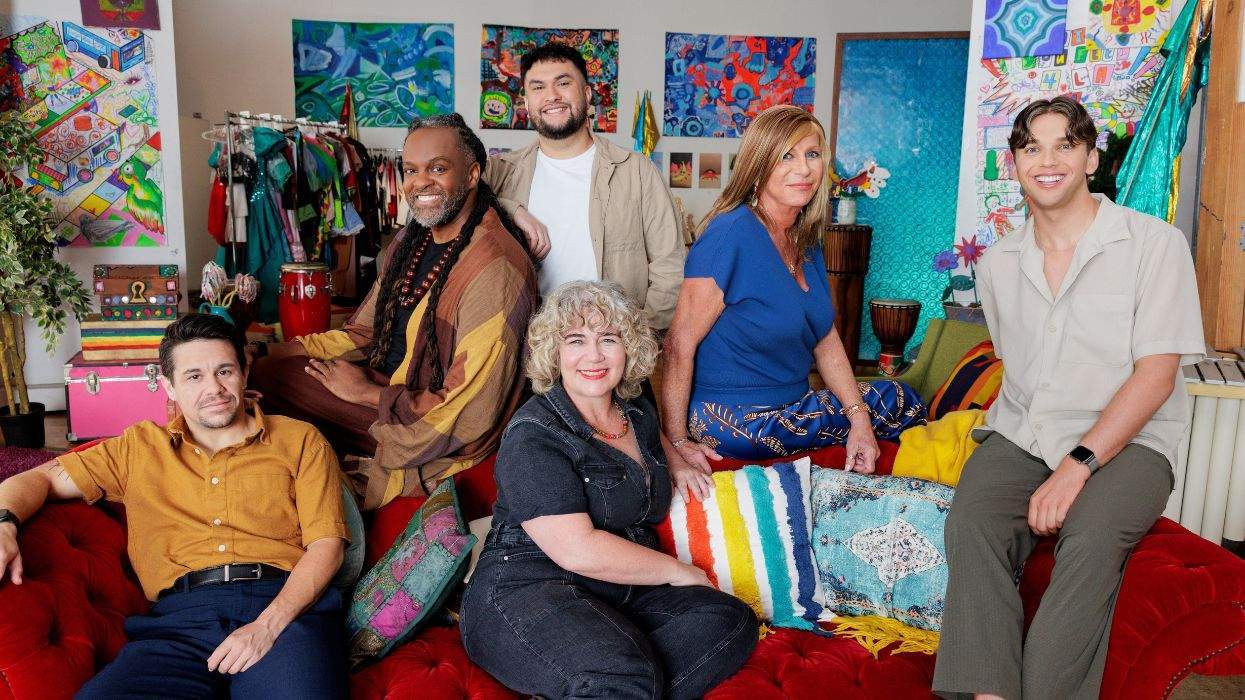
Glass is one of six conversion therapy survivors who share their stories in the episode, released Tuesday. Sharing Space is a documentary-style roundtable series that features conversations with and about LGBTQ+ young people, moderated by supportive adults and allies.
Related: Daniel Radcliffe Chats With Trans, Nonbinary Youth in Trevor Project Series
Andrew, a young gay man from Missouri, realized partway through his conversion therapy that it was making him repress his authentic self, but he stuck with it to maintain his relationship with his parents. Later, after attending a conservative Christian college, he swallowed a bottle of Advil. His mother asked if he did it because he had a severe headache, but he told her he wanted to end his life because he was afraid he’d lose his parents’ love.
His mother said, “We’ll always love you.” He then asked, “When I marry a man, will you come to my wedding?” She said she and his father wouldn’t, because that was sin, “and we do not support sin.” He then cut off his parents, but the relationship is evolving, he says, while he has accepted his authentic self.
Elena Joy, from Arizona, drives home the importance of self-acceptance. “I realized it was better for my kids to have a gay mom than a dead mom,” she says.
- YouTube www.youtube.com
Conversion therapy is not like other kinds of therapy, says Darren, a gay man from Illinois. “Other kinds of therapy are centered on what is the best outcome for the individual. … But in conversion therapy, the highest priority is not the person; it’s the therapist’s view of God, higher power, what’s right in the world,” he says.
Lexa, a therapist who moderated the discussion, agrees that conversion therapy is a misnomer. “This a fairly dangerous and traumatic practice that people are often forced into,” she says.
Glass notes that she sometimes still struggles to unlearn the lesson that people like her don't deserve to be happy, but she is "living this life that is just full of abundance. And it's like, oh, my God, I'm going to be happier than anybody I know."
The episode comes as the U.S. Supreme Court is considering whether states can ban the use of conversion therapy on minors. The court heard oral arguments in October in Chiles v. Salazar, a challenge to Colorado’s law, which prohibits licensed professionals from claiming to change or attempting to change a minor’s sexual orientation or gender identity. It does not apply to clergy or religious counselors, and it does not restrict supportive therapy that helps young people explore their identities.
The law has been upheld by lower courts, but the Supreme Court, which has a conservative majority, appeared sympathetic to the challenger, Kaley Chiles, a counselor who says it violates her free speech rights. If the court rules in her favor, the bans would fall in all 25 states that have enacted them. The ruling will likely be released in the spring or summer.
Conversion therapy is associated with an extensive list of negative mental health outcomes, according to the Trevor Project, an organization that focuses on preventing suicide among LGBTQ+ youth. Young LGBTQ+ people who experienced conversion therapy were more than twice as likely to attempt suicide and more than 2.5 times as likely to report multiple suicide attempts in the past year than those who had not been subjected to it.
The Trevor Project's most recent study found that conversion therapy is on the rise: After one year of following a cohort of nearly 1,700 LGBTQ+ youth, reports of being threatened with conversion therapy rose from 11 percent to 22 percent, and exposure to these practices climbed from 9 percent to 15 percent.
“The Trevor Project has been a leading voice in the fight to end conversion therapy in the United States for years. We know that sadly, right now, these dangerous practices are making a resurgence,” Nolan Scott, the organization’s senior director of marketing and content, said in a press release. “Too often, political debates and news stories about this topic fail to include the LGBTQ+ people who have been subjected to conversion therapy. Our goal with this episode is to show the real people, and share the real stories, behind the headlines and government actions — and illustrate the devastating toll that conversion therapy takes on young people and their families.”
If you or someone you know needs mental health resources and support, please call, text, or chat with the 988 Suicide & Crisis Lifeline or visit 988lifeline.org for 24/7 access to free and confidential services. Trans Lifeline, designed for transgender or gender-nonconforming people, can be reached at (877) 565-8860. The lifeline also provides resources to help with other crises, such as domestic violence situations. The Trevor Project Lifeline, for LGBTQ+ youth (ages 24 and younger), can be reached at (866) 488-7386. Users can also access chat services at TheTrevorProject.org/Help or text START to 678678.