

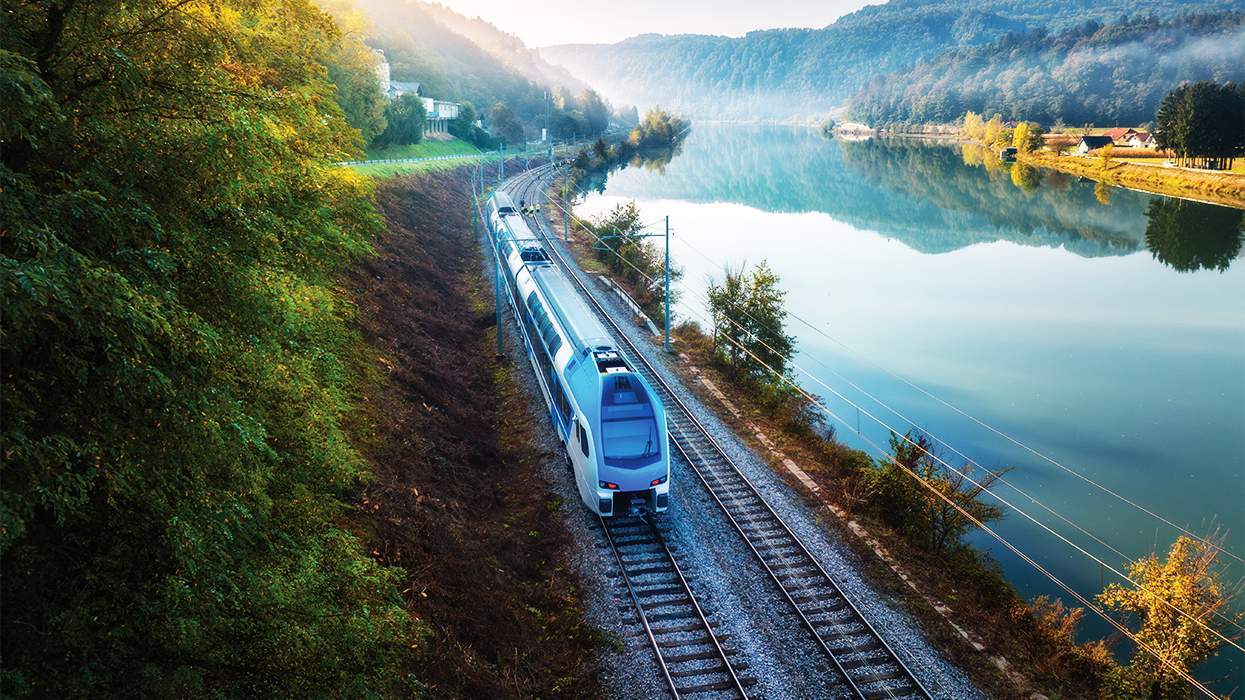
In 2018, RuPaul famously posted what he thought was the transgender flag to Twitter but was, in fact, the 1953 Ellsworth Kelly painting Train Landscape. The Drag Race host was roasted for the error — which was likely the result of a misspelling on Google — but as a trans woman who’s obsessed with trains, I didn’t mind too much. I feel equally represented by either ensign.
Much like Bernie Wagenblast, the trans woman who serves as the voice of multiple New York City Subway lines, my love of trains started early. When Wagenblast, now 69, was growing up in Cranford, New Jersey, she and her grandmother would take multi-leg trips to visit family that required buses and cab rides — but it was the train portion that was special.
“It’s a different experience looking out the window of a train than it is looking out the window of a car or even a bus,” she says. “With trains, you’re seeing people’s backyards; you’re not seeing the front of the house. You’re seeing sidings where freight cars used to go. You’re almost, in a sense, peeking behind the scenes.”
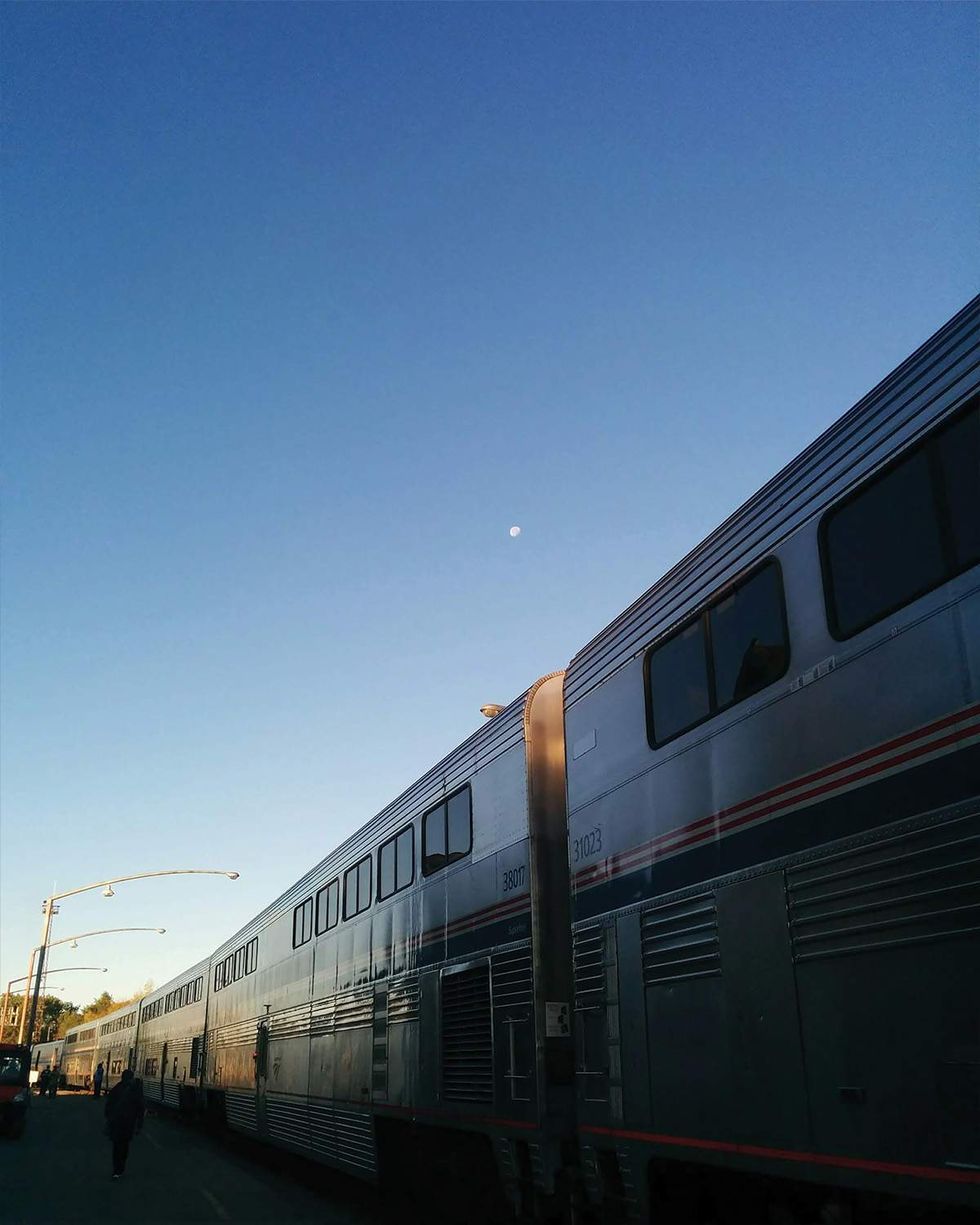 An Amtrak Superlinercourtesy
Of course, that sense of furtive discovery is appealing to more than just trans people. But it’s undeniable that our community has a disproportionate number of train lovers, so much so that it has become a widespread internet meme. Many of those posts, predictably, use the portmanteau “trainsgender.”
My own love of trains began with childhood monorail rides in Disneyland and continued with New Jersey Transit treks into Manhattan as a teenager. Now that I’m an adult with some disposable income, I try to take a long-distance Amtrak route, like the Empire Builder between Seattle and Chicago, at least once a year. To me, the sleeper car is not simply a slow way of getting somewhere, but a destination unto itself. Being rocked to sleep in the Cascade Mountains and waking up to the smell of French toast in Glacier National Park is one of the finest experiences America has to offer.
For Chicago-based artist Leander Nora Sharp, their lifelong affection for train travel “started from necessity” as the most expedient way to get from the city to their college in rural Ohio. “I almost inevitably became incredibly fond of it,” they say. They took the Empire Builder “just so many times” in their early 20s, and started ruminating on the connection between transness and train travel out on the Northern Plains.
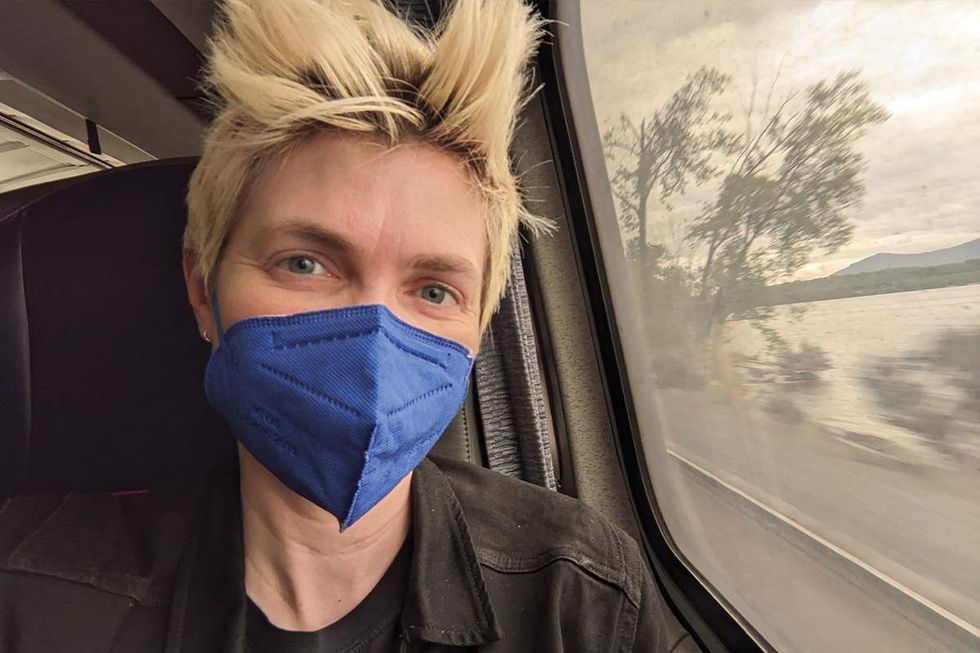 Leander Nora Sharp on a traincourtesy
“I subconsciously started to discover that it was an experience that made me feel whole or positive in a way that was nourishing,” they say. “It wasn’t just neutral or incidental. It was like, ‘No, this feels right in my bones,’ in a way that is sort of hilarious when you think about how we use that language around identity-related stuff.”
Sharp has since become something of an evangelist for the train. In 2019, they held a competition, modeled after ABC’s The Bachelor, to auction off the free companion ride that came as a perk of their Amtrak Guest Rewards credit card. The lucky winner of The Amtraklor, as the artist cleverly dubbed it, got to experience the crown jewel of the U.S. long-distance routes: the California Zephyr, which travels southwest from Chicago through the Rocky Mountains all the way to the Bay Area. Sharp’s motto? “You get to go for free, but you gotta go with me.” (Unlike The Bachelor, the trip was totally platonic.)
One might think that trans people would be afraid to spend hours on end locked in a long tube with a bunch of strangers — especially when the dining car often requires communal seating. But I’ve never once felt uncomfortable in those settings — and Sharp, with all their hours logged, can only recall a few bad apples in the bunch.
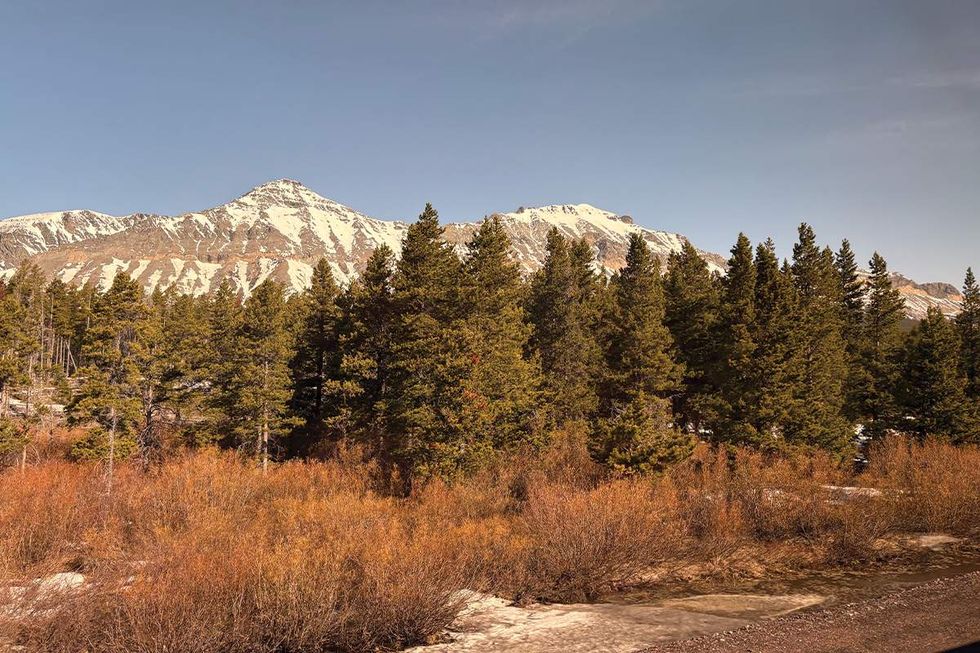 Views from the Empire BuilderSamantha Allen
“Train culture is a little bit of a come one, come all for the weirdos of the world,” they say — a mélange, as they describe it, of Mennonite and Amish people who take the train for religious reasons, upper-crusters with aviophobia, riders from rural areas who aren’t served by airports, and “people with unexpected transitions in their lives.”
“And then, because you’re on there for so long, you have to live and let live a little bit more,” Sharp explains. “There’s a feeling of, ‘We’re all gonna settle in and create an accepting subculture here, barring, like, extremely annoying behavior.’”
There are also practical benefits to the train that are especially appealing to trans travelers, like the relative laxness around having to display identity documents on board. Not having to go through a TSA screening process beforehand is another blessing. Wagenblast, who came out in 2023, has never run into problems at the airport. Nonetheless, “there’s still a level of anxiety,” she says — and that completely goes away when you book a train ticket instead. “The opportunity to take the train to me outweighs the disadvantages of the time that it takes,” she says.
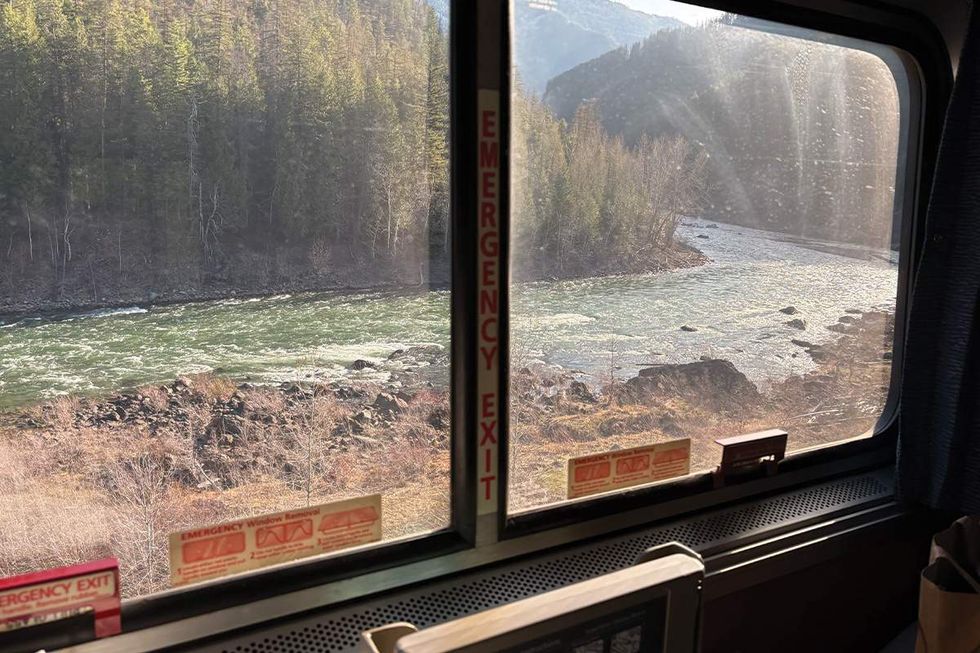 Views from the Empire BuilderSamantha Allen
One particular subset of the trans community often reports an especially strong connection with Amtrak: autistic people who have a special interest in trains. When asked about the incidence of autism within the trans community, queer clinician Rebecca Minor LICSW says, “It’s high! Research consistently shows an overlap between autism and gender diversity.” The percentages vary depending on which survey you consult, but one 2020 study in the academic journal Nature Communications found that nearly a quarter of gender-diverse people in a large sample were autistic.
Because opponents of trans rights continue to wield autism diagnoses as justification for denying access to gender-affirming care, I have long been reluctant to explore my own possible neurodivergence. But when I realized that my fascination with trains mirrored the way that many openly autistic people felt about them, I started to ask questions.
Finn Gratton, a psychotherapist and author of the book Supporting Transgender Autistic Youth and Adults, says that many people with forms of autism that impact their executive function or motor skills enjoy the stress-free predictability of being taken to one’s destination that a train can provide. But, in their view, Amtrak is also prime to become any autistic person’s special interest. “It’s a system,” Gratton emphasizes. “So are road systems, but train systems have all these connection points. Road systems do but they’re much more diffuse. It’s a way of thinking of all the entries and exits and how you could get from here to there.”
 Views from the Empire BuilderSamantha Allen
I’m still on my own journey, pun intended, of understanding how my brain works, but I am comforted by Minor’s affirming expertise. “Autism does not make someone less capable of knowing who they are,” she says. “The fact that autism and gender diversity overlap should lead us toward more tailored, neurodiversity-informed, gender-affirming care, not toward invalidation or gatekeeping.” In the meantime, riding the rails will continue to resonate with me on an almost spiritual level that feels like it has everything to do with being trans.
Sharp compares being a closeted trans person to the increasingly inhumane experience of commercial air travel, which involves a lot of “grinning and bearing it, or even white-knuckling it.” When the plane hits turbulence, you “grip the fucking armrests and try to pretend everything’s OK,” they say. It’s a state of constant anxiety I remember all too well. But when you get on the train, you can slow down. You can stretch. You can breathe.
“There is something about the train that I find to be a very embodied experience — or an experience that invites you into embodiment and presence and openness,” Sharp says.
The only thing more open is the endless country ahead.
This article is part of OUT’s July-Aug 2026 print issue, on newsstands July 7. Support queer media and subscribe — or download the issue now through Apple News+, Zinio, Nook, or PressReader.
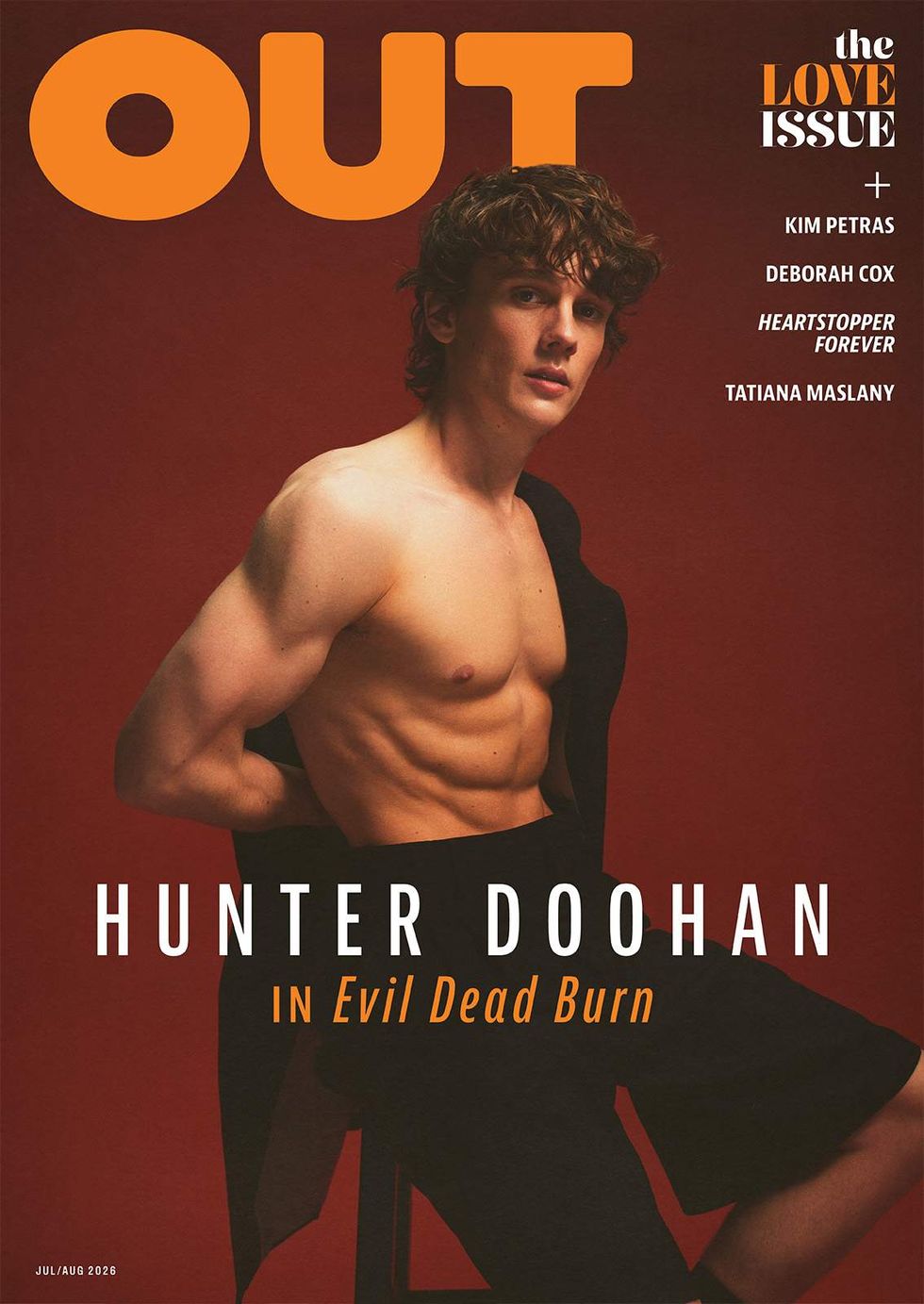 Hunter Doohan on the cover Out's July/August 2026 print issue