




Even though hemorrhoids are incredibly common — about one in 20 Americans have one — no one really wants to talk about them. Anal health should be something that we can speak about openly, especially with sexual partners, but people often feel too embarrassed to bring it up at a doctor’s appointment.
We already taught you what to do if your love of bottoming gave you anal fissures, but what about hemorrhoids? They can be just as hard to treat as anal fissures, but there are things you can do to heal and prevent new ones from forming.
So if you hooked up with someone who is very well endowed, went a little too far with your fiber intake and ended up straining to go to the bathroom, or thought spit was a good substitute for lube and ended up with a sore behind, there are plenty of steps you can take to heal your hemorrhoids and get back to bottoming.
What are hemorrhoids? What are the symptoms?
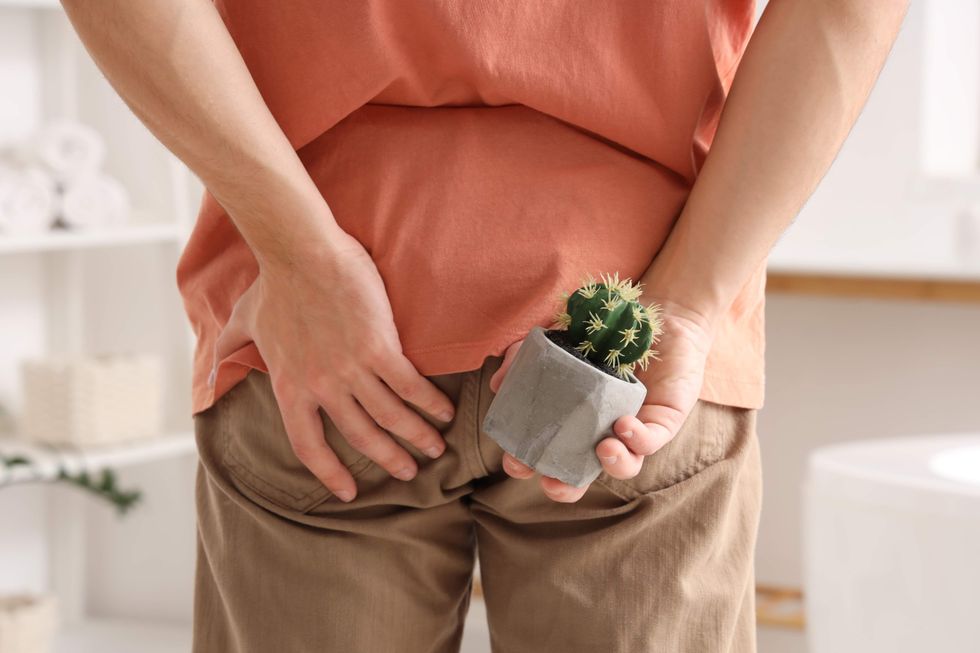
While anal fissures are tears in the lining of the anal canal, hemorrhoids are swollen or enlarged veins in the anus or lower rectum that can be either internal or external.
“Essentially, they’re the result of increased pressure in the area, whether from straining during bowel movements, pregnancy, or prolonged sitting, and can even develop from anal sex, which most people don’t know,” says Dr. Evan Goldstein, a leading anal health expert in the United States who founded Future Method, a sexual wellness brand dedicated to revolutionizing anal sex prep.
Hemorrhoids are both common and manageable, and you’ll know you have one if you’re experiencing “bright red blood on the toilet paper or in the bowl, itching or irritation around the anus, pain or tenderness, swelling, and in some cases, a firm, sensitive lump near the opening of the anus,” Goldstein says.
Aesthetic Nurse Practitioner Chris Bustamante, who is also the owner and CEO of Lushful Aesthetics, a popular men’s clinic that provides services like HoleTox to make bottoming easier, tells Out that there is one symptom in particular that you’ll want to have checked out by a doctor right away since it can be a sign of something more serious going on.
“Rectal bleeding should not automatically be assumed to be hemorrhoids,” he says. “Fissures, infections, inflammation, polyps, and colorectal cancer can also cause bleeding, so persistent, recurrent, or heavy bleeding should be medically evaluated."
Are they common for gay men who like to bottom?
Brent Hofacker/Shutterstock
Hemorrhoids are mostly caused by pregnancy, constipation, straining, sitting on the toilet for prolonged periods of time — this is why your doctor tells you not to scroll on your phone while you’re in the bathroom — and frequent diarrhea. But anal sex can play a role as well. Bustamante says that while bottoming doesn’t directly cause hemorrhoids, “receptive anal intercourse can irritate an existing hemorrhoid and make pain, swelling, or bleeding more noticeable.”
While the act of bottoming itself is less likely to cause hemorrhoids than anal fissures, Goldstein says that “hemorrhoids can happen when someone douches too much or too aggressively, when they don’t use enough lube or the right lube, or when they haven’t dilated enough through training exercises.”
This is why Goldstein takes anal health so seriously, and has developed treatments and products to make bottoming less painful and less likely to cause injury. “That’s one of the reasons why I sought to develop a gentle, body-friendly douching system with Future Methods,” he says. “Most of the options out there weren’t designed specifically for anal sex, and they can leave the anal tissue irritated and more susceptible to injury.” Goldstein also preaches the use of dilators to help the “underlying muscles learn full relaxation,” so that you can bottom without pain or making hemorrhoids worse. “Tight pressure leads to or exacerbates hemorrhoid formation. It's all about pressure management,” he says.
According to Dr. Carmen Fong, a colorectal surgeon and the chief medical officer at Bummed, a telehealth platform that makes prescription creams to treat hemorrhoids and anal fissures, the connection between bottoming and hemorrhoids hasn’t been studied enough even though it’s something her patients deal with.
“Friction from sex can cause stretching and looser connective tissue that can lead to more hemorrhoid problems in the populations that I see, but there is little literature on this because few people study gay men having sex,” Fong says. “What bottoming is strongly linked to is anal fissures, a different condition. So a sharp, paper cut pain is more likely a fissure; painless bleeding or itching is more likely a hemorrhoid.”
What treatment options are available for hemorrhoids?
PeakStock/Shutterstock
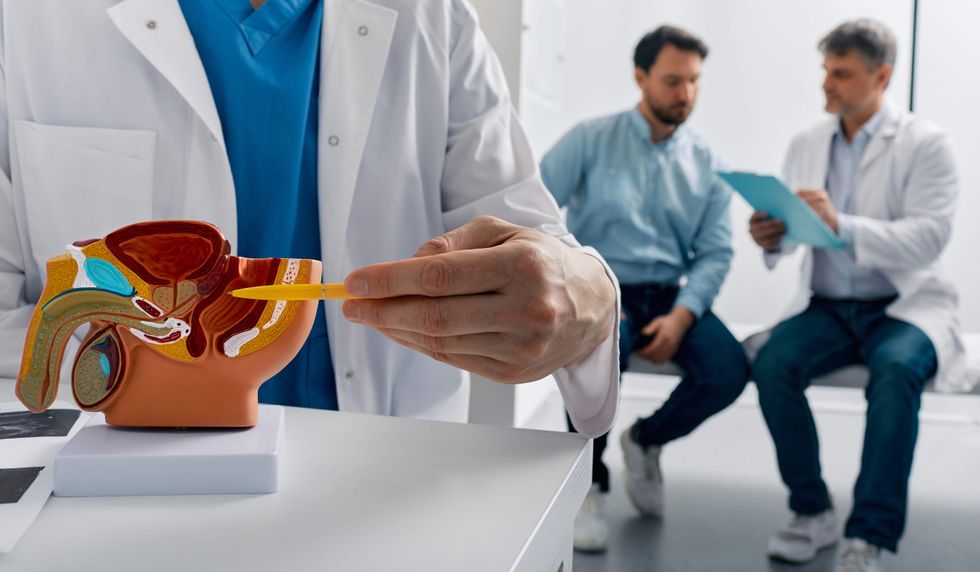
Treatment is going to depend largely on your particular anatomy and whether you have an internal or external hemorrhoid and how severe it is. “Most uncomplicated hemorrhoids should first be treated with increased fiber and fluids, softer bowel movements, less straining, shorter toilet time, and warm sitz baths,” Bustamante advises. “Over-the-counter creams may temporarily help with itching or swelling, but they do not correct prolapsing hemorrhoids and should not be used indefinitely. Steroid creams, such as Preparation H, should never be used for more than one week.”
If you are struggling with an internal hemorrhoid that isn’t responding to the more conservative at-home treatments, Bustamante recommends “rubber-band ligation, sclerotherapy, or infrared coagulation” that would be performed by your doctor. For larger internal hemorrhoids, painful external hemorrhoids, thrombosed hemorrhoids, or cases with significant excess skin that aren’t healing, your best bet is a hemorrhoidectomy, even though the recovery time is longer.
Once you’ve treated and gotten rid of the hemorrhoid, your focus should turn to prevention and restoration of anal health, especially if you enjoy being on the receiving end of anal sex. This means eating more fiber, staying hydrated, spending less time on the toilet, doing pelvic floor exercises, getting anal Botox (HoleTox), exercising regularly, using anal dilators, and going to physical therapy if your doctor recommends it. “Yes, someone might need a surgical approach to completely rid the faulty hemorrhoid. But by working the pressure with dilation, in tandem with anal Botox, we can correct the culprit,” Goldstein says. “If I ran the world, I’d tell everyone to bottom because it allows appropriate anal relaxation and thus less hemorrhoids.”
It’s also worth your time to seek out a queer physician or LGBTQ-affirming doctor because they are much more likely to understand your sex life and take it into account when discussing treatment options. “In my practice, especially for patients who engage in receptive anal sex, I also focus on restoring the anatomy of the anal canal, removing excess skin tags when appropriate, and preserving both function and aesthetics,’ Goldstein says. “That's something many traditional hemorrhoid treatments don't take into account.”
While you’re healing, can you still bottom?

Mix Tape/Shutterstock
With anal fissures, the advice is to take an extended four-to-eight week break from bottoming, but hemorrhoids are a little different. If you are experiencing sharp pain, bleeding, swelling that doesn’t go away, or a persistent full, pressurized feeling, then you’ll need to take a break until symptoms subside, otherwise just “go slow with lots of lube and dilation prior to penetration,” Fong says.
Bustamante also recommends taking a break “from receptive penetration while there is active pain, bleeding, swelling, a tender lump, or prolapsing tissue” because “continuing to bottom during an active flare can repeatedly irritate the area and delay healing.”
This is sound advice that should be followed to avoid exacerbating symptoms, but Goldstein says there is also a scenario where bottoming can actually help the healing process.
“Hemorrhoids don't automatically mean your sex life must be put on pause. But — and this is a big but — it's not the same for everyone,” he says. “Hemorrhoids are swollen veins, and penetration can go one of two ways. For some people, slow and well-lubricated sex actually redistributes pressure and brings relief. For others, it aggravates things, causes irritation, or tears tissue that wasn't ready. So the question isn't ‘can I bottom with hemorrhoids?’ The question is ‘what is my body telling me right now?’”
This is where remembering to warm up and using anal dilators will come in clutch. “What I recommend to people is to use your dilators – on your own – to test the waters,” Goldstein says. “Are you still feeling any of these symptoms? If so, then you need a bit more time to recover. But, if not, then you can try bottoming.”
Do you need to change the way you have sex?

Lomb/Shutterstock
Once your hemorrhoids have healed and you're ready to jump back in the sack with someone, you may need to make a few changes so that those uncomfortable lumps don’t make a repeat performance. “You do not need to stop bottoming, but technique matters,” Bustamante says. “Use a generous amount of lubricant and reapply it as needed. Warm up gradually, avoid forcing penetration, and choose positions that allow the receptive partner to control the pace and depth.”
Goldstein also recommends using anal dilators in between bottoming sessions to train “the muscles and skin to open up on command” and to not “rush foreplay” before the main event if you want to avoid doing more damage. You can also add some tender loving care for your anus to your aftercare regimen. “Don’t skim on the aftercare,” he says. “I love suppositories, topical creams, and even Epsom salt baths as part of your post-sex recovery plan. This gives the tissue real time to recover.”
Sources cited:
Dr. Evan Goldstein is a leading anal health expert in the United States who founded Future Method.
Dr. Carmen Fong is a colorectal surgeon and the chief medical officer at Bummed.
Chris Bustamante is an aesthetic nurse practitioner and the owner and CEO of Lushful Aesthetics.