


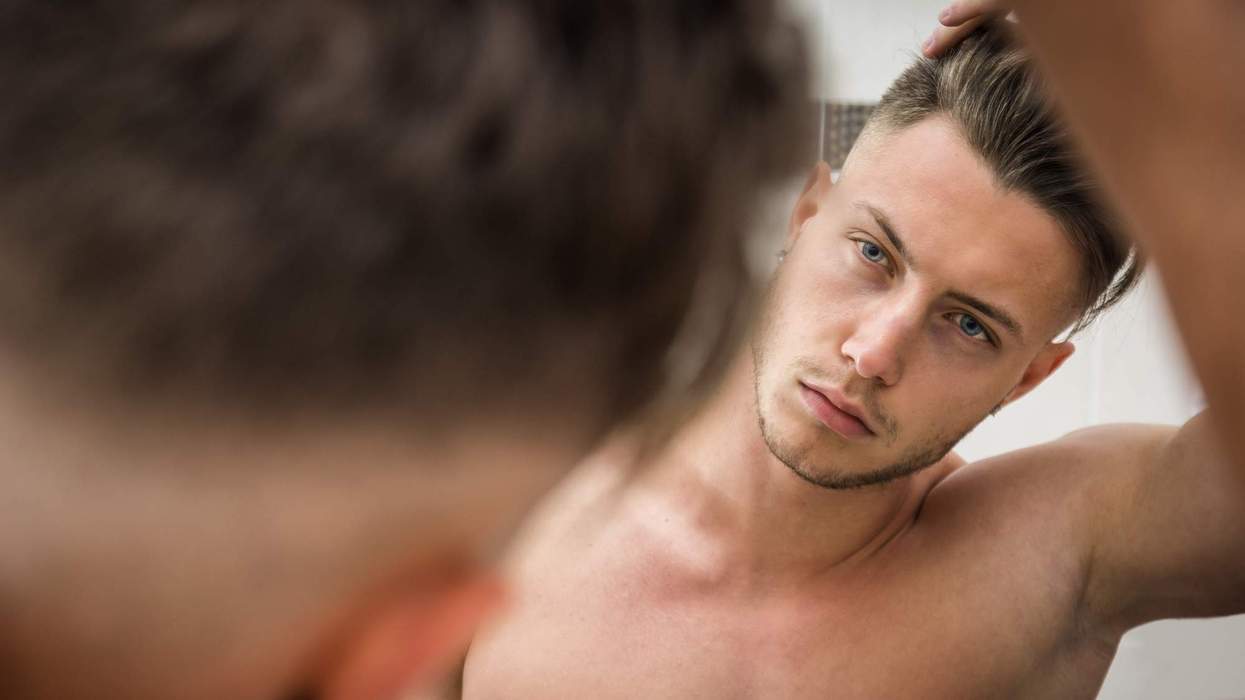

We live in an image-obsessed society that worships at the altar of youth, so when you start to lose your hair, most people immediately start scrambling to find a solution.
Hair loss affects 85% of cisgender men and 35% of cisgender women, so if this sounds familiar, you’re not alone. This problem is ubiquitous, but can be even more complicated for trans folks who deal with hair loss related to gender-affirming hormone therapy, though that’s understudied.
And it’s not just about vanity; the inability to conform to society’s view of how you should look can have real psychological consequences. Studies suggest that people struggling with hair loss are more likely to have anxiety, social phobia, paranoia, and major depression.
Some people will choose to handle this by rocking the balding look, while others will shave it all off or seek out treatment options. If you’ve decided you want to try to stop or reverse your hair loss, we’ve asked experts to give us the pros and cons of all the major options on the market so you can make an informed decision.
What causes hair loss?
What causes hair loss?
New Africa/Shutterstock
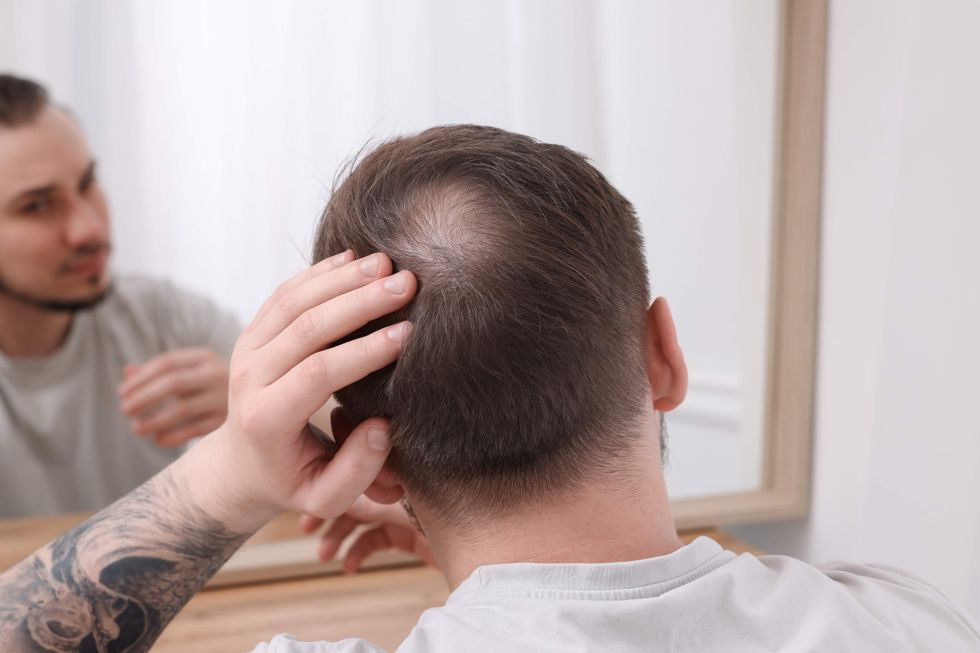
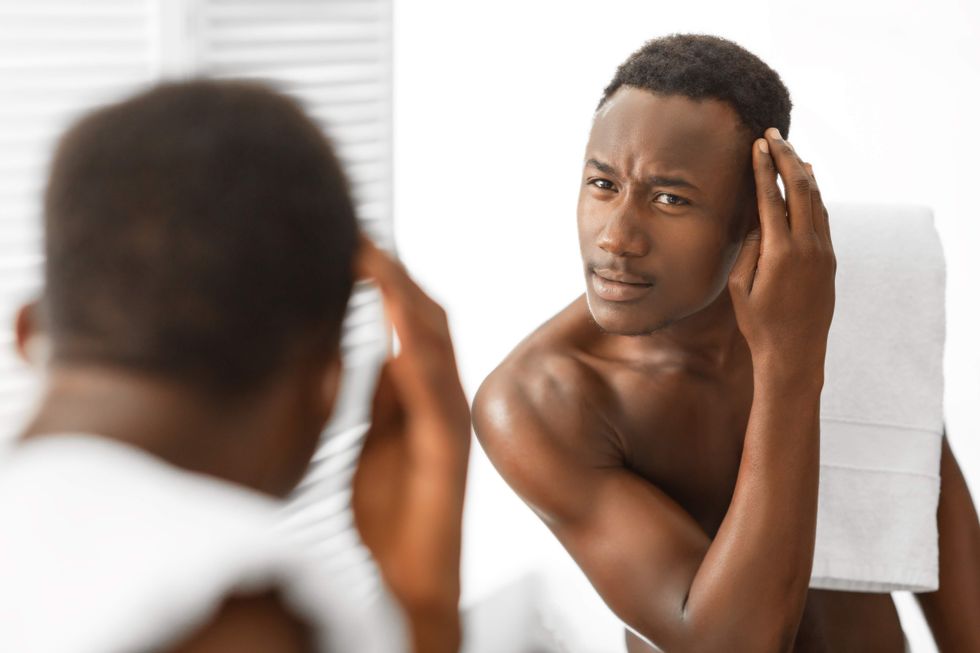
Male pattern baldness is caused by a sensitivity to the hormone dihydrotestosterone (DHT), which leads to the hairline moving backward, usually in an “M” shape, and thinning at the crown of the head.
“The hair follicle is super sensitive to these, and it shrinks the hair follicles in people who are genetically susceptible,” says Dr. Aaron Erez, a family medicine physician and a certified functional medicine practitioner. “Male pattern baldness tends to be at the front of the head, and also the classic bald spot towards the back. There's definitely a component of hormones, but there's a huge genetic component as well. It's not just one gene; it's multifactorial, multiple genes coming together to lead to this.”
Transgender people can also experience balding, but for a slightly different reason. For many trans women and transfeminine people, going through testosterone-dominant puberty may contribute to hair loss prior to starting estrogen-based hormone replacement therapy (HRT), which some studies suggest might actually help regenerate hair growth. For trans men and other transmasculine people, starting testosterone-based HRT can increase some people’s chance of balding, especially in cases where balding runs in the family.
“If you're on hormonal therapy including testosterone, the testosterone can absolutely add to hair loss, especially if you have genetic susceptibility or the follicles are sensitive,” Erez says.
According to Erez, if you’ve only noticed a small amount of hair loss, then you might want to look into less invasive treatments like red light therapy or nutritional supplements before bringing out the big guns. “But if you're noticing significant hair loss, the most important thing is to start early so that you don't lose ground,” he explains. “You can't reverse hair loss once it passes a certain mark, so the sooner you get started, the better.”
There are a lot of snake oil salesmen out there trying to scam their way into your wallet with promises of magical elixirs to fix this problem, but don’t waste your money when there are clinically tested treatments available.
But which option is the best for you?
Prescription oral medication

Prescription oral medication
Rizieq/Shutterstock
What is it?
Finasteride and minoxidil are two of the most widely used clinically proven medications on the market to treat hair loss. Finasteride helps stop hair loss by blocking the enzyme that converts testosterone into DHT, the hormone responsible for male pattern baldness, while minoxidil is a vasodilator that stimulates the hair follicles to promote hair regrowth.
Pros and cons:
Not only do studies show that both medications are effective at treating male pattern baldness and are frequently combined, but you’re more likely to stick to a regimen when you only have to take one pill a day. That doesn’t mean the medications don’t come with downsides.
“The cons are that the side-effect profile is stronger, meaning that people can have a loss of libido, a low mood/depression to name but a couple of the more common side effects,” says Dr. Aziz Elgindi, the lead hair transplant surgeon at Harley Street Hair Transplant Clinics, who recently performed Love Island star Ronnie Vint's hair transplant.
Finasteride can also reduce or slow bottom growth for trans men and transmasculine people who take it, which might prevent a gender-affirming effect of HRT.
Topical medications
Topical medications
Caroline Ruda/Shutterstock
What is it?
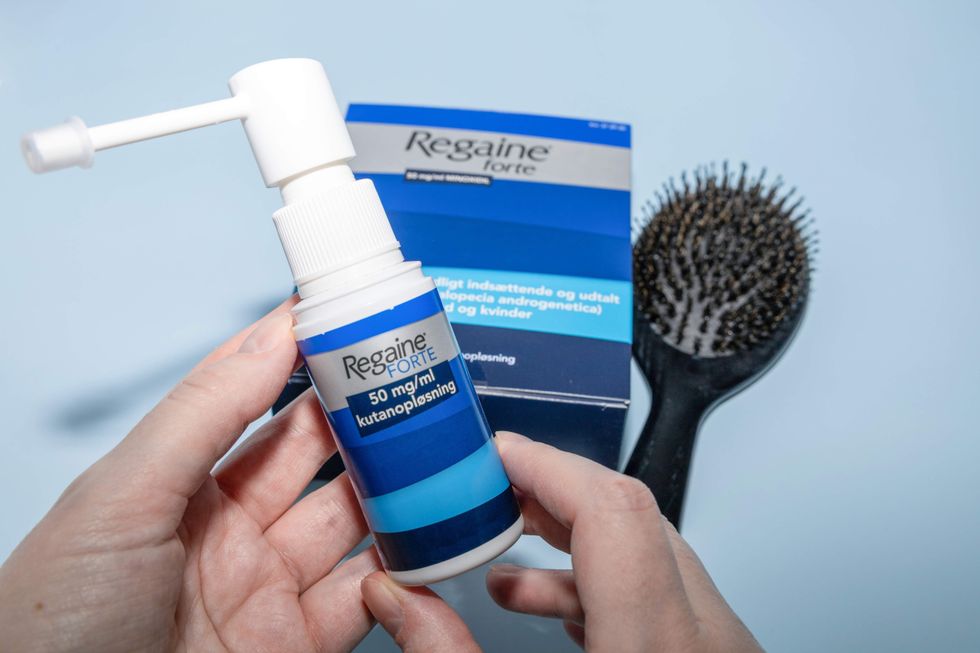
There are also topical versions of finasteride and minoxidil, which work by being absorbed through the scalp, as well as topical ketoconazole, which reduces scalp inflammation and inhibits DHT at the follicle level.
Pros and cons:
Topical versions of finasteride and minoxidil have fewer side effects since they aren’t being taken orally. “Side effects include things like redness in the area, burning, itching and more scalp sensitivity,” Elgindi says. “The clinical evidence shows that they work just as well as the oral medication.”
On the flip side, these topicals only work well if you follow the directions and are consistent with them. They have to be applied directly to the scalp, massaged in, and then left for 30 to 45 minutes in order to be absorbed properly.
Elgindi also warns that “a significant percentage of the population” doesn’t produce an enzyme in their hair called sulfotransferase (SULT1A1), “meaning that the absorption of minoxidil isn't very good, leading to the medication to not be as effective at performing its job.”
According to Erez, your best bet is to combine oral and topical medications to get the best results possible.
“Each treatment does make improvements, but when you stack them, you can actually tell that they're making a difference,” he says. “So you generally want to stack multiple things: minoxidil, finasteride (which is a DHT and hormone blocker), and topical ketoconazole, which has multiple ways that it affects the hair follicle, including hormonally.”
Hairpieces
What is it?
If you’ve lost too much hair for some of the treatments to work, or you don’t want to take a prescription medication or undergo surgery, hairpieces (aka toupees) might be the best option. Hairpieces, often called “hair systems,” are high-quality, non-surgical hair replacement pieces that are glued in place and blended with your remaining hair.
Pros and cons:
Hairpieces have come a long way since the days of Uncle Lewis’ dead-cat-looking toupee in National Lampoon’s Christmas Vacation. Now, they are usually undetectable, often using hand-tied human hair that can be glued in place, allowing for showering and swimming.
While these days hairpieces look better than ever before, you’ll also pay a premium for them — a custom-made one can be over $2,000, and that doesn’t include salon services and maintenance — and some people still might be able to tell that it’s not your real hair.
“The cons are that the hairline still looks too straight and not natural, as well as the ongoing maintenance and costs associated with removing the old one after it has reached its lifespan and replacing it with a new one,” Elgindi says.
Hair transplant surgery
Hair transplant surgery
Kaan Yetkin Kaan/Shutterstock
What is it?
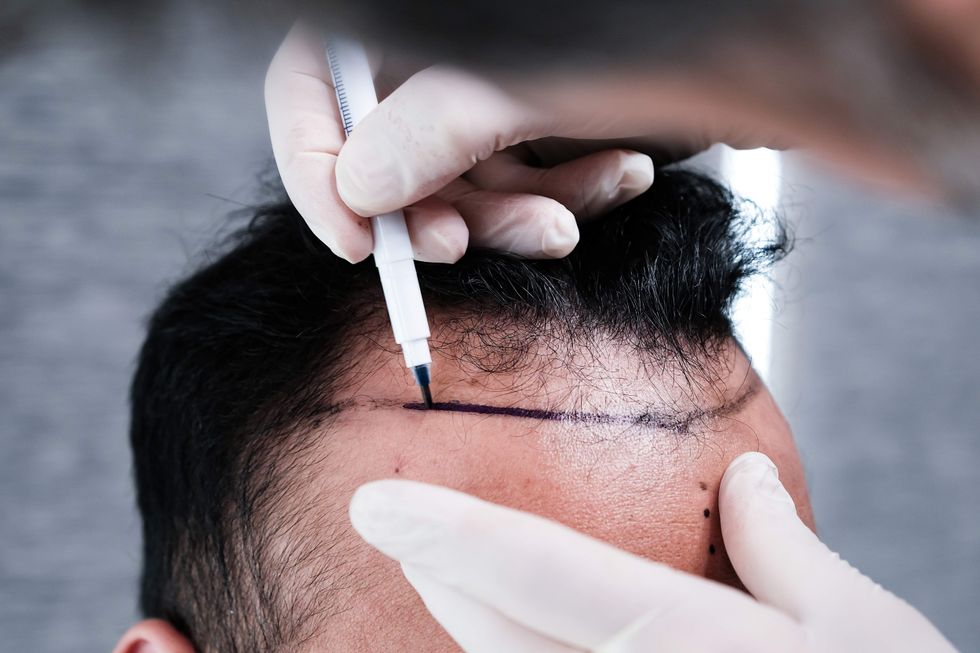
Hair transplant surgery is a minimally invasive procedure in which healthy hair follicles are harvested from a donor site, usually the back and sides of the head, and painstakingly grafted into the balding area. It’s not a cure for future hair loss, though, so people are often prescribed medication to help keep the hair they still have, and may end up needing to repeat the surgery when their hairline recedes further. The procedure has become increasingly popular in recent years, with one in every 13 men reporting having undergone hair transplant surgery, and celebrities talking openly about getting it done.
Pros and cons:
When your hair loss is so severe that you’re past the point where topical or oral medications are going to do the trick, hair transplant surgery can be a great option. “If there's a small or medium amount of hair loss, you can try to reverse that and potentially be happy with the result,” Erez says. “But if it's so severe that it's not going to come back, that's the point of no return.”
A modern hair transplant not only looks natural, but “increases a person's confidence massively as well as makes them look younger too,” Elgindi says. But he also warns that the surgery can last six to nine hours and costs thousands of dollars, so you should know what you’re getting into before you start saving for one.
“You are also limited to the number of hair transplants that you can have in your lifetime, as that is determined by your 'supply zone’ a.k.a. your donor area (the back and sides of your head),” Elgindi says.
The surgery may be popular, but it also comes with risks. The procedure is relatively safe, but patients may experience excessive bleeding, anesthesia complications, folliculitis, infection, swelling, itching, scarring, unnatural hair growth, or poor graft survival.
Low-Level Laser Therapy
Low-Level Laser Therapy
Prostock-studio/Shutterstock
What is it?
Low-Level Laser Therapy (LLLT) is great if you want to go the non-invasive, drug-free route with your treatment. LLLT uses lasers or light-emitting diodes (LEDs) to deliver red light or near-infrared light to the scalp, usually in the form of a helmet or cap, to promote hair growth.
Pros and cons:
According to Erez, LLLT works best in conjunction with other treatments, and while the upfront cost is high — a high-quality device will run you between $800 and $2000 — it’s something you can do at home with very little risk. “Low-level laser therapy is great,” he says. “There’s a ton of data on it. It's again just an additive thing; it's probably not going to work on its own if you're just doing that.”
The American Hair Loss Association says that studies have found that LLLT helmets “improved hair counts and hair thickness in men with androgenetic alopecia (male pattern hair loss),” but that “more research is needed to fully understand its efficacy and long-term effects.”
LLLT is also pain-free and works well on the crown of the head, but you’ll only see results if you use it consistently. “It requires continuous and consistent use, and the results are the thickening of your hair slightly but not actually growing any new hair like with the medication,” Elgindi cautions.
Sources cited:
Dr. Aaron Erez is a family medicine physician and a certified functional medicine practitioner.
Dr. Aziz Elgindi is the lead hair transplant surgeon at Harley Street Hair Transplant Clinics.