

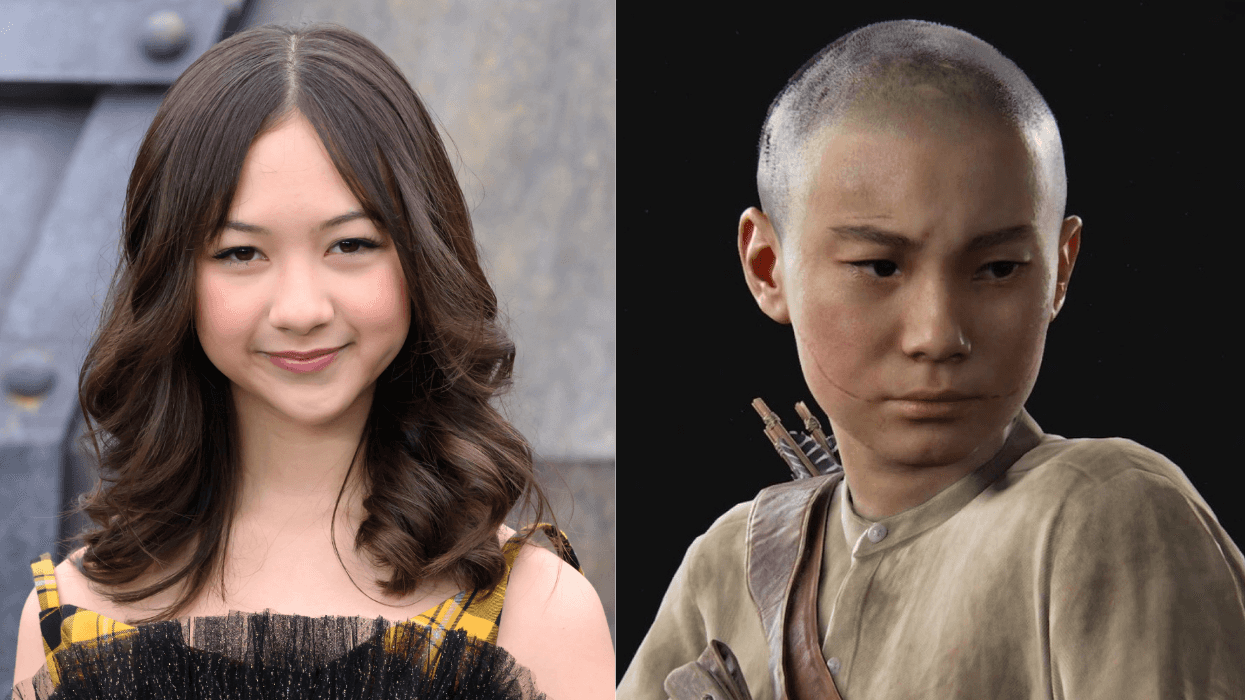
They didn’t have to go there. That’s what is so upsetting to me about HBO casting a cisgender woman — Kyriana Kratter of Star Wars: Skeleton Crew — to play a transgender character in the highly-anticipated season 3 of The Last of Us.
An out nonbinary transgender actor — Ian Alexander — was already providing the voice for the character of “Lev” in The Last of Us video game. Star Trek fans may recall Alexander from their groundbreaking role as Gray in Star Trek: Discovery.
As Ariel Messman-Rucker reported for Out, HBO said Lev will still be portrayed as the 13-year-old transgender boy who is brother to Yara and “partner and moral compass” to Abby in the upcoming season of the popular post-apocalypse drama.
So why did HBO cast Kratter? While I recall her being a more than capable actor in Disney’s Star Wars series, producers reportedly chose Kratter because she “best embodied the character.” That’s according to Kotaku.
Better than an actual trans actor who’s already played the role? Let me guess: A cisgender producer said so. And it’s interesting to note, as Them’s Mathew Rodriguez wrote, the words “best embodied” no longer appear in the March 20 article published by Deadline that was cited by Kotaku. Did that unnamed cis producer throw a fit and demand editors at Deadline pull that quote, for fear of being accused of perpetuating “transface”?
For those unfamiliar, transface is the name given this longstanding Hollywood practice of casting cis actors in roles portraying trans characters. It’s a variation on the now-disgraced performance of “blackface,” when white actors wore makeup to portray Black characters.
Messman-Rucker called the casting of Kratter “an odd choice in 2026,” given how LGBTQ+ audiences have recently applied pressure on film and television studios to stop doing transface. But “odd choice” isn’t the phrase I’d choose; I’d say, “consistent choice,” given Hollywood’s record over the past three decades.
- 1992: Jaye Davidson was nominated for an Academy Award for playing Dil in The Crying Game.
- 1999: Hilary Swank won an Oscar for her performance as Brandon Teena in Boys Don’t Cry.
- 2005: Felicity Huffman earned a nomination for playing Bree in Transamerica.
- 2013: Jared Leto won Best Supporting Actor for playing Rayon in Dallas Buyers Club.
- 2014: Jeffrey Tambor was cast as Maura in the Amazon TV series, Transparent, and won an Emmy for his performance in 2015.
- 2015: Elle Fanning played Ray in 3 Generations, prolific out gay producer Ryan Murphy cast Denis O'Hare as Liz in American Horror Story: Hotel, and Eddie Redmayne was nominated for Best Actor for playing Lili in the Oscar-winning film, The Danish Girl.
- 2016: Michelle Rodriguez played Frank opposite Sigourney Weaver in The Assignment.
- 2017: Matt Bomer appeared as “Freda” in Mark Ruffalo’s Anything.
Even before his film debuted, Ruffalo — as executive producer — faced backlash for casting Bomer in Anything, and addressed it on social media: “To the Trans community. I hear you,” he wrote on what was Twitter back in 2016, “It’s wrenching to… see you in this pain. I am glad we are having this conversation. It’s time.”
The conversation didn’t matter. Nor did time.
Anything was held back for release until 2018. But waiting two years did not end the controversy; it even led to threatened boycotts. Out reported that associate producer Kylene K. Steele — who herself is trans — asked viewers to remain open-minded: "Matt did an amazing job, and he's a phenomenal actor," Steele said. "You shouldn't be judged by who the person's gender is, if they can pretend and be the person that's fit for the role, then that's the way it should be."
The way it should be? I thought out trans actor Mack Bayda playing Malcolm in 2022’s A Man Called Otto opposite Tom Hanks was the way it should be. How about Trace Lysette playing trans sex worker Shea in Sir Patrick Stewart’s Showtime series, Blunt Talk, in 2015? Emmy winner Laverne Cox playing Desiree, an out trans woman, in the Prime Video series, Clean Slate just last year certainly felt like that was the way it should be, even though her show was unfortunately short-lived.
Ten years after Anything, why is transface still a thing? As recently as eight years ago, actress Scarett Johannsen pulled out of playing Dante Gill in Rub & Tug following online outrage that ultimately led to the cancellation of the film altogether. “This battle seems won,” wrote Pooya Mohseni, an out trans director, in a 2018 oped in The Advocate titled, “The Last Days of Transface.”
And maybe she was right, for 2018.
But acceptance of trans people in America and around the world has shifted in the intervening eight years, as political pendulums have swung further right. We’ve seen a boom in state laws restricting trans rights, federal threats to gender-affirming care as well as bogus claims about the rising prevalence of murderers who are transgender. So, given how the national mood about trans people seems less welcoming than in years past, it may not be surprising that some in the entertainment industry are willing to give transface another go.
The argument goes: “They’re actors. Their job is to pretend to be someone they’re not. What’s the big deal if a straight person plays gay, like Eric McCormack did for years on Will & Grace, or vice versa? Playing trans is just like that.”
Except it’s not. I know, because I am also someone with experience in the industry; I am an out transgender woman who spent a dozen years working as a closeted child actor and model in New York City, cast as both a boy and a girl.
While I presented as male in most of the 100 ads in which I appeared, my prepubescent voice won me roles playing girls in radio commercials, and for almost five years, my feminine looks earned me modeling jobs walking the runway with Brooke Shields and acting in a commercial with Sarah Jessica Parker. It was like living a dream, but then I had to go back to living the nightmare of pretending to be the “boy” everyone thought they knew. And I confess to being pretty convincing in that role for 40 years.
Although I never starred in any films or TV shows, this Long Island kid did come close: The late Philip McKeon and I competed for the role of Tommy, the son of Linda Lavin’s Alice, in 1976, and I lost the role of Cadet Captain David Shawn in 1981’s Taps to an actor from Glen Ridge, New Jersey you may have heard of: Tom Cruise?
The truth is, even at 18, Cruise was a lot more macho than I could ever pretend to be.
But the best answer to why transface is the wrong choice, this year or in any year, comes from Emmy-nominated out trans actor, producer, writer and activist Jen Richards, an Out100 honoree. Ten years ago, Richards weighed in on the Anything controversy with honesty and eloquence. Her words are just as relevant to the casting of a cis actress in the third season of The Last of Us in 2026:
“First, there's the practical/economic one. It denies actual trans women opportunities, jobs, resources, which hurts (the) entire community.”
“When @MattBomer plays a trans sex worker, he is telling the world that underneath it all, trans women like me are still really just men.”
Richards also revealed one other detail that shows she knows of what she speaks: “I auditioned for this. I told them they shouldn't have a cis man play a trans woman. They didn't care.”
And clearly, in 2026, they still don’t. I can only hope that when it comes to casting cis actors in trans roles, Kyriana Kratter is the last of them.
Dawn Ennis (she/her/hers) is an award-winning writer, TV news producer, news manager, digital news pro, and college professor who has more than four decades of experience in network, local and digital newsrooms. She was the first out transgender journalist in network TV news and the first out trans news editor at The Advocate. Follow her on @lifeafterdawn.
Opinion is dedicated to featuring a wide range of inspiring personal stories and impactful opinions from the LGBTQ+ community and its allies. Visit Out.com/submit to learn more about submission guidelines. We welcome your thoughts and feedback on any of our stories. Email us at voices@equalpride.com. Views expressed in Opinion stories are those of the guest writers, columnists, and editors, and do not directly represent the views of Out or our parent company, equalpride.