


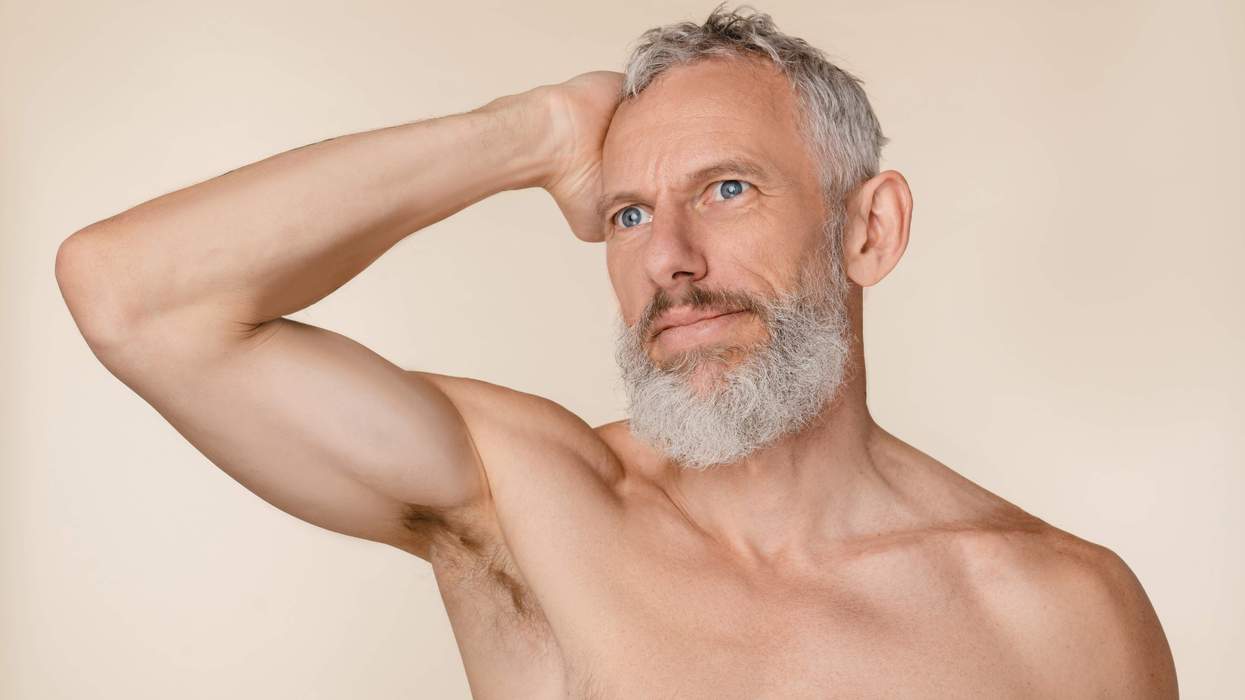

Society will try to tell you that aging is horrible. That wrinkles, gray hairs, and achy joints spell the end of life as you know it, and that your sex life declining is inevitable. But it doesn’t have to be that way.
First off, embrace the silver hair and smile lines. You earned those. Second, you should be proud to be a trans elder since the AIDS crisis took so many from us. And third, do you know how much sex people in retirement communities and nursing homes are having? It would be a travesty to let your sexual health decline as you age when you have so much more experience now than you did in your 20s.
Aging can have a profound impact on your sexual health, and this is only made more complicated when you add in the challenges of being transgender. There is a severe lack of research being done on the topic, but that doesn’t mean there aren’t things you can do about the frustrating changes that come with aging.
Trans woman and transfeminine people have their own sets of challenges, but so do trans men, transmasculine people, and gender diverse folks. As you exit middle age and enter your 50s, 60s, and beyond, you may notice a dip in your libido or even sexual dysfunction that causes pain during sex, but there are plenty of ways to alleviate those symptoms or stave them off altogether.
So lean into your silver fox and daddy era and use these tips from trans sexual health experts to help you stay frisky — and healthy — way past middle age.
What sexual health changes should trans men and transmasculine people over 50 expect?

jorgeliz/Envato
By the time most trans men reach 50, they’ve likely been on T for decades, which can shape how your body changes as you age. For trans men and transmasculine people, that can bring on some of the same types of issues menopausal cisgender women experience, like vaginal atrophy because of a drop in estrogen that can correspond with testosterone-based HRT.
“Long-term T lowers estrogen exposure to vaginal tissue, which causes the same kind of thinning, reduced elasticity, and dryness seen in genitourinary syndrome of menopause, even though the trigger here is testosterone therapy rather than ovarian aging,” says OB/GYN Dr. David Ghozland, who has over 15 years of clinical experience specializing in pelvic reconstruction surgery like vaginoplasty and labiaplasty. “Because of this, sexual activity may come with genital pain or discomfort.”
There are plenty of treatments for vaginal atrophy that range from pelvic floor therapy to low-dose topical vulvar-vaginal estradiol creams and vaginal DHEA, all of which are applied locally so they don’t interfere with masculinizing hormone therapy. The symptoms of this condition are no joke, and some can be mistaken for a urinary tract infection, so make sure to check in with your provider if you are feeling pain, discomfort, or if it’s impacting your sex life.
“An aging front hole, like an aging back hole, can experience more muscle laxity and thinning of the lining,” says Dr. Michelle Forcier, a clinician for the LGBTQ+ telehealth company FOLX Health. “Front hole or vaginal atrophy, due to lack of estrogen, happens in menopause, but also can occur in much younger men on testosterone. It may present as symptoms of dryness, irritation, itching, or even bleeding.”
When you were in your 20s, you could ignore your health without many consequences, but those days are over. Just like you need to stay on top of your blood pressure, blood sugar levels, and cholesterol, if you’ve had bottom surgery, you need to be an active participant in your ongoing care.
“For those who've had metoidioplasty or phalloplasty, aging may bring changes in sensation, scar tissue, or the function of erectile devices or implants,” says Dr. Rachel Needle, a sex expert at sexual wellness brand Mila and the co-founding director of Modern Sex Therapy. “If an implant is present, it may eventually require maintenance or replacement, making long-term follow-up with a surgeon familiar with your specific procedure an important part of ongoing care.”
And it’s not just your physical health you need to worry about. While gender euphoria can do amazing things to improve your confidence and sexual wellbeing, dysphoria can rob you of a fulfilling sex life. “Gender dysphoria doesn't necessarily disappear with time or transition, and it may evolve as the body ages,” Needle says. “Stress, depression, anxiety, body image, relationship changes, and the cumulative effects of navigating a world that isn't always safe or affirming can all influence sexual well-being.”
What can trans men and transmasculine people do to improve their sex lives after 50?

Ketut Subiyanto/Pexel
You can’t avoid the fact that your body will change as you age, but there are so many things you can do to improve your sex life as you reach your silver fox era that there’s no reason to panic when issues crop up. The important thing is to take care of yourself and remember how lucky you are to still be here at all.
“Aging is a privilege many LGBTQ+ people were not afforded,”Jericho Feng, a trans therapist, says. “I hope we all get to experience these changes. Embracing this new chapter of one’s sexual journey after 50 will involve intentional self care, but coming out to yourself as trans was already the hardest task. These other things are small potatoes.”
But if you are noticing that your sexual health is starting to decline, it’s important to seek help from a medical professional. Unfortunately, this can be more difficult if you are trans or gender nonconforming, but Needle says that finding a provider who is an expert in both transgender health and sexual medicine is an “investment in your long-term sexual well-being” that will be worth the effort you have to put in to find someone.
“They can help determine whether hormones, medications, pelvic floor function, an underlying medical condition, or another factor is contributing to what you're experiencing, and, more importantly, what can be done about it,” Needle explains. “If you still have vaginal tissue, don't overlook symptoms such as dryness, irritation, pain during penetration, or urinary symptoms. These changes are common with long-term testosterone therapy, but they're also highly treatable.”
Pelvic floor exercises can also be incredibly helpful with orgasmic difficulties and eliminating pain during sex, but if that isn’t an option for you because of dysphoria, talk to your doctor about other options. “If you use your front hole, then kegal or pelvic floor exercises might help strengthen those muscles,” Forcier says. “But for some transmen/transmasculine persons, that might not be an option because of dysphoria.”
What can you do to prevent your sexual health from declining?

Wavebreakmedia/Envato
If you want to try to slow the sands of time — at least where your sexual health is concerned — than taking care of your overall health is the first step.
“Both transgender and cisgender persons experience a host of effects from their aging bodies that can impact sex,” Forcier says. “Staying active and reducing risk for preventable diseases such as high blood pressure, high cholesterol, diabetes, and so on reduces the negative effects these conditions have on sex. Maintaining good mental health, reducing stress and fatigue, and healthy relationships improves all genders' sex lives — however they conceive their sexuality to be best expressed and lived."
Ghozland also suggests kicking your nicotine habit because cigarettes and vaping have a more profound impact on trans men and transmasculine people on T. “Smoking or vaping while on HRT is actually found to interfere negatively with HRT — increased cardiovascular risks. Never mind the overall effect it has on the aging body.”
But according to Ghozland, the most “pressing problem” for trans men and transmascs is avoiding medical treatment altogether for fear of discrimination. “Care avoidance is a major, well-documented issue on its own,” he says. “Nearly half of trans men have delayed or avoided preventive care like pelvic exams or STI screening out of fear of discrimination, and roughly half aren't getting annual pelvic exams at all.”
Plenty of trans men and transmacs experience a surge in sexual desire and horniness when they start T, but as that shifts or wanes, it’s important to track those changes with a health care provider. “Don’t assume sexual changes are just ‘part of getting older,’” Feng says. “Trans men often describe changes in their libido when starting testosterone and then those urges often mellow out. But monitor what is ‘normal’ and notice if there’s changes in desire, difficulty orgasming, or pain during sex.”
Some trans men may also notice weight gain while taking HRT, and while you might worry about the impact that could have on your overall health and sexual function, Feng cautions against getting too hyperfocused on this issue. “Rather than focusing exclusively on the number on the scale, trans men can ask: Am I getting weaker? Can I still do the things I enjoy doing during sex? My clients with robust sex lives after age 50 all do resistance and weight-bearing exercises — which is awesome because those can help preserve physical function as people age,” he says.
7 tips for having better sex after 50

alphotomp/Envato
1. Add more lube
Lube is often the answer to making sex more pleasurable, but you need to remember to use even more now that you’re older. “Lube is, always and forever, throughout the lifetime, everyone's best buddy in the bedroom,” Forcier says. Ghozland agrees and says don’t skimp on it. “Lube is not optional,” he says. “I cannot stress this enough, even if you think you have enough, squeeze that bottle again and add more. Expect more of it than you did when you were younger, because aging reduces natural lubrication in trans men.”
2. Redefine sex as you get older
Sex never has to look just one way — it would be boring if it did — and that’s doubly true as you age. “Give yourself permission to redefine what a satisfying sex life looks like,” Needle says. “Your body doesn't have to respond the way it did at 25 to experience pleasure, intimacy, or connection. Many people find that broadening their definition of sex, communicating openly about what feels good, and focusing less on performance and more on pleasure, connection, and authenticity leads to a richer and more satisfying sexual life.”
3. Don’t be afraid to switch things up
As you creep past middle age, your sex life might need to change, and that’s ok. Sex and the way you like to experience pleasure may shift with the years, but you can still have explosive sex well into your golden years. “If your sex life has changed after 50, that doesn't mean it's over, it means it's evolving,” Needle says. “Sexuality changes throughout life, and many trans men and transmasculine people discover new sources of pleasure, intimacy, and confidence as they age rather than losing them”
5. Don’t be ashamed to use accommodations during sex
If you want to keep your sex life sizzling hot as you get older, you’ll need to get over any hangups you have about using tools to support and accommodate your aging body. It’s just an excuse to buy new toys! “Using different equipment, such as a longer dildo if they top, or a vibrator built into a seat pad so they can simply sit on it on a chair, can lessen the physical strains of sex but still keep things spicy,” Feng says.

YuriAcursPeopleImages/Envato
5. Try new sex toys made for you
It may take some research and extra cash, but it’ll be worth it when you take your sex life from good to toe curling. “Explore sex toys designed specifically for trans bodies,” Ghozland says. “A strap-on for topping cis males, for example, is very different for those sold to women, so definitely check that out. Depending on where you’re from, it may be hard to find and would definitely include a lot of trial and error. But for an aging body, where penetration may not be as pleasurable anymore, vibration does really go a long way.”
6. Add anal sex into your repertoire
If using your front hole gives you dysphoria or has become painful as you’ve aged, switch things up. “If any kind of vaginal stimulation doesn’t work, anal penetration can be affirming and pleasurable for some, so that’s worth trying,” Ghozland says. And again, don’t forget the lube!
7. Explore through masturbation
Partnered sex is great, but as you try to figure out what works for your body now, try a little solo play. “Masturbate to know what still works for you,” Ghozland says. “Aging comes with a lot of changes, and having that time alone without the pressure of being with a partner may allow you to explore what still feels good and what doesn’t anymore. Masturbating while a partner watches, and having them observe, works too, if you’re comfortable with that.”
Sources cited:
Dr. David Ghozland is a board-certified OB/GYN and the founder of Intimate Health Center.
Dr. Michelle Forcier is a clinician for the LGBTQ+ telehealth company FOLX Health.
Dr. Rachel Needle is a sex expert at sexual wellness brand Mila and the co-founding director of Modern Sex Therapy.
Jericho Feng is a gay, trans, Asian therapist who provides LGBTQ-affirming therapy.