




If you’ve entered that “Older Wiser Lesbian” phase of life, then it’s probably time you learned about the freight train that is barreling down the tracks, ready to cause chaos in your life: menopause.
Cue the dramatic music!
You’ve probably heard the women in your life complaining about hot flashes while simultaneously celebrating leaving period cramps in the dust, but you might not actually know anything about menopause or how to talk to your doctor about treatment options.
Which is why we tapped into the menopause brain trust and asked experts what you can do to manage the symptoms and how to have the best post-menopause sex life imaginable.
What is menopause?
Rosie Parsons/Shutterstock
You’ve officially reached menopause once you’ve gone 12 consecutive months without a menstrual cycle, which typically occurs between the ages of 45 and 55. Most women will have experienced perimenopausal symptoms for years leading up to their last period.
"Once you hit that mark, you are postmenopausal for the rest of your life,” said Dr. Kathleen Jordan, the chief medical officer for Midi Health. “While the erratic ‘peaks’ of perimenopause may settle, the ‘valleys' of low estrogen remain. You can expect continued hot flashes, dry skin, and a higher risk for bone loss and cardiovascular issues. You might also experience cognitive challenges and a shift in how your body carries weight.”
Menopause can cause a whole host of other symptoms, including sleep disturbances, night sweats, mood changes, weight gain, lower energy levels, vaginal dryness, and lower libido due to the steep drop in estrogen production.
Lasara Firefox Allen, a trans and pansexual accredited menopause educator, author of Gender Queer Menopause, and the founder and facilitator of the Gender-Affirming Menopause Care Certification course for care providers, said they experienced a slew of these symptoms personally, as well as Genitourinary Syndrome of Menopause (GSM), a chronic condition that causes vaginal dryness, vaginal irritation, painful intercourse, and loss of libido.
“For me, though, the big ones that I experienced post menopause were joint pain, a distinct and pronounced drop in sexual desire, and worsened GSM,” they said. “I have also seen this holding true for many of my friends, community members, and clients.”
What treatments are available for menopause symptoms?
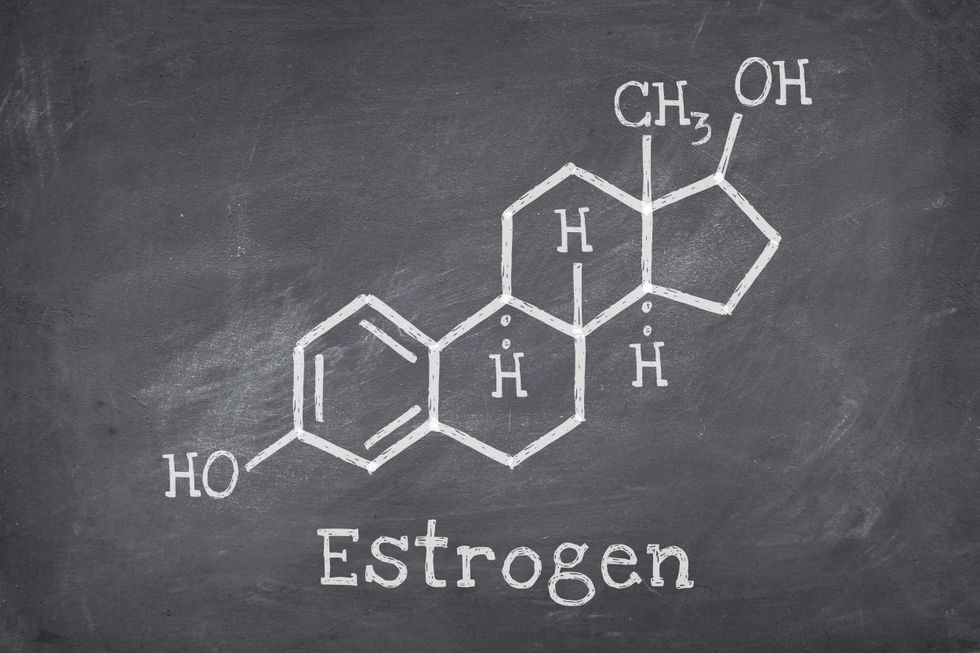
Chemical structure for estrogen
Linaimages/Shutterstock
The gold standard for prescription menopause treatment is Menopausal Hormone Therapy (MHT), which is an FDA-approved treatment for symptom relief.
"There are evidence-based hormone therapies, non-hormonal prescriptions, supplements and lifestyle adaptations that can help,” Jordan said. “MHT is the most reliable in managing systemic symptoms like hot flashes and bone protection, but many other interventions are effective, too.”
According to Jordan, topical estrogen can be used to treat vaginal health, and she also recommends “magnesium for sleep and vitamin D for bone health to provide a well-rounded care plan.”
Should you talk to your doctor?

PeopleImages/Shutterstock
If you are having symptoms that are impacting your quality of life, or you have concerns about the long-term health issues that can be caused by menopause, then talk to your doctor, but make sure you do your research first and be direct about your goals for treatment.
“Instead of asking ‘What should I do? say ‘I’ve researched hormone therapy and I’d like to see if I’m a candidate’ or 'I’m not sleeping well lately and I’m wondering if it’s perimenopause and if treatment might help,’" Jordan said. “If you have a family history of heart disease or osteoporosis, be sure to bring that up as well, since those are clinical reasons to consider menopausal therapy early. It's always acceptable to seek a second opinion from a specialist who focuses on midlife if you don't feel confident in their treatment plan.”
Allen agreed and said this is even more crucial if you are part of the LGBTQ+ community. “Do your homework," they said. "Know what your options are. Be prepared to advocate for your needs, wants, and desired outcomes.”
What should transgender people know about menopause?
NMK-Studio/Shutterstock
A year without a period may not be a good measurement for the transgender community, since high doses of testosterone can cause the absence of menstruation as well. Trans people may also experience menopause early due to gender affirming surgical intervention, according to Allen.
“Trans folx may experience menopause, or menopause-like experiences more than once in the gender journey,” Allen said. "We also may experience it earlier on average, precipitously (in the case of surgical intervention), and we may have a more complex relationship with the experience of menopause. It may be wildly affirming to be post-menopausal, but it can also bring an increase in certain health risks.”
Trans men may be reluctant to make any changes to their hormone regimen even if they are experiencing uncomfortable menopause symptoms, but Jordan assured that there are other options available.
"Transgender men may be hesitant to adjust their hormones as a solution, so it's important for them to know that there are many evidence-based therapies that are nonhormonal, too,” she said. “Anyone born with ovaries will experience menopause. Some men have their ovaries removed and many use testosterone therapy — either of which can induce symptoms. Checking in with a trained provider on menopause can help you navigate and feel your best.”
How will menopause impact your sex life?

Marino Bocelli/Shutterstock
Loss of estrogen means that you may experience vaginal dryness, changes to your pelvic tissues, or increased urinary tract infections (UTIs), which can all make sex less enjoyable and more painful. And while the idea that you’re getting older might be a mood killer for some, think about how amazing it will be when both queer or sapphic women in a couple aren’t dealing with periods.
"For some people, the psychological impact of feeling ‘older' can also play a role in low desire,” Jordan said. “However, many people find a new sense of freedom in their sex lives once the fear of pregnancy or the hassle of periods is gone and can have a fabulous sex life–especially if their local symptoms are addressed with readily available care.”
While treatable, these changes are unavoidable so Allen recommends being open to your sex life looking different post-menopause. “This can be a time to explore how, or if, desire is changing,” they said. “How what we want may be different. In what ways our bodies are shifting.”
What can you do to improve your sex life after menopause?
Rawpixel.com/Shutterstock
To combat the loss of estrogen and the symptoms it causes, Jordan recommends vaginal moisturizers and using more lube when having sex. Topical estrogen and DHEA (Dehydroepiandrosterone) can also help maintain moisture and aid in regulating the skin’s elasticity.
“Pelvic floor therapy can help too,” she said. “If penetration – whether with fingers, toys, or partners – is painful, pelvic floor physical therapy can be transformative. It helps relax the muscles that may be tensing up in anticipation of pain. Prioritize slow sex; give your body the extra time it needs to reach the same levels of blood flow and arousal you experienced in your 20s.”
According to Allen, hormone treatments can help to alleviate the loss of libido that many people face, making your sex life even better once your menstrual cycle goes on a permanent hiatus.
“MHT may also increase your sex drive and improve your sex life,” they explained. “Testosterone may be indicated in the case of HSDD (hypoactive sexual desire disorder. HSDD is diagnosed by two criteria, by the way: a lack of desire, and distress regarding the lack of desire.”
Tips for having better sex post-menopause from a queer sex expert

Iryna Kalamurza/Shutterstock
Sofie Roos, a bisexual licensed sexologist, relationship therapist, and author at relationship magazine Passionerad, said that having sex post-menopause may look a little different than when you were younger, but it can be just as exciting, erotic, and pleasurable as it was before.
“For queer women especially, this can lead to a new chance to redefine what intimacy is for them, where they can rediscover their relationship to sex, and build a new relationship with closeness, where creativity and being in the moment gets more important than performing, or following norms,” she said.
1. Take your time
"Take extra time on you, as it often takes longer to get turned on. Also invest time into physical exercise as that improves the blood flow to the genital area, and therefore makes it easier to get horny, to get wet, and to get sensitive.”
2. Communication is key
“Talk about how your body has changed and what difficulties you’re facing with your partner, but also let them know what feels better now, and what kind of intimacy you’re curious to discover together. To be open with this is key for being able to evolve in a good and pleasurable way!”
3. Add in some new sex toys
“Discover the power of sex toys, as they can boost blood flow and make you reach pleasurable orgasms again if you feel your relationship to your climax has changed.”
4. Build intimacy
“Build intimacy also outside of sex, as closeness, non-sexual touch and creating a feeling of safety improves your lust!”
5. Do what feels good
“Lastly, remember that there’s no right and wrong way to have sex, so do what feels good for you and your partner!”
Sources cited:
Dr. Kathleen Jordan is the chief medical officer for Midi Health.
Lasara Firefox Allen is a trans and pansexual accredited menopause educator, author of Gender Queer Menopause, and the founder and facilitator of the Gender-Affirming Menopause Care Certification course for menopause care providers.
Sofie Roos is a bisexual licensed sexologist, relationship therapist, and author at relationship magazine Passionerad.