


Many of us have that one friend who keeps dating people who could be their identical twin. For some mysterious reason, they seem to be drawn to hooking up with people who look so much like them that you do a double take every time they walk into a room together.
This is a “dopplebanger.” If you’re queer, you’ve probably done this yourself or know someone who has. It’s a fun term for a real phenomenon within LGBTQ+ dating. This can obviously happen in straight couples too, but when you’re in a same-sex relationship, you’re even more likely to resemble each other. And that doesn’t even take into account that people often grow to look more like their partner over time.
There are so many toxic dating trends out there, from benching to banksying to pocketing, but is “dopplebanging" toxic, or is it just a feature of dating someone of the same gender?
What is a ‘dopplebanger’?
 KOTOIMAGES/Shutterstock
“Dopplebanger” is a fun portmanteau of “doppelgänger” — a supernatural look-alike — and “banging” because, you know, sex. It’s a clever way to refer to people who have “sex with or date someone who looks very similar to you, sometimes to the point where you look like identical twins,” says Zachary Zane, former Out contributor and current sex and relationship expert for adult toy seller Velvet Brands. Think Kristen Stewart and wife Dylan Meyer when they both had long platinum blond hair.
For straight people, this manifests in internet trends like the “Sibling or Dating” memes, but the term “dopplebanger” originates in the queer community. The old adage about opposites attracting may be true for some, but other people are drawn to the familiarity of a face similar to their own. And when you’re in a queer relationship, you may also dress alike and have similar haircuts, which just adds to the uncanny resemblance.
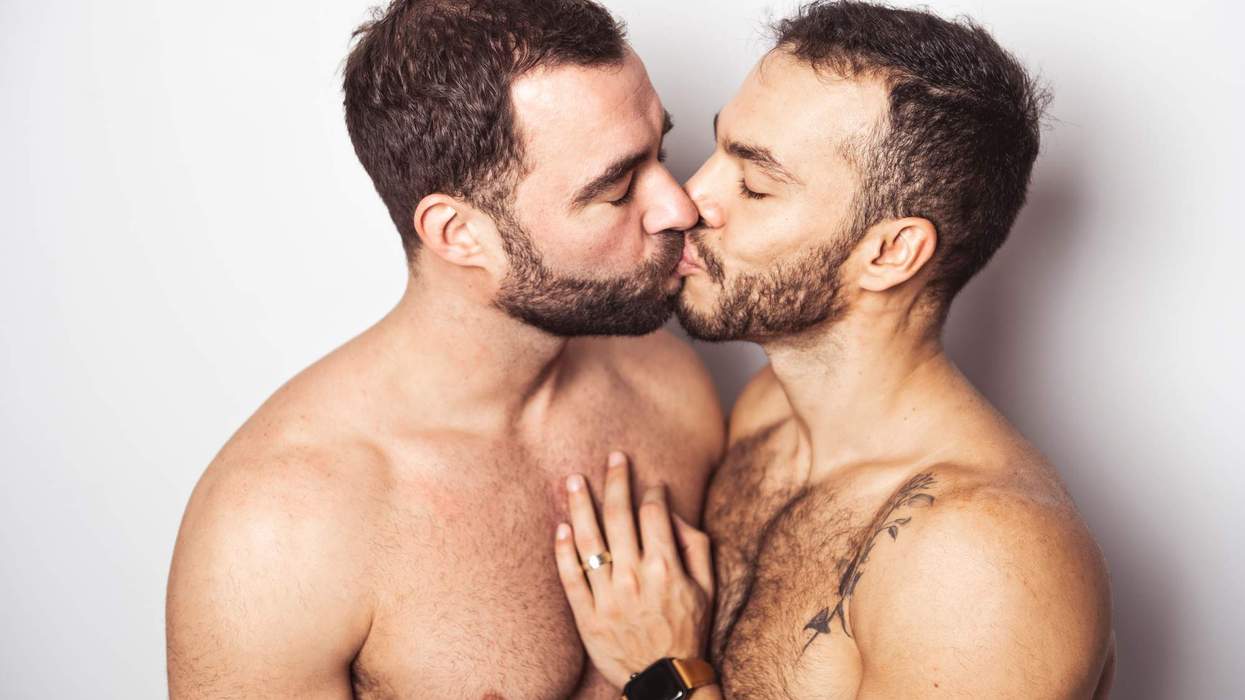
“Two men with the same haircut look like they match, whereas a man and woman with the same face simply appear as a couple,” LGBTQ+ inclusive psychologist Rod Mitchell tells Out.
Dopplebanger may be a fun term to tease your friends with, but it’s also based in scientific fact. A 2013 study showed participants images of their romantic partner’s face that had been digitally altered — either with a stranger’s face or their own — and found that both male and female participants found the composite photos that mixed in their own face to be the most attractive.
Add in the fact that studies have shown that couples frequently match each other’s height and weight, which is often a reflection of shared lifestyle, and it’s a recipe for looking like you’re in a relationship with your twin.
Is ‘dopplebanging’ toxic?
Olezzo/Shutterstock
Dating or having sex with someone who looks like you isn’t really a problem. It’s only toxic if you are obsessed with finding someone who has your face while ignoring all the other qualities that might make someone a good partner.
“If you’re attracted to someone for any reason, including that they look like you, that’s valid, and you should be able to have sex with or date them,” Zane says.
For the most part, the term itself is a lighthearted joke within the queer community, though used by people outside the group, it could be seen as an insult that pathologizes queer love and sex as a product of narcissism, says Jon Prezant, a certified sex and couples therapist who works mostly with gay men and queer relationships.
“It’s not toxic inherently, but it's used with hostility to describe narcissistic sexual pursuits of queer people,” he explains. “Freud actually wrote about his theory of some homosexuality as a mirror of the self. It's an old accusation against homosexuality, rebranded by queer people themselves in fact. Dating someone you resemble is not toxic, but the way people use the term can be.”
And there may be important reasons someone in the LGBTQ+ community might choose someone who looks like them. “If you spent years trying to figure out which spaces were safe, someone who looks like you is a shortcut — they allow you to skip the part where you have to explain yourself,” Mitchell says. “That’s not vanity, that's someone who learned early on that being understood is not always a guarantee.”
Is being a 'dopplebanger' common among LGBTQ+ couples?
Olezzo/Shutterstock
There are plenty of hetero celebs who have dated someone who looks like them — Brad Pitt and Gwyneth Paltrow got this critique when they dated in the ‘90s. And if that “Siblings or Dating” meme is to be believed, there are a near-endless number of straight couples in regular life who also look like they’re related.
Zane says he’s only “had one gay friend of mine date a doppelbanger,” but has seen it a lot online, which he thinks “makes the phenomenon feel more common than it actually is.”
According to Zane, the resemblance is also just more obvious in queer couples. “You tend to see this more in LGBTQ+ relationships just because the partners are of the same sex, and you’re more likely to look like someone who’s of the same sex as you,” he says.
Dopplebanging is also more common in the queer community because there is already a “shared cultural aesthetic,” says Prezant, who has seen this a lot with his LGBTQ+ clients. He says people have a hard time with "differentiation" in relationships, meaning that they struggle to hold onto their individuality and separate identity while staying connected to their partner.
“It is very hard for every relationship to tolerate difference,” Prezant says. “Sometimes dopplebanging seemingly removes that [difference] on a superficial level, but each couple will still be called upon to tolerate difference without fusing with their partner.”
Why do people do this?
 New Africa/Shutterstock
For Zane, the motivation behind dopplebanging is simple and obvious: “Because they find the other person attractive.”
Mitchell also says that people are naturally drawn to someone who looks like them because there is an innate feeling of trustworthiness. “Faces that resemble our own typically appear trustworthy before they appear attractive,” he says. “We feel more comfortable around people who look like us, like they've already completed some kind of test.”
While narcissism could be part of why someone might date their double, there are many reasons someone might pick a look-alike partner either intentionally or subconsciously, Prezant says.
They may choose someone who looks like them “to satisfy the need for validation and desirability they may not necessarily feel,” or to signal “their sexual and erotic value” to others, or because they are overcompensating “for a painful emptiness wound” that they are trying to fill, according to Prezant.
“It could also mean that a gay man desires the body type that he grew up learning he should be ashamed of. That's not toxic narcissism,” he says.
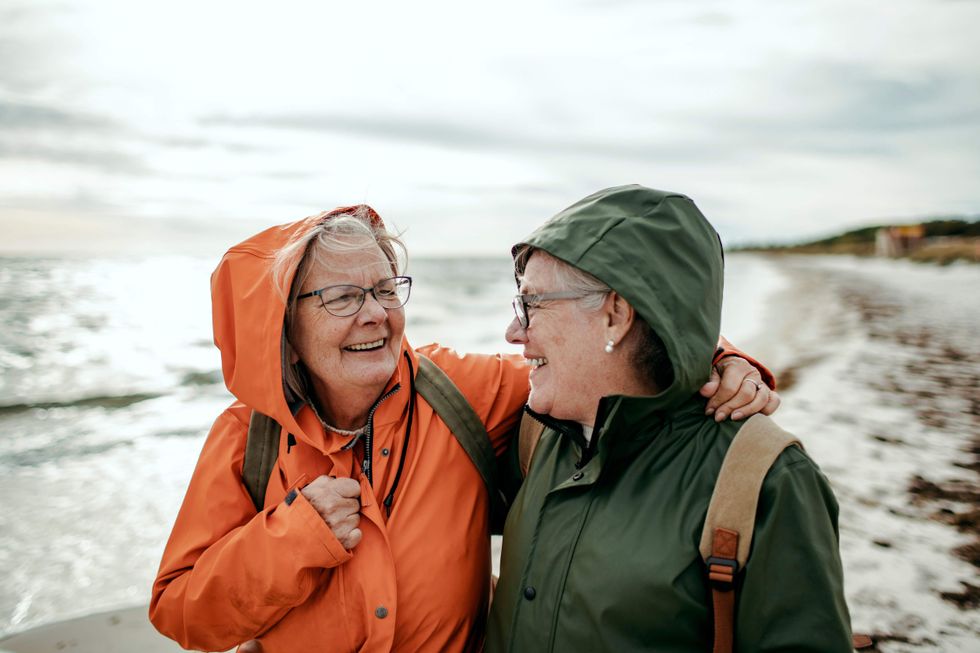
What does being a ‘dopplebanger’ say about your relationship?
 Devor Geber/Shutterstock
Dating or having sex with someone who looks like you doesn’t have to be a big deal. There are a bunch of reasons why you might do this, but there is no reason to rush to some psychological diagnosis when the simplest answer is that you find that person hot.
“Society often overanalyzes sexual and romantic desires — questioning why we have specific kinks or preferences,” Zane says. “While introspection is valuable, there is also power in embracing your attractions without shame. As long as your dynamic is safe and consensual, you don’t need to justify your desires by knowing their ‘roots.’ You can just enjoy them.”
People are frequently drawn to those who share the same interests, and they end up picking someone who looks a little like them, or they start to merge fashion and hair choices over time and look more and more like each other as the years go on. But that doesn’t have to be a problem, and you don’t need to rush to your therapist’s office. “People usually pick partners who share many aspects of their lives,” Mitchell says. “There’s nothing you need to do about it, unless they're standing in for a partner you haven't gotten over yet.”
According to Prezant, the most important thing about dating someone who looks like you is whether you can tolerate the ways in which you are different. For the relationship to really work, you have to embrace your partner’s individuality as much as your similarities.
“Can you tolerate being unlike each other where it counts? Also, many queer communities are small and have similar visible aesthetic codes so it's often harmless to date someone who resembles you in a small dating pool," he says. "It doesn't always require a psychological explanation."
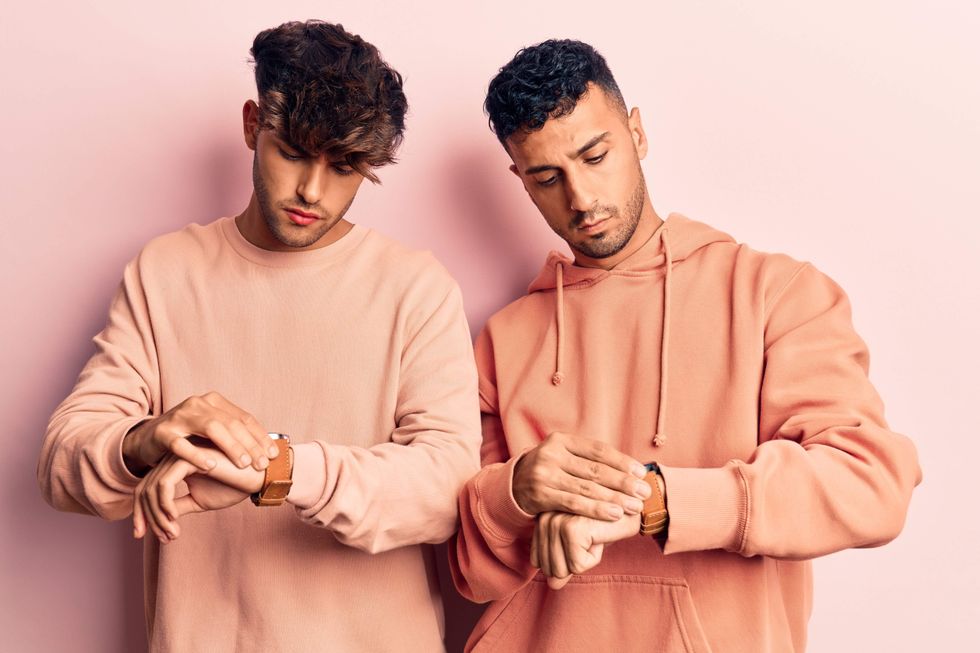
Does it spell doom for the relationship?
Krakenimages.com/Shutterstock
OK, so you looked over at your partner one day and realized it was a little like looking in a mirror. Or your friends have started teasing you about how uncanny the resemblance is between you and the people you choose to hook up with. Now what? Are you doomed to be the butt of the joke (possibly depending on your friend group)? Or is your relationship doomed from the start?
“Not at all! That said, you should be dating someone for more than their appearance,” Zane says. “Do you share the same values, humor, goals, etc.? That’s what’s going to matter far more in the long term.”
As a therapist, Mitchell says that two people sharing physical traits tells him very little about whether or not a couple will make it long-term. “Far more telling is how they interact with each other during disagreements,” he says.
For Prezant, a couple’s appearance “doesn’t matter,” and it says nothing about whether or not their relationship is in trouble. “It's on each individual in a relationship to grow with the relationship and to build a relationship worth having,” he says. “Your hairstyle doesn't reflect this responsibility.”
Sources cited
Zachary Zane is a former Out contributor and current sex and relationship expert for adult toy seller Velvet Brands.
Rod Mitchell is an LGBTQ+ inclusive psychologist and founder of Emotions Therapy Calgary.
Jon Prezant is an AASECT-certified sex and couples therapist who works mostly with gay men and queer relationships.