




Vanilla sex is all well and good, but once you’ve mastered bottoming, oral, hand jobs, and frottage, you may find yourself craving something a little more exciting.
If your sexual appetite is growing and you're finding yourself wanting to try bondage, spanking, and power exchanges, BDSM is worth exploring.
The world of BDSM can seem opaque to the uninitiated, but for those who are curious, there is a whole world of kinky sex and psychological stimulation to explore.
Whether you’ve been interested in BDSM ever since you saw Frank-N-Furter’s kink aesthetics or read Fifty Shades of Grey and wanted a “Red Room” of your own (though, you shouldn't use the novel as a guide to safe BDSM practices), or have only recently opened your mind to the possibility that you could be into kinky sex after watching Baby Girl or Pillion, you’re going to need expert advice before diving into this kinky world so that you can do it safely while having as much fun as possible.
What is BDSM?

LightFieldStudios/Envato
BDSM — an acronym for bondage/discipline/sadism/masochism — refers to the act of “intentionally and consensually applying unbalanced power dynamics to a sexual scenario,” says Topher Cusumano, a sex and sexual health writer who produces shows about queer sex and kink as the co-founder of Daddy TV.
“Think about the thrill of a horror movie that gets you sweating. It's very similar to being in a kink headspace, experiencing a physical reaction under safe, controlled circumstances,” Cusumano tells Out.
BDSM is an umbrella term that can encompass everything from role-play and restraints to playing with power dynamics and spanking, with the core pillars of the practice being consent and communication.
“Contrary to misconceptions, BDSM’s foundation is not pain,” says luxury dominatrix and kink educator Mistress Marley. “It’s consent and communication, paired with intentional power exchange. People talk about what they want, what they don’t, and how the experience will stop if someone becomes uncomfortable. Without informed, enthusiastic consent, it’s not BDSM; it’s harm.”
Why do some people like BDSM?

According to bisexual Pro Dom Harrison Getz, everyone’s love of BDSM and kinky sex probably comes from a slightly different place, but there are also some universal truths about the community. People tend to love it because it “is fun, it is playful, and it is fantasy” and allows you to explore the hierarchies that determine the social order.
“This exploration allows people to attune to their feelings about their place in society, particularly as it relates to sex and gender,” says Getz, who makes kink videos for OnlyFans and has been working as a professional Dominate in London for the past six years. “How does it feel to be humiliated? How does it feel to be punished? How does it feel to dominate someone?”
Getz says that this is why BDSM “is disproportionately enjoyed by bourgeois professionals” who spend their days “in the cold, antiseptic social environment of the office” where they control their every impulse. “BDSM plays with the contrast between the strict and the orderly, on the one hand, and raw sexual desire on the other,” he says. “Tight, orderly ropes. Firm, unyielding gags. Cold, penetrating steel. The sharp, punctual strokes of a cane. All versus you, a human; soft, warm and dripping with desire.”
There is a misconception that people who are into BDSM are depraved or emotionally damaged, but Marley agrees that for many people who spend their lives making decisions and being responsible for other people, it can be freeing to surrender that control, while other people enjoy taking the reins when they don’t have any control in their everyday lives.
“There’s also something very intimate about trusting someone else with your vulnerability,” she says. “You’re expressing your desires and your boundaries and trusting someone to respect them. When it’s done properly, BDSM creates a level of communication that many ‘vanilla’ dynamics never reach.”
But someone’s desire to engage in BDSM can also simply be because it feels good. “Not every fantasy needs to be diagnosed or have an origin story. As adults, we’re allowed to explore and enjoy consensual pleasure in whatever form that may be,” Marley says.
Cusumano, on the other hand, loves that BDSM allows him to “microdose” big feelings like vulnerability, fear, humiliation, total control, and a total loss of control that can be scary to experience in real life.
“You'll hear kinksters talk about ‘headspace,’ sometimes ‘Dom space,’ sometimes ‘sub space.’ That's the container,” he says. “When you're with a partner who's inhabiting an agreed-upon role, you get to play around with these big, scary feelings in a dose small enough to survive and big enough to examine and really feel. Then you put it down. That's the whole trick: it's real, but it's inherently a fantasy. It's reversible. Unlike real pain or fear, which, as so many of us know, has a way of lingering longer than we'd like.”
Does pop culture give people the wrong idea about BDSM?

Warner Bros.
Pop culture often seems enamored with showing taboo and transgressive kinky sex, focusing on the most salacious aspects of BDSM, but almost universally fails to show everything that happens to make those scenes physically and emotionally safe. “Problematic portrayals in pop culture often skip the negotiation and jump right into the drama of BDSM,” Marley says. “We get to see the restraints and punishment from an intimidating Dominant, but don’t see the most important part of the interaction. The part where everyone is involved talks about boundaries, safe words, health concerns, and aftercare.”
Movies and TV shows often show people into BDSM as emotionally damaged, sexual deviants who work out their twisted desires in a “dark and secret dungeon,” when in reality “kinky people are regular people — queer people, couples, disabled people, parents, professionals — pretty much every kind of person you can imagine,” she says.
For Cusamano, seeing Michelle Pfeiffer “in a leather catsuit doing property damage in Batman Returns” rewired his brain, which is why he thinks even problematic portrayals of BDSM can be helpful. “It gives us a big piece of the vocabulary we need to bring our fantasy to life,” he says. “Of course, we hope that once people decide to take it out of their head and into practice, they put in the work to learn actual safety first. If you're reading this piece, congratulations, you're already on the right track.”
The biggest myth Getz would like to dispel is that physical and emotional abuse and BDSM are not one and the same. “It’s not unheard of for couples to strive for realism in a kinky role-play scenario, but BDSM usually has some element, however small, of camp and dramatic exaggeration,” he explains. “If a person is throwing their partner around, threatening them, hitting them and choking them, without any sense of measure, purpose or theatre, then it’s very unlikely that they are engaging in consensual BDSM.”
One of he most important things to remember is that “kink is an escape from reality. Abuse is an inescapable reality,” Getz says.
If you want to try BDSM for the first time, what should you do?

ADDICTIVE-STOCK/Envato
Cusamano suggests talking to kinky people to learn about the BDSM scene without the pressure of sex being on the table. “You can learn so much from out-of-scene conversations, without the lingering ‘are we gonna fuck?!’ energy clouding everything,” he says.
Some solo sexual time will also allow you to do some self-exploration to figure out what you’re actually into. “Keep a masturbation journal,” Cusamano recommends. “Give yourself time to explore your body and your fantasies. I'd suggest doing this without porn. Let yourself sink into your wildest scenarios, the kinkiest, lushest version you can imagine. Masturbate, cum, then journal: What did you feel physically and emotionally during the session? Which parts were clearly just fantasy, and which parts do you think you might actually want to bring into the real world?”
Once you’ve done that you might be chomping at the bit to get started, but don’t jump in the deep end right away. Try filling out a yes/no/maybe checklist (you can find many online) of activities you’re interested in or unwilling to try, and pick something simple that you both checked off. “For your first experience, choose a relatively low-risk activity — maybe a blindfold, light spanking, soft restraints, or verbal commands,” Marley says. “Don’t try to recreate an advanced scene you saw in porn. Start slowly, listen to your body and emotions, and build from there.”
If you already have a partner who is game to start experimenting with BDSM, Getz says do your research, watch some tutorials online, and then try it together. But if you’re single, the first step is finding someone to play with. If you live in a big city, there may be kink events you can attend or you can seek out BDSM classes or go to kink parties or clubs.
“The website FetLife is a mainstay of the BDSM community and you can find details of what’s on in your area there pretty regularly,” Getz says. “Members will often organize what’s called a ‘munch,’ a casual social event, usually at a local pub or bar, where you can meet fellow kinksters in your area and talk about what you’re interested in trying.”
How can you make BDSM safe?
romanchaknodii/Envato
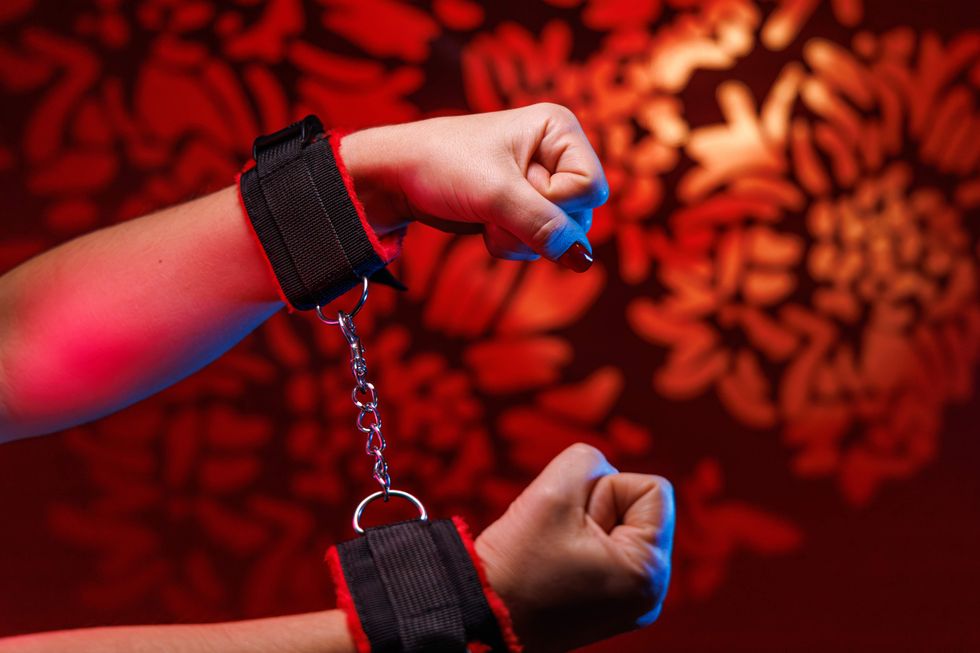
BDSM can be an emotionally and physically rewarding experience, but if not done with safety and consent in mind, things can go wrong, even if unintentionally. “Don’t play without negotiation — including aftercare —and a safe word system, and don’t play when you’re intoxicated,” Marley advises. “Never ignore hesitation, freezing, distress, or a safeword. Consent should be freely given, specific, and ongoing. In addition, beginners should avoid high-risk activities like breathplay, neck restraints, and electrical play.”
The “safe word” is considered the gold standard of consent in BDSM, but Getz points out that it doesn’t work for everyone, which is why actually talking to your partner before a scene is so important. “For example, people who are neurodivergent may find it hard to actually articulate the word at the appropriate time and you may miss that they are unhappy,” Getz said. “I was in this position myself when I was younger. I ended up having a bad time, because I was too shy and awkward to say stop or use the safe word. For this reason, I don’t tend to just use safe words as a dominant. Rather, I think it’s better to regularly and actively check in with the other person; ask how they’re doing, how they’re feeling.”
If you want to start experimenting with impact play like spanking, there are things to keep in mind so that you don’t do any lasting damage to your partner. “With impact play, avoid vulnerable areas such as the head, neck, spine, abdomen, and kidneys,” Marley says. “Don’t leave a restrained person alone and don’t use improvised restraints that can tighten unexpectedly or affect circulation. Also, if you’re using restraints, keep medical or bandage scissors nearby just in case you need to quickly cut them away.”
Cusamano suggests staying away from a 24/7 dynamic while you’re still a newbie to BDSM because it can be really easy to start blurring the lines between fantasy and reality. “Part of the joy of BDSM play is the clarity of Dom/sub roles: in its most basic form, the Dom calls the shots, the sub obeys. But we're humans,” he says. “There will be days a Dom wants to feel vulnerable or soft, or at the very least, off-duty. There will be times a sub needs to listen to their own internal rhythm instead of their Dom's demands.”
Plus, getting to know what your partner is like in their everyday life can make things more exciting. “What I'm trying to say is: don't go into this wanting a partner to play a character for you outside the context of a scene,” Cusamano says. “In fact, getting to know the people you're playing with in their day-to-day form makes watching them transform into that character during a scene even more thrilling.”
What is aftercare and why is it important?

garetsworkshop/Envato
BDSM aftercare is the practice of caring for your partner after a scene by providing physical, emotional, and psychological comfort. “Aftercare helps you transition out of the intensity of a scene,” Marley says. “Both partners can experience an emotional or physical drop after the adrenaline and endorphins wear off — sometimes referred to as dom or sub drop.”
Aftercare is a crucial part of the kink experience for exactly this reason. It helps you transition out of the scene and headspace you and your partner created before you have to take on the real world again. “That means practically and emotionally releasing the roles you were playing, and basking in the afterglow of what you built together,” Cusamano says.
The physical and emotional experience of BDSM can be so powerful that your state of mind is fundamentally altered, and it can be tricky to come back into your body and into he present moment, but proper aftercare can help with that.“If you were the sub, aftercare is time to reclaim your power in the space. If you were the Dom, it's time to relinquish that power and feel like equals again,” he explains.
This can take many forms, including caring for you and your partner's emotions and what you put your body through. According to Cusamano, aftercare can include “cuddling, talking through what you liked about the scene, playing a video game, sharing a cocktail, taking a walk outside. If you did impact play — spanking, flogging — it might be literal: cooling cream or lotion on sore, tingling skin.”
Getz agrees that aftercare can look different for everyone. “But it goes without saying that, after any BDSM play, you should be loving and caring to your partner; make sure they are feeling physically and mentally relaxed and satisfied,” he says. “If you’ve been spanking and whipping their bottom, for example, you could rub some soothing lotion into their skin. You should also double-check for skin breaks and help them clean and dress them, if there are any.”
Tips for people new to BDSM
africaimages/Envato
If you’re still scratching your head, wondering how to get started or how to make you and your partner’s BDSM experience as fun and life-altering as possible, these kink experts have all the information you need.
Mistress Marley’s tips:
Talk before you touch
“Negotiation is a fundamental part of the experience. Always discuss the activity, intensity, boundaries, health concerns, safewords, and aftercare when everyone is still dressed and thinking clearly.”
Start small
“You might be fantasizing about an elaborate dungeon scene, but your first kinky experience doesn’t need ten props and a detailed storyline. Pick one or two approachable elements and leave room to see how they actually feel when you’re experiencing them in reality rather than just fantasy.
Use clear safewords and check-ins
“The traffic-light system is simple: green means continue, yellow means slow down or check in, and red means stop. Dominants should still pay attention to breathing, body language, and responsiveness rather than treating the absence of a safeword as automatic permission to continue.”
Buy tools designed for the activity
“Don’t go DIY with household objects, scarves and belts, which can tighten, cut off circulation, damage nerves, or be difficult to get off. Use body-safe BDSM equipment designed for the purpose and properly learn how it works before using it in a scene. Keep safety shears nearby when restraints are involved.”
Debrief afterward
“After your sessions, talk about what worked, what didn’t, and what could be better. This isn’t a form of criticism, but how kink gets better and better every time. Like every sexual encounter, honest feedback is the best way to learn each other’s boundaries, minds, and bodies.

jgcocinarte/Envato
Harrison Getz’s tips:
You don’t need to break the bank
“Buying a load of expensive kink gear is not necessary. The most important element in BDSM is the rapport between you and the other participant(s). You can engage in BDSM with as much, or as little, paraphernalia as you choose.”
Good gear will last a lifetime
“Good quality gear is worth it, though. Not only will it last longer, well-made gear adds to the sense of occasion and helps create the strictness and formality which is such an essential part of the vibe.”
Use your voice
“So much of a good BDSM experience is verbal. Unlike sex, you might not necessarily be in close physical contact throughout a session, so talking can help to maintain intimacy.”
Know what you’re doing before you start spanking
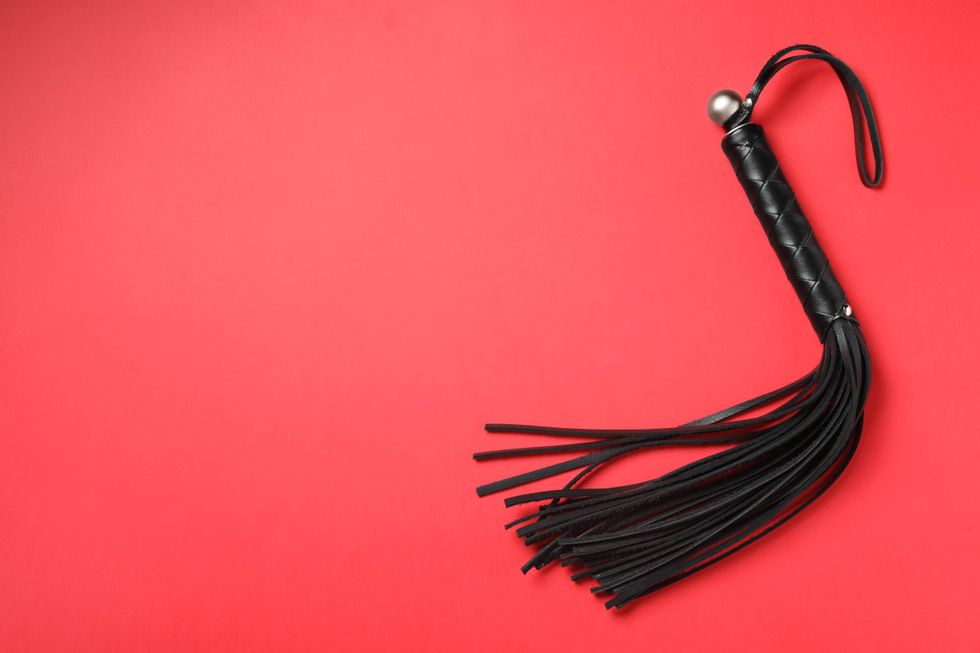
“When spanking: leather implements sting, but are less likely to leave marks than wooden implements. Leather is pliable, after all. Belts, straps, whips and tawses can be really sore, but hard wooden paddles and bath brushes are generally more likely to leave a bruise. When you paddle someone's ass, frat style, you are technically hitting them with a big stick, so bear that in mind before you start swinging wildly."
Aim low when spanking
“Aim low when spanking. The most important thing, from a safety perspective, is to avoid the area around the tailbone. People's glutes can take quite a beating. Their coccyx, less so.”
Pick your dom carefully
“Avoid doms who brag about how sadistic they are and how hard they can spank you. If a dom is overly desperate to prove how tough they are, they are probably not very good. A dominant should be capable of working with all levels of experience and shouldn't be using you to work through their insecurities.”
Say hi to kink creators
“Don't be afraid to reach out to creators on socials. If someone has made lots of hot photos or videos of them engaging in kink, they probably love sharing what they're into, so feel free to ask them about it!”

LightFieldStudios/Envato
Topher Cusamano’s tips:
Explore all sides of yourself
“You can be more than one role and have more than one kink. Some kinks may be more interesting to you as a sub, while others bring out your natural Dom side. Maybe there's kinks you're a total switch for. Being sub in one scene won't make you less Dom in another.”
Have fun
“Yes, there's safety and consent to navigate. But once you've got that down, it's really not that serious. If people tell you that you need to wear certain clothes or live by certain rules to be truly embraced by the BDSM community, they're idiot gatekeepers who don't speak for anyone but themselves. Relax, remember it's called BDSM play for a reason."
The stoplight method
“A great way to communicate with a new partner in-scene is the stoplight method. Red means stop immediately: use it the second you feel unsafe, or the second you stop having a good time. (Trust me, you'll know.) Yellow means slow down, lower the intensity, ease off. Green means keep doing exactly what you're doing, because you're loving it.”
Lean in
“When you're getting ready for a scene, dress the part. It doesn't have to be a full leather getup. If I'm playing a bully jock, I'll throw on a jersey and running shoes, nowhere close to my normal wardrobe. Sometimes those external touches make the internal shift a lot easier.”
Sex and kink don’t have to be linked
"A great kink scene can include penetrative sex or oral, but it doesn't have to. Some people get such a thrill out of just being tied up, teased, smacked around, whatever, that sex is the furthest thing from their mind. Some would even say penetration takes them out of headspace entirely. I'm mentioning this because so many vanilla people have a strong reaction to sex that doesn't involve a hole and a pole. You don't need either to have a good time. For some people, kink is more of a sensual meditation than a sex act. So listen to your body, and give it what it wants."