
Warning: This article contains spoilers.
Terry Matalas is a very busy man. Lately, he's been seen and heard all over podcasts, YouTube and social media, promoting and answering questions about the latest Marvel Cinematic Universe miniseries, VisionQuest, which he created. The hit show has generated buzz in advance of the upcoming MCU blockbuster, Avengers: Doomsday, with a surprise post-credit scene driving advance ticket sales through the roof.
VisionQuest also made MCU history with its cast of three out LGBTQ+ stars, marking a milestone in rainbow representation on television, which Out reported hit a new low this year.
"I really can’t take the credit," Matalas told Out.
But his show is also the target of a lot of Reddit chatter about why the characters those actors played were not shown to be queer on screen, as well as questions about whether the show's central plot is a "trans allegory," either by design or because viewers see it that way. Despite his grueling schedule, Matalas this week made time to address those questions and more in an interview with Out.
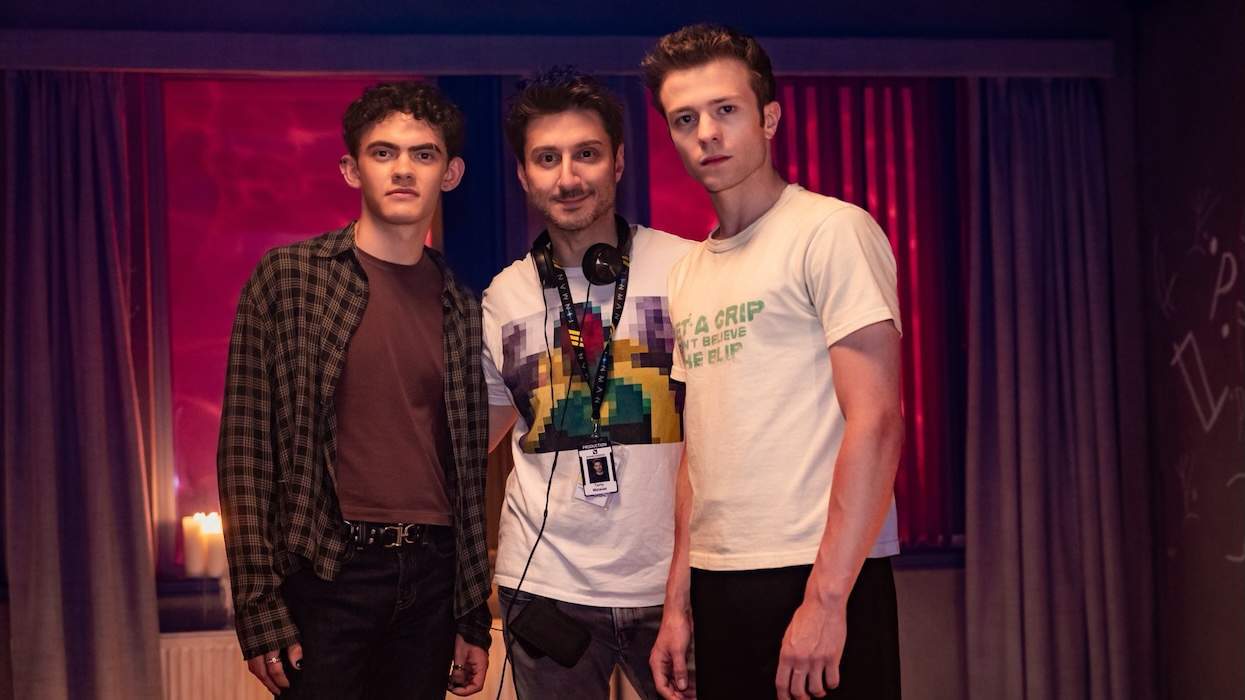
He's been working nonstop on this miniseries since 2024, when he was brought on to develop VisionQuest as its showrunner. Additionally, he is one of the show's eight executive producers, the writer of three out of its eight episodes, and he directed the first two episodes as well as its powerful, emotional and "super-sized" finale that streamed on Disney+ earlier this month.
The Plot, Explained
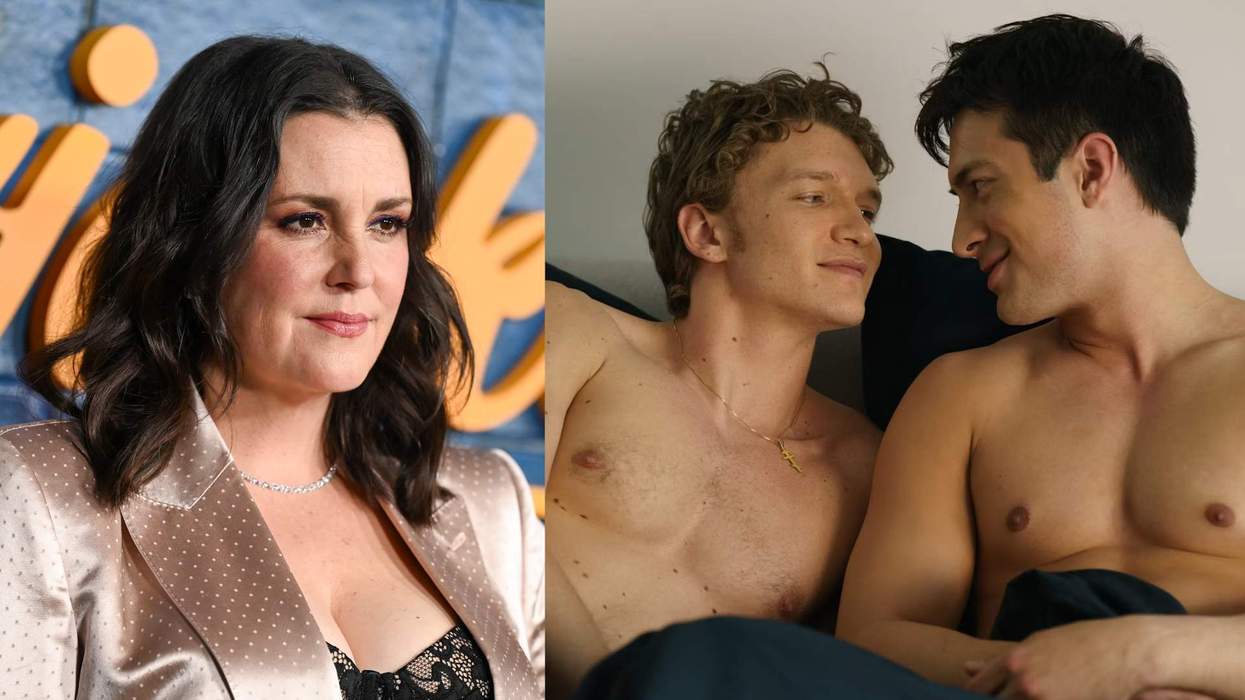
And what a finale: Vision, the "synthezoid" superhero, comes to terms with his own identity as the father of his finally reunited twin queer sons, Tommy and BIlly — played by out bisexual actor Ruaridh Mollica and out gay actor Joe Locke, in his first MCU appearance since Disney+'s groundbreaking lesbian witch romp, Agatha All Along.
But wait, there's more: Vision battles his own megalomaniac robot daddy, Ultron from The Avengers movie franchise, played with gusto by James Spader. For the first time in 11 years, Spader provides not only Ultron's iconic voice, but also appears in the role on camera, as well as the literally mustache-twirling villain, Virgil Horton.
Actor Paul Bettany is once again Vision, and plays a number of other key roles related to that main character, all centered around the idea that "family is forever," a line first uttered five years ago by Vision's late wife, Scarlet Witch Wanda Maximoff, in the MCU WandaVision series. Wanda used a hex to conjure Vision and their sons, a plot point that this version of Vision at first considers irrelevant to his new journey.
Faced with the challenge of playing a character who is struggling to understand himself and humanity, Bettany displays a wide range of emotions as Vision. Ultimately, he uses the magic of television sitcoms and a gesture of self-sacrifice to finally convince Ultron to spare humanity from extinction, as they all confront grief.
Fatherhood Themes
As Out reported in 2020, Bettany's own father was gay. Thane Bettany was so overwhelmed by grief at the loss of his partner of 20 years, he decided to spend the final months of his life back in the closet. Not by accident, fatherhood and identity are themes of great significance for Vision and many of this show's characters, and for Matalas himself. He became a father and his own dad died during production of his first TV series, 12 Monkeys. Memories of his father inspired more than a few Easter eggs, Matalas shared with Out.
Memory Lane
As Vision explores his memories, so did Matalas, who weaved-in a vast collection of pop culture references, including such gay favorites as The Golden Girls and Call Me By Your Name, as well as a healthy dose of Greek mythology and a 1975 pop song by Glen Campbell that this week is back in the charts as a Top 10 hit, all thanks to VisionQuest.
That song is “Rhinestone Cowboy” and, just as Matalas predicted, Spader's dance to that tune has become a meme.
Another deep cut was John Denver’s “Calypso,” oddly set to a shoot-em-up between Vision and the bad guys.
"It was a song from my childhood. My father used to play it on long car trips," Matalas explained to Out. "I've always wanted to put an action scene to it because I'm a weirdo."
He also explained why a 1974 song by Roger Whittaker is heard at the end of the finale, because it was yet another song related to his late dad. He wanted "to channel that father and son energy," he said in both the official Marvel podcast and in his conversation with Out. "'The Last Farewell' is from my father's mix tape from back in the day and worked perfect with our Ship [of Theseus] theme."
The winning formula for Matalas and his team of writers was to mix the processing of loss and paternal pathos with rock-em sock-em robot action. The show also boasts the MCU debut of Paladin, a bounty hunter played to the hilt by a memorable player in many of Matalas's productions, Todd Stashwick. Paladin is a character Marvel fans had previously seen only in the comic books. Stashwick's edgy performance as the cold-blooded killer haunted by dark secrets is a stark contrast to the unexpected comic relief of Vision trying to reconnect with humanity with the help of AI, in the form of five earnest agents with varying talents and an MCU heritage.
Transgender Allegory
An out transgender friend of Matalas made an observation online after watching "Reboot," the third episode of VisionQuest.
"Vision says 'You are who you think you are,'" wrote Maia Monet, an activist, YouTuber and the transgender resource manager at The Center in Orlando, Fla. "I wonder how much he might have been influenced by thinking of trans people?"
"I love hearing that," Matalas told Out, coincidentally on the eve of the Transgender Day of Remembrance. "One hopes whenever you bring anything to the screen that audiences connect with it, and the emotional arc feels real and grounded even as the show goes into some heady, fantastical science fiction territory. The season was largely driven by Vision exploring what it means to be a person and figuring out his identity. Even though he is a synthezoid character, we wanted his journey to feel as human as possible and explore something deeply recognizable. So, it’s deeply gratifying to read that people are finding that connection to the series."
Not everyone, however, is as gratified by that connection.
Byl Holte, a right wing, anti-trans social media influencer with 172K followers on X, came to the same conclusion as Monet, but denounced the transgender allegory as a plot by "woke Disney."
"Instead of giving us a kickass action-adventure show about good defeating evil, Vision's story shifts from what Vision CAN DO to what Vision WANTS TO BE," wrote Holte last month on X. "Forget saving the world. Forget kicking ass. Forget being the hero he was created to be. Now the demand for the audience is to reject what he IS in favor of what he WANTS TO BE."
His rant goes on, and he attracted a few supporters of his hate speech, dubbing the show "Delusion Quest." But most users were more interested in ratioing Holte for his transphobia: "This is the dumbest thing I’ll likely read today," wrote one. "You are so ignorant," said another, with others asking, "How does anyone take you seriously? Have you not been paying attention to Vision's story in the whole context of the Marvel Universe?"
Then there was this: "Dude, the shit you post is so moronic, I'm losing my desire to troll you."
LGBTQ+ Representation
As Out reported last month, the Marvel Cinematic Universe got a little queerer, thanks to VisionQuest casting Mollica as Tommy Shepherd/Tommy Maximoff, gay actor Joe Locke as Tommy's brother, Billy, and lesbian actress T’Nia Miller as Jocasta the synthezoid. Miller starred in 2012's Stud Life, but in VisionQuest, she plays both Jocasta and the human she was, neuroscientist Dr. Josephine "Jo" Carrington, as straight.
Mollica told Variety he recognized the "honor" of playing a canonically bisexual character as a bi actor.
“I feel like Marvel did a great job by casting a bisexual actor for this and it’s such an honor to be portraying that in the MCU,” he said, and rejoiced that there are “these queer twin brothers in the MCU together, it’s so cool." said Mollica.
Out asked Matalas to talk about the inclusive representation in this miniseries.
"We were in the lucky position of being able to draw on decades of storytelling from the comics while developing the character, and then Ruaridh brought so much depth to the role," he said. "He was an incredibly thoughtful collaborator as we brought Tommy to the screen."
“I feel so seen,” Mollica told Variety.
But on Reddit, fans complained about what they didn't see: Tommy being bi. Matalas has already explained this issue in an interview with The Hollywood Reporter, confirming the show included both queer and bisexual Easter eggs for Tommy.
"There wasn’t really a lot of time for him to be exploring his sexuality with the stakes so high. We definitely put in some queer and bisexual-coded patches," said Matalas. "There are these patches on his green jacket in the third episode."
So, unlike Agatha showrunner Jac Shaeffer who as Out reported in 2024 helmed the queerest MCU project to date — showing Billy making out with his boyfriend and prominently featuring lesbian love across nine episodes — Matalas was only given eight to work with, and that forced him to make the choice to limit Tommy's bi identity in this miniseries to Easter eggs. The character has but one relationship on-screen, with Lisa Molinari, played by Lauren Morais.
Unfortunately, that decision only contributes to what GLAAD says is a drop in LGBTQ+ representation on TV of 25 percent. "Those [patches] are promises, I suppose, for future stories and relationships," said Matalas, and one can only hope.
More Maximoff?
Asked if he has been tapped to tell more stories about Tommy and Billy and the Maximoff family in the MCU, Matalas told Out: "I love these characters and this corner of the MCU, and I could keep playing in this sandbox forever," but declined to say more. Another interviewer tried to pin him down:
"Where do you want to see this father and his two sons next?" asked YouTuber Erik Voss of New Rockstars.
"I don't know that I could talk about it," said Matalas. "A lot of it's above my pay grade. And then there's a lot of it that, we have lots of ideas, let's just say."
VisionQuest and Doom
Matalas did confirm to Gold Derby that Robert Downey Jr. voiced Doctor Doom in that surprising VisionQuest finale post-credits scene, revealing Wanda will appear in next month's blockbuster movie. He added that RDJ's line was specifically written for that moment, but that he personally did not film it. Also, he said that he's already seen a screening of Avengers: Doomsday, but cannot discuss what he saw. "Ten out of 10," was all he would say to Voss.
But he did reveal to ScreenCrush that while working on the show, he and Spader improvised lines about Ultron meeting Doctor Doom, even "riffed on this a few times." They imagined Ultron might take issue with Victor von Doom's academic credentials and ask, "Where did he get his doctorate from, anyway?"
Matalas Shoutouts
The New Jersey native is a graduate of Emerson College in Boston, known for its LGBTQ-inclusive academic program and its Los Angeles campus internship program, which led Matalas to work on Star Trek: Voyager, Star Trek: Enterprise and the second and third seasons of Star Trek: Picard. So, as in 12 Monkeys and in Picard, he told Out he gave Emerson another Easter egg in VisionQuest.
"I always like to shoutout to my alma mater, so I sneak in Emerson when I can. We did the same chain of hotels in 12 Monkeys with the Emerson Hotel" he said, adding that two other shoutouts in the series were references to other personal connections. "Syracuse is a reference to my father. And New Jersey was home! So, if it's organic, they'll fit in nicely."
AI in the Family
All this is happening against the backdrop of a growing public paranoia about the real-life threat AI may pose to the world and our future. In one recent interview, Matalas and Spader made clear VisionQuest was not a "retread" of other science fiction shows that focus on the "existential threat of AI taking us out," said Matalas. "Any way you look at it, we are AI's creators, right? We are its parents and it's going to be up to us to to raise it right, to give it guardrails, or and let it be free and hopefully develop in a way that is all right for the rest of us."
Spader noted VisionQuest is really about the dynamic between a father and a grandfather who just happen to be AI, and the young man who's struggling with both his relationship to them, and his own identity.
"Those relationships, no matter how chaotic, no matter how funny, no matter how moving or emotional, what they are is a marriage of humanity and AI together in a rather relatively benign fashion," he said. "Because they're family, and what do you do with that? If you're a human and your father happens to be AI, you know, I think that's part of what the film's about, is how to be a father."