

This story originally appeared on The Advocate.
At least 28 transgender people were killed in the United States over the past year, and 14 of them were Black trans women, according to a national report released this week by Advocates for Trans Equality ahead of Friday’s Transgender Day of Remembrance.
The group’s memorial honors 62 people who died between November 1, 2025, and October 31, 2026, across 30 states and Washington, D.C. Alongside those killed, it remembers 21 people who died by suicide and 13 who died of natural or unknown causes.
“Every name in this report belonged to a person: an artist, a student, a parent, a friend,” Bahari Thomas, director of public education at Advocates for Trans Equality, said in a statement.
Related: Transgender Day of Remembrance: What it is and how to observe it
One name that will be familiar in the nation’s capital is SaVanna Wanzer, who founded D.C. Trans Pride in 2007 and later started D.C. Black Trans Pride. When Wanzer died in April at 63, Tori Cooper of the Human Rights Campaign recalled what it was like to have her as a friend. “I can say firsthand that SaVanna will not just be missed for her work, but for her sisterly wisdom and her sense of humor,” Cooper wrote.
Other entries preserve memories that only someone close would know. Madeline “Maddie” Cassandra Stensrud, of Erie, Colorado, met her partner in a crepe shop in 2017. They bonded over fantasy novelist Brandon Sanderson. When her partner proposed at a Renaissance fair, the words “Marry Me” were engraved on a sword. “Maddie was always a gal who loved swords,” her partner wrote in the remembrance report.
Related: A devastating reality: New report finds violence and erasure ahead of Transgender Day of Remembrance
How a name goes missing
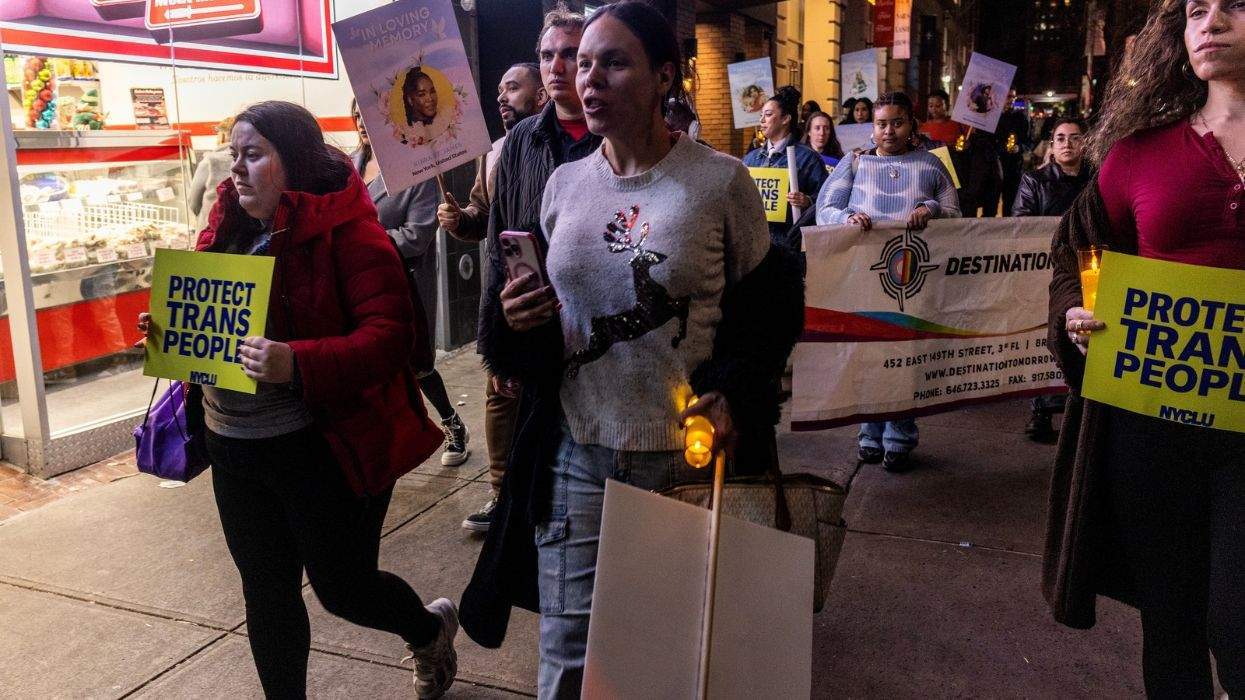
The observance began in 1999, when transgender writer and activist Gwendolyn Ann Smith organized a candlelight vigil honoring Rita Hester, a Black trans woman killed in Boston the previous year. The vigil also commemorated other trans people killed since Hester’s death.
More than a quarter-century later, even learning whose name to read can be difficult. Police may release a name the person no longer used. A news outlet may repeat it. An obituary may omit that the person was trans. Advocates for Trans Equality draws on local reporting, LGBTQ+ organizations, volunteers and families to compile its memorial. The gaps mean researchers cannot use the annual counts to determine whether fatal violence is rising or falling.
This year’s remembrance comes just weeks after the midterm elections. Thomas said lawmakers introduced more than 700 anti-trans bills this year and put spending on ads attacking trans people at $400 million for the election cycle.
“We speak the names of those we lost because too many leaders only seem to say ‘trans’ when they need a vote or a villain,” Thomas said. “While our community grieves, we are calling on our allies for more than a moment of silence.”
The Trans Remembrance Project will hold a public online remembrance Friday from 6 to 7 p.m. Eastern.