

If you don’t know about the Murdaugh murders, you have to be living under a rock. The case consumed the media landscape in 2021 when the Murdaugh family patriarch, Alex Murdaugh, was sentenced to two life sentences for the murder of his wife, Maggie, and their son, Paul.
The trial made national headlines, and it was dissected through the Murdaugh Murders podcast series hosted by Liz Farrell and Madeline Mattney. There were three documentaries on the subject, each appearing on a different streamer: Netflix, HBO Max, and Investigation Discovery. And there was a 2023 Lifetime movie called Murdaugh Murders: The Movie.
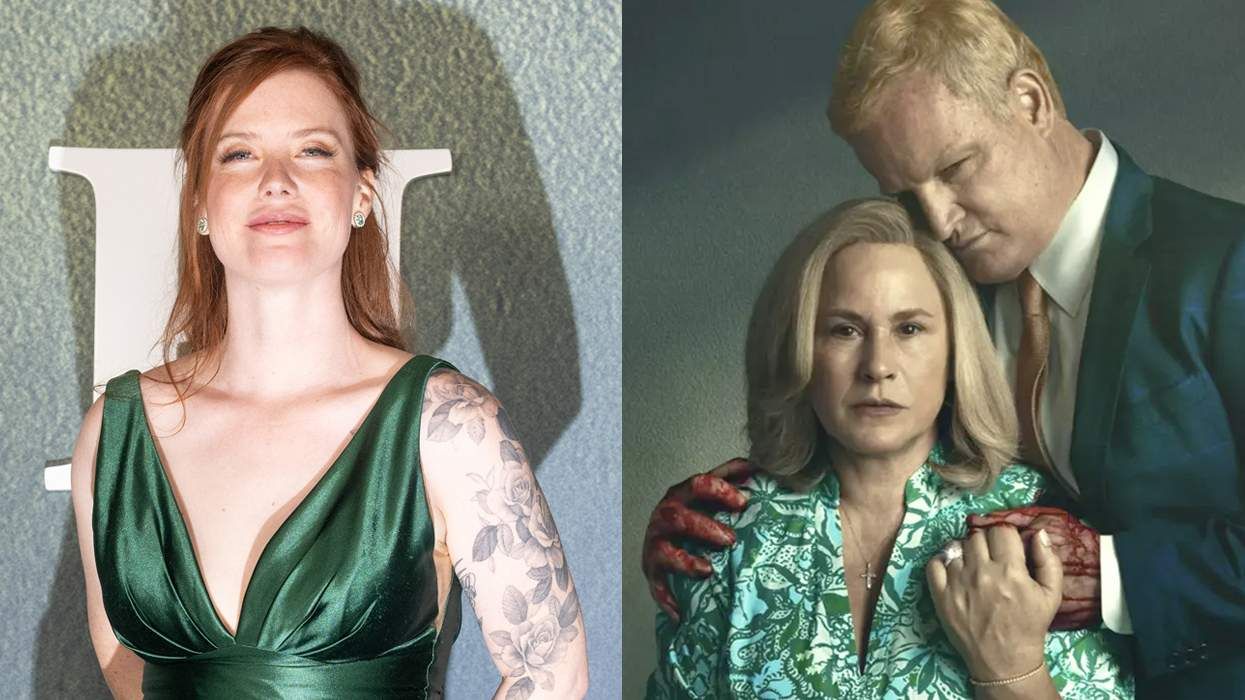
And now, there's a new Hulu show, Murdaugh: Death in the Family, from filmmaker Erin Lee Carr. Historically, Carr sat squarely in the world of documentary, centering her projects around complicated women and the nasty media landscape they find themselves in. Take her 2021 documentary Britney Vs. Spears, an in-depth look into Britney Spears’s devastating legal battle to end her conservatorship, or the 2023 documentary, The Ringleader, a revisionist look at Rachel Lee, the woman who took the fall and went to prison for the Bling Ring robberies in the late 2000s. Most recently, she directed about how the queer indie pop sister duo Tegan and Sara were the victims of identity theft thanks to toxic online fan culture.
With Murdaugh: Death in the Family, Carr dove headfirst into the scripted world; she serves as the show’s co-creator alongside Michael D. Fuller. Out spoke with Carr about why she decided to sign on to this project as a scripted series, what it meant to her to tell the story in a deeper, more nuanced way, and what her next project will be.
Out: How did the idea for this show present itself to you? Tell me about the conception of it.
Erin Lee Carr: I’m not kidding, at least 80 people reached out about the [Murdaugh murders] and said, "We need a doc, we need it.” Being a part of the documentary community, I already knew that there were teams that were already on it, and so I thought, What if I don’t do the doc, but I do the scripted… We were so lucky to get Michael D. Fuller, the showrunner and co-creator, who’s from the South and knows the language, and then we got Patricia Arquette and Jason Clarke [as leads].
The chance of selling a show as a person who's not sold a show before is extremely brutal in the statistics, and so I knew that with these power players, I had a chance to be a shot at something really beautiful, and that's what we did. It's been four years, so it feels like it's quick to sort of come out, but it took many, many years and a writer's strike in between to get this going.
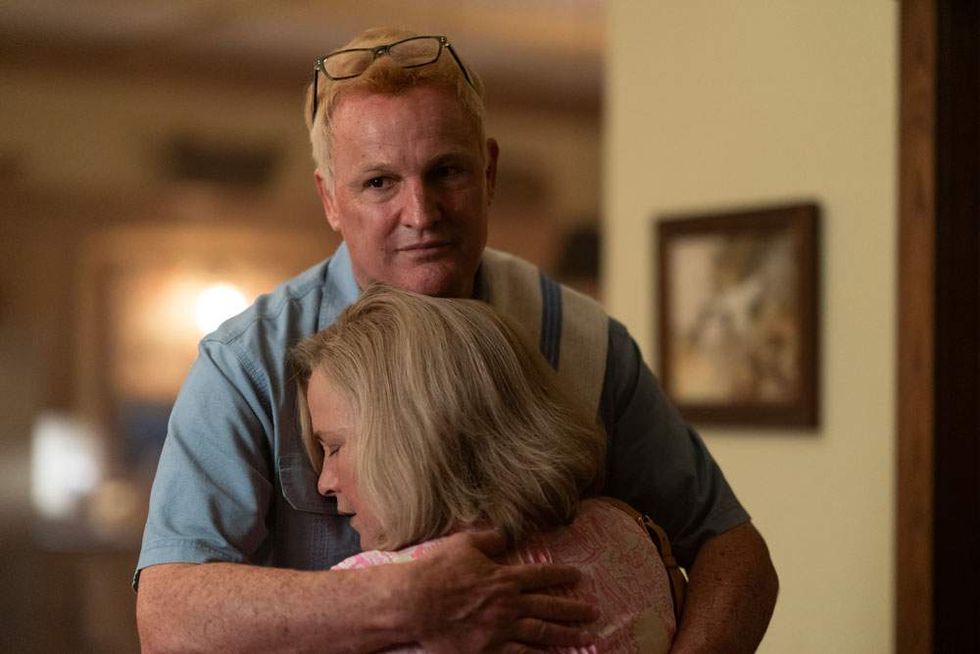 Jason Clarke as Alex and Patricia Arquette as Maggie in 'Murdaugh: Death in the Family'Disney/Daniel Delgado Jr.
Why scripted, though? You’ve done a lot of documentaries. Was it always your intention to swerve into that lane somewhere down in your career?
I was put on earth to be a documentary filmmaker, but I was also raised by David Carr, a journalist, to climb new mountains. I saw it as a way of learning an entirely new skill set, and it was frightening. Honestly, it was scary because I'm just so set in my role as a documentary filmmaker, and it's really easy and comfortable. Yes, the subject matter is extremely painful, but...I just don't know how many years we have in this life. And so I just said, if I have an opportunity, and somebody is going to let me be a part of a scripted show, yeah, by George, by God, I'm going to do it.
I was lucky to get to work on the Stephen Smith episode. It's episode 5, where this is the young queer kid who was brutally killed, [which] was first ruled an accident but then was considered a homicide. So I got to work on that a little bit and bring in that concept of queerness into the show. Especially as someone who is extremely out right now and going to premieres with my two partners, it felt really cool and good and authentic to not know all the Southern language, but explore what it means to be queer and to feel scared and to...show his life before his death. And so I got really lucky and got an episode that I could really speak to in my own experience.
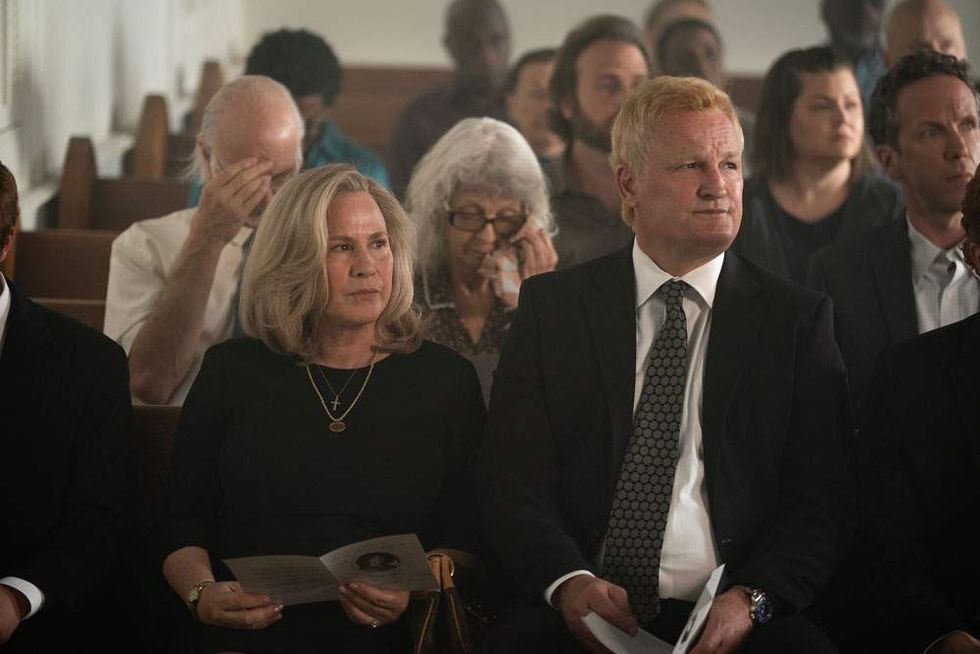 Patricia Arquette as Maggie and Jason Clarke as Paul in 'Murdaugh: Death in the Family'Disney/Daniel Delgado Jr.
With this story in particular, it speaks to the idea of privilege, and I’m wondering in this political landscape, as a queer person, why you felt it was the right time to tell this story?
I think that there was this element within this family that you could get away with anything and everything. And in the actual story, Alex Murdoch's crimes were uncovered as a deep fraud that he had perpetuated on his family, his friends, and members of the community. And so if you look at that case, you know that that was part of the motivating factor, and that was really important. Because the big question about the Murdoch case is, How does somebody who loves their family, who was very beloved by the community, go from this person to that person, and their family was in a long line of prosecutors that ruled the South?
And so this is one of the steepest falls from grace that one could ever imagine, and we really wanted to take this story and have it inspire aspects of the show and really think about what it means when you've been told your whole life you can get away with everything.
I wanted to show the humanity of Paul Murdaugh and Maggie Murdoch, who were ultimately the victims of the worst nightmare… I really wanted to talk about the nature of privilege and how it looked like [in this] certain way. But so much was happening behind closed doors, and the legal pressure that Paul, in my opinion, was facing was a factor in Alex Murdaugh's conviction of killing his family.
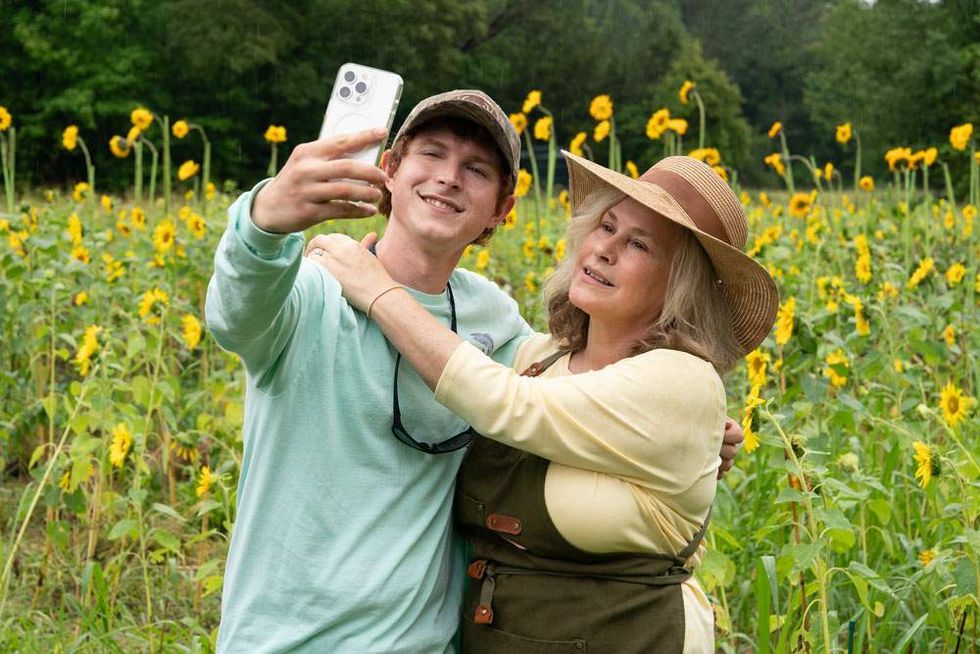 Johnny Berchtold as Paul and Patricia Arquette as Maggie in 'Murdaugh: Death in the Family'Disney/Daniel Delgado Jr.
In the past, the documentaries you've come out with have been empathetic looks at women's stories, but this project doesn't touch on that as much. What was the difference in making something like this from what you've done in the past?
This is really from the mind of Michael D. Fuller because he understands masculinity, the nature of the South, the duality of the beauty of the landscapes, and the violence that's perpetuated in these lands. I have to say that the understanding of this masculinity that this family [has] really comes from Michael's lived experience. I got to be really involved in the creation of Patricia's inspiration for Maggie. I think that I will continue to make things about women, you'll see that in future works of mine. It was a beautiful, intense education in understanding these things that came from Michael.
For your next project, is there any figure, whether a woman or a man, that you want to make a documentary about? My suggestion if you'll take it, is Jen Shah from The Real Housewives of Salt Lake City.
Oh my god, so good! I do have something I'm working on for HBO Max about a mother-daughter duo and something for Netflix about a famous woman. But thank you for that feedback, it's been pitched to me before. I'm very, very interested.
Can you speak more about the celebrity one?
I can't say who it is, but it's a celebrity crime story. It's more of a crime story than a celebrity story, but the person is very well known.
New episodes of Murdaugh: Death in the Family drop Wednesdays on Hulu and Disney+.