
It’s no coincidence that horror becomes wildly popular in times of social unrest. People need to see solutions for surviving the monsters in their everyday lives. For me, in this current moment, if Donald Trump, his monster administration, and their zombie followers are the villains in our national horror, an algae bloom decimating the blue paint our dear monster leader so valiantly laid down in D.C.’s Reflecting Pool is the anti-hero we all need. How fitting that nature is taking back the reins from an administration so dead set on destroying anything of public value for vanity or profit.
Every country has a killer clown. Every town has Elm Street. And every town has bully kids, bully parents, bully teachers, hypocrite pastors and real-life monsters that kids like me wanted to run as far away from as possible.
I was 10 when I first saw A Nightmare on Elm Street 2: Freddy's Revenge, but I was in tune enough with myself to connect with Jesse Walsh, a teenage boy haunted not just by Freddy Krueger but by something inside himself he cannot control. While earlier horror films often coded queerness through villains, Freddy's Revenge places a closeted young man at the center of the story and turns his fear of exposure into the monster itself.
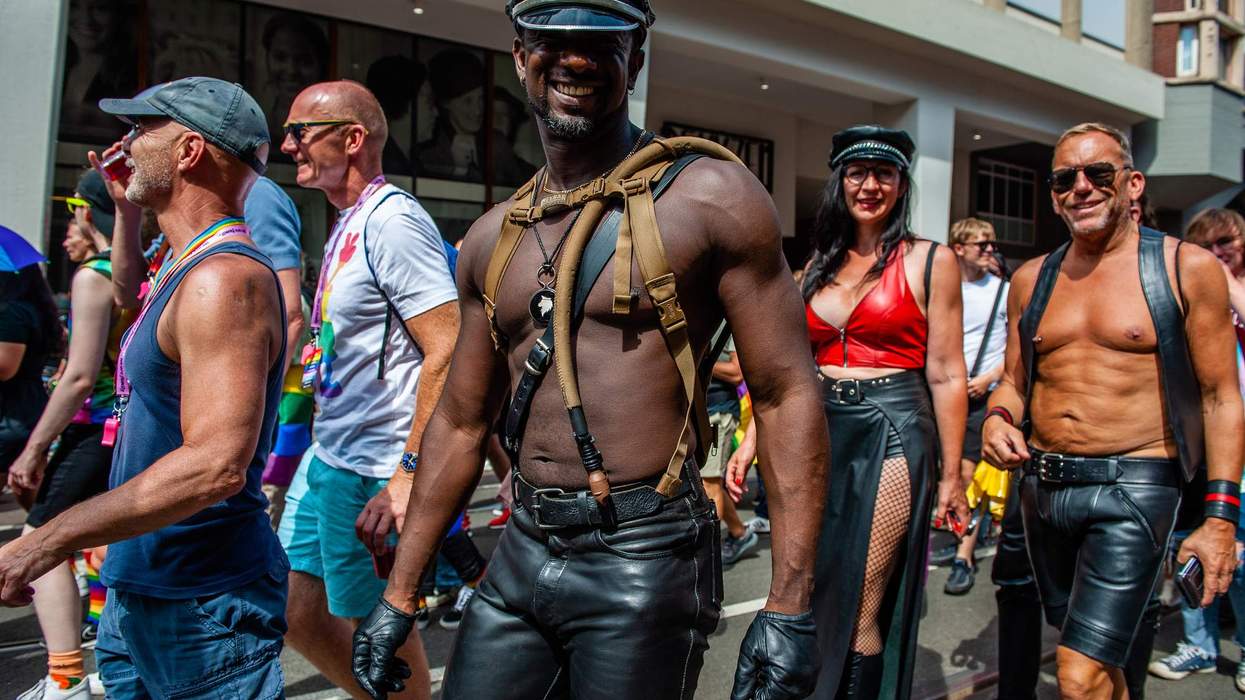
Released in 1985 during societal terror caused by the AIDS crisis, the subtext is hardly subtle. Jesse recoils from his girlfriend's advances, seeks comfort and intimacy from his male best friend, wanders into a gay leather bar, and finds himself stalked by a sadistic gym teacher whose eventual death unfolds in a bondage-inspired shower sequence. Freddy's Revenge effectively transforms Freddy into a metaphor for repression itself. The horror comes not from being gay, but from trying desperately not to be. Jesse spends the film terrified that something inside him will emerge and destroy his life, a narrative that resonated with many queer viewers even before critics had language to describe it.
The film's legacy extends beyond the screen. Mark Patton, who played Jesse, endured years of scrutiny and professional fallout because of the movie's homoerotic themes at a time when Hollywood remained deeply hostile to openly gay actors. Writer David Chaskin would later acknowledge that the film was conceived as a gay panic allegory. Robert Englund, who played Freddy Krueger, has repeatedly said the subtext was obvious from the script itself. Everyone involved in the film knew it.
The film's infamous leather bar sequence, its fixation on male desire, its inversion of traditional horror gender roles, and Freddy's relentless torment of Jesse's sexuality were not accidents. All these themes were embedded inside one of the most popular horror franchises in America at a moment when LGBTQ people were dying en masse and being demonized, feared, isolated, and erased. Long before Hollywood was willing to tell openly queer stories, Freddy's Revenge smuggled one into multiplexes across the country.
Fast-forward to today, and the queer community and horror are still inextricably linked. That link wasn't always obvious to the rest of the world. For decades, horror was treated as disposable entertainment: blood, guts, jump scares, Cenobites, cursed campgrounds, people deformed from nuclear fallout living in deserted towns, and teenagers making poor decisions. But queer audiences felt something many critics missed. I always saw myself more in The Hills Have Eyes and Hellraiser than any saccharine John Hughes escapade about the politics of suburban prom. Those John Hughes people were my monsters, and I had to survive them.
The good news is that queer horror no longer has to hide.
Where Freddy's Revenge was forced to communicate through coded glances, leather bars, and subtext, a new generation of filmmakers is telling queer stories out in the open. Films like I Saw the TV Glow use horror to explore gender identity and transformation. Leviticus transforms religious shame and homophobia into a literal supernatural curse. The recent Hellraiser reboot cast trans actress Jamie Clayton as Pinhead, while Bodies Bodies Bodies populated its entire nightmare with messy, complicated queer characters who get to be stupid, funny, selfish, horny, annoying, and human.
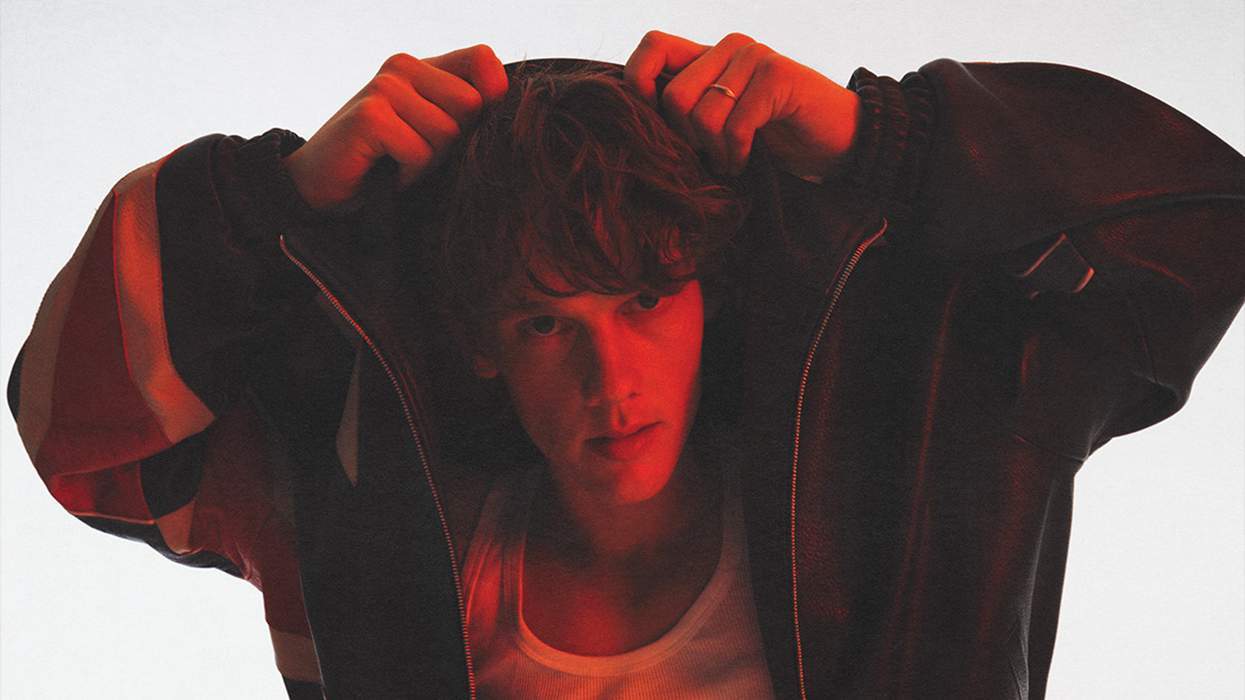
Recently, actor Hunter Doohan has emerged as one of horror's newest scream kings.
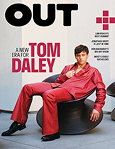
In Out's recent cover story, Doohan discusses stepping into the legendary Evil Dead franchise as Joseph in Evil Dead Burn. Since the release of The Evil Dead in 1981, the franchise has become one of the defining properties in horror history, spawning sequels, reboots, television series, comic books, video games, and generations of devoted fans. Ash Williams is as recognizable to horror audiences as Freddy Krueger, Jason Voorhees, Ghostface, or Leatherface.
What makes Doohan's casting particularly meaningful is how unremarkable it seems. Here is an openly gay actor stepping into one of the biggest and most influential horror franchises ever created, playing a straight character, and nobody is treating it as controversial. Forty years ago, Mark Patton's career was damaged because audiences recognized queer themes in Freddy's Revenge. Today, Doohan is helping carry one of horror's most beloved franchises into its next chapter.
Where Freddy's Revenge had to smuggle its queer themes into multiplexes under the cover of a slasher sequel, today's horror creators can engage those themes openly. And I hope these stories carry the same weight for kids today that they carried for me.
I wrote my first book in fifth grade. The House on North Broadway is a horror book about George Weirdo, a St. Paul resident who escapes a very mysterious and cursed house, relocates to Albuquerque only to fly back and die on a ghost plane from another dimension when it crashes into The House on North Broadway in St. Paul. Poor George Weirdo.
I was obsessed with horror movies. If I could save up enough allowance, I could rent whatever I wanted. Horror was the escape I needed to survive the monsters in my real life. It was also cool as hell.
Outside of Sesame Street's The Count, my first crushes were Freddy Krueger, Candyman, Pinhead, Ash Williams, and even Leatherface. My dad took it seriously enough to take me to see Candyman in the theater to open the door to a history lesson on slavery in America. Good horror usually does have a message. To this day, if I've had a very bad day, I still watch the last sequence in The Texas Chain Saw Massacre and fancy myself as penultimate final girl Sally psychotically laughing away in the flatbed of a truck after I've escaped off into the sunset.
Looking back, I think that's what I loved and still love most about horror. Underneath the terror, blood, guts, monsters, and chainsaws, horror is about survival. It's about flipping the narrative and often seeing what society calls normal and those it deems popular as the true villains. Horror gave me a template and the humor to get through all of that teenage nonsense. And all the nonsense that continues to this day.
We still have monsters everywhere we look. The world is dark. People still fear and hate our community. Politicians still build careers around convincing the public that LGBTQ+ people are dangerous. Entire industries still profit from fear.
But horror taught me something a long time ago. The monsters don’t always win. Final girls survive. And maybe we're the final girls.
Josh Ackley is a political strategist and the frontman of the queerpunk band The Dead Betties. @momdarkness
Opinion is dedicated to featuring a wide range of inspiring personal stories and impactful opinions from the LGBTQ+ community and its allies. Visit Out.com/submit to learn more about submission guidelines. We welcome your thoughts and feedback on any of our stories. Email us at voices@equalpride.com. Views expressed in Opinion stories are those of the guest writers, columnists, and editors, and do not directly represent the views of Out or our parent company, equalpride.