

This story originally appeared on The Advocate.
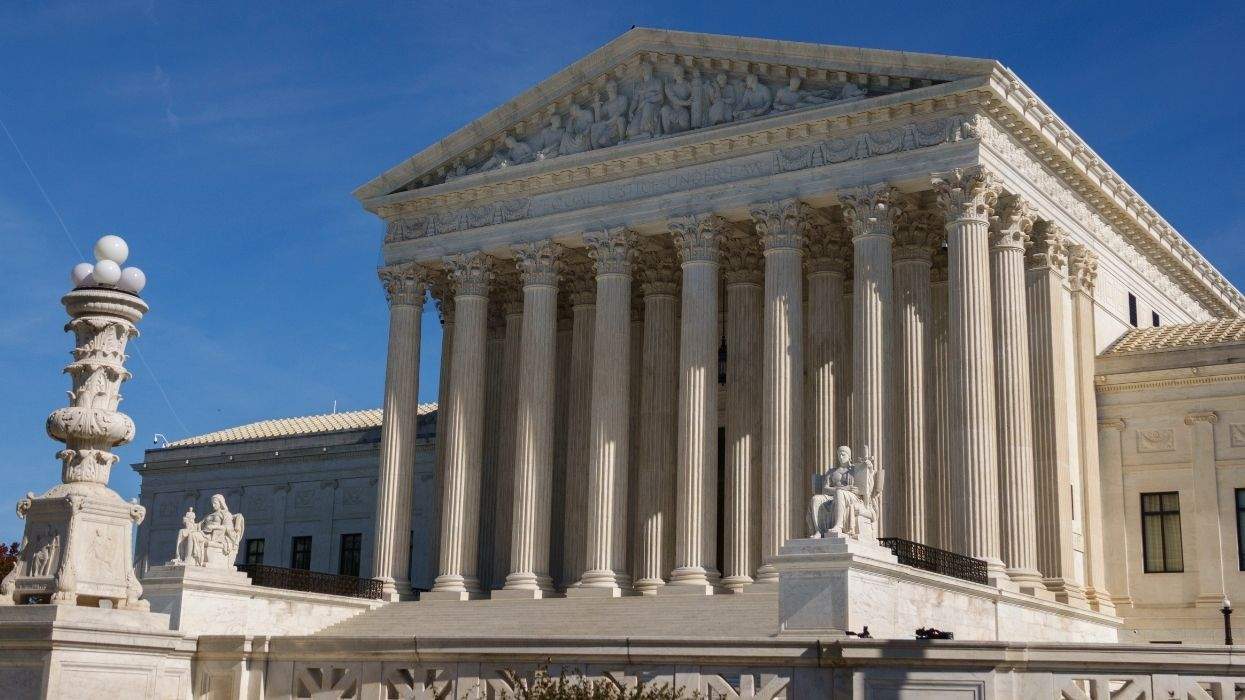
The U.S. Supreme Court’s three liberal justices sharply questioned Tuesday whether Catholic preschools should receive taxpayer funding while retaining the ability to reject children of LGBTQ+ parents. However, many of the conservatives appeared receptive to the schools’ challenge to Colorado’s nondiscrimination requirements.
The argument in St. Mary Catholic Parish v. Roy exposed competing understandings of equality. It involved religious schools seeking public funding without compromising their beliefs, and families seeking the same educational opportunities as their neighbors.
“The principle at issue here is, do you have to treat them better?” Justice Elena Kagan asked.
Colorado launched its universal preschool program in 2023 through public and private providers, including religious schools. Participating schools may teach their faith but must provide equal enrollment opportunities regardless of protected characteristics, including sexual orientation and gender identity.
Two Catholic parishes and the Archdiocese of Denver challenged those conditions without applying to participate, arguing that they conflict with religious admissions policies. A federal district court ruled for Colorado after a trial, and the 10th U.S. Circuit Court of Appeals affirmed that decision. But the Supreme Court agreed in April to hear the challenge.
Earlier Supreme Court decisions barred states from excluding schools from funding because they are religious. Colorado argues that its program welcomes religious providers and regulates discriminatory admissions, not religious teaching.
Justice Sonia Sotomayor pressed the schools’ attorney, Nicholas Reaves, on what an exemption would permit.
Related: The Supreme Court is taking up a case that could shut LGBTQ+ families out of preschool
“Your Catholic schools will reject a child merely because their parents are homosexual?” she asked.
“I would say, if it’s the sincere religious exercise of the petitioner, then I think that would be permitted,” Reaves responded.
Reaves said families must affirm the schools’ statement of community beliefs in good faith. According to him, some circumstances involving same-sex couples would prevent enrollment.
Sotomayor distinguished instruction from exclusion.
“You can teach whatever it is you want to teach, but if parents choose to subject their children to this teaching, you have to accept that child,” she said. “That should be their choice, not your choice to exclude them.”
Justice Ketanji Brown Jackson challenged the Trump administration’s argument that conditioning funding on compliance burdens religious freedom.
“The school itself does not have to admit anybody it doesn’t want to admit,” Jackson told Principal Deputy Solicitor General Sarah Harris, who argued in support of the catholic schools. “But if they’re accepting public benefits voluntarily, these are the conditions that apply.”
Jackson asked whether the same reasoning could justify racial exclusions. Harris said racial discrimination would very likely produce a different outcome under strict scrutiny, the demanding constitutional test the administration wants applied.
“But that’s just arbitrary,” Jackson responded. “That’s just because the Court would say race is different, right?”
Kagan questioned the implications for public education.
“So is the next case parents in a public school saying it’s really important to my religious beliefs that my child not be educated with children of same-sex parents?” she asked.
Several conservatives focused instead on accommodating the schools.
“Why not seek the win/win?” Justice Brett Kavanaugh asked, pointing to roughly 2,000 participating preschools and 34 Catholic schools.
“There are plenty of opportunities to respect the rights of the religious believers and respect the ability of LGBT parents to find among the 2,000 schools an appropriate fit for their children,” he said.
Related: Op-ed: A child’s access to preschool shouldn’t depend on who their parents love
Colorado Deputy Solicitor General Helen Norton challenged the assumption that preschools are interchangeable.
“Think of the parent who needs a school that opens at 7:00 a.m. so she can get the bus that takes her to work,” she said.
Colorado seeks “equal opportunity, not some opportunity,” Norton said.
Justice Amy Coney Barrett questioned whether formally neutral conditions could nevertheless exclude religious institutions.
“If you know that the effect of choosing that requirement will push out those with a contrary belief, how is that different?” she asked.
Chief Justice John Roberts initially distinguished Colorado’s policy from explicit religious exclusions but later suggested their effects were “pretty much the same.”
Outside the court after the hearing, petitioner Lisa Sheley described the financial consequences for her family.
“All we wanted was for our little ones to have the same education we’ve chosen for their older siblings, but Colorado has punished us for that choice,” she said.
Reaves told reporters that families had paid thousands of dollars out of pocket and that enrollment at Catholic preschools in the archdiocese had fallen nearly 20 percent. He attributed two school closures to funding shortfalls and declining enrollment.
“It claimed that Catholic schools are the ones excluding families, even as Colorado excludes thousands of Catholic families,” Reaves said of the state’s argument.
LGBTQ+ advocates emphasized the children who could be denied admission. Lambda Legal and GLAD Law filed a brief supporting Colorado.
“No four-year-old should be turned away from a taxpayer-funded classroom because of who their parents are, including children of LGBTQ parents,” Lambda Legal attorney Karen Loewy said in a statement.
Human Rights Campaign President Kelley Robinson likewise urged the court to uphold the requirements.
“Exclusion has no place in our educational system,” Robinson said.
A decision is expected by the end of June 2027. Reaves said outside the court that, if the schools prevail, he expects they could participate by the fall.