


This story originally appeared on The Advocate.
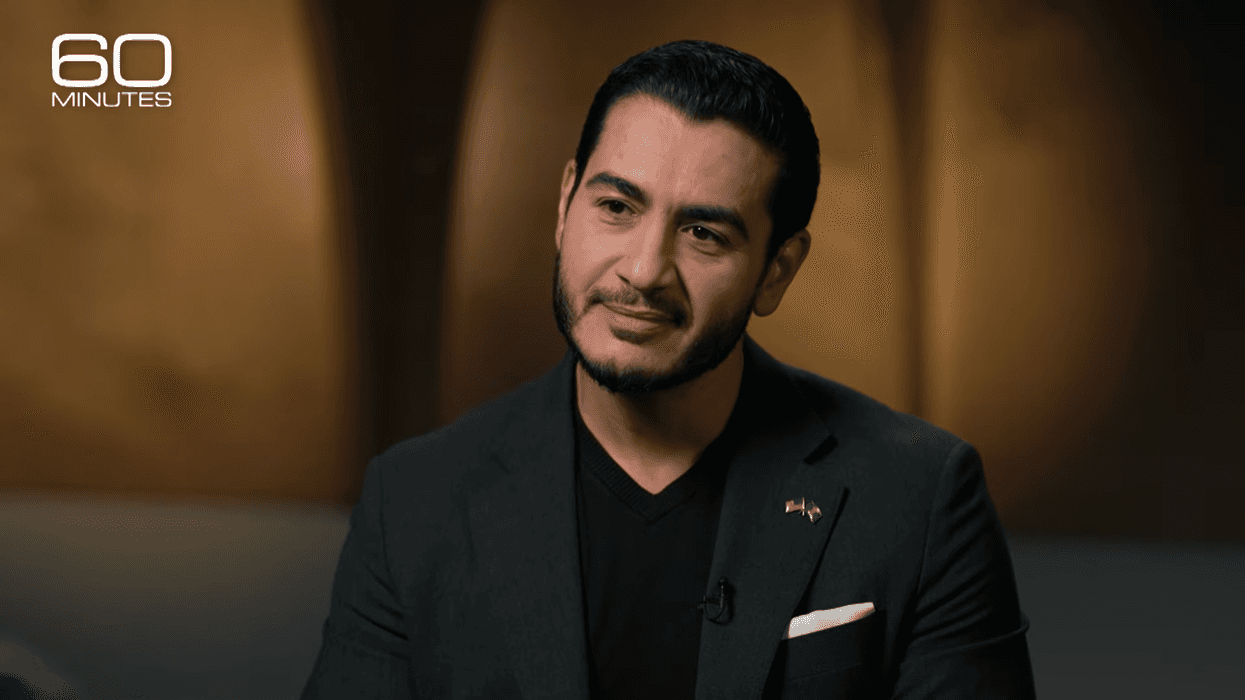
Michigan Senate candidate Abdul El-Sayed made clear he will defend transgender rights in an often combative 60 Minutes interview that aired on Sunday.
CBS sent conservative columnist Ross Douthat to interview the Democrat ahead of today’s midterm elections, in which El-Sayed is running in a closely watched contest against Republican Mike Rogers. During the conversation, Douthat questioned whether El-Sayed’s Muslim faith would undermine his progressive politics.
“A lot of Muslims have like a lot of Christians have traditional traditionalist conservative positions on issues like abortion, same-sex marriage, transgenderism,” Douthat said. “I’ve had Michigan Democrats tell me that Donald Trump made inroads with Muslim American voters in this state on those issues. Do you feel any tension between your faith and being part of and a champion of a very socially liberal and culturally liberal party?”
- YouTube www.youtube.com
But El-Sayed said that was where right-wing attacks on him made no sense. While President Donald Trump has painted El-Sayed as a socialist and a “jihadist,” the Democrat calls himself a constitutionalist focused chiefly on individual rights. That includes rights for transgender people.
Related: Jesse Watters wanted to debate trans kids’ bodies — until Dr. Abdul El-Sayed asked about his
“The minute you ascent to government taking anybody’s rights, whether you use them or you don’t, you are assenting to government taking everybody’s rights,” El-Sayed pushed back. “And I believe in rights. And even though somebody might use rights that you don’t understand, you never mean to use yourself, you still got to show up and fight for those rights.”
It’s a conversation El-Sayed said he consciously engaged in with Michigan’s LGBTQ+ community while trying to build bridges with the Muslim community in the state.
“The point I always make is to say, ‘Listen, I don’t care whether or not you will ever use a right that you were fighting for. Understand that a failure to show up and fight for that right is a failure to show up and fight for your own,’” he said. “So whether people are trying to take your rights to put your face on the ground 34 times a day at a mosque or people are taking away your rights to love who you love, I think we all have got to come together and, ‘No, no no. We are not going to allow government to take rights, because that’s what the Constitution protects.’”
Related: Meet Dr. Abdul El-Sayed, the handsome politician breaking a sweat on the campaign trail
He rejected Douthat casting the defense of rights as part of “secular” or “cultural liberalism.”
“I’m talking about constitutional rights,” he said. “Culture is about choices that people ought to make. Constitutional rights are about the ability to make those choices. I will always fight for the ability to make choices, to live who you are. But I think at the end of the day, the question of culture and the question of politics are separate.”
Douthat argued that “rights are in conflict” on issues like trans athletes’ participation in sports. But El-Sayed said he did not know if that was actually true. “I think we manufacture these social issues,” El-Sayed replied.
He went on to question the conservative approach of attacking schools for discussing topics like gender identity. In a digital age, he said children learn more about such cultural debates from the internet and through their smartphones than they do in the classroom.
Related: Jesse Watters coos 'here kitty, kitty' to Hasan Piker in a maid outfit and cat ears
“The notion somehow that you are going to prevent your child from being exposed to something that you may find disagreeable and that is going to be because of school is so profoundly outdated, because of course you have all the information and they have all the information,” he said.
”Here's the thing about it,” the candidate continued. “I think it’s really important for us to recognize that the free flow of information is actually a beautiful thing. It’s really important and the most important thing you can do is not try to protect a person from seeing a thing. It's about trying to make sure that as you coach your kid through the world that you are engaging with them and saying here's what I believe. Here’s what you may see in the world. You get to make your choices about who you're going to be in the world.”