


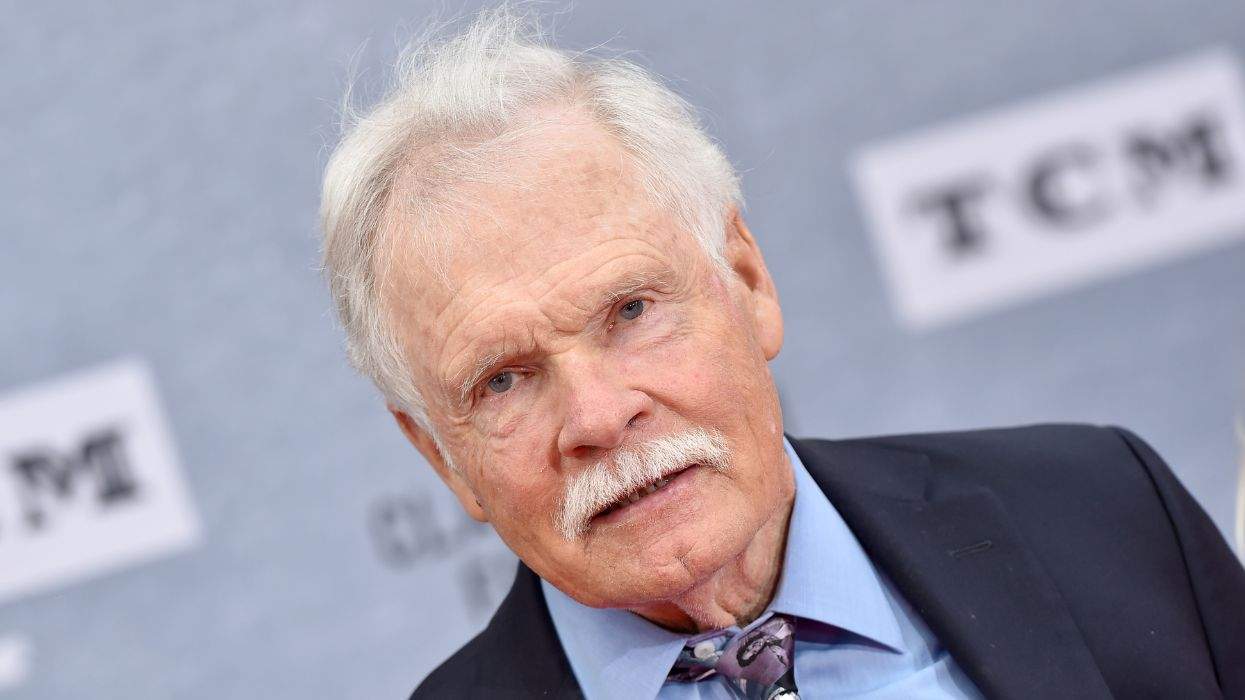

Ted Turner, who changed the face of cable news with the founding of CNN in 1980, died on Wednesday at the age of 87. According to a statement released through Turner Enterprises, the charismatic TV magnate, who revealed he had been diagnosed with Lewy body dementia in 2018, died peacefully and surrounded by family.
In the 1970s, Turner — an Ohio native who eventually earned the nickname the “Mouth of the South” — pioneered the idea of a superstation when he broadcast a local Atlanta station, Channel 17, around the country via satellite. But his belief that information was essential to empowering the U.S. public led him to push the bounds of broadcast news even further. And at the start of the new decade, he founded CNN as the first 24-hour news channel, eliminating the need for viewers to tune in for a set evening broadcast to learn about events of the day.
While building CNN and multiple off-shoot news networks, Turner also began revolutionizing other sectors of the TV industry. In the late ‘80s and ‘90, the magnate founded Turner Network Television (TNT), Cartoon Network, and the initially controversial but ultimately beloved film channel Turner Classic Movies (TCM) — widening access to small-screen entertainment to viewers of all ages. And in 1996, Turner Broadcasting merged with Time Warner, earning the 57-year-old entrepreneur, who stayed on to head up the company’s cable TV networks, $7.5 billion.
Turner was a larger-than-life figure who often courted controversy with off-the-cuff remarks about himself, his competitors, and current events, as well as his swaggering public displays. But outside of his business dealings, Turner, who was married to activist and actress Jane Fonda from 1991 to 2001, is most remembered for his advocacy against nuclear weapons and environmental destruction. During his lifetime, he donated $1 billion to the United Nations — though it took him two decades, due to a disastrous 2001 merger between Time Warner and AOL. And he is credited with helping bring bison back to the American West, as one of the foremost landowners in the U.S.
In his later years, Turner spoke passionately about the effects that nuclear war, global warming, and overpopulation could have on all people, including those in the LGBTQ+ community. When pressed to take a personal stance on gay marriage at a talk with the Commonwealth Club of California in 2008, Turner said that he supported LGBTQ+ people’s right to marriage, as he expected his own to be supported. (Turner, who leaves behind five children, was famously married three times.) He also quipped that while gay marriage wasn’t one of his key issues, nuclear weapons were, and they "endanger everyone — gay or not."
Although Turner cut ties with Time Warner in 2006, as a result of his influence being reduced in the wake of the AOL deal, his progressive politics and humanistic values had a lasting impact on Turner Broadcasting and its parent company. In 2016, when North Carolina passed its now infamous law barring anti-discrimination ordinances aimed at protecting the LGBTQ+ community, Turner Broadcasting was one of a number of media companies that immediately threatened to boycott the state. Many aspects of the law — which was quickly nicknamed the “bathroom bill,” because it policed transgender people’s access to public restrooms — remained active until the end of 2020. But many credit corporate pressure, and an estimated loss of $3.76 billion in potential investments, with the bill being labeled a political disaster.