


This story originally appeared on Them.
On September 14, the U.S. Supreme Court struck down proposed changes by the Trump administration to limit mail-in ballot voting. This decision comes just a month and a half before the midterm elections in November.
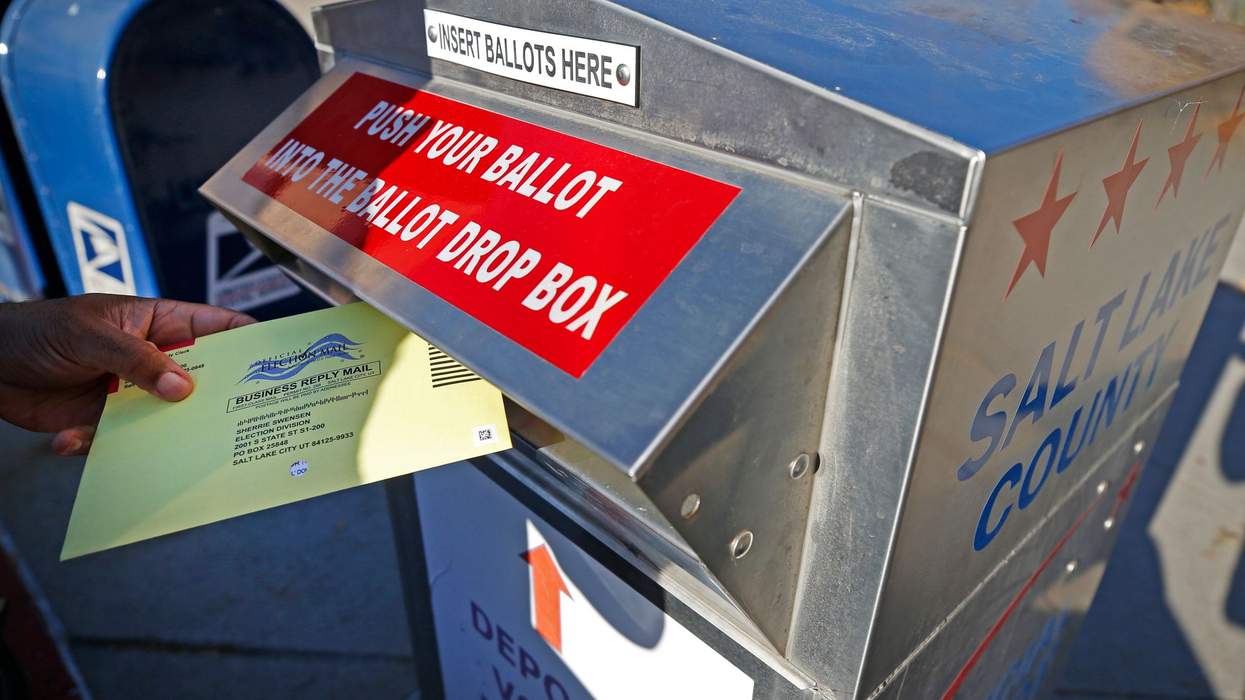
President Donald Trump issued an executive order on March 31 aimed at changing the mail-in voting system by attempting to regulate the USPS’s ability to send out ballots to individuals that were not listed on newly created federal mail rosters compiled using potentially incomplete and inaccurate federal databases created for other purposes, not current and existing state voter registration. The move could have restricted access to millions of eligible voters, especially given that nearly one-third of the country votes by mail, per The Guardian. This comes after many years of President Trump falsely alleging that mail-in ballots have been the source of massive voter fraud and cause for his loss of the 2020 election. It is worth noting that Trump is to be a mail-in voter, per Politico.
According to the Brennan Center for Justice, “The principal thrust of the order is to charge the U.S. Postal Service (USPS) with determining who may vote by mail and instructs it to refuse to deliver ballots sent by anyone not included on newly created federal mail voter lists.” Per the independent, nonpartisan law and policy organization, the move would criminally penalize election officials, mail couriers, and anyone else involved in delivering mail-in ballots to voters “the administration deems ineligible.” Additionally, the law organization stated that the move would possibly have also required the creation of a national list of voting-age citizens by the Department of Homeland Security, all while using incomplete information, “to facilitate this usurpation of state and federal laws governing mail voting.”
The Constitution recognizes that individual states and Congress have the power to regulate their own free and fair elections; this federal attempt to alter the system has continuously been challenged by lower courts and has been discouraged by the USPS, who claim that changes to the mail-in system this close to the election could result in chaos and confusion, especially given that the first absentee ballots were already sent out to North Carolina voters as of early September.
Breaching state rights to govern their own fair elections, the executive order would have made it even more difficult for groups that already face scrutiny at the ballot box, such as people of color and transgender voters. The decision by the Supreme Court to strike the restrictions to mail-in voting down will keep it possible for trans voters to avoid the additional and unnecessary scrutiny on government IDs, which sometimes do not reflect the correct gender marker of trans people.
While showing up in person to vote may be incredibly simple for many Americans, trans individuals remain at the mercy of the poll workers because, as of September of this year, 36 states required individuals to present identification in order to cast their ballot. And what happens when your visual identity doesn’t match the letter of your gender marker? Or if you have an “X” gender marker on your identification, a marker unrecognized by the federal government. In both cases, poll workers could potentially challenge the voters’ form of identification, and in turn discriminate against them. Mail-in voting allows individuals to vote without fear that they may be turned away from the polls.
Additionally, in February of this year, Kansas revoked 1,700 licenses and birth certificates of transgender people in the state, effectively limiting their movement and ability to travel. While Kansas is a state that allows mail-in voting, according to the Kansas Secretary of State’s website voters “must complete an application for an advance ballot and include [their] driver’s license number or a copy of [their] photo identification,” which poses a huge challenge for those whose licenses and identification have been revoked.
Because of this ruling by the Supreme Court, voters will be able to cast their ballots by mail according to current voter registration despite the hurdles that trans people have had to overcome during the Trump Administration’s second term in office.
To check your voter registration by state, visit the United States Election Assistance Commission official government site.
Get the best of what’s queer. Sign up for Them’s newsletters.