




If you have a vulva and struggle with arousal, reaching orgasm, or have problems with lubrication, modern medicine might have a solution. The O-Shot is a new injection that uses a patient’s own blood as a treatment for sexual health issues.
Yes, we’ve officially entered the realm of science fiction!
Much like the P-Shot, the procedure gay men are flocking to for better sex and longer-lasting erections, the O-Shot is a modern treatment for an age-old problem: How can you have better orgasms and a more satisfying sex life?
To find out whether or not you should give the O-Shot, well…a shot, we talked to LGBTQ+ health experts to get all the information you need to make an informed decision.
What is the O-Shot?

Lesbians lying in bed together.
Shutter Z/Shutterstock
The O-Shot is a relatively new treatment where a small tube of a patient’s own blood is drawn and then spun in a centrifuge to create platelet-rich plasma (PRP) before being injected into the clitoris and/or vaginal wall where the G-spot is located. The idea is that the injections increase the collagen formation and blood flow to restore sexual function.
“The O-Shot is a regenerative treatment using your own platelet-rich plasma (PRP), which we draw from your blood, concentrate, and inject into key areas like the clitoris and anterior vaginal wall,” says Aesthetic Nurse Practitioner Chris Bustamante, the owner and CEO of Lushful Aesthetics. “The goal is to improve tissue quality, blood flow, and nerve sensitivity — basically optimizing the anatomy that’s already there so it can function better.”
The procedure is mostly used to treat various forms of sexual dysfunction, but there is also some research to suggest it can be used to treat urinary incontinence that may come as a result of childbirth, menopause, or other health problems.
“Mild stress urinary incontinence — like leaking when you cough, sneeze, or exercise — can improve," Bustamante says. "But to be clear, this is not the first-line treatment for incontinence. Pelvic floor therapy is still the gold standard."
How will the O-Shot improve your sex life?
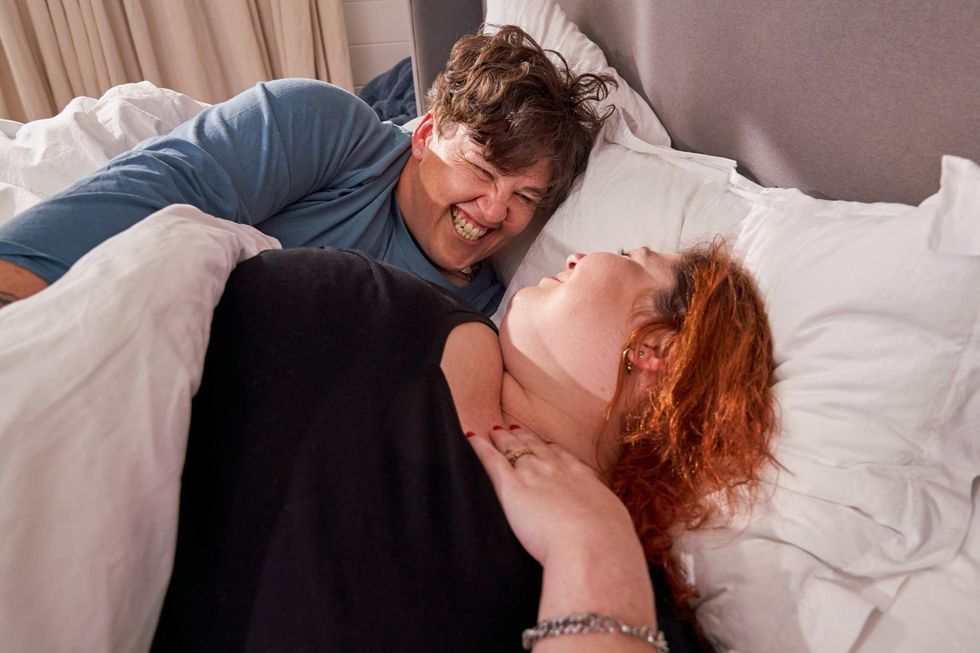
Lesbians laughing in bed together.
KOTOIMAGES/Shutterstock
If your problem is erectile dysfunction, there are a slew of treatments that can help improve your sex life. From pills to the P-Shot to penile Botox to pelvic floor exercises, if you can’t get it up like you want to, you’ve got choices. But if you’re struggling with being able to orgasm from clitoral stimulation or vaginal penetration, there has been very little research done into what can help.
Luckily, treatments like Clitoxin and the O-Shot are now available and can increase your body’s natural ability to create lubrication and aid in giving you better and more frequent orgasms. “Patients can see an improvement in orgasm quality, ease, and natural lubrication,” Bustamante explains. “Libido is more complex. That’s hormonal, psychological, relational — so the O-Shot can help, but it’s not a standalone fix for desire.”
But Bustamante also says that while the O-Shot can improve your sex life, you’ll get the best results if you pair it with other sexual dysfunction treatments. “The O-Shot is not magic, but it's a great treatment option to explore in conjunction with hormone replacement therapy, pelvic floor therapy, and understanding where you're at psychologically when it comes to sex,” he says.
Suzannah Weiss, a sex therapist and resident sexologist for Fleshy, warns that while there is research from a small batch study to suggest that the O-Shot “can help with sexual functioning, including facilitating arousal and orgasm,” results can vary, “with some patients seeing little difference and some experience negative side effects,” including mild pain, bruising, bleeding around the injection site.
Is the O-Shot becoming popular among lesbians and sapphics?

Two lesbians sitting on a bed, embracing each other.
PeopleImages/Shutterstock
It's unclear to Weiss whether or not the O-Shot is statistically more popular among lesbians and sapphics, but she has “seen this population get it as it is usually something a woman does for her own pleasure rather than to meet patriarchal standards. It’s about increasing pleasure, not appearance.”
Bustamante says that although he doesn’t offer the O-Shot in his clinic, which is focused on men’s health, queer women and LGBTQ+ people looking for more clitoral sensitivity are more likely to seek out this kind of treatment.
“For patients whose sexual activity is more clitorally focused, improvements in sensitivity, arousal response, and orgasm intensity can be more noticeable and more relevant,” he says. “So for lesbians and sapphics, it’s about optimizing the primary organ of pleasure.”
How much does it cost?

A woman looking at bills.
Damir Khabirov/Shutterstock
Sadly, the treatments can be pricey and aren’t usually covered by insurance. You can expect to pay anywhere from $1,000 to $2,000, but you will only need to get it redone every six months to a year.
That might seem like a lot of money for an elective procedure, but remember that you get what you pay for. Finding a reputable doctor, nurse practitioner, or injector may cost a little more, but it’s also the key to getting better results with fewer side effects.
What are the side effects and risks?

A doctor holding a clipboard.
PeopleImanges/Shutterstock
After getting the O-Shot, you can expect mild swelling, temporary sensitivity, tenderness, and bruising at the injection site.
“Since it’s your own blood, it’s generally very safe,” Bustamante says, though he also warns that “serious complications are rare, but like anything involving injections, technique matters.”
The risks are fairly low, but Weiss says that since extensive research on the treatment has yet to be done, it’s best to be cautious, especially since some patients have reported pain.
“It does involve needles in your clitoris, which is such a densely innervated body part — and many practitioners are not properly educated about the clitoral nerves and vasculature, which can lead to mistakes,” she says. “It is also possible to get a clitoral or vaginal infection if any bacteria is introduced during the shot, e.g. if the needle isn’t clean.”
Weiss also says that if you have “vulvodynia or any kind of chronic pelvic pain condition,” you may want to stay away from the O-Shot because “it may aggravate preexisting sensitivities.”
Sources cited:
Chris Bustamante is an aesthetic nurse practitioner as well as the owner and CEO of Lushful Aesthetics.
Suzannah Weiss is a sex therapist and the resident sexologist for Fleshy.