
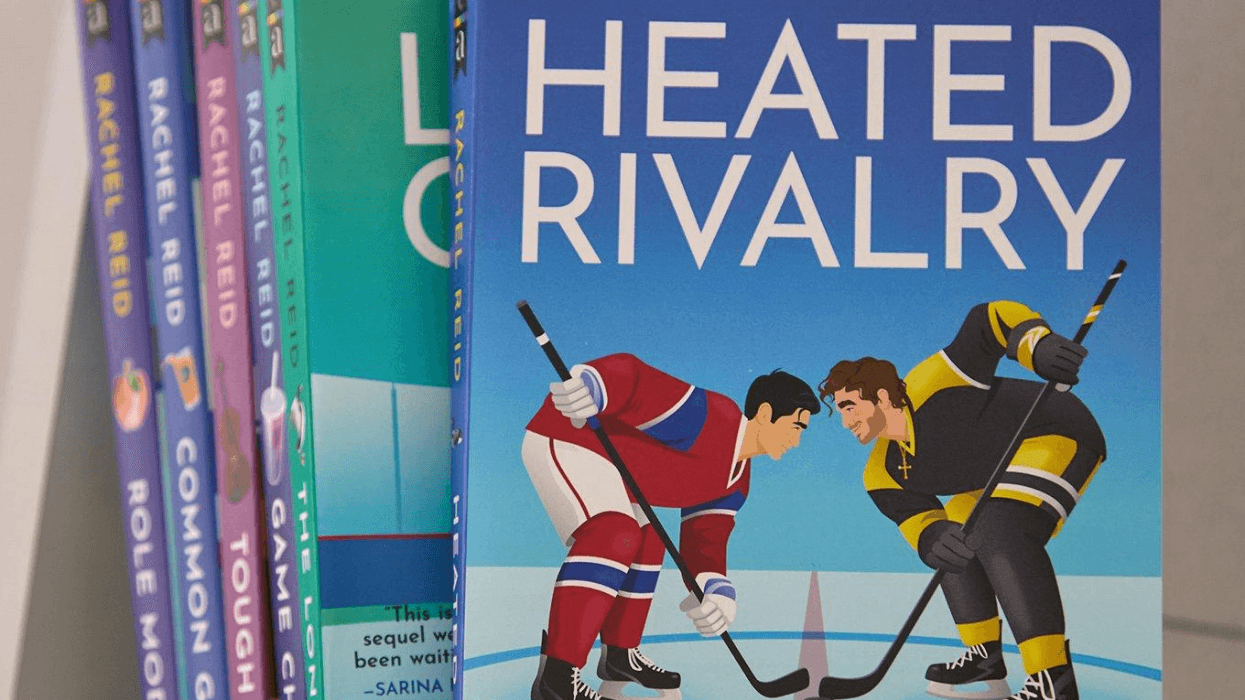
I wasn’t really aware of Heated Rivalry when it premiered November 28 on Crave and HBO Max last year. My debut novel, The Book of Luke, was coming out four days later, so to say my attentions were elsewhere would be an understatement.
Over the next month, however, while bouncing around the east coast on my book tour, I rapidly became aware of the TV phenomenon exploding around me – largely because Heated Rivalry questions were proliferating my Q&As. Once I’d dutifully familiarized myself with the hit (to my total delight!), I understood why readers had linked the two stories and why both bookstores and journalists were including my novel as something to read upon leaving Shane and Ilya at their cottage. After all, my book follows a gay football player who returns to the globetrotting reality show he won in his youth once his adult life implodes in scandal. Inevitable secret sexual escapades soon bombard him on-camera and off. So: hot men, sports, international intrigue…there are obvious shared themes. If anything, I was grateful to even tangentially benefit from the glow of this pop culture supernova, and for any books I sold as a result, I remain forever indebted to Rachel Reid, who authored the source material, and TV creator Jacob Tierney.
But I started to notice something interesting when I heard from some readers both in person and online as the months went on. They didn’t understand why the book ends (spoiler alert!) with Luke as a single man. He has three separate love interests throughout the course of the story – a closeted media scion, a calculating ex-husband, and a starry-eyed porn star. Why was there not a tidy and definitive answer about Luke’s romantic future? I couldn’t ignore that this was rapidly becoming a sticking point for how some folks were viewing the narrative as a whole, especially if they’d discovered it in conversation with a collection of romance novels. “It’s a great story,” one commenter summed up perfectly, “but it’s not really a romance.”
No, dear commenter, it is not. Not because I don’t genuinely respect romance novels, but because I just didn’t write one!
I have happily read romance novels (queer and straight!) that I’ve adored, some by dear friends, others by total strangers, and I’ve admired so many of them. The romance genre is perhaps one of the most underestimated yet powerful forces in contemporary publishing, and I will always rush to praise it. Romance novels thrive within a framework of tropes and conventions that their audiences know intimately and passionately. As such, to craft a story for such a voracious audience is a tremendously brave thing for a writer to attempt. You will potentially face both adoration and scrutiny in equal measure, because these readers are so beautifully fluent in the style of book that they’re consuming. But what happens when those same book lovers dive into a tale that never even professed to play by those rules?
Look, I’ll be the first to admit that there’s only so much any of us can control. In the publishing industry, that pretty much goes as far as writing the book and then publicizing it. From there, any work of art can be recommended casually and with a context that its creator never could have imagined or intended. And no one should be force-fed material that doesn’t excite their preferences. If someone wants to exclusively read romance novels, more power to them, and may those authors’ coffers be lined.
However, I can’t help but wonder if there’s a larger question brewing, as on-screen romance adaptations like Heated Rivalry, Heartstopper, and Red, White, and Royal Blue shape our dominant cultural narratives about mainstream gay storytelling. Are we training consumers to only accept stories about gay male characters who get their happily ever after, the audience effectively forcing two dolls together and saying, “Now kiss!” (as a recent New York magazine cover evoked)? And do we thus create an economy where queer stories that don’t have a perfect bow become less commercially viable and (even more so!) a risk for the people who cut the check to bring that book or movie into the world?
Don’t get me wrong, I love a happy ending as much as anyone. And after decades where queer characters were constantly used as fodder for tragic conclusions, there can never be too much joy in the world. But don’t queer stories deserve complications too? In this world of algorithms, where everyone is trying to label something with a familiar Bookstagram catchphrase (“enemies-to-lovers!”, “so messy!”, “adjective of choice plus ‘daddy!’”) might we not potentially marginalize authentic voices simply because their work got miscategorized? We can’t deny that any work of art is inevitably part of a delivery system to bring it to the world, but maybe we’d all absorb what we’re consuming a little bit more meaningfully if we were grading it upon its individual substance and not how it was sold to us.
I’ll probably never fully know the extent to which any possible misperceptions of my book impacted its trajectory, positively or otherwise. Even if I’ve unintentionally betrayed a reader who was caught off-guard by Luke’s ambiguous epilogue, I want to say how thankful I am that they still took the chance on my book. I really hope more people do too. And for those who were pleasantly surprised and now might be adventuring outside the romance world for a good read…well, you never know when you’ll find your perfect match. As Shane and Ilya can attest, opposites attract.
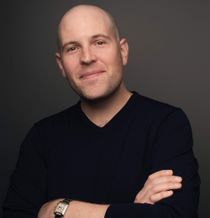
Lovell Holder is a queer filmmaker and USA Today-bestselling author of The Book of Luke. Previously, Lovell directed and co-wrote the feature films Lavender Men and Loserville. Follow him on Instagram @lovell.holder.
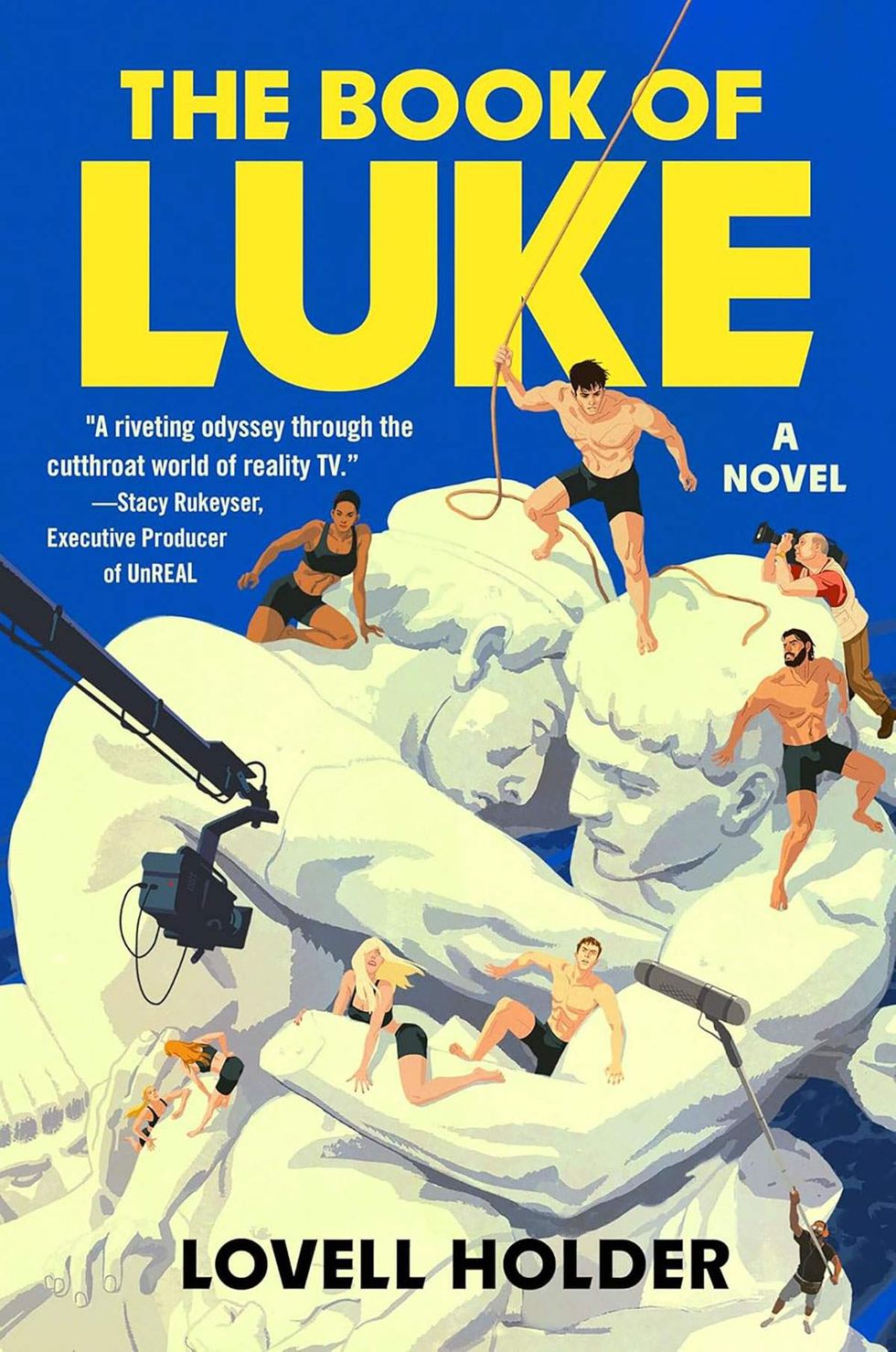 The Book of LukeCourtesy
Opinion is dedicated to featuring a wide range of inspiring personal stories and impactful opinions from the LGBTQ+ community and its allies. Visit Out.com/submit to learn more about submission guidelines. We welcome your thoughts and feedback on any of our stories. Email us at voices@equalpride.com. Views expressed in Opinion stories are those of the guest writers, columnists, and editors, and do not directly represent the views of Out or our parent company, equalpride.