


This story originally appeared on Them.
Have you heard the gospel of Lola Petticrew?
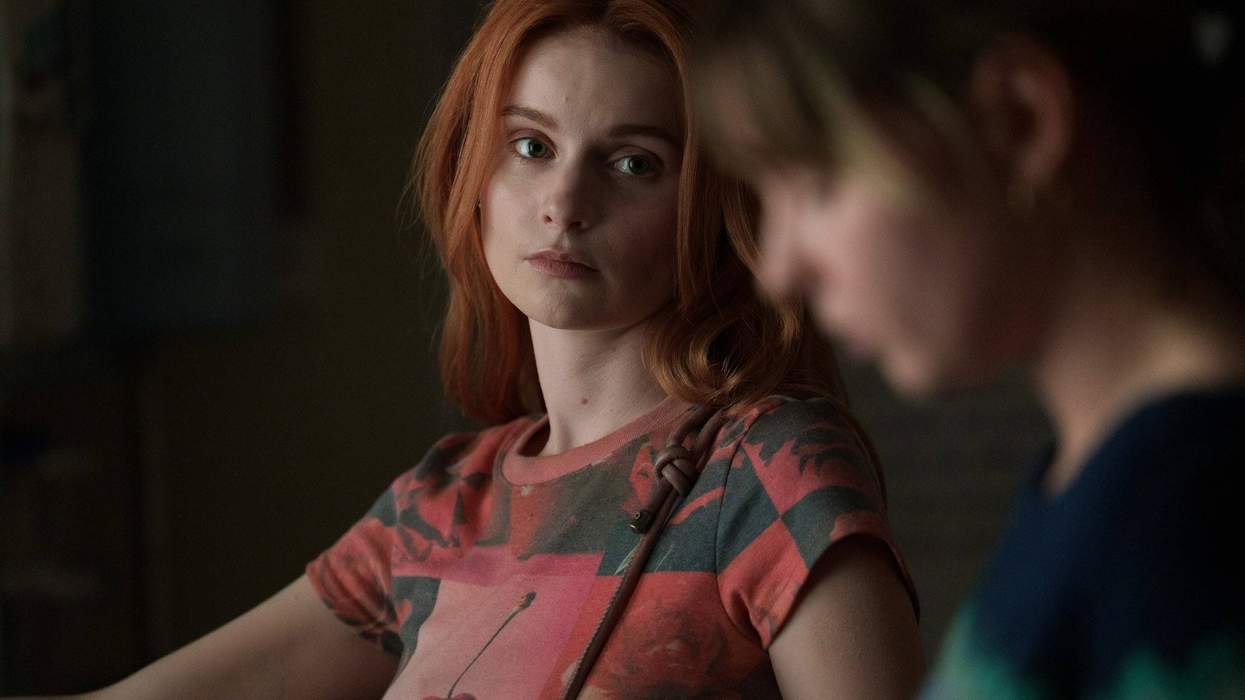
The nonbinary actor first came on my radar after our friends at Autostraddle blogged about their role in Hulu’s FBI serial killer drama Furious, but I resisted watching it. Not because the show doesn’t have great reviews — it does! — but because I don’t typically want to spend my post-work hours watching a crime procedural about a Jeffrey Epstein-style network of sexual predators. Real life is dour enough. But as the accolades for Petticrew continued to roll in, I was persuaded to put on my thickest skin and press “play.”
And wow! Already, in this initial, eight-episode season, Petticrew has easily turned in one of the best TV performances of the decade so far.
If you also need to be brought up to speed on Furious, the Elizabeth Meriwether-created show follows FBI agent Alice Black (the fantastic Emmy Rossum) as she pursues serial killer Catherine Grace (Petticrew), who is using the same kinds of opioids her traffickers once used on her to murder a string of abusers tied to the wealthy Jay Easton. (Clock those initials.) When we first meet Catherine, she cuts a terrifying figure, breaking from a gruesome torture session only to give a trick-or-treater some candy corn before returning to her violent reverie. Petticrew nails the same sort of unnerving American Psycho-esque tones that Christian Bale did a quarter-century ago, and that many have since imitated to lesser effect.
But as we learn more about what Catherine and her closest friend endured at the hands of Easton’s pals — and as Alice’s own past begins to unravel — the show’s moral outlook gets muddier. Petticrew’s performance also begins to reveal its layers, shattered teenage vulnerability coming to the surface in moments that are largely acted alone in bedrooms, with no screen partners. Catherine can be crying one moment, dancing the next, all of it believable, all of it seamless. Petticrew completely inhabits the material in a way few actors do on shows this mature, and all the Emmy buzz they’re getting is completely earned.
Without spoiling things — since I know that this show has flown under the radar for too many — Petticrew’s turn in the season one finale finds them embodying this entire range of emotion, descending to the depths of Catherine’s trauma even while approaching the apex of her rage. It’s a tension that too many actors would try to approach with jarring, “turn on a dime” moments that rely on sudden tonal shifts to induce an easy audience reaction. But what Petticrew seems to understand in their portrayal is that pain and violence are not contradictions, but rather fuel for each other’s all-consuming fires.
Adding even more nuance to the character, Catherine appears to be at least strategically bisexual in ways that make her own orientation even more inscrutable. In an early-season arc, she seduces a women’s shelter staffer (Chloe Troast), but as Autostraddle noted, her intentions are unclear. It is one of many moments in Furious — some involving Catherine, others Alice — that collectively question what sexuality even means when someone’s autonomy has been so thoroughly violated. Is it possible to want again? Can desire be reclaimed from violence? I went into Furious expecting a sort of possibly ill-advised mélange of Silence of the Lambs; Killing Eve; and a “ripped from the headlines,” Law and Order-style episode on the Epstein Files. But I came away from the show — which has already been renewed for a second season — asking big questions about justice, revenge, and culpability.
That’s in large part thanks to Petticrew, who can flash all those questions across their face with a deftness that promises great things to come.
Get the best of what’s queer. Sign up for Them’s newsletters.