


“Why are you here?” At first, I didn’t know the answer. Later, I realized that dance is a way of being seen in a world that often made me feel invisible.
At age 6, I was the only boy in my ballet class in Chengdu, China, and the girls couldn’t understand why I was there. I thought a boy dancing ballet was elegant, so I signed myself up. But every time my primary school held its annual talent show, I pretended to be sick. Because to my schoolmates, a boy who danced ballet was strange.
Later, at boarding school in Massachusetts, I joined the school voguing club. I initially had no idea what voguing was, but my crush, Alex, a professional voguer, told me it was fun. I fixated on him across the dance studio and inched closer until I became his shadow, clumsily imitating the angles of his wrists and arms.
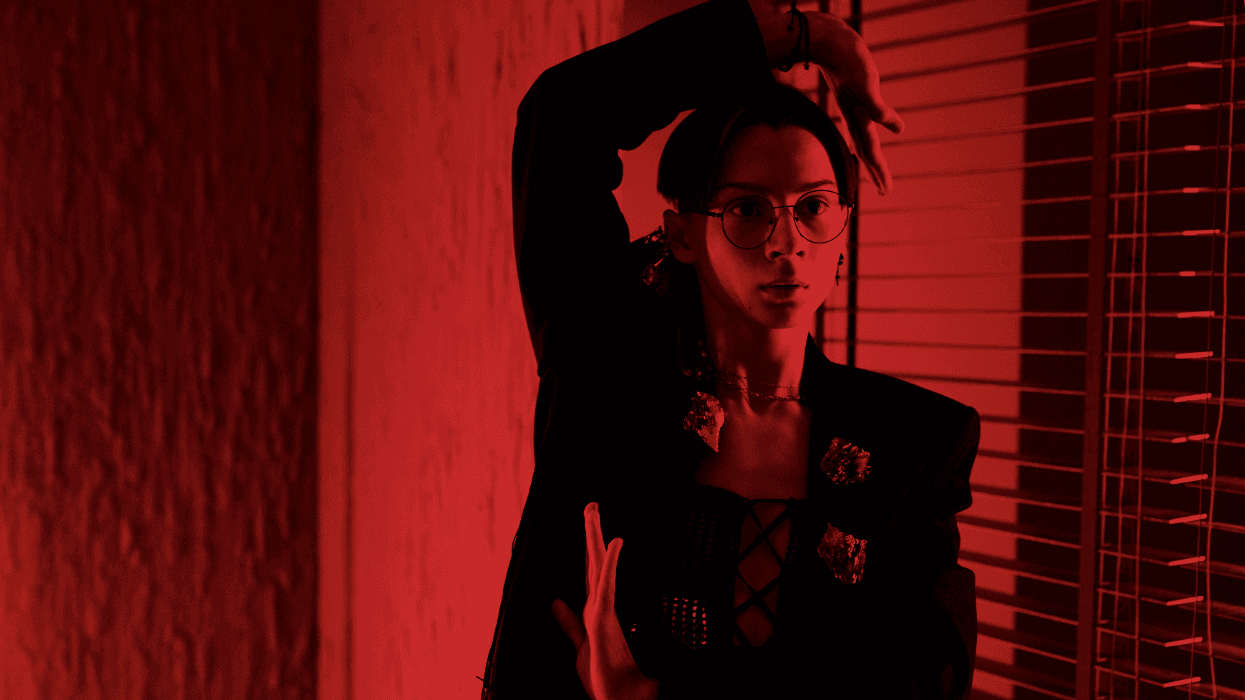
Looking at myself in high heels, long eyeliner, sequins covering my cheekbones, and a skirt so short that I had to yank it down to sit, I stood in front of the mirror and hardly recognized myself. The boy from Chengdu who danced ballet was gone. I didn’t know who this new reflection was, but he was definitely braver than I was.
When I stepped onstage, I couldn’t see the faces in the audience, but I could hear someone laughing — not a malicious laugh, but uncontrollable surprise at the strange sight. With my toes curled up in the heels, every move felt like stepping on a blade. My body struck poses, but my heart floated overhead, looking at the boy in the short skirt and asking, “What on earth are you doing?”
Afterward, there were no claps or boos — only unsettling silence. I stepped offstage and unshackled my blistered feet. Alex came over, patted my shoulder, and said, “Not bad.” His praise made my cheeks burn instantly.
I’d known I was gay since I was 12. I felt attracted only to boys. But I couldn’t reveal my true sexual orientation to anyone. I was still in China. A 2024 report published in The Lancet noted that while legal persecution of LGBTQ+ people in China ended in 1997, discrimination still persists, and state crackdowns on queer media and advocacy continue. Families, including mine, often believe men must marry women to continue the family line; being gay is seen as shameful.
But last November, during my first semester at Columbia, far from my family’s condemning eyes back in China, a poster in the lobby of the Richard Rodgers Theatre — where I’d just seen Hell’s Kitchen, my first Broadway show — caught my eye. The famed Alvin Ailey dance troupe was offering a voguing class. The next day, I signed up for an audition.
The audition took place on November 11, 2025. The studio floor was scuffed, and grayscale photos adorned the walls. The smell of floor wax and sweat recalled the Chengdu ballet studio, the high school voguing club, and the blinding lights onstage. But this time, I didn’t feel alone. There were people of all skin colors, body types, and ages, wearing tight-fitting leotards, loose T-shirts, bare feet, or boots.
At Ailey, I relearned voguing without my crush to rely on. Marcus, the 60-year-old instructor with white hair and arms sharp as knives, stood us in front of the mirror.
“Why are you here?” he said. “You are here to discover the essence that is you.”
From Marcus, I learned to stand firm in heels, form crisper angles, and remain calm after falls, spinning into the recovery. But more importantly, I learned that voguing is translation: transforming the words you swallow into angles, the emotions you suppress into speed, and the self you hide into posture.
Scholars like bell hooks have argued that voguing imitates the very structures that marginalize queer people. But voguing feels less like imitation to me than resistance spoken through bodies. Someone who feels unseen forces the world to look at them by striking eye-catching poses. That is not imitation. That is survival.
Born in Harlem dance halls and popularized by Black and Latino transgender communities, voguing has always welcomed those excluded elsewhere. If you have ever been rejected for being too short, too tall, too fat, too thin, too quiet, too noisy, or too strange, the door of the dance hall is open.
The power of voguing comes from waking up every morning and deciding not to shrink yourself. This power isn’t given; it’s accumulated bit by bit with each performance.
Today, when I remember Alex, I want to thank him. Through voguing, I’ve found a new version of myself that isn’t afraid of being seen, that can stand firm even in high heels, that doesn’t need anyone’s approval to stand center stage.
So put on those heels, apply that mascara, make the moves you do only in your bedroom. Ask yourself in the mirror, “Why are you here?” If the answer scares you, then stand up and speak.
The moment you’re no longer afraid of being seen is the moment you truly start to dance.
Xingchi (Jim) He is a first-year cognitive science student at Columbia University whose writing explores queerness, identity, and cross-cultural self-expression.
Opinion is dedicated to featuring a wide range of inspiring personal stories and impactful opinions from the LGBTQ+ community and its allies. Visit Out.com/submit to learn more about submission guidelines. We welcome your thoughts and feedback on any of our stories. Email us at voices@equalpride.com. Views expressed in Opinion stories are those of the guest writers, columnists, and editors, and do not directly represent the views of Out or our parent company, equalpride.