


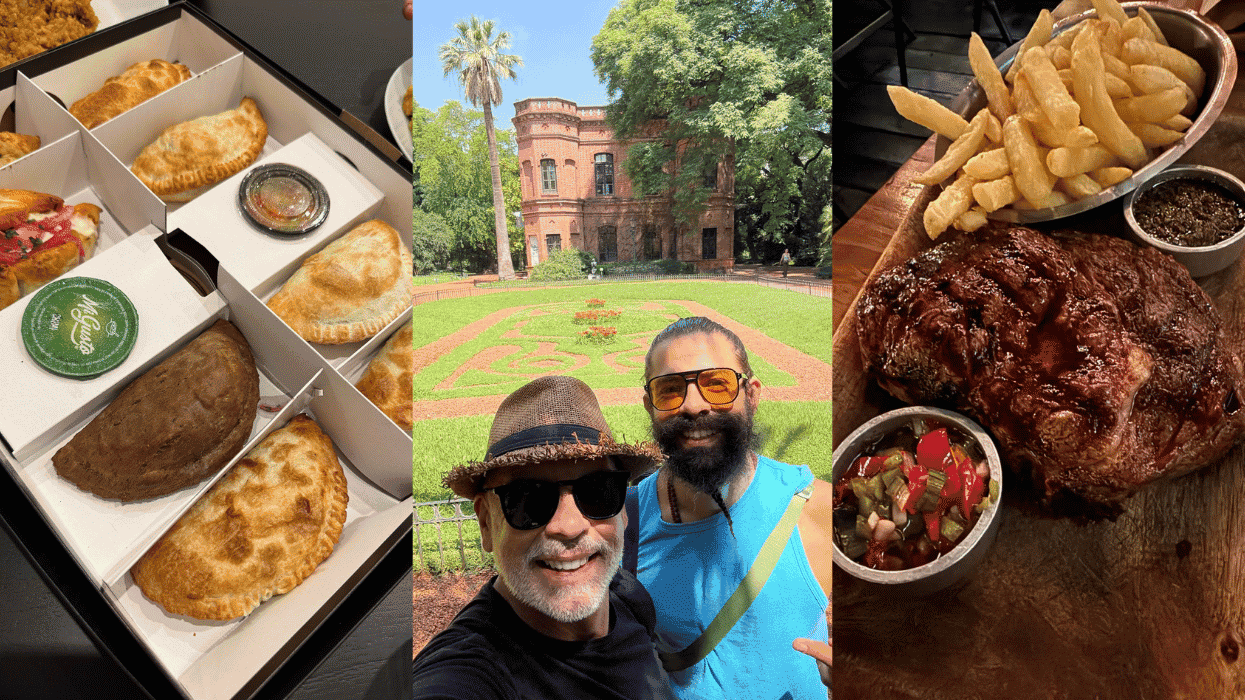

Buenos Aires has long been on my list to visit, and a good friend, who hails from Argentina and lived in the city before relocating to the USA, convinced me to go. Given my investment in learning Spanish, my goal to visit LGBTQ+-friendly locations, and my pursuit of affordable living, Buenos Aires became a reality recently, when the Southern Hemisphere Summer began. In a word, ‘passion’ defines my first trip and the wonderful experience in the magical city of Buenos Aires! If you love passion, you’ll love Buenos Aires!
The feeling of passion began on my nearly 10-hour overnight flight from Miami. Many who boarded my flight were from Argentina and immediately exuded a happiness and a passion for life. They certainly smiled more than fellow U.S. citizens and seemed more content despite the economic turmoil and the multi-billion-dollar infusion of capital from the United States to prop up the Argentinian government. What I didn’t realize on my first flight to Buenos Aires was that the passion for life I began to see in those initial moments among Argentinians carried through my three weeks visiting there. The people have a passion for enjoying life, having a good time, savoring homemade foods and delicious local wines, creating some of the best-known music, winning at football (soccer), and dancing the night away into the bright early hours of dawn while passionately kissing a new friend or two.
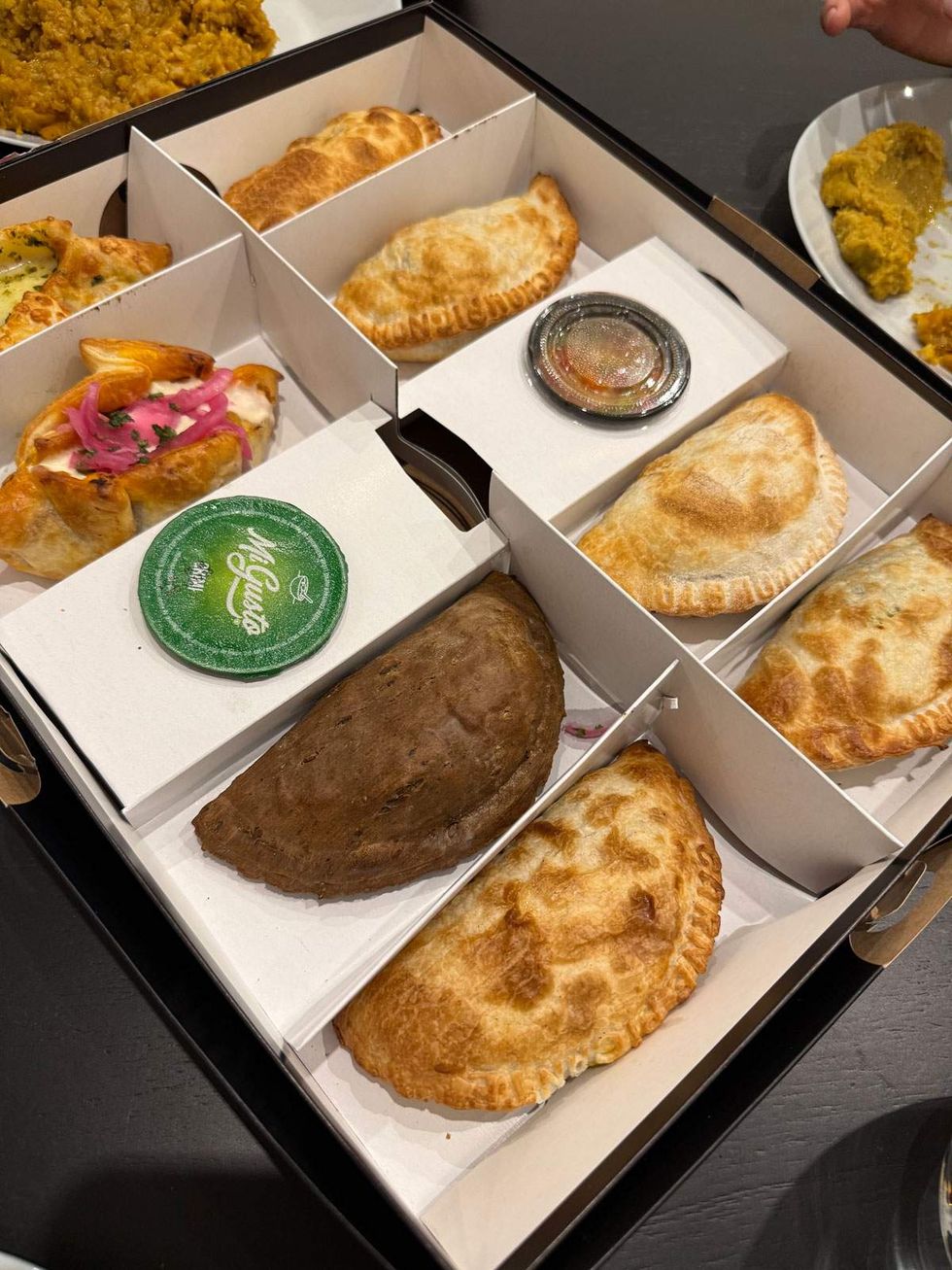 Empanadas are a mainstay of the Buenos Aires diet.courtesy Michael Dru Kelley
Buenos Aires gives me New York City vibes. The city is built, moves, and feels like the Big Apple in many ways, from the speed at which people move to the plain, low-slung buildings of middle-class housing standing among towering, luxurious condos and office buildings. Buenos Aires houses a harmonious blend of people from around the world, with fortunes ranging from none to those who can live anywhere in the world they choose. Just like in New York, people from all walks of life move, eat, and play together with little regard for the place in society each holds, except for their passionate smiles for one another and their greetings to nearly everyone they pass on crowded streets.
Architecturally, Buenos Aires captures the old-world spirit of Spain yet has produced some of the most modern and technologically advanced skyscrapers in the world. Rarely do I notice something as common as a building door; however, Buenos Aires seems to place particular emphasis on this portal to homes and businesses. The many types of doors I encountered both demonstrated an array of woods from the giant trees that surround the city and the people's artistic imaginations. Whether shaped into arches or dominating 15-foot-high entries, I often found myself standing in awe of entryways from 300-year-old buildings to brand-new apartment complexes. In fact, as of last count, I had more than 100 photos on my phone, just of the doors I encountered in Buenos Aires, which I consider some of the best works of art I have seen in my life.
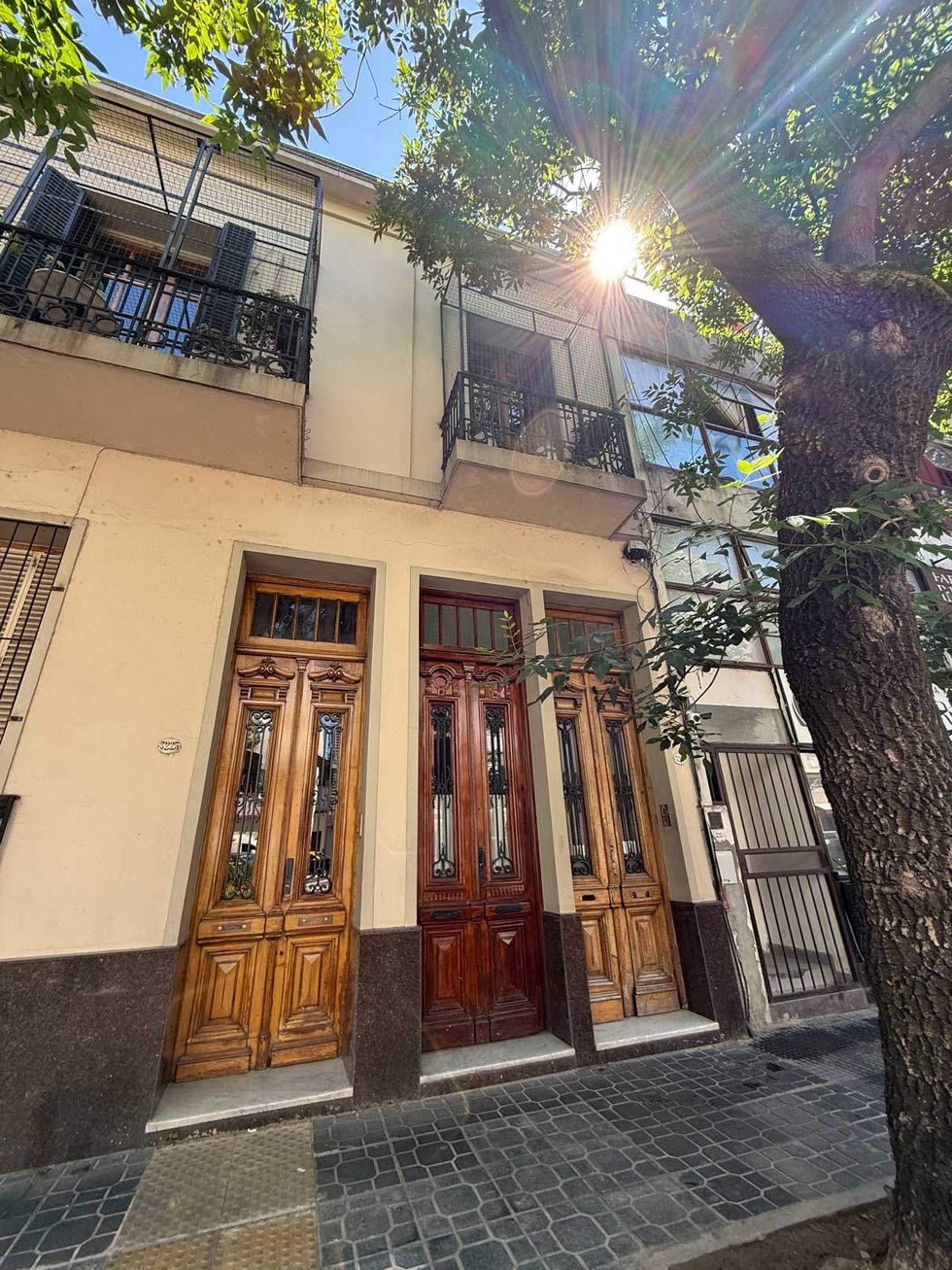 An example of the many beautiful wooden doors that can be found throughout the citycourtesy Michael Dru Kelley
Speaking of trees, Buenos Aires holds the title of home to some of the most majestic trees in a city landscape that I have seen. The trees planted over the last two hundred years, like those in other Latin American cities, have been a concerted effort to provide cooling and shade for the benefit of all citizens, while also improving air quality and the climate. The result is breathtaking trees that cause you to put down your phone and look up to take in the foresight of the city’s long-dead leaders, who would no doubt be proud that trees have flourished long after their existence. The trees have also inspired the botanical passions of the residents of Buenos Aires, with many gracing their small terraces to expansive yards with a wide variety of flora and fauna, giving the entire city a beautiful polish that sets them apart.
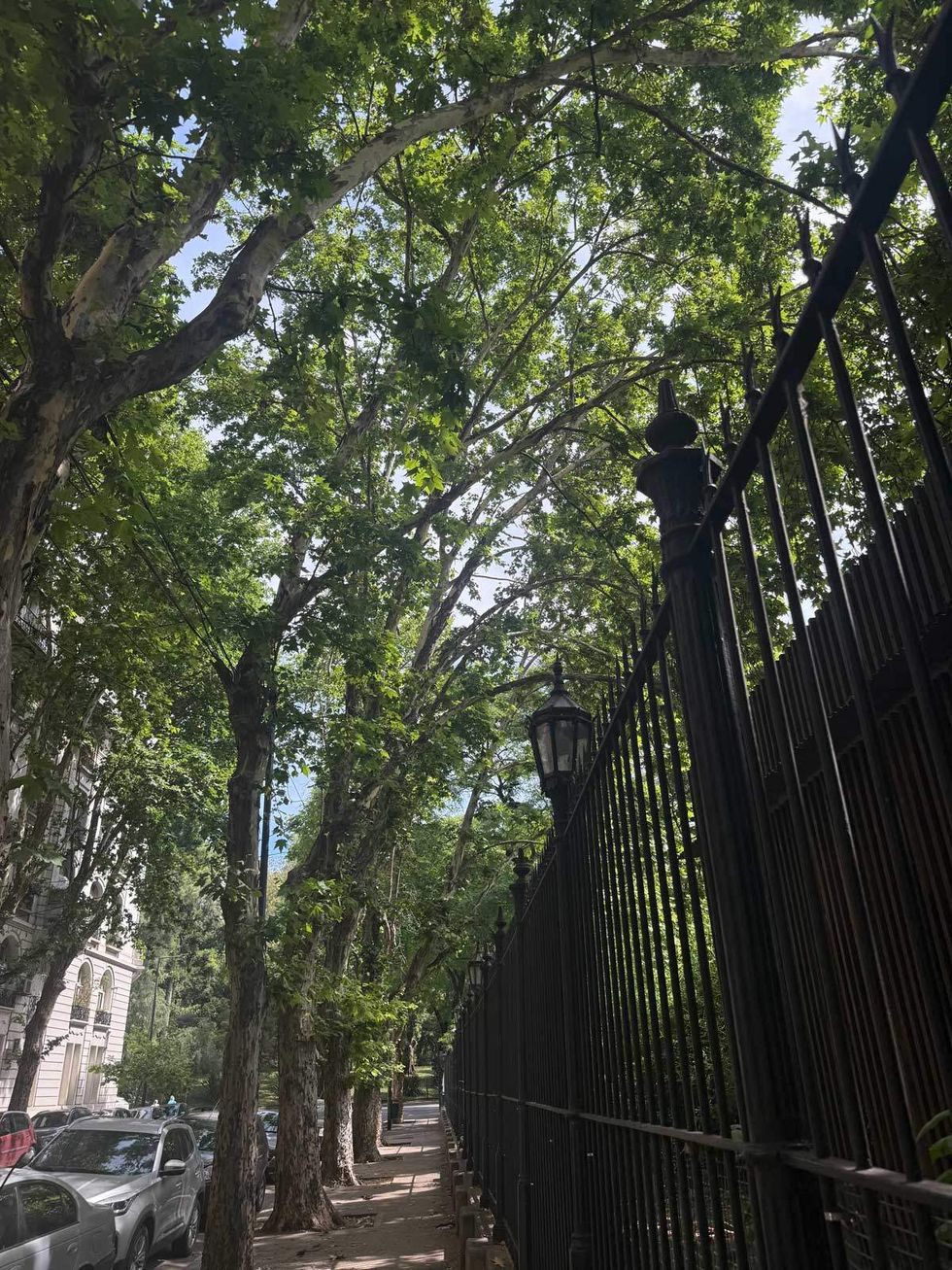 Beautiful large trees line the streets of Buenos Aires, providing shade and a cooler climate for its citizens and visitors.courtesy Michael Dru Kelley
If you are passionate about food and drink, especially wines, meats, and empanadas, then Buenos Aires is for you! Remarkably affordable, Argentina is well-known for its quality red meats and beautiful, delectable wines. One can hardly move down a street in Buenos Aires without feeling the passion for grilling steaks of all types. Whether on a strict budget or willing to spend a lot of Argentinian pesos, you can have a delicious steak grilled to perfection. Empanadas are made the world over, yet in my humble opinion, Argentinians have perfected the delicacy with crispy pastry crust and fillings of all types. I must have eaten my weight in empanadas during my time there, offset by nearly 20,000 steps a day traversing this glorious city. If you are a wine aficionado, you will love wines from Argentina, especially since many are priced under $10 at grocery stores. Pizza is another food that demonstrates Argentina’s roots in Italy and the Southern Mediterranean, and it rivalled any I have had, including New York.
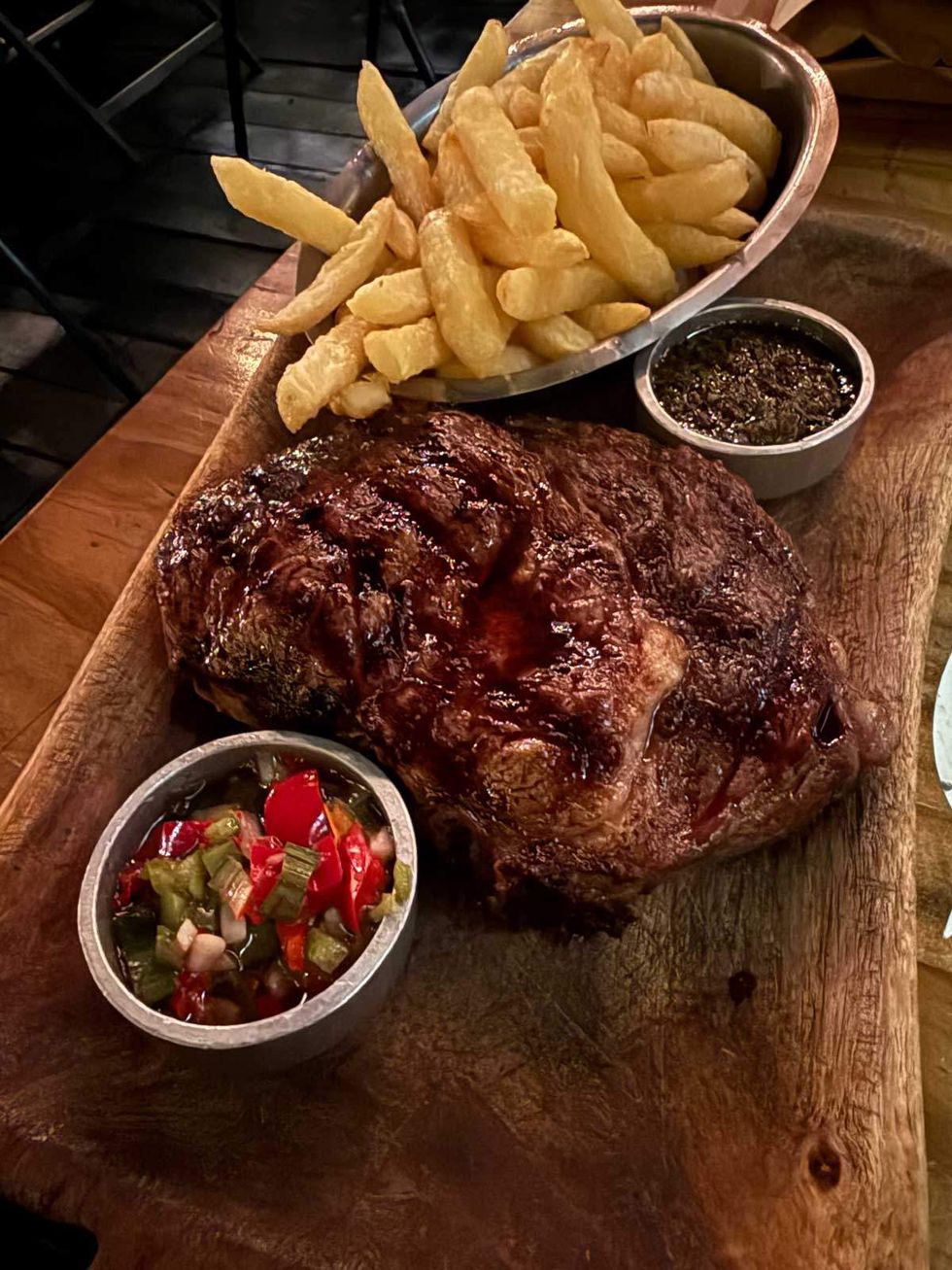 Locally-sourced, delicious steak meals can be found almost anywhere in Buenos Aires.courtesy Michael Dru Kelley
Mate is also in the hands of nearly every citizen in Buenos Aires. Mate, or yerba mate, a unique type of tea, is an acquired taste, brewed raw and unfiltered into a wide-mouth insulated cup, then topped with very hot but not boiling water. The matte tea is ready instantly and consumed through a metal straw with holes at the bottom to strain the tea for easy sipping. The tea is also as much a part of socializing as talking. Typically, one person in a group will pass their mate teacup to each person, adding a few ounces of fresh hot water after each person finishes until the mate leaves are fully utilized. Then, they dump the remnants and start again! Mate comes in a variety of flavors and seems to be the primary form of hydration among the masses.
Speaking of hydration, I will tell you that water and ice served with meals are like prized possessions in Buenos Aires. As a U.S. citizen, I am spoiled: glasses of water and ice are typically served almost as soon as one sits down in an American restaurant. This is not the case in Buenos Aires. You must ask — often several times — to get just a small glass of water or ice with any drink. And while this may grow frustrating if you are traveling, walking many steps, and eating nearly every meal out, the constant request for water and ice can grow wearying until you receive the coveted “bucket of ice.” Like everything else in Buenos Aires, when you finally get the treasured ice, almost every restaurant — regardless of price and style — will serve you the most glorious small silver bucket filled beyond need with the best-shaped ice cubes that you can self-serve with a silver tongs.
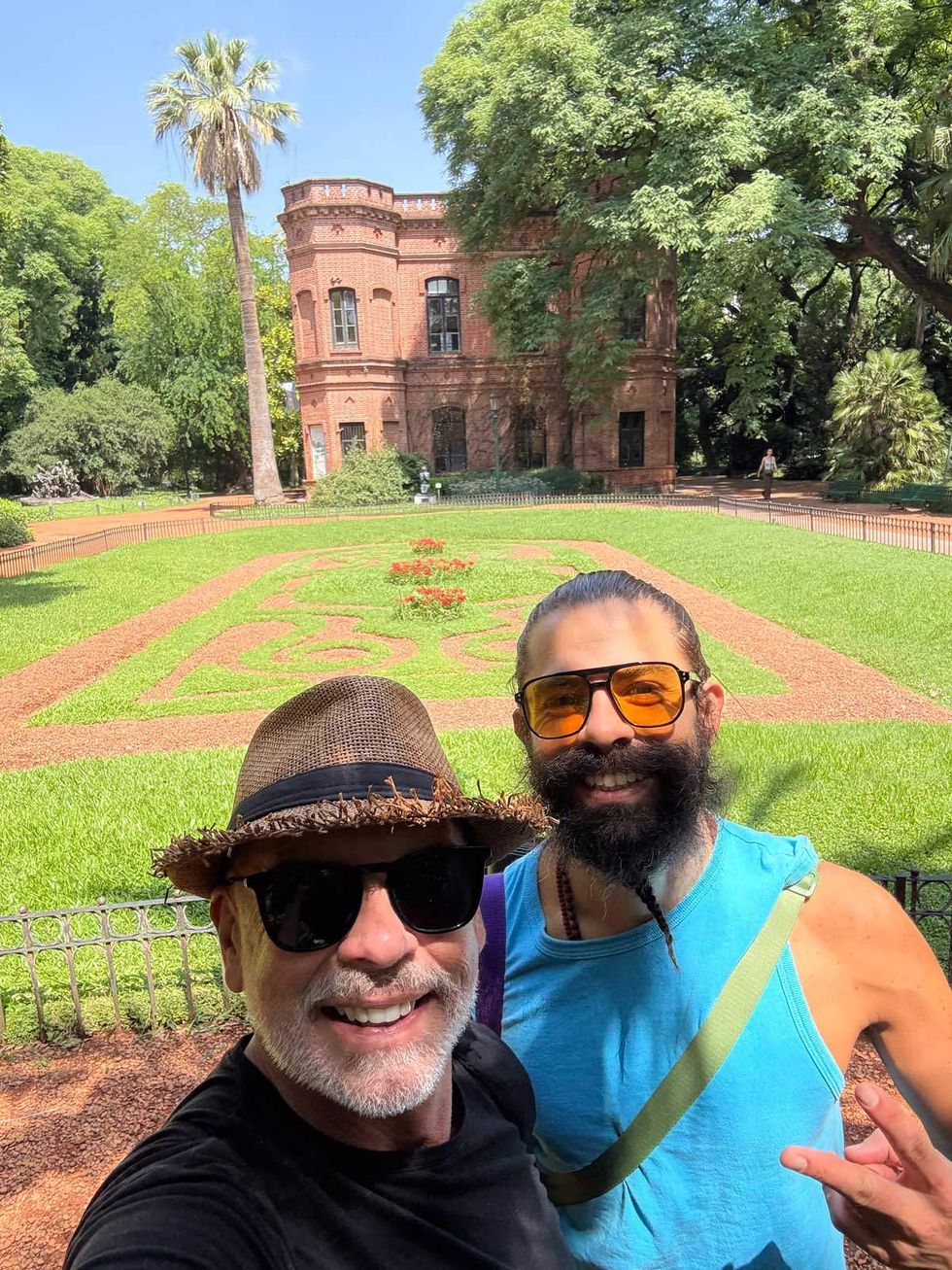 Author Michael Dru Kelley takes a selfie with a friendly local tour guidecourtesy Michael Dru Kelley
When it comes to culture, Argentinians are especially passionate about music and football (soccer). Tango music and dancing are a must for lessons or a dinner show. In many parks that grace the lovely city, you can usually find free tango lessons. I was also able to see a local favorite band, El Plan De La Mariposa (The Plan of the Butterfly), in an arena that held just a few thousand, yet felt like the energy of tens of thousands, who stood and bobbed vigorously to the music on stage.
Buenos Aires also boasts not one but two professional soccer teams (football to the locals), with many demonstrating their allegiance in their everyday apparel and even through body art. Virtually everywhere I went there were signs of teams supported by small businesses and on windows in many homes. While I did not get to a game, I am told it is one of the most extreme experiences one can have in Buenos Aires, with raucous crowds and cult-like followings.
Shopping is also a passionate pastime in Argentina. Whether you're in the incredible malls that have socially defied the internet age of instant delivery to the nearly 3-kilometer-long San Tameo market in central Buenos Aires on Sundays, you will find something for everyone on your take-home gift list.
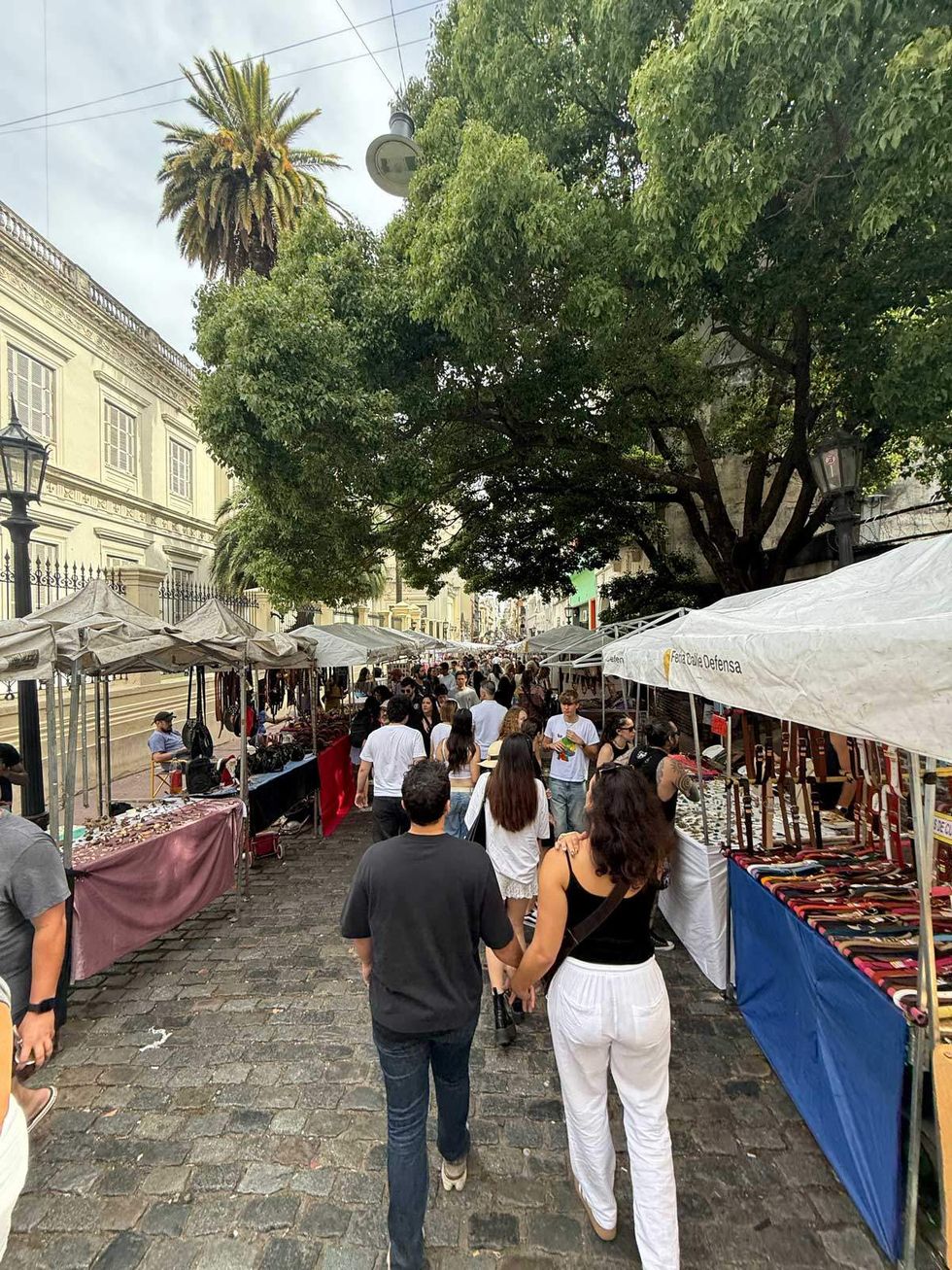 Large outdoor markets are a popular place to shop in Buenos Aires.courtesy Michael Dru Kelley
Like many Latin American countries, Buenos Aires is very gay friendly. Their constitution is about supporting equal lives across gender and sexual identities. While Argentina has joined a growing group of countries leaning more towards traditional or “conservative” values, most of the population supports gay rights and same sex marriage. And you can see it in their plethora of LGBTQ+ offerings, including nightlife, online communities, and the many same-sex couples holding hands as they stroll down the street.
However, please note that nightlife in Buenos Aires should be renamed “morninglife” because most clubs don’t open until 12 Midnight or 1 AM and go on until well after the sun comes up! In fact, most people don’t go out for dinner until after 9 or 10 PM. I only went out a few times, and each time was amazing. Regardless of the hour, people were full of life, love, and passion. I did happen upon a few encounters on the dance floors with Argentinian men who could teach the world a thing or two about kissing. Kissing seems to be a must for most in Argentina, when it seems to be a dying form of intimate communication in the States and elsewhere I have traveled. And, like everything else I encountered in Argentina, they do it passionately.
If you love or need passion in your life, book your trip to Buenos Aires today. You will find it at every turn.
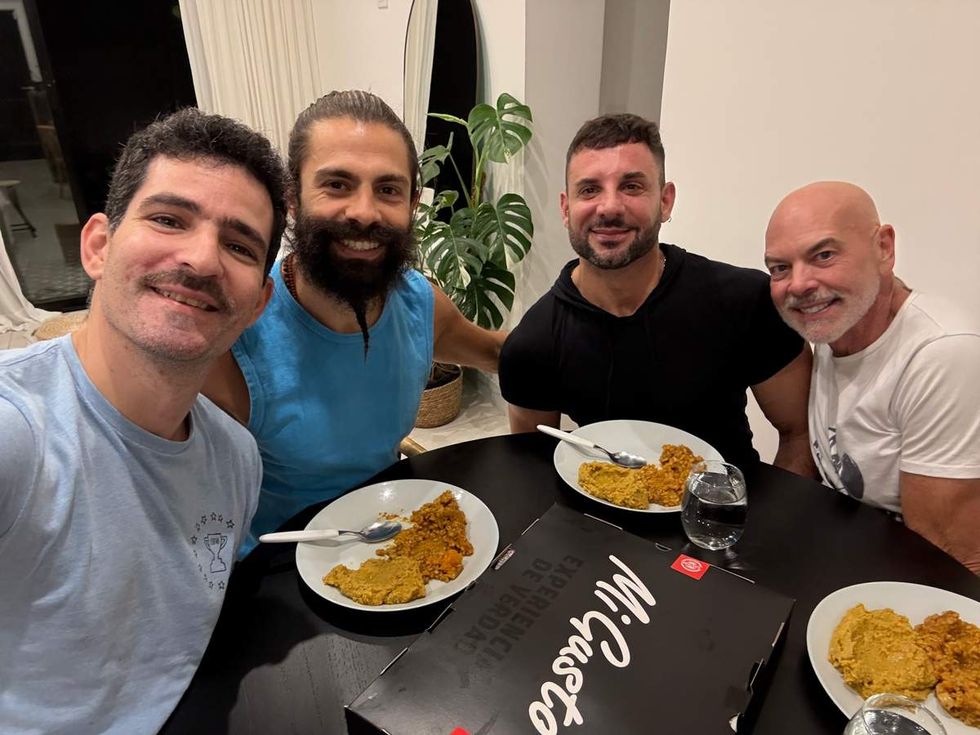 Author Michael Kelley (far right) shares a meal with some Buenos Aires locals who quickly became friends. courtesy Michael Dru Kelley
Michael Dru Kelley is a writer, media entrepreneur, and co-founder and principal LGBTQ+ shareholder of equalpride, publisher of The Advocate. Since leaving his management role at equalpride, Michael is focusing on the collective action needed across humanity, reducing meat and gas consumption to reverse climate change, traveling the world to find solutions, and innovating to help people eat cleaner for healthier bodies and a healthier planet.
Michael can be followed on Instagram at @michaeldrukelley and on his developing food brand, “Comfort Food Made Clean,” at comfortfoodsmadeclean.com. His opinion pieces and articles represent his own viewpoints and not necessarily those of equalpride, or its affiliates, partners, or management.