
Savannah takes St. Patrick’s Day seriously. Visitors flock to the Georgia city from across the country. The water in all the fountains downtown runs green. The historic district, a tourist-heavy side of town, takes on the spirit of a beer fest and parade.
Visitors get drunk and rowdy. In my first year of university at art school there, an adult told me it wasn’t the safest weekend for a little gay boy to go wandering at night. Still, I wandered.
There were a lot of kids like me in Savannah, which remains home to a major art and design college. In time, I’d leave there as a published writer and not-half-bad illustrator, hungry for big-city gay life. But that first year, I was awkward, afraid of everything, shy about my Southern accent and still trying to shed it. So when some older gays on campus gave me a fake ID and told me to try Club One, I had to.
This, they said, was the gay bar. And my first.
Of course, in hindsight, no kind adult working in the bar believed I was of drinking age. They still let me in. Why? The answer lies in the lost look I can still see in old photos. I was, in every way, a “baby gay,” a creature in need of family and mentoring from wise old queens, and those were only to be found at Club One.
Now that I’m grown up myself, I share the sense of protectiveness that all adult queers seem to feel for the messy seedlings who will, someday, be fully formed LGBTQs. But back then, I was still waiting to bloom.
An older gay man found me downtown and gave me his spare ticket to what he said was “the best drag show on earth” at Club One after I told him I wanted to go there. I didn’t know what a drag show was. He said the ticket was for the “coveted midnight show” where “every gay man wants to be tonight.”
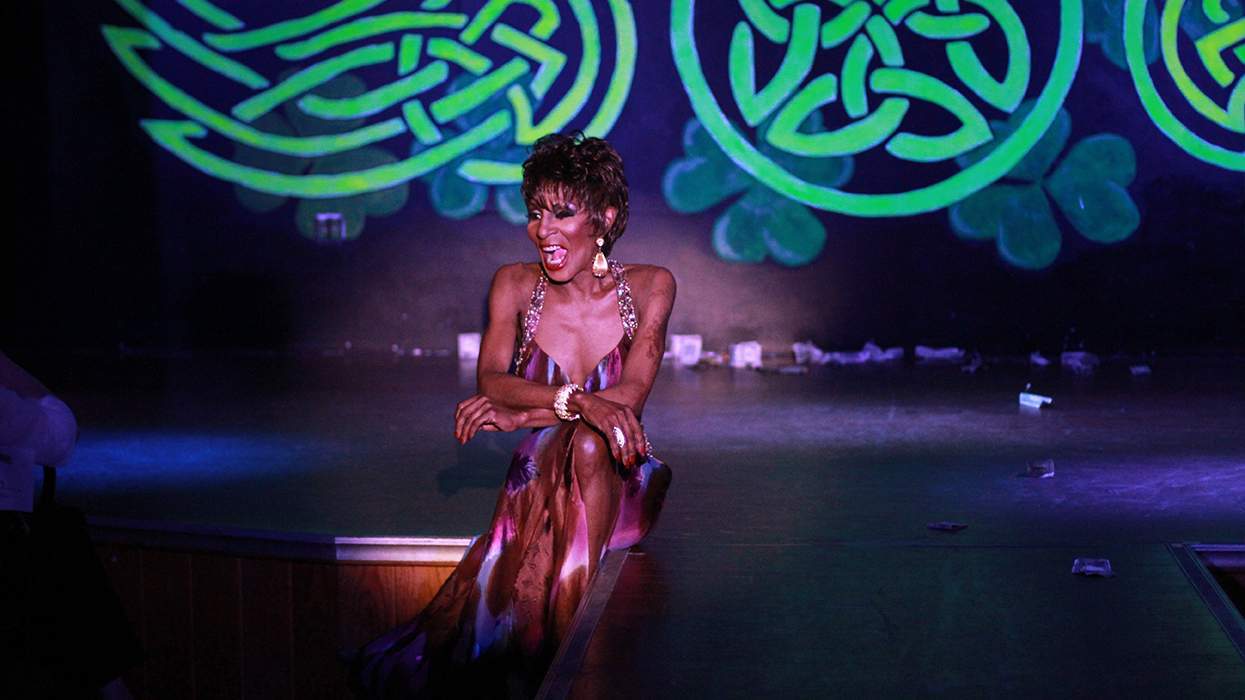
The entrance was a seedy-looking blue door on a quiet street, more like an alley, with a long line already forming. Once inside, I shuffled nervously to the top floor, sat in the back, and watched a little stage roar to life. Loud gameshow music played as the curtain opened, where a bone-thin woman slinked onstage in a simple blue dress.
“Good evening, Savannah!” she snarled into the mic. “I’m Chablis. But you motherfuckers can call me the Lady Chablis, Grand Empress of Savannah!”
She was an icon in the twilight years of her life — I just didn’t know it yet. The Black trans club performer became internationally famous by playing herself in the 1997 film Midnight In The Garden of Good and Evil, and people were still flying all across the world to see her show.
Countless queer people made pilgrimages to the Deep South gay bar. In time, I was a weekly regular. There, I had my first kisses and messy hookups, and I learned how to tip a queen. After I tested positive for HIV, it’s where I found community and support, and, near the end of school, passed that love on. I found myself telling new kids in the basement bar to watch their drinks. I told them to learn the staff’s names and treat them like family, because they were.
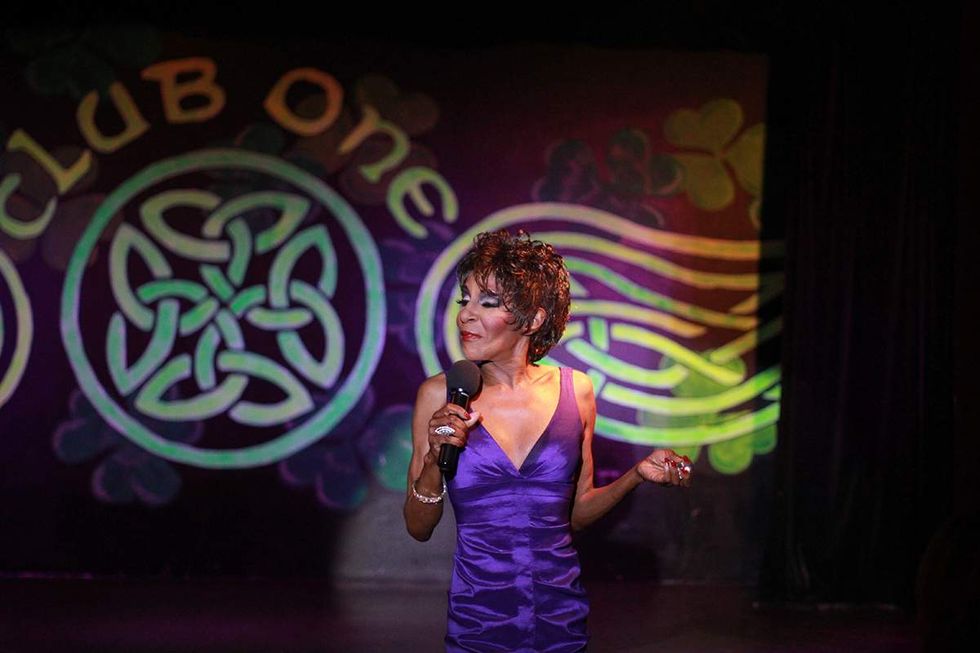 Lady Chablis at Savannah's Club OneCourtesy Travis Coles / Club One
Over a decade later, during my first book tour, I stopped in Savannah and did a reading on the famous Club One stage, where I had seen the Grand Empress perform on my first visit a lifetime beforehand. (She died in 2016.) It was a humbling experience.
On March 5, Club One announced it was moving from its current historic location, its home for 38 years, to a new spot in town. The ratty backstage space where so many drag queens, including RuPaul herself (her signature is on the wall), have prepared for their numbers, where the Lady Chablis herself got ready, will be gutted, demolished. That feels wrong. To me, it’s holy ground.
“I love the corner we sit on,” Chi Chi Bonnet Sherrington, a drag queen who’s lived in Savannah for most of her life, told Savannah Morning News last April. “But looking to new things is necessary. If we don’t grow with the times, the times will grow without us.”
At a time when American queer spaces are more threatened than perhaps ever before, it’s a wonder that Club One has survived this long.
Travis Coles, Club One’s former general manager who is now overseeing its relocation, tells me the building has been for sale since 2019, so they’ve known a move was coming. An early potential buyer would have let them stay, but they wanted to overhaul the whole building; it would mean six months to a year closed. Coles felt the club would not survive that break and ultimately decided moving was the best course.
He tells me they’ll only have a month or two of “downtime” between the closure and opening of the new space, a venue formerly called The Boiler Room and, more recently, a bar called Elan, next door to the iconic piano bar Savannah Smiles. The team is planning a big reopening in June.
Still, there’s sadness. “When the last show happens, and the curtain closes, I’m probably going to fall apart,” Coles says. “After working here for 21 years, I think I’ve spent more time in this building than any home I’ve lived in.”
The data on gay bar closures in recent years is dark: According to research by Oberlin College sociologist Greggor Mattson, published in the journal Socius, gay bars declined by 45 percent between 2002 and 2023. Between 2012 and 2017, they experienced their largest five-year decline, losing 18.6 percent of their numbers, with an additional 14.4 percent disappearing from 2017 to 2019.
Lesbian bars have been hit hardest, dropping from an estimated 200 in the 1980s to only 15 by 2019, according to research published by Smithsonian magazine. Bars catering to queer people of color and cruisy men’s bars both declined by nearly 60 percent from 2007 to 2019, Mattson’s data found.
I speak to Coles just before Club One’s final weekend in its original location, and he says, “Everyone is in their feelings a bit this weekend. No space is quite like this one.”
But there are pros to the move, he says: The stage in the new space is bigger, and 90 percent of the club will be on a single, more accessible level.
Still, bigger is not always better. In New York, the legendary leather bar The Eagle bought the building next door in 2022, more than doubling its space in an effort to be more of a dance venue. The expansion introduced what one writer in Fagrag magazine called “the large dance floor our dear Eagle has always deserved,” but many longtime patrons felt the tight and intimate atmosphere of the old bar was lost.
Club One opened in 1988 at the height of the AIDS crisis and has been a sanctuary ever since. “That’s an important part of our history,” Coles says. “It was basically our church for us at a time when you couldn’t easily be gay in the Deep South.”
“And,” he says, “it’s still the meeting hall, the safe haven. We’re in Southeast Georgia, where you have all these small towns. Not the easiest part of the country to be gay in.”
He stresses that it’s not a closure, just a move, but still, I wonder about the future of queer spaces. I live in Berlin, near many gay bars, but I rarely visit them. Is that a change in me or in gay culture? Do we have a responsibility as queer adults to keep these institutions alive, or does their steady decline reflect broader shifts in how we gather, what we need, and how we live?
“Gay bars are iconic in part because they are the most common and accessible LGBTQ+ places,” writes Mattson in a 2022 essay on the shifting place of gay bars in America.. “But they are also,” he notes, “social spaces, performance stages, sites of memory and commemoration, and instigators of local activism.” Lucas Hilderbrand, professor of film and media studies at UC Irvine and author of The Bars Are Ours: Histories and Cultures of Gay Bars in America, 1960 and After, argues that for nearly a century, gay bars have “served as the medium for queer communities, politics, and cultures.”
All this is enough to justify continuing support, but, as I’ve written in Out, recent years have seen an increase in sober and sober-adjacent community spaces for queer people, which seem to address our community’s disproportionate rates of substance abuse and misuse; there is, it seems, more need now for dry queer gathering spaces than boozy ones. Will drag culture survive that shift? Will gay bar culture outlast it?
To survive, Club One itself has had to update. Its press release for the move declares it will be Savannah’s “first multi-level dance, show, and entertainment complex.”
I ask Coles about that: “We want to expand what we do on the stage more. The entertainment aspect is getting bigger.” He says the club’s theater productions (local stagings of Avenue Q, Sweeney Todd, and Rocky Horror) have “attracted a variety of people that might otherwise not find themselves in a gay bar,” and this has been crucial to its survival.
In the new space, he says they plan to “do even more, like comedy shows, burlesque, live bands, film screenings, and even book readings. If it can be done on a stage, we’ll do it.”
He drives his point home: “It’s not just a drag bar.”
It sounds great, but it still makes me a little sad that the only way a gay bar can survive is by being more straight-friendly. Why is “just a drag bar” not enough?
Coles urges hope — and truly, it is necessary for him to do so. People have to keep believing in the gay bar.
“That’s the thing about the club,” he says. “It’s not the paint on the walls. It’s about the people more than the building. It’s about the family.”
This article is part of OUT’s July-Aug 2026 print issue, on newsstands July 7. Support queer media and subscribe — or download the issue through Apple News+, Zinio, Nook, or PressReader starting June 18.
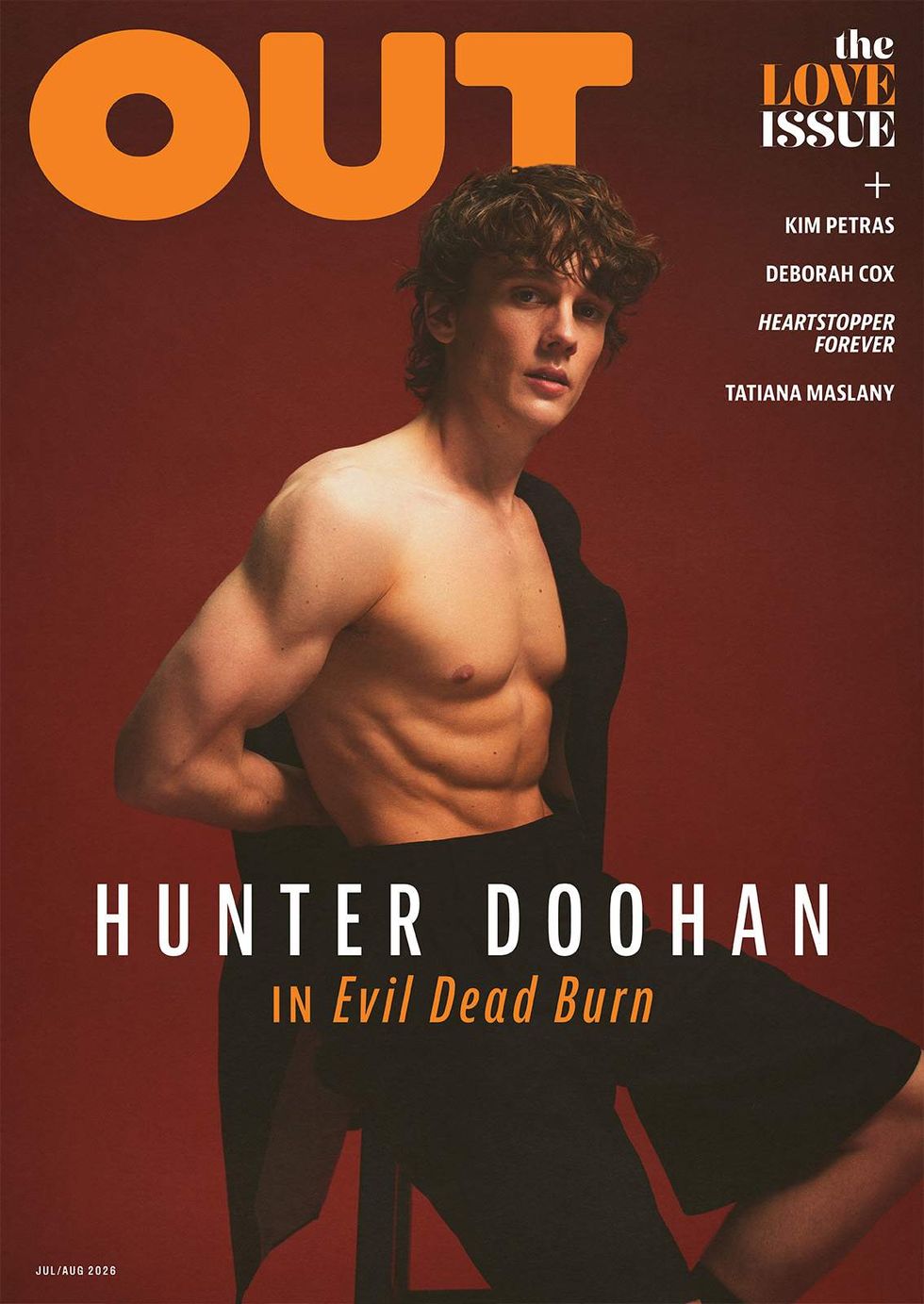 Hunter Doohan on the cover of OUT's July-Aug 2026 print issue.