

This story originally appeared on The Advocate.
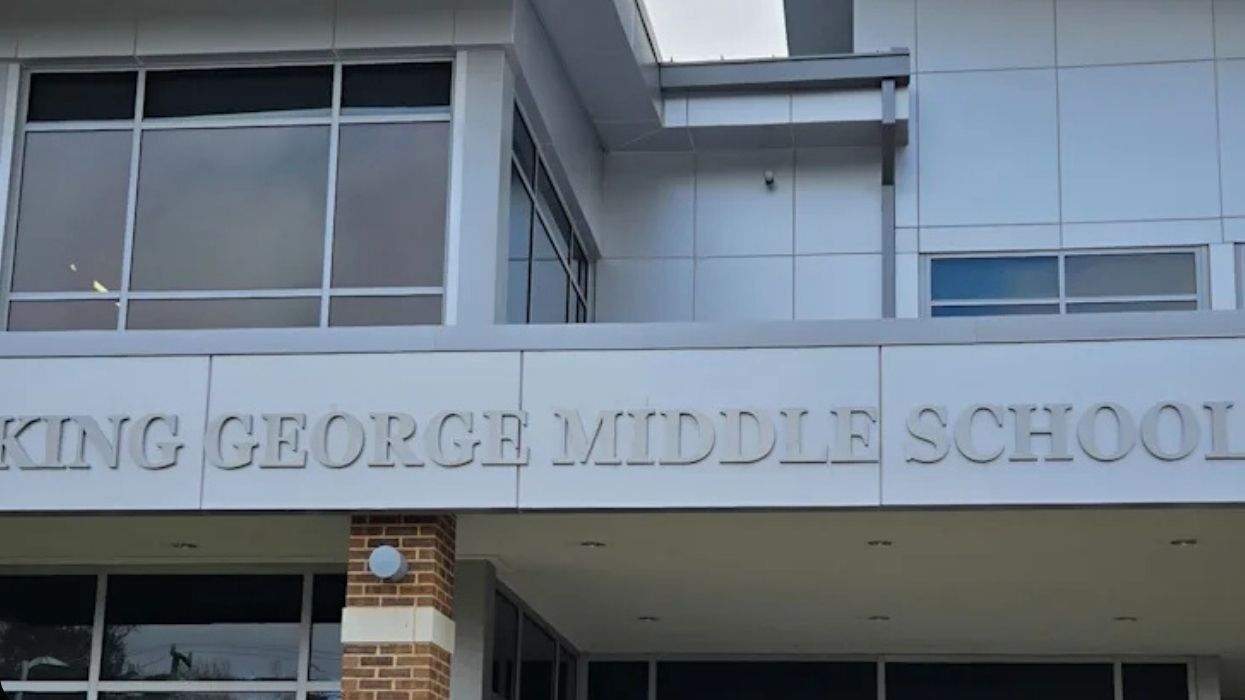
Susan Park’s child has already advanced from King George Middle School, about an hour and 20 minutes southeast of Washington, D.C. The eighth-grade year in which he hoped to join a gay-straight alliance, make friends and find some relief from bullying is over. That time cannot be returned to him. When school starts, he will enter King George High School.
Park could have allowed the dispute over the club to become another family’s problem. Instead, on Tuesday, she, along with the family of another student, filed a federal lawsuit so that the next LGBTQ+ student in this rural Virginia county might receive what her child was denied.
“I joined this suit because even though my kid has moved on and is not in middle school anymore, I think this club would be a wonderful thing,” Park told The Advocate in an interview Wednesday. “I want them to be able to form this club and create that community.”
The American Civil Liberties Union of Virginia and Potomac Law Group filed the lawsuit Tuesday against the King George County School Board, Superintendent Jesse Boyd and King George Middle School Principal Casey Nice. It alleges that officials repeatedly changed the rules to prevent students from forming the GSA while allowing other organizations to continue operating.
The students are asking a federal judge to order the school district to treat their club like the others.
The 17-page complaint accuses King George officials of violating the First Amendment and the federal Equal Access Act, which requires covered public schools that allow noncurricular student groups to provide them access without discriminating based on their messages.
For Park, the dispute is about what happens when adults transform children’s search for friendship into a political controversy.
“Seventh grade was really tough for my kid,” she said.
When information about the proposed GSA appeared on the middle school’s Canvas platform last September, her child, identified in court records as A.A.P., saw the possibility of something school had not offered him: a place to belong.
“He was just very excited about the idea that there were some other kids who might share the same interests and who would want to get together and form a community at school,” Park said.
He had already endured teasing and bullying, she said. The proposed club meant potential friends, fun projects and a place to spend time with students who understood something about his life.
Within days, school officials placed the GSA on indefinite pause amid intense community opposition, she said. Park’s child was devastated. He asked to address the school board, not only for himself, she said, but for students who were afraid to identify themselves publicly as LGBTQ+.
“I was so proud of him because he wasn’t just speaking up for himself,” Park said. “He was speaking up for other kids who might not feel comfortable speaking up or might not feel comfortable having people know that they identify as part of this community.”'
Democratic Gov. Abigail Spanberger recently appointed Park to Virginia’s LGBTQ+ Advisory Board. The governor’s office announced the appointment July 2.
Spanberger’s office did not respond to The Advocate’s request for comment on the lawsuit.
Park said she hopes the Spanberger administration will take more active steps to support students and focus on their well-being.
The students followed the rules. Then the rules changed.
According to the complaint, a seventh grader identified as Z.J.W. began organizing the GSA in August 2025. A teacher agreed to sponsor it, and Nice initially supported the proposal.
The students prepared a constitution, calendar, flyer, and interest form describing a mission to create a safe, inclusive environment for LGBTQ+ students and allies.
Nice approved the materials, the lawsuit alleges. They were posted on Canvas on September 15, and 17 students expressed interest. Three days later, it was gone.
Some parents circulated the materials in a community Facebook group, generating hundreds of comments. The proposed faculty sponsor was allegedly doxxed, accused of “grooming” children and targeted with demands that she be fired.
On September 18, Nice told families the school had placed the GSA “on pause” because it had caused division in the community, according to the lawsuit. The materials disappeared from Canvas.
The school board later considered additional requirements for student clubs. After the ACLU warned that one version would violate federal law, the board adopted a policy prohibiting noncurricular organizations at the middle school level.
The complaint alleges that officials then preserved other groups by defining virtually every club except the GSA as curricular. Those organizations included the Yearbook Club, Robotics Team, Book of the Month Club, Beta Club, and an Outdoor Club where, according to the ACLU, students make fishing lures and skin squirrels. Administrators also allegedly explored modifying a leadership class so the Fellowship of Christian Athletes could be classified as curricular.
No comparable accommodation was offered to the GSA, attorneys said. Instead, students were allegedly told that a group performing substantially the same functions might be approved if it were called a “Kindness Club,” “Safe Space Group” or “PRISM Club” and removed explicit references to LGBTQ+ people.
“They kept changing the rules so that no matter what, it would not be approved,” Park said.
Park said the board was not merely denying students another extracurricular option. By singling out a club created to affirm LGBTQ+ children, officials were sending those children a judgment about who they were.
“By banning this club, you’re effectively saying there’s something wrong with being gay,” she said. “The kids can see that. They’re aware of that.”
Narissa Rahaman, executive director of Equality Virginia, said GSAs provide vital spaces where LGBTQ+ students can find community and belonging.
“These students showed real leadership and responsibility in advocating for themselves, and Virginia schools should encourage that rather than punish it,” she said.
National research supports that argument. Glisten’s 2025 National School Climate Survey, based on responses from 2,800 LGBTQ+ students, found that two-thirds felt unsafe at school because of their sexual orientation, gender identity or gender expression. Students with access to GSAs, supportive educators, inclusive anti-bullying policies and LGBTQ-inclusive instruction reported a stronger sense of belonging, higher GPAs, and less safety-related absenteeism.
An earlier Glisten study found that frequent GSA attendees reported greater school belonging, slightly higher self-esteem, and slightly lower depression. Participation was especially high among middle school and rural students.
Related: Virginia school board adopts anti-transgender policy and blocks LGBTQ+ club
The argument returns to Facebook
The dispute again spilled into public view after The Advocate’s report was posted Tuesday in a private King George Facebook group with about 17,000 members.
Some commenters celebrated the board’s decision, called the club indoctrination or treated LGBTQ+ identity as inherently sexual. LGBTQ+ graduates pushed back, describing harassment they witnessed or experienced in King George schools.
One former student recalled “whole tables of kids chanting the T slur at my friends at KGMS” while nothing was done. “These kids need support and community,” the person wrote.
The exchange illustrated what Park says the school board failed to grasp: LGBTQ+ students already know they are being debated. Refusing to acknowledge them does not preserve childhood innocence. It leaves the loudest and most hostile voices to explain their place in the community.
Park said the GSA was simply a place where students could make crafts, play games, and build friendships.
“They want to talk about Minecraft and their crochet projects,” she said.
‘They just don’t like LGBTQ-affirming speech’
ACLU of Virginia attorney Wyatt Rolla said the district’s willingness to permit a similar club only after removing references to LGBTQ+ students is legally significant.
Rolla said the school board offered a series of “shifting rationales,” including membership requirements, age appropriateness, and safety concerns. Students were allegedly told they could create a club doing the same things as the GSA as long as its name and mission did not mention LGBTQ+ people.
“There’s not a coherent reason that the school board has articulated why it’s inappropriate for this club to form other than the fact that they just don’t like LGBTQ±affirming speech,” Rolla said. “That is not a legally permissible reason to target one club while other student clubs are allowed to operate.”
The First Amendment prohibits a government body from discriminating against private speech because officials dislike its viewpoint. The Equal Access Act requires federally funded public secondary schools that allow noncurricular groups to offer them equal access regardless of their speech.
“School boards are not allowed to pick and choose which clubs can exist based on which messages they like,” Rolla said. “Those students had a right to form a GSA, and the school board denied them that right because of community hostility to LGBTQ±supported speech.”
The Equal Access Act was enacted largely to protect student-led religious groups. The same law protects a GSA, Rolla said.
“Our case is not about treating the GSA in some special way,” they said.
King George Middle School requires parental permission for students to participate in clubs. Both families involved in the lawsuit were prepared to provide it, Rolla said.
“The parents had clearly stated that they wanted their children to participate in this student club,” they said. “That choice was taken away from them by a school board that was responding to politically motivated hostility that was targeting their children.”
Students had already warned the board
The Advocate previously reported that Park’s son described King George schools as persistently hostile toward him, his friends and other LGBTQ+ students.
“I can’t say that I’ve ever thought that I liked my school,” he said in January. “I never felt really safe there, and none of my friends have felt that either.” He said he heard “a lot of slurs per day” and that a friend had recently been punched in a school bathroom.
Earlier this year, the board separately restricted transgender students’ use of names and pronouns, restrooms and participation in sex-separated activities. Park said school officials had allowed personal beliefs and national political campaigns against LGBTQ+ people to displace their central responsibility.
“I think the school board members and some people in the school administration are letting their personal agendas or beliefs or whatever you want to call it sidetrack them from their mission,” she said.
That mission, Park said, is ensuring students can feel safe, focus on school and succeed academically. “When kids feel targeted and scared and isolated, they can’t really focus on learning,” she said. The families are asking for $1 in nominal damages, attorneys’ fees and court orders requiring the district to treat the GSA on the same terms as other student organizations.
Rolla said the ACLU intends to seek a preliminary injunction because Z.J.W., who initiated the club, is entering eighth grade and has already lost a year of constitutionally and statutorily protected rights.
The complaint also asks the court to prohibit retaliation against students and educators who supported the GSA. The school board, Boyd, and the King George County Board of Supervisors did not respond to The Advocate’s requests for on-the-record comment.
Park said she hopes the case teaches her child something larger than the mechanics of a federal lawsuit. She wants him to understand that he can challenge unfairness and that he is not alone when he does. “I want him to know that he has power to use his voice and speak up when he sees something that’s unfair,” she said. “Whatever the outcome is, just the process of speaking up for himself and for other people is so important.”
She also wants him to see the lawyers, neighbors and community members who stepped forward to support him.
“I’ve said it before, but I’m just so proud of him,” Park said. “I think he’s an amazing kid. I just love him so much.”