
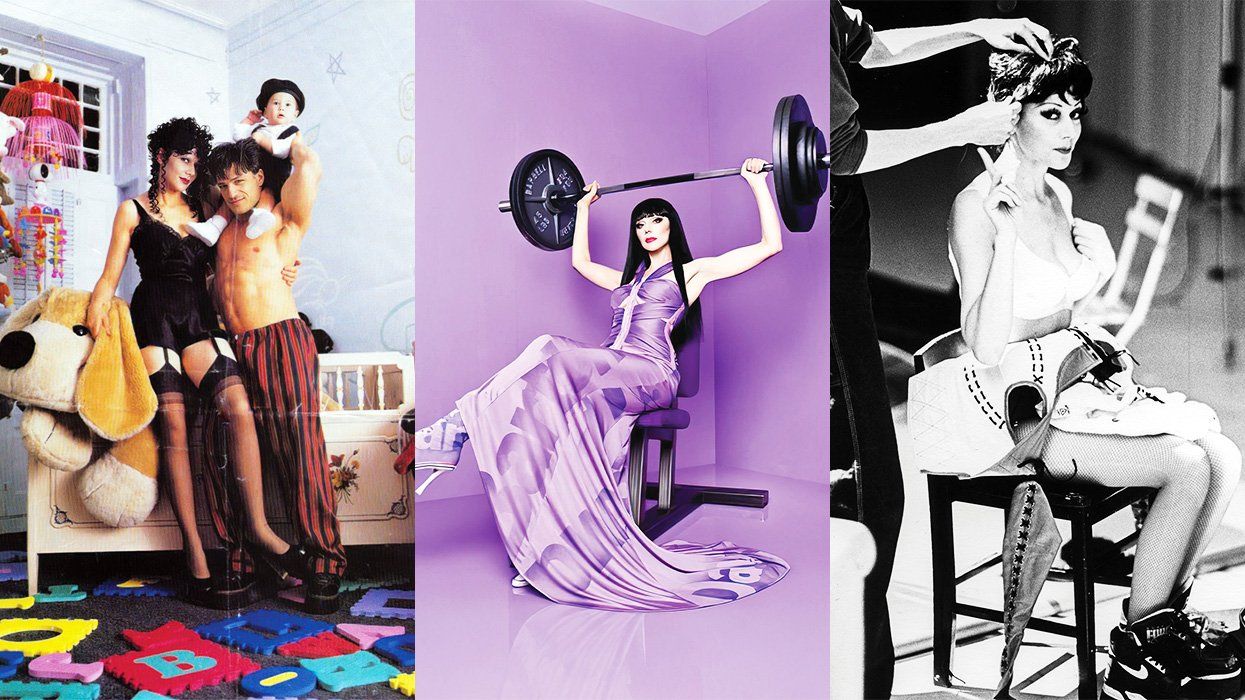
Swanning in a feather headdress and a swath of tulle, Susanne Bartsch held court at the June book party for Bartschland: Tales of New York City Nightlife, a pictorial memoir of her life and career that also serves as a who’s who of the town’s glitterati. Michael Musto, Amanda Lepore, Joey Arias, Aquaria, and more legendary figures featured in the book gathered at the Standard’s Boom Boom Room to preen before the cameras — and to celebrate Bartsch, who since moving into the Chelsea Hotel in 1981 has presided as a club queen (and queen-maker) in the City That Never Sleeps. The crowd soon migrated next door to the business of partying at Le Bain, where Bartsch hosts her popular Tuesday night event, On Top.
RuPaul himself wrote the foreword of Bartschland, in which he recounts how the event producer had once hired him as a go-go dancer at her famed weekly party, Savage. “When she entered the room, she hovered over the crowd like a magical fairy, sprinkling excitement on everyone in the club,” writes Charles. “By the time she made it over to me, her first words were, ‘You’re a popstar.’ I was thrilled and honored that the Queen of the Night had dubbed me the very thing I had come to Manhattan to be."
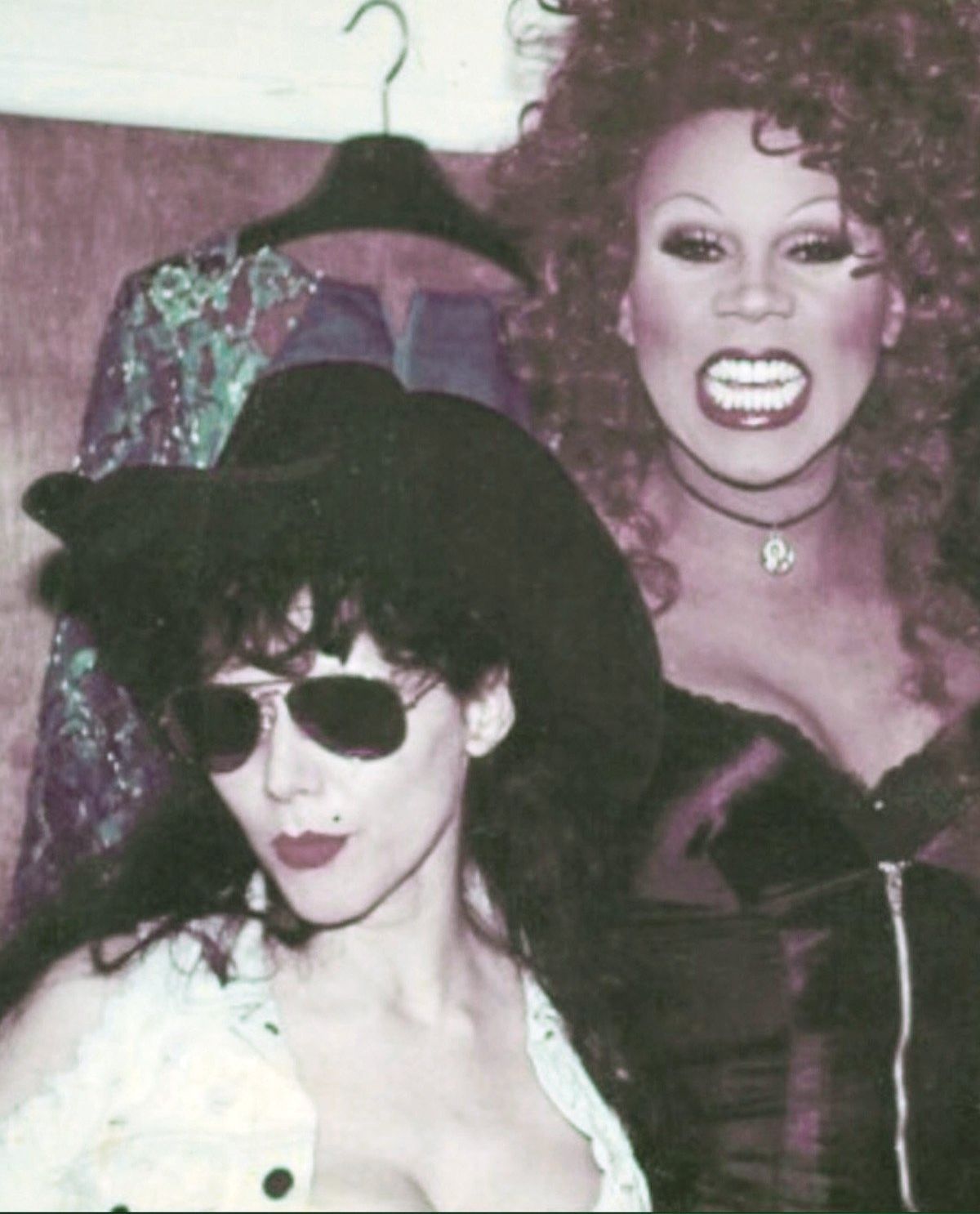 Susanne Bartsch and RuPaulCourtesy
“He’s a great supporter,” Bartsch says of RuPaul. “He says, ‘I’m who I am because of you. You helped me a lot.’” The world’s most famous drag queen had previously written glowingly of Bartsch in his new memoir, The House of Hidden Meanings. He is now helping promote Bartschland through his new bookselling company, Allstora. Earlier this year, those who purchased it there gained access to an exclusive chat between the longtime friends.
Bartsch is renowned for her sartorial influence — she literally imported British fashion to New York through her former SoHo boutique, helping to popularize Vivienne Westwood, Leigh Bowery, John Galliano, and more U.K. designers on NYC dance floors and runways. A 2015 Fashion Institute of Technology exhibit chronicled her own fabulous costumes. But as an event producer, she changed culture. For over four decades, as depicted in her book, Bartsch created safe spaces and showcases for folks like LGBTQ+ people who thought, dressed, and lived outside of the box.
Bartsch was decades ahead of mainstream society in modeling allyship. Since the beginning, “I’ve been very, very drawn to the LGBTQ community…. Honestly, I think the gays have more fun,” she says.
 Susanne Bartsch and Amanda LeporeCourtesy
“I’m not an actress. I’m not a singer. I’m not really a dancer…. I don’t have those talents,” she adds. “My talent is to express myself with looks and creativity — and creating spaces for people to be safe and express themselves as well.”
Bartsch has leveraged her producing talents to help the LGBTQ+ community philanthropically. Notably, in 1989, she launched the Love Ball, which raised $400,000 to fight the AIDS epidemic; the event also helped introduce the ballroom community to mainstream attention. Not one to rest on her laurels, Bartsch is planning another event next year that will platform rising designers as a kind of alternate programming to the Met Gala, with proceeds benefiting The Center, an LGBTQ+ nonprofit.
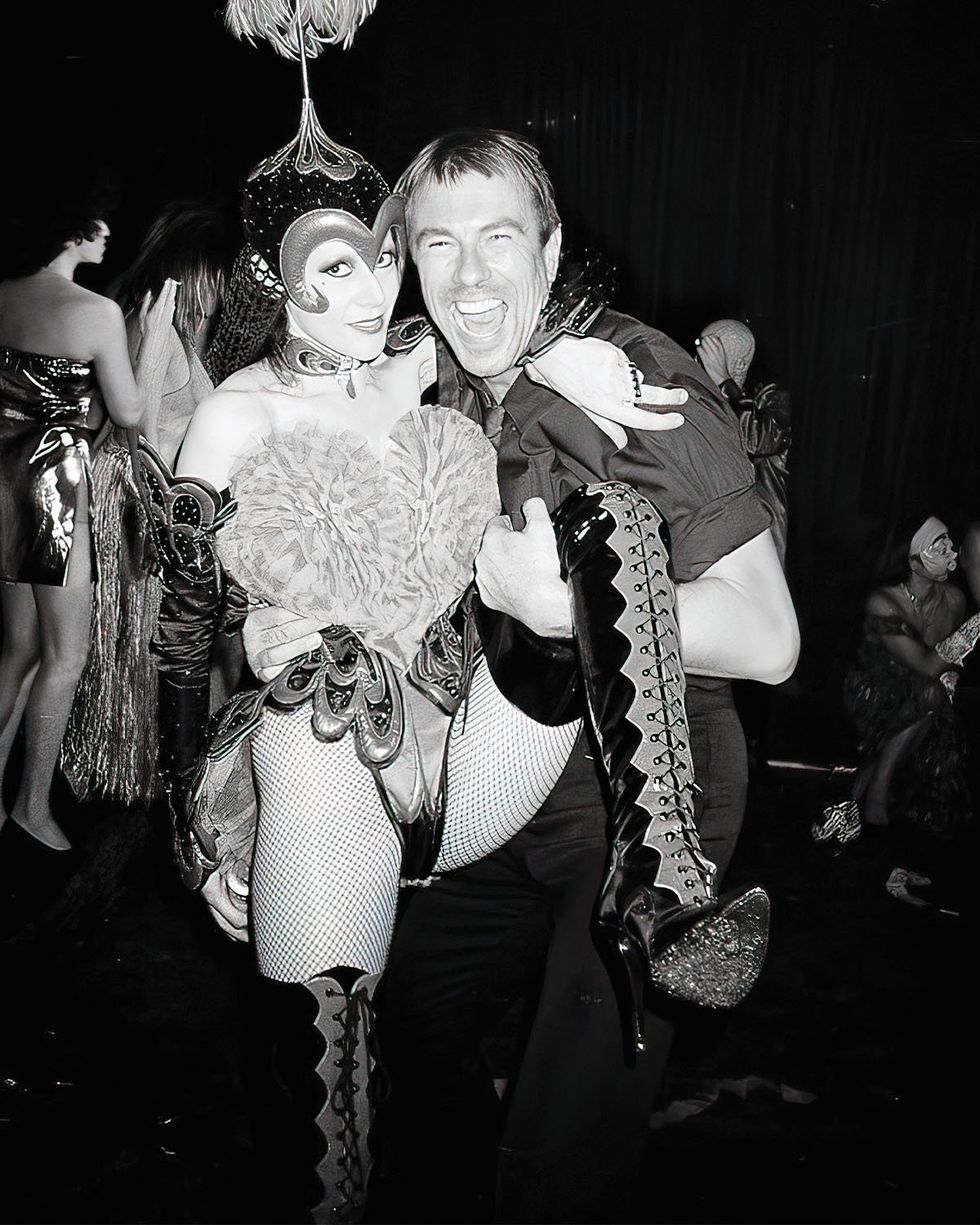 Susanne Bartsch in the early ‘90s with Thierry MuglerCourtesy
In Bartsch’s youth, her unique sense of style propelled her out of what could have been a more conservative fate in her native Switzerland. “In a way my whole life has been a reaction against my Swiss heritage,” writes Bartsch, who recalls drawing rainbows on her eyelids with crayons while wearing hot pants as a teen. She wanted more from life than being a banker’s wife. In the late 1960s, she moved to London, ostensibly to learn English. In actuality, she was in search of a creative community. She found one there. Later, she found a home in NYC.
Bartsch treasures her calling. “Not many people know what they love to do. And so if you find it, it’s such a gift,” she says. “And then if you can make a living with it on top of it, you know, pay your rent? That’s the ultimate.”
This year, Bartsch returned home in rainbow regalia to Zurich Pride, where drag performers dragged her onto the main stage — giving her the platform for a change. “It was just a really nice feeling to be out there with these queens behind me, cheering me on, and the people in the front loving the moment,” she says. “It was a beautiful energy.”
The moment was a highlight of her homecoming to Switzerland, which she says has progressed a lot since her youth. “I remember a time [when] nothing like that could happen in Switzerland, and it’s [now] more open-minded,” says Bartsch, who on July 10 plans on launching an exhibition at Zurich’s Museum of Design devoted to her inclusive world of fashion and nightlife.
 2015 FIT exhibitCourtesy
Of course, it wouldn’t be a true Bartsch event without a Bartsch sartorial statement. And the party queen is a master at crafting a memorable ensemble. “My first rule with planning an outfit is, I have no rules. And my whole signature is, I don’t have a look,” dishes Bartsch — though she does favor wigs. Bartsch estimates it takes two to three hours for “a full look,” whereas a “medium” look might take 90 minutes.
The tie that binds her sense of style? Fearlessness. “I dress for myself. I really do,” she says. “And I am not afraid of anything.... I’m gonna look the way I’m gonna look because I feel good in it.”
And she has advice for other outsiders who might be afraid of openly expressing themselves: “We need to have fear. It’s protective for humans. But at the same time, don’t let that run your life.” Need further inspiration? “Buy my book.”
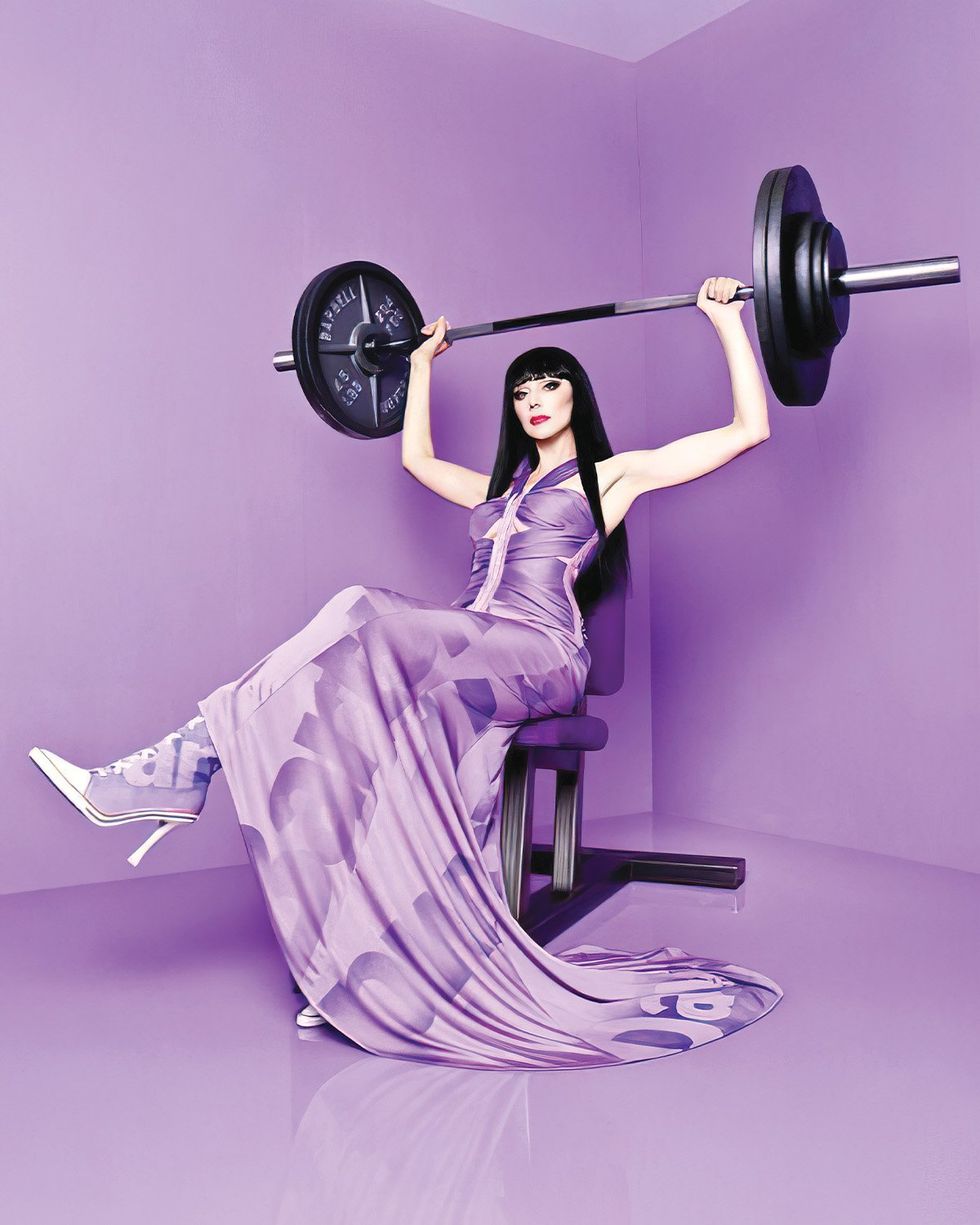 MATHU ANDERSON
Find Bartschland: Tales of New York City Nightlife on Amazon or Allstora. To learn more about Bartsch, stream her documentary Susanne Bartsch: On Top on Prime Video or WOW Presents Plus.
This article is part of Out's September/October issue, which hits newsstands on August 28. Support queer media and subscribe — or download the issue through Apple News, Zinio, Nook, or PressReader starting August 13.