

This story originally appeared on The Advocate.
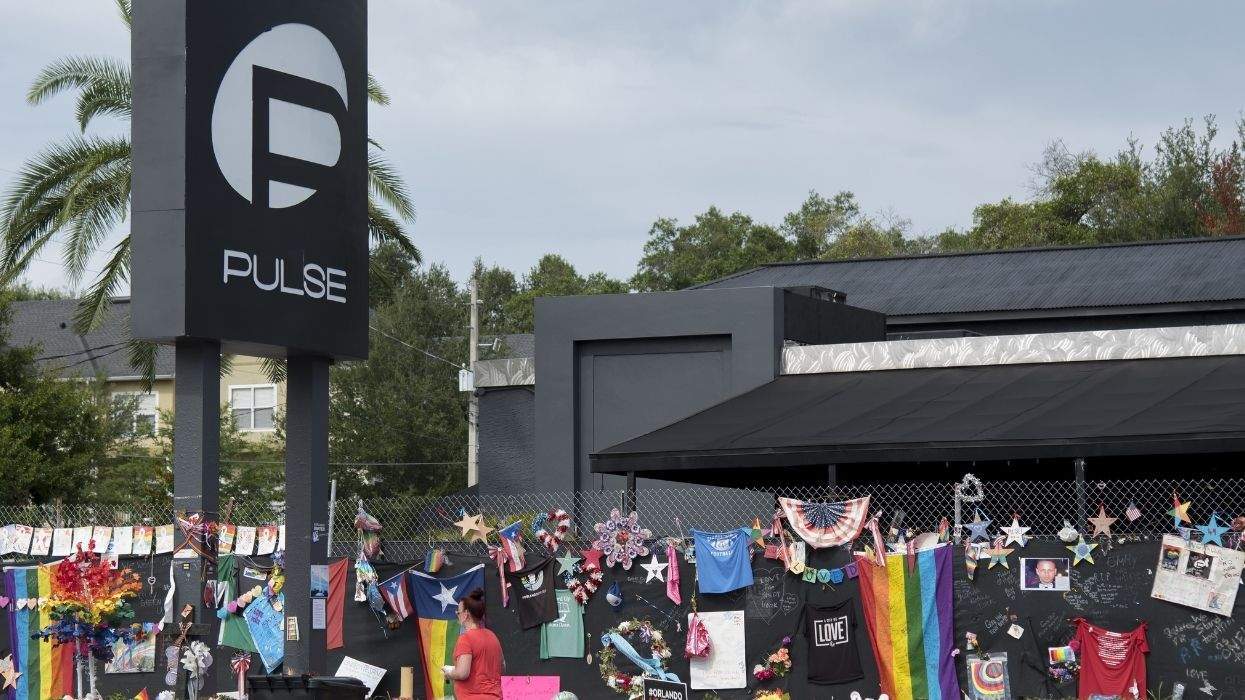
Many of the hundreds touched by the then-deadliest mass shooting in U.S. history at Pulse, a gay Orlando nightclub, where an extremist gunman killed 49 people and left 58 others injured ten years ago Friday, still seek solace. Even survivors who left the Florida venue uninjured suffered emotional anguish and guilt, while loved ones of those who didn’t make it navigated immeasurable loss.
“There’s no handbook on how to survive after surviving,” says Christopher Hansen, who crawled his way out of the crime scene to help others. It was his first visit to the club since he was new in town.
But in the intervening decade since what remains the deadliest attack on mostly LGBTQ+ victims, many of those navigating pain and darkness in the aftermath of the shooting found their way along healing paths toward justice, reflection, and positive action. Survivors turned into national spokespeople for LGBTQ+ rights or advocates for survivors of other mass tragedies. Some found ways to help save their own lives.
These are a few people who suffered through the massacre and helped make a difference over the past 10 years.
Related: Orlando tears down ‘horrific’ Pulse sign. Survivor Brandon Wolf says it once meant safety
Life-saving organs
For Orlando Torres, a promoter who worked years in the Orlando LGBTQ+ nightclub scene, June 12, 2016, was a night at work that ended in upheaval. He helped launch Latin Night at Pulse, the event that drew a disproportionately Hispanic crowd to the club that evening, and ended up on the floor of a bathroom in Pulse playing dead during an hours-long standoff.
Today, he considers himself lucky in many ways, and not just for living through the tragedy. Locked away from much of the worst violence, he lost friends but did not watch them die.
“I can talk about it because I have no nightmares. I have no visuals,” he says. “I was in the four walls of a stall all night long.”
God gave me that path and let me stay on Earth. - Orlando Torres
Torres already enjoyed some notoriety in Orlando’s club scene before the shooting, so the sudden attention did not cripple him. He became a regular fixture in the media and among the survivor community. In the decade since, that attention has slowed, as has business in Orlando’s LGBTQ+ nightlife scene. Pulse never reopened, and economic changes brought new ownership and changing fortunes for legendary venues like Southern Nights.
Torres moved to Puerto Rico for a period in pursuit of a new life but later returned to Orlando, like so many others. Now 62, he makes a living in logistics. That includes transporting aerospace equipment and, especially relevant to his background, working with medical professionals to ship surgical supplies. He routinely gets calls to rush to airports and facilitate the transport of organs to hospitals for transplants, every time giving a stranger a new lease on life. He was introduced to transporting organs by a fellow Pulse survivor in the wake of the shooting
“God gave me that path and let me stay on Earth,” Torres says. “That took me on a path toward saving lives, so that is what I do.”
Related: Two Pulse survivors are now 'ex-gays' running a conversion therapy organization
Honoring through action
The Pulse shooting drove Brandon Wolf, then a barista and theme park employee in Orlando, toward political advocacy. He attended Pulse with Drew Leinonen and Juan Guerrero, a couple who ultimately died together in the shooting.
“It's hard to believe it's been 10 years,” Wolf says. “Ten years of missing faces at birthday parties, empty seats at dinner tables, and voicemails never returned. Six days after the shooting, at his funeral, I promised my best friend that I would never stop fighting for a world that he would be proud of. That promise has taken me in new directions, led me to new jobs, and made me ask myself every day what more I can do to give back to my community.”
In the immediate aftermath, Wolf and other friends established a nonprofit, The Dru Project, in Leinonen’s honor. The organization established scholarships for LGBTQ+ students. This year is its last.
So much has changed about who I am as a survivor. - Brandon Wolf
But that was only the start of his work to improve the future for queer youth. He has since worked as the national press secretary for the Human Rights Campaign and, more recently, returned to Florida to become the senior director of communications strategy for Equality Florida. Those roles made him a prominent national voice on television and at major speaking events in some of the most powerful rooms in the country as a constant representative of the LGBTQ+ community. He wrote a memoir titled A Place for Us and has spoken extensively about gun violence, Florida’s anti-transgender policies, and the need to create a more accepting future for young people.
He remains motivated by the loss of those killed at Pulse, the people who did not escape as he did.
“So much has changed about who I am as a survivor, who we are as a country, and the obstacles we're trying to overcome,” Wolf says. “But one thing has not changed: our responsibility to honor the memories of my best friends and 47 others not with hollow sympathies or empty words, but with action.”
Related: Orlando to honor victims, commune with survivors on 9th anniversary of Pulse shooting
Demanding accountability
Leinonen’s mother, Christine Leinonen, also became an unwitting face of the tragedy and a voice for the bereaved. After learning of the shooting at Pulse, she appeared at the scene demanding information and pleading on national television for news about Drew’s condition. It would take 33 hours before police informed her that her son had died in the club.
The loss of her only child devastated her, but the response to the shooting also made her angry. The former police officer has spent the last decade pursuing information, justice, and accountability. She recently co-authored a book with Jeffrey Badger, Control the False Narrative: Orlando Police Chief John Mina, the Department of Justice, and the Facts about the 2016 Pulse Nightclub Shooting, detailing what she argues were police response failures beginning with the first officers' hesitation to enter the club.
I just wanted to love my son and grieve my son, that's all I wanted to do. - Christine Leinonen
She began raising questions at a time when much of the community sought to rally around law enforcement after shooter Omar Mateen died following an hours-long standoff. But Leinonen wanted answers about why police had not neutralized the situation sooner. She particularly criticized the media attention sought by then-Orlando Police Chief John Mina, now Orange County sheriff.
“For John Mina to come to the media, and over and over again, just keep lying and telling these fabulous lies about police heroics, and how they went right in immediately and engaged the shooter and caused him to go to the back, never told the truth about any of it,” she said.
Similarly, Christine Leinonen became one of the first people to question the onePulse Foundation's plan to create a for-profit museum, a charity initially led by Pulse’s former owners that later dissolved amid accusations of mismanaging public dollars. Often, Leinonen’s quests for answers began as a lonely and singular mission, only later attracting others touched by the tragedy.
“I didn't even want to write this book. I didn't even want to do anything against a museum, and now I don't want to do this thing against the city with this mini museum they're doing,” Leinonen says. “I just wanted to love my son and grieve my son, that's all I wanted to do.”
But she has remained at the tip of the spear, giving voice to members of the survivor community who wanted to be heard. She continues to pressure the city over plans for a public site at the former Pulse location. She also worked closely with activist Zachary Blair to expose safety and code violations at the club before its closure, some of which may have cost lives.
Leinonen has remained a voice demanding better police responses to mass shootings. She also spoke out after the Uvalde school shooting, arguing that lessons from Pulse had not been applied years later.
Far from feeling estranged from other survivors, Leinonen acts as an advocate unafraid to demand justice even when doing so places her in the minority. A female pipefitter in a male-dominated field and a police officer before many women wore a badge, she is familiar with breaking ground. She admired the same spirit in her son, who founded the first Gay-Straight Alliance at his high school.
“I didn't mind when I was getting along, and I didn't mind when I wasn't getting along, so it's whatever made sense,” she said.
Reflections of resilience
Hansen had only recently moved to Orlando at the time of the shooting and stepped into Pulse for the first time on June 11, hours before the attack began. While his efforts to help care for the wounded earned media attention, he spent years struggling with survivor's guilt.
He still recalls being asked to speak at a mural unveiling and thinking, “Why am I not part of the 49? Why am I here? I was guilty of being alive.”
A few years later, however, he found a greater purpose. After returning to his hometown of Lone Oak, Arkansas, to be closer to family, he left behind most of his possessions, including some of the honors he received after the shooting. There, he helped organize a memorial project to light up a bridge in North Little Rock in honor of the victims. That effort evolved into the national Reflections of Resilience movement, which now illuminates structures across the country.
This year, the event includes the Big Dam Bridge, North America’s longest pedestrian bridge. Hansen has expanded the concept beyond honoring a single tragedy, with lanterns now lit in memory of all those impacted by hate, violence, and suicide.
“I was looking for love, community, and roots, and because of Pulse, now I have found the love,” he says. “I had to love myself to love others, but the brand of my rainbow is love and strength.”
I was guilty of being alive. - Christopher Hansen
Bridge lightings have now taken place nationwide, including in Orlando last year. Hansen organizes major Reflections events each year on June 11, the day before the Pulse anniversary, reaching back toward a world and a version of himself that existed before the life-changing event.
Hansen has also become involved with Survivors First, a mission dedicated to ensuring that charity money raised after mass-casualty events reaches victims. He has worked closely with Anita Busch, a journalist-turned-advocate on the issue. That work has connected him with survivors of the 2017 Las Vegas shooting, the only mass shooting in U.S. history that claimed more lives than Pulse.
The work has helped Hansen and countless others heal. For Hansen, it provided a reason to keep going as he confronted depression and worked through his own haunting thoughts.
Hansen recently marked three years of sobriety from drugs and alcohol.
If you or someone you know needs mental health resources and support, please call, text, or chat with the 988 Suicide & Crisis Lifeline or visit 988lifeline.org for 24/7 access to free and confidential services. Trans Lifeline, designed for transgender or gender-nonconforming people, can be reached at (877) 565-8860. The lifeline also provides resources to help with other crises, such as domestic violence situations. The Trevor Project Lifeline, for LGBTQ+ youth (ages 24 and younger), can be reached at (866) 488-7386. Users can also access chat services at TheTrevorProject.org/Help or text START to 678678.