

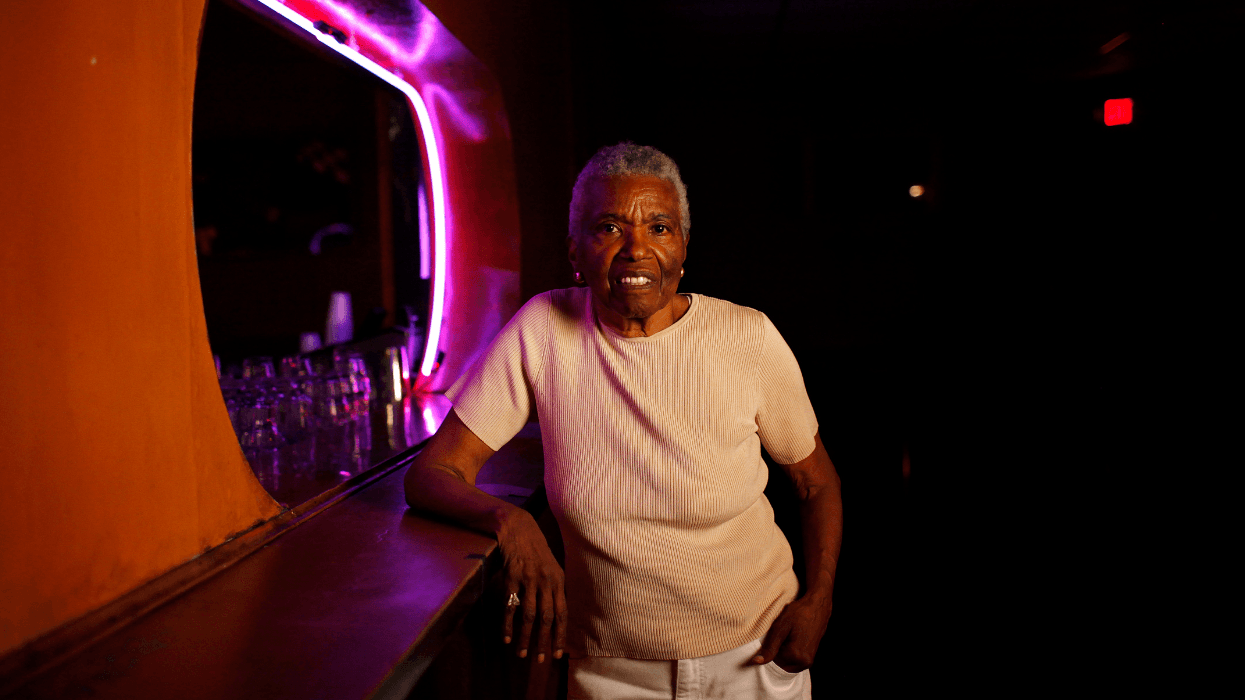
Jewel Thais-Williams built one of the most important queer institutions in America, and somehow, many people still don't know her name.
For more than four decades, the Black lesbian entrepreneur turned Catch One into far more than a nightclub. Opened in Los Angeles in 1973, it became a sanctuary for Black queer communities, a gathering place for everyone from Madonna to Sharon Stone, and eventually a lifeline during the height of the AIDS crisis.
As director C. Fitz began researching Thais-Williams for what would become the documentary Jewel's Catch One, she ran into a surprising problem.
"There's hardly anything about this woman online. Imagine that," Fitz tells Out at the Provincetown International Film Festival ahead of the film's Pride Month rerelease. "Imagine not doing the film."
What started as a short two- or three-minute profile quickly evolved into a full-length documentary — one that now celebrates both Jewel's life and the community she built around her.
The timing of Jewel's Catch One's June 16 rerelease feels especially fitting. Arriving during Pride Month, just days before Juneteenth, and coinciding with the documentary's 10-year anniversary, the film offers audiences another opportunity to revisit a legacy rooted in Black queer joy, resilience, and community-building.
The rerelease also comes just weeks before the one-year anniversary of Thais-Williams's death on July 7, 2025, adding another layer of meaning to the film's return.
For Fitz, the documentary has always been about giving audiences a chance to fully understand Jewel's impact.
She built more than a nightclub
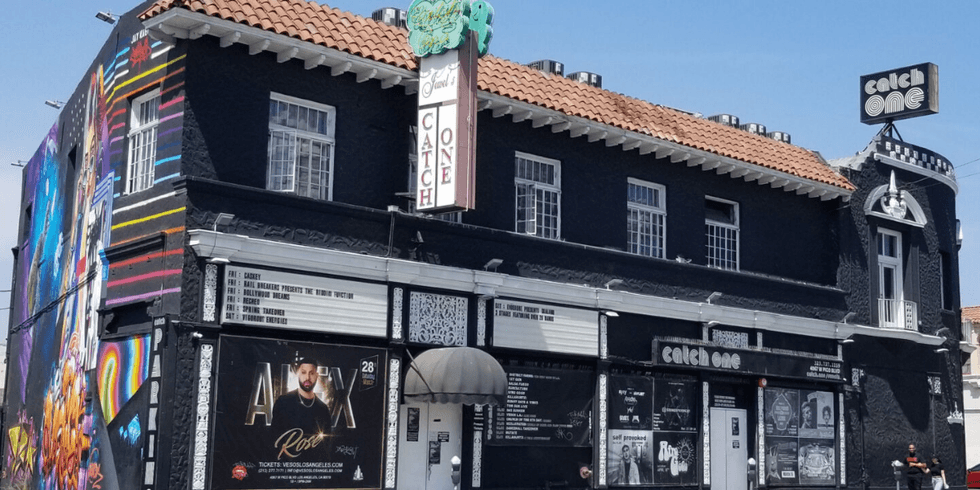
Catch One, the legendary Los Angeles venue founded by Jewel Thais-Williams in 1973, grew from a neighborhood disco into one of the most important institutions in Black LGBTQ+ history.
When Fitz first approached Thais-Williams, she quickly realized she wasn't documenting a singular accomplishment. She was documenting an entire ecosystem.
"She had the club, she had a vegan restaurant downstairs, and she has the nonprofit health clinic next door," Fitz says. "She was running ragged — not ragged because it was Jewel, she was an Energizer Bunny — but it was incredible."
What amazed Fitz most was that Jewel never framed any of these ventures as entrepreneurial success stories. Instead, she saw them as responses to community needs.
That approach shaped everything Catch One would become.
Founded in 1973, the venue emerged at a time when Los Angeles nightlife remained heavily segregated, with many clubs openly discriminating against Black patrons and LGBTQ+ people.
Thais-Williams changed that. She created a space where everyone was welcome. Over time, Catch One grew from a neighborhood disco into a cultural institution known around the world, earning comparisons to Studio 54 while maintaining a distinctly Los Angeles identity rooted in Black queer joy.
And unlike many nightlife destinations that fade with trends, Catch One evolved alongside the needs of its community.
During the AIDS crisis, she became a mother to thousands
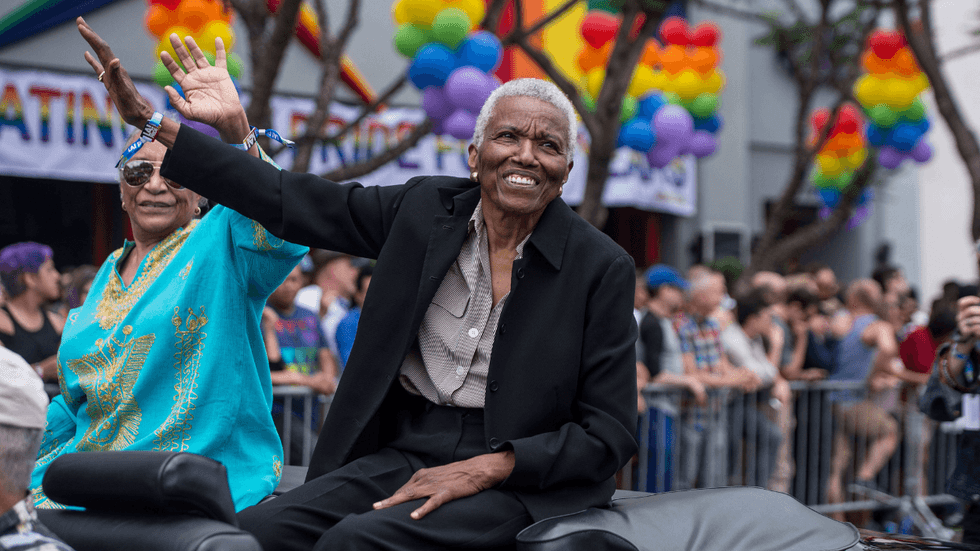
Grand Marshall Jewel Thais-Williams rides in the annual LA PRIDE Parade on Santa Monica Boulevard in West Hollywood on June 12, 2016
Sarah Reingewirtz/MediaNews Group/Pasadena Star-News via Getty Images
Some of the documentary's most powerful moments center on Thais-Williams's response to the AIDS epidemic. At a time when fear and stigma were rampant, many venues were turning people away. Jewel did the opposite.
"She would turn the parking lot into a soup kitchen," Fitz says. "She delivered meals. She rallied the troops, meaning the community, to help the community."
The work was deeply personal. Many of the people getting sick weren't strangers. They were friends, performers, employees, and longtime patrons.
"It was a very painful time for Jewel," Fitz says. "A lot of her patrons and friends were just dying, yet she still stood up and got them help in any way she could think of."
The documentary also highlights a painful truth: resources weren't always reaching Black LGBTQ+ communities. "The funds didn't trickle down to her community," Fitz explains. "They got sort of caught up in West Hollywood and white LGBT world."
So Thais-Williams built her own support systems. She organized meal deliveries. She mobilized volunteers. She transformed her club into a place where people living with HIV would continue to be welcomed when much of society was pushing them aside.
"She was our mother," Fitz says. "Mother to thousands."
Preserving queer history became a community effort
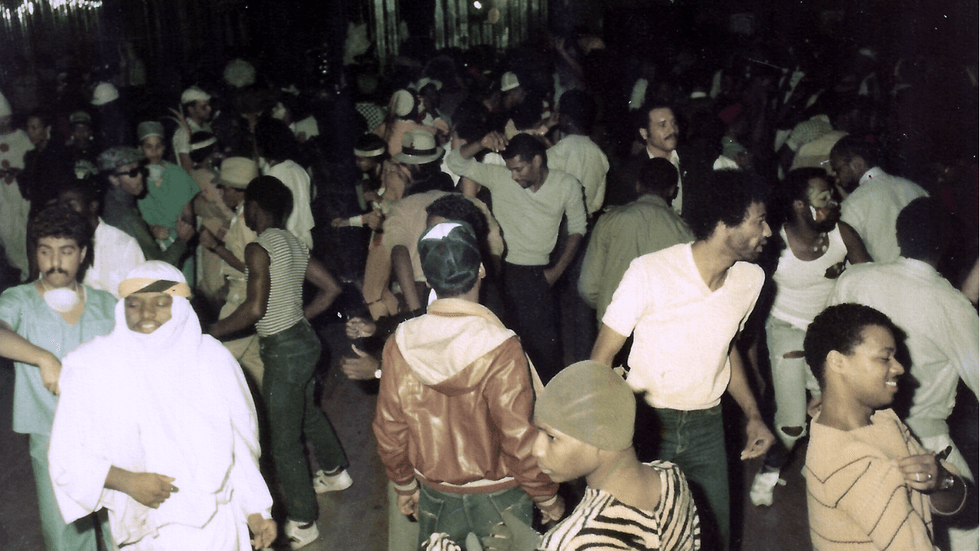
Catch One dance floor, Halloween archival
Catch One archival
One of the documentary's greatest strengths is its archive. The film is packed with photographs, ballroom footage, VHS recordings, celebrity appearances, and personal moments that make Catch One feel alive decades later.
Gathering that material became a community project. "Jewel did have her own collection of pictures, which were amazing and really make the documentary so personal and intimate," Fitz says.
But much of the footage had to be tracked down elsewhere.
"The community was great," she says. "They gave us their tapes that they had on VHS. We had to transcribe them and transcode them, but it was all worth it because we saved that history."
And that archival work became about much more than documenting a nightclub. Many of the ballroom competitions featured in the film also doubled as AIDS fundraisers, preserving an often-overlooked chapter of queer resistance.
"Those balls that raised money for the AIDS crisis, that was so important," she says. "Obviously raising money, but also part of our culture."
Everyone said yes
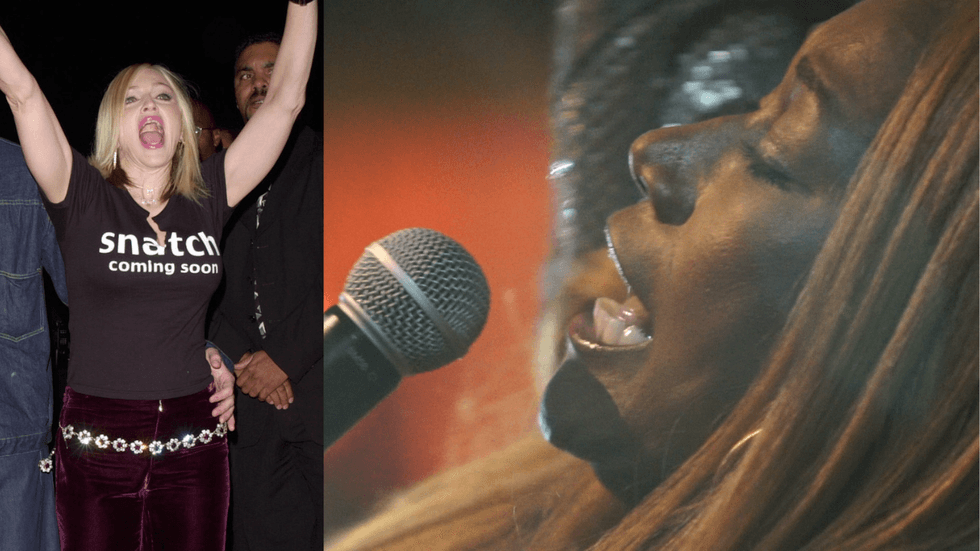
Madonna's 'Music' release party at Catch One; Bonnie Pointer singing at Catch One
Catch One archival
The documentary features appearances from Sharon Stone, Sandra Bernhard, Thelma Houston, Bonnie Pointer, Evelyn "Champagne" King, Madonna, and many others.
Fitz says building the lineup happened organically. "I would sit with Jewel and we had a couple lunches together where I called it 'the list,'" she says.
Each time, more names would appear. "Every lunch she would come up with 10 or 20 more people."
The response was almost universal. "They all said yes," she recalls. "Because of what Jewel did and what she stood for."
One of Fitz's favorite stories from the filmmaking process involves Thelma Houston.
"I got brave and I went up to her and said, 'I'm doing this documentary on Jewel Thais-Williams and we'd love you to be part of it.' She said, 'Absolutely.'"
That response quickly became the norm. People wanted to be part of the film because Jewel had spent decades showing up for everyone else.
The doors were open to everybody
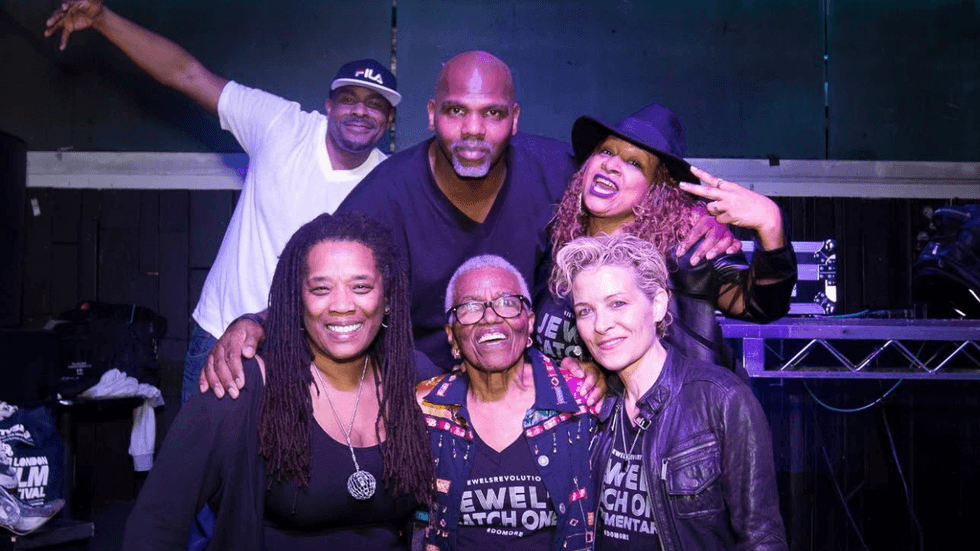
C. Fitz (bottom left) and Jewel with Thea Austin, Pat Branch, and DJ Key Key
Photo by Natalia Knezevic
For Fitz, making Jewel's Catch One became about more than documenting one extraordinary woman. It became an opportunity to preserve an entire ecosystem that existed because Jewel decided everyone deserved a place to belong.
That philosophy never changed, whether Jewel was opening her doors to Black queer Angelenos, feeding people during the AIDS crisis, or creating spaces for communities that had been ignored elsewhere.
"The doors are open to everybody," Fitz says.
It's a simple idea, but it's also what made Catch One so extraordinary.
As queer spaces continue to disappear across the country, Jewel's Catch One doesn't just look back at a beloved institution. It reminds audiences what can happen when someone builds a community and refuses to let anyone be left outside of it.
Watch Out's full interview with director C. Fitz below. Jewel's Catch One is now available to rent or purchase on digital HD, cable, and satellite video-on-demand platforms across North America via Freestyle Digital Media. Special thanks to the Provincetown International Film Festival.