

“You really should go on this date,” his driver said.
The flat tire earlier in the afternoon had deflated more than rubber. It was also raining that night — in Palm Springs. The vibes seemed off.
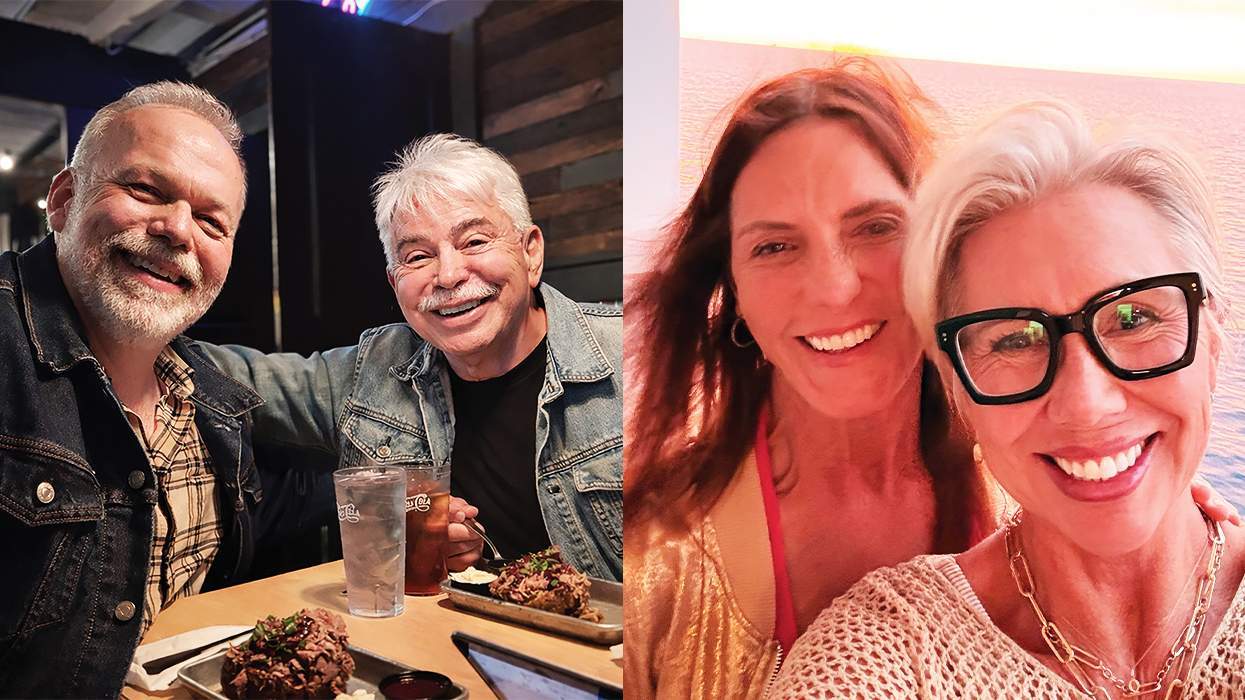
Larry Thomas, 82, had acclimated to the idea of living out life alone after his partner passed away. But he’d already traveled the 275 miles from Scottsdale, Arizona, to SoCal for this dinner. And it was the night before Valentine’s Day. He felt hopeful.
The driver looked at the profile of his passenger’s date — Quinn Olson, 56 at the time and also a widow — and nudged him to follow through. The stormy weather ultimately made for romantic circumstances when the two men were the only ones to dine at the restaurant that evening. They had the place to themselves.
“Three and a half hours flew by,” Olson says over the phone. Six months later, the happy couple married.
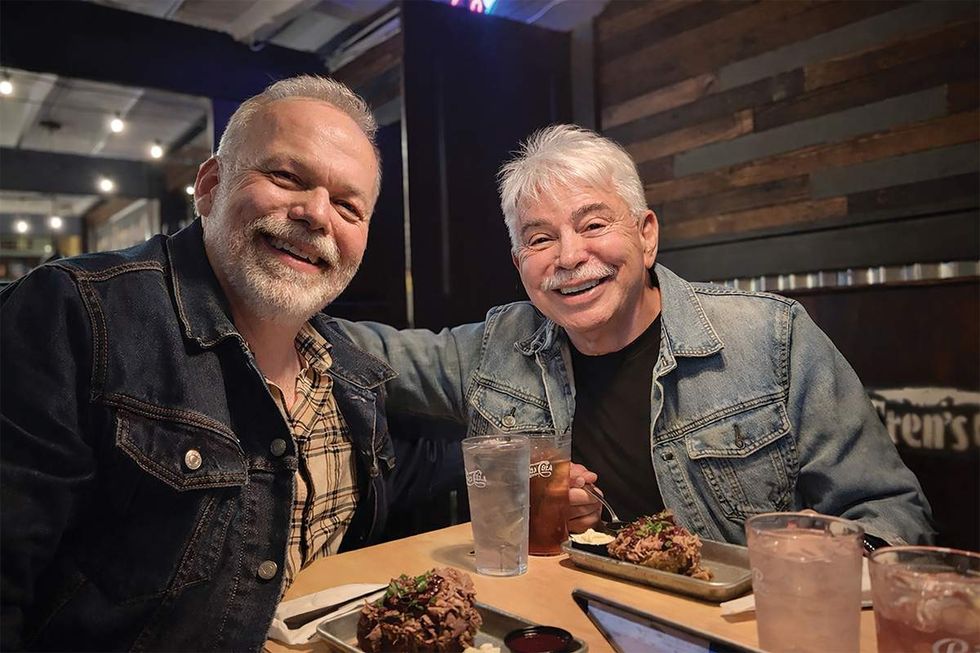 Husbands Quinn Olson and Larry Thomascourtesy Larry Thomas
Larry met Quinn through an LGBTQ-specialized matchmaker — in this case, Anthony Canapi, AMFT, the co-owner of Best Man Matchmaking (@yourgaymatchmaker).
“I’d been working for a celebrity matchmaker in Beverly Hills, and found there was this gap in the market for gay men, especially people of color,” Canapi says.
As online fatigue settles in, many queer people are investing in offline experiences to find love. Some are hiring LGBTQ-focused matchmakers, an investment that typically runs in the thousands of dollars at minimum. Others are buying tickets to locally curated events—and even traveling to the cities that host them. Speed-dating nights bring hopeful romantics to local bars on the normally slower weekday evenings. For enthusiastic wingpeople, LGBTQ-specific “date my friend” parties start with a lightning round of attendees pitching their besties (some involve Powerpoints), followed by a reception and mingling. The common promise among these offerings is to get people off their phones and face-to-face with other humans.
The offline-dating movement has tailwinds from both rising app prices and swipe fatigue. At the time of this writing, Grindr ranges from $19.99 to $499 a month. Tinder subscription prices vary, along with an invitation-only tier at $499 a month. Hinge comes in at $32.99 to $49.99 a month; Raya, $24.99 to $49.99 a month; OkCupid, $14.99 to $54.99 a month; Sniffies, $19.99 a month; and Scruff, $16.99 a month. These are standalone one-month prices; if you buy a multi-month commitment, rates are lower, but you also pay upfront in full.
All of these apps have a free tier. But in the technology biz, one playbook to upsell subscriptions is simply to make the freemium option more tedious. The technical term for this is platform degradation, but you might be more familiar with its drag name: enshittification, coined in a November 2022 blog post by journalist Cory Doctorow, who later wrote a book of the same name. In enshittification, companies build high-quality products or services, create stickiness or even dependency with their user base, then strategically degrade the offering over time to maximize short-term profits for shareholders.
Our own noncommittal behavior is also a factor. With only a few photos to go off of before you have to swipe left or right—and dozens or even hundreds of other profiles to return to at any given moment—it often feels like dating apps can enable snap judgments and flakiness, even from those who have good intentions.
We tolerate the malaise because our yearnings for love (and sex) are powerful. The prospect of companionship is something many of us want out of the time we have on this Earth. For queer people, whose love has been criminalized throughout much of history and is contested to this day, the hesitation isn’t in the value proposition; it’s in deciding whether they want their next potential match to be curated by an algorithm or a human.
Personal finance is about managing the resources you have to cultivate the life you want. That life might include a partner. And there are only so many DMs, swaps, and swipes the gays and theys can tolerate before hope begins to falter. Are matchmakers, dating coaches, and curated events the better investment for queer singles to find love? (Gestures to budget spreadsheet) And are they worth your money?
Out asked several industry experts to investigate.
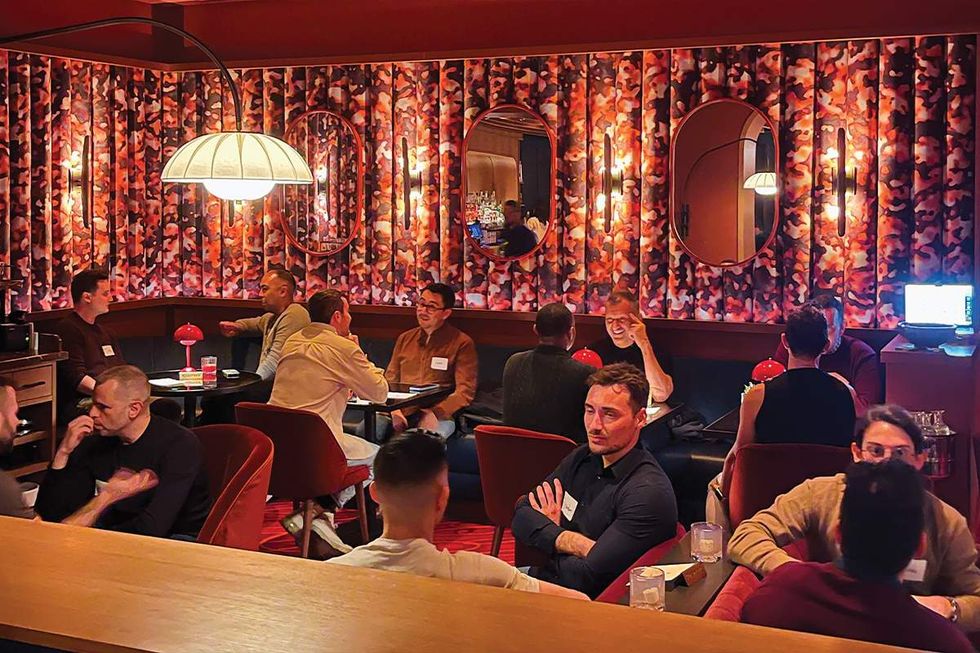 A speed dating event hosted by Trevor Kuhn at So & So’s Piano Bar in Hell’s Kitchen.Trevor Kuhn
What You Pay For
Professional matchmaking is the most high-touch and premium of these services. And while matchmaking has been around for decades, LGBTQ-specialized matchmakers have only recently become mainstream. Several of the matchmakers I spoke to said the volume and geography of their inbound inquiries have increased in recent years, with queries coming in from both cities and rural areas, as well as other countries.
The typical client is often a mid-to-senior career professional who doesn’t have time to go to a singles event, and is looking for something specific, says Lamont White, an Atlanta-based gay matchmaker of 11 years and Bravo personality with credentials in psychology and counseling (@thegaydatingcoach).
“For a long time, I was doing individual counseling, particularly with gay men and gay couples,” he says. “During one couples session, I was like, “These guys should have never gotten into a relationship.” They should have just stayed in the hookup phase and moved on. I don't blame them, because most gay men have not been taught how to date or how to court.”
White says his company’s services focus on accountability, helping men show up as their authentic selves, and, when needed, candor.
“I had a guy, an IT specialist who worked from home. No hobbies, no interests, no friends,” White tells me. “He said, “Oh, I want to go on a date with somebody.” I'm like, "Well, you're literally a vegetable right now. You have no interests. I can't put you in front of a man.” Over the next several months, I made sure he had three new hobbies. He joined a scuba diving group, a public speaking group, and a card game group. He started making friends, not best friends, but people that he could call and socialize with.”
He says the skill of cultivating intimacy outside of sex is important for long-term relationship success.
“It's a huge red flag if you're a gay man and don't have a gay friend you have not had sex with,” he says. “If you can't form intimate relationships with other gay men, how are you going to do that with a potential partner or husband?”
Coaching aside, the primary deliverable for a matchmaker is to prospect for potential dates on their client’s behalf, people who might not be hanging out at events or on apps, and who meet their client’s requirements.
“My guys are looking for a needle in a haystack, and I’m up for the challenge,” says White.
Prospecting means sourcing and vetting potential matches for compatibility, but also painting a picture of possibility for the respective match, explains Trevor Kuhn, a New York-based dating coach and matchmaker for gay men (@lovedaddytrev).
“Maybe [the matches] have taken a break from actively looking, but are still open to the possibility if it comes along,” Kuhn tells me. “In this case, I present the possibility to them. And honestly, they are usually delighted to hear from me. If I find there is compatibility, I’m sending them on a free first date with a great guy—my client.”
In addition to done-for-you matchmaking, providers often also offer coaching services or facilitate curated events. The week of our conversation, Kuhn was getting ready to host a 6:30 p.m. mixer and speed dating event the following Monday in Manhattan. Events create a curated experience at a much lower sticker price, and they double as a way for the host to elevate their profile as a connector.
“My monthly inquiries have doubled since this time a year ago,” he says. “One client told me that, when he goes to in-person events, at least he is meeting people, whereas on the apps, it's often not going anywhere.”
But speed dating events can still be a roll of the dice, says Elise Braunschweiger, founder of Amity Matchmaking (@yourdatingcopilot). She notes that the people who hire matchmakers and the people who go to speed dating events or mixers tend to be different crowds.
“In matchmaking, there’s often a guarantee that you’re going to meet someone who meets all your preferences,” she says. “Speed dating doesn’t have to provide that same outcome.”
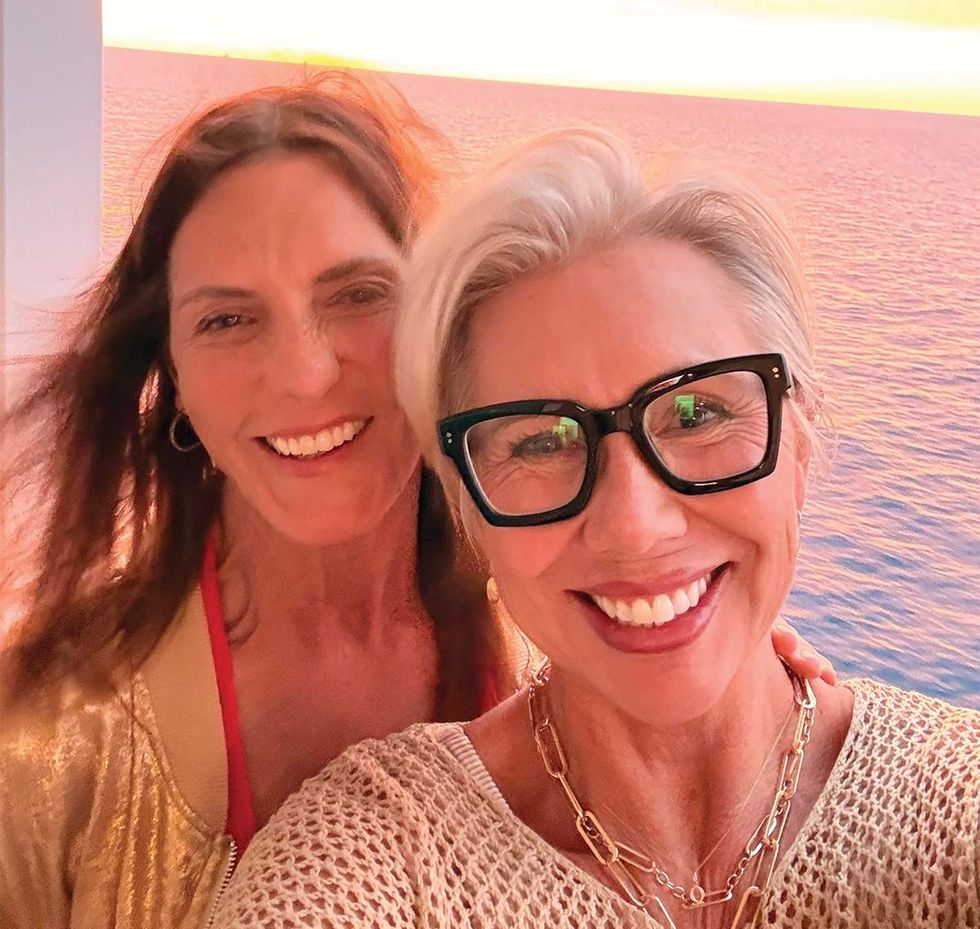 Susan Dost and Quincy Tessavernecourtesy Susan Dost
Braunschweiger explained that, although dating apps have enabled noncommittal behavior in other ways, their invention helped destigmatize the idea of getting outside help for your love life.
“It’s the same reason someone would outsource to a landscaper, or have someone do their taxes, or hire a personal trainer. They're not enjoying the work, or they don't have the time,” she says. “The people hiring matchmakers are choosing something that is more targeted, more effective, so that when they are opening that emotional door, the likelihood of success is greater.”
Rather than niching down to one specific gender identity or sexuality, Braunschweiger focuses instead on knowing her LGBTQ clients extremely well.
“The matchmaking industry was not built by or for gay people,” she says. “And to be honest, if you're someone who is gender non-conforming, or lesbian, or bi, or AFAB, you probably know that things labeled LGBTQ are probably cis gay men first, and then maybe the rest of us can join, and it will adapt from there.”
Braunschweiger matched one of her Los Angeles clients, Susan Dost, with Quincy Tessaverne by doing a pre-call with each of them, then setting up the date. Dost told me in a separate phone call that the rigor of Braunschweiger’s onboarding process gave her confidence that the matchmaker knew her requirements, particularly regarding kids.
“She basically gives you a blank canvas and says, ‘OK, tell me everything you want in a person, what your expectations are,’” Dost says of Braunschweiger. “For someone who's busy and has two kids, it was nice to be able to go, “Okay, this would be nice, that would be nice.” The last person I dated was totally not into kids, which is impossible. She had presented herself as such. But by the end, she’d say “You’re really bringing the kids?” Yeah—these are my kids.”
Tessaverne, also a parent, had previously been on dating apps, but found that people often weren’t serious about actually finding a relationship.
“I eventually got onto Raya, and was so excited, but it was horrible,” she tells me. “All these people are basically collecting people to follow them on Instagram.”
The two women said the budding friendship between their children is a joy to behold.
“We're going on trips with the kids, and planning our life for the future,” says Tessaverne. “It's been so intentional.”
Open Mind, Open Heart
Resistance to vulnerability might also affect your dating mojo. Tom Bruett, a licensed marriage and family therapist based in Denver (@queerrelationshipinstitute), tells me that most people on the dating scene fall into one of two buckets, each with their own respective challenges.
“There are the people who are new to dating, maybe because they're recently out of a relationship or widowed, and then there are people who've been dating for a long time, who are feeling really burned out by the process,” he says. For people getting back into the dating scene, there might be a phase of rediscovering who you are and what you want. Meanwhile, for fatigued daters, the challenge is to not spiral or conclude that there are no more fish in the sea.
This doesn’t mean you should be gullible with your money, though. The experts I interviewed agreed that it’s good to vet your options, and recommended screening for credentials, experience in an industry, and proven client results (“There are a significant number of matchmakers and dating coaches who come from the marketing industry,” says White). Remember, these are the people you want to help you with your love life, so be discerning and thoughtful with how you invest your time and coins.
I asked Larry Thomas, now 83, for his take on it all.
“I've lived long enough to know that life changes quickly,” he says. “There's not a lot of time to be out looking, unless you love sitting in bars every night, which neither of us do. The matchmaker was one of the best investments I’ve ever made.”
Maybe queer dating doesn’t have to mean a gauntlet of selfies, microaggressions, and wasted time after all. Investing in love can be money well spent. As dating apps continue to post eye-popping financials, an increasing segment of LGBTQ daters are taking their dollars offline instead.
White says business is booming.
“These dating apps are providing me with job security.”
Nick Wolny is Out magazine’s finance columnist and author of Money Proud: The Queer Guide to Generate Wealth, Slay Debt, and Build Good Habits to Secure Your Future, now in bookstores nationwide. nickwolny.com @nickwolny
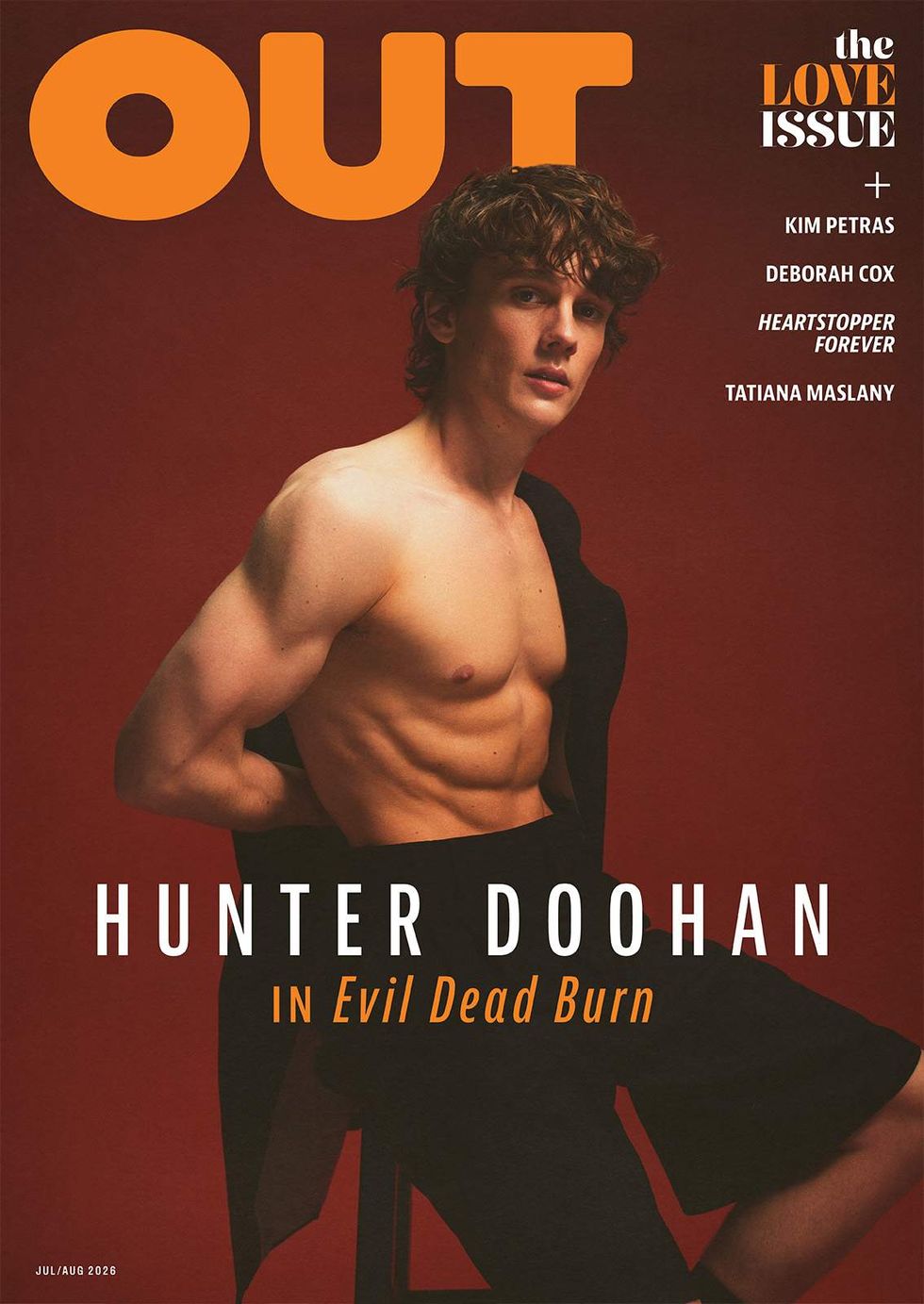 Hunter Doohan on the cover of Out's July/August 2026 print issue
This article is part of OUT’s July-Aug 2026 print issue, on newsstands July 7. Support queer media and subscribe — or download the issue through Apple News+, Zinio, Nook, or PressReader starting June 18.