

There’s a moment I carry from this work. It never makes it into policy memos or budget spreadsheets. It’s the pause on the other end of the phone when a local provider tells us they’re trying to stretch impossible dollars while their community keeps showing up with urgent needs: someone who can’t afford transportation to appointments, someone rationing medication after a coverage change, someone newly diagnosed who needs care and compassion, not judgment. That pause isn’t indecision. It’s exhaustion. It’s grief. It’s the weight of knowing that in the United States, where we have the tools to prevent and treat HIV, we still too often choose politics over people.
We’ve made extraordinary progress. HIV is no longer a death sentence. PrEP works. Treatment works. Undetectable equals untransmittable. And yet, HIV hasn’t gone away. The epidemic persists, especially for communities that have always been asked to carry the heaviest burdens: Black and Latino gay and bisexual men, transgender women, Black women, people in the South, people navigating poverty and housing instability, people who use drugs, immigrants, and rural communities facing fewer resources and more stigma.
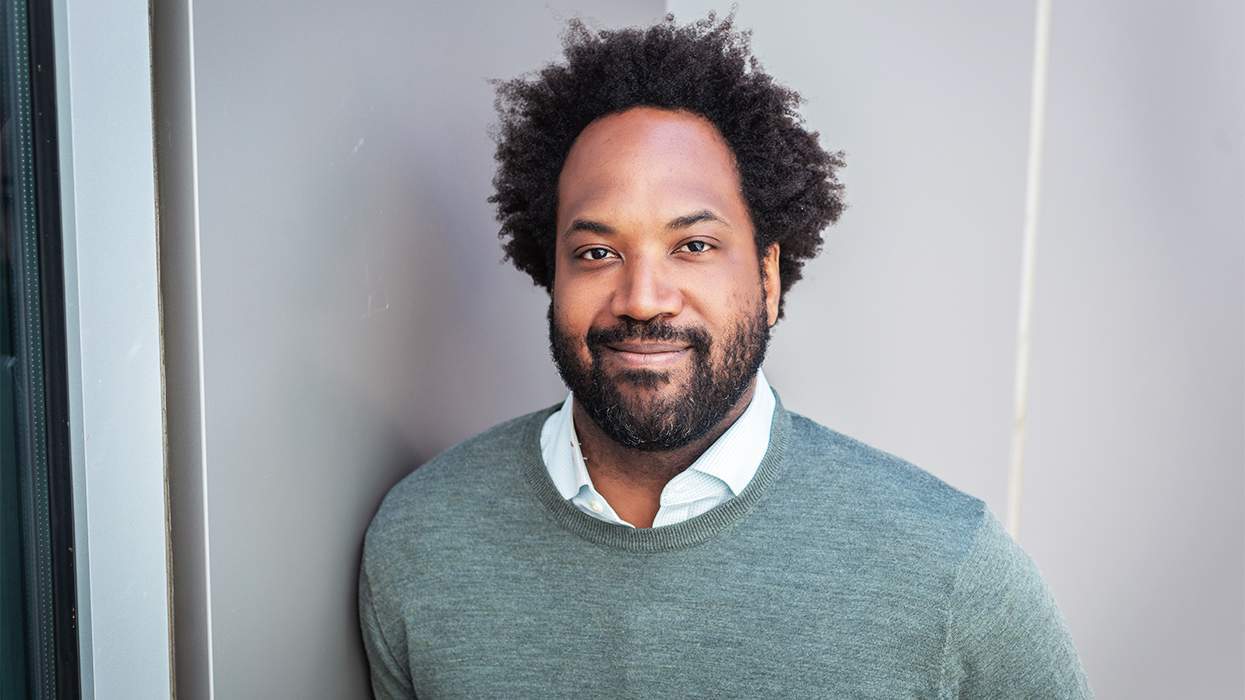
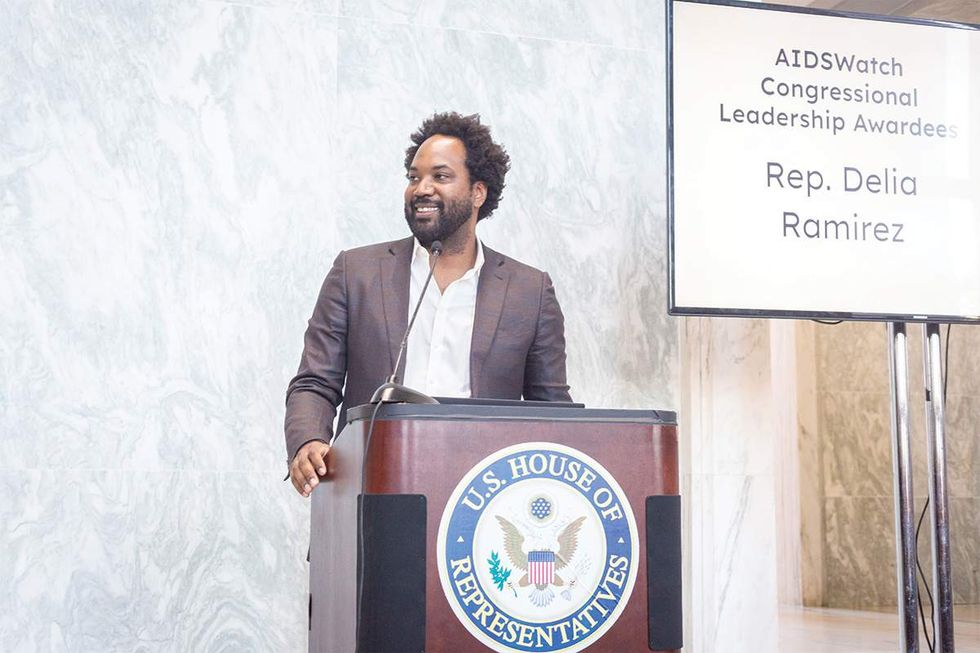 Carl Baloney Jr., AIDS United’s CEO and presidentMadison Kirkman
At the same time, we’re living through a political moment that is openly hostile to public health and LGBTQ+ lives. The attacks are not subtle: on gender-affirming care, on sexual health education, on harm reduction, on the basic idea that government should help people live healthier, longer lives. When that hostility turns into policy — when budgets are cut, programs are restricted, providers are punished, and misinformation becomes law — people suffer. Preventable infections rise. People fall out of care. Community organizations close their doors.
This is exactly why AIDS United exists, and why our work matters more than ever.
AIDS United is a national HIV organization with a local backbone. We are not the heroes of this story; the heroes are the community leaders, outreach workers, clinicians, and advocates who keep showing up in every zip code, even when the political winds are against them. Our job is to make sure they have what they need: resources, strategy, connection, and power.
Here’s how we do it: We invest in communities. We defend and expand HIV policy and funding. We bring people together across the country to advocate for what works. And we push our sector — the HIV movement itself — to evolve, strengthen, and sustain for the long haul.
Power starts locally. That’s why we build and support advocacy at the community level. One of the most important ways we do that is through our Public Policy Council, a bridge between national policy fights and the day-to-day realities of local communities. Over the past year, the council mobilized quickly to push back against federal budget proposals that would have cut funding for HIV prevention, treatment, and harm-reduction programs nationwide. When budget plans signaled cuts to HIV prevention at the Centers for Disease Control and Prevention, advocates across the U.S. contacted lawmakers, shared stories from their communities, and made clear what these cuts would mean in real life — fewer HIV tests, fewer syringe service programs, and less access to care and medications for people living with HIV.
AIDS United puts dollars where they matter most: into community organizations doing the work. Through our Desarrollo and Caminos funds, we support organizations such as PACTA Inc. in Puerto Rico and the Gender Advancement Project in Central Florida, places where the social and political climate has become openly hostile to the health and safety of marginalized communities.
In Puerto Rico, PACTA operates amid crumbling public infrastructure and policy shifts that have hollowed out health care systems, leaving older adults living with HIV with few reliable ways to reach their providers. In Florida, the Gender Advancement Project works under a legislative onslaught that targets transgender people directly, while political pressure makes it harder for clinics and providers to keep doors open.
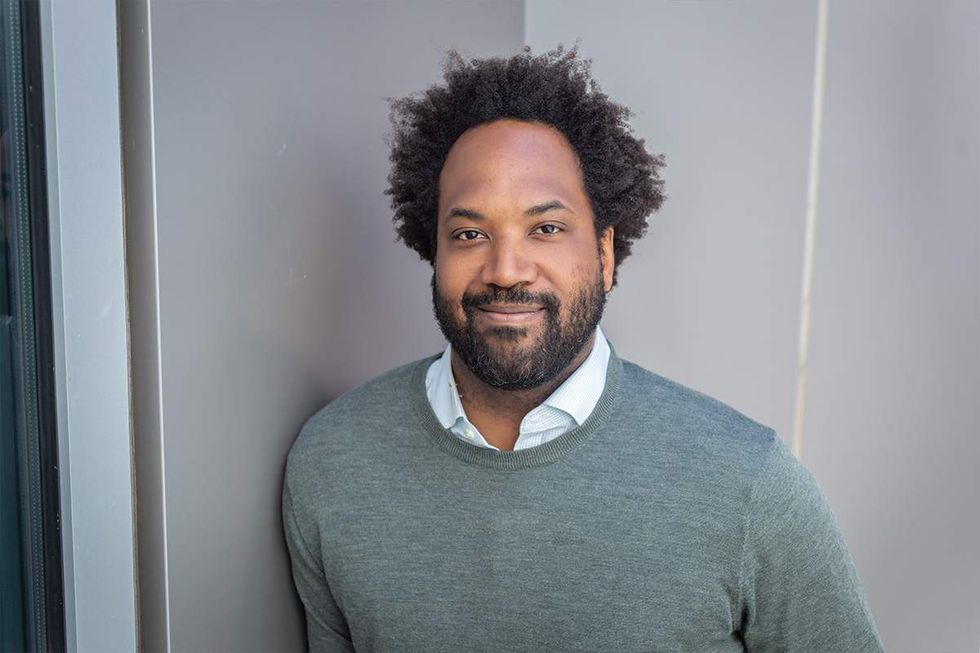 Carl Baloney Jr.Denis Largeron
In these contexts, funding is not simply about expanding services. It is about survival. For PACTA, it meant pivoting from traditional support groups to staff personally delivering lifesaving medications to people’s homes when transportation systems failed. For the Gender Advancement Project, it meant investing in legal clinics, fiscal sponsorship for gender-affirming care, and online health care partnerships to preserve continuity of care as physical clinics became unsafe or inaccessible. These aren’t “work-arounds.” They’re the last remaining safety net for people being pushed out of formal health care by policy decisions and deliberate neglect.
The hardest truth right now is that some organizations are struggling simply to survive. Rising costs, workforce burnout, political pressure, and an increasingly uncertain funding environment mean local providers are being asked to do more with less, again. In some places, that “more with less” has become “impossible with almost nothing.”
One example is A Vision 4 Hope Inc., a community-based organization working across metro Atlanta and rural Georgia. A national backlash against diversity, equity, and inclusion has made it harder for organizations serving transgender, nonbinary, and Black communities to operate openly and safely — leading to denied venues, broken partnerships, and growing safety risks for staff. Fulton County’s Board of Health laid off 17 HIV and sexual health workers, eliminating a critical public partner and forcing community organizations to shoulder what had been shared responsibilities, from public education to referral coordination. Combine that with rural transportation gaps and staffing challenges, and you get the reality: programs narrowed, reach reduced, and community need growing even as systems meant to support people disappear.
When a local HIV organization closes, it doesn’t just impact a budget line. It tears a hole in a community’s safety net, one that can take years to rebuild. Our grants are one way we help prevent those holes from forming.
For decades, AIDSWatch has been a critical convening. The annual gathering in Washington, D.C., of HIV advocates and allies is a powerful tool for sharing our stories with lawmakers. But not everyone has the flexibility, money, disability access, or time off work to make that trip. That’s why we built AIDSWatch@Home — to bring together people who’ve never lobbied before, people who have been locked out of policy conversations, and people who know exactly what it means when funding decisions get made without community voices in the room.
The 2025 cohort included state and local organizations in eight states, each mobilizing their communities through advocacy days at state capitols, training sessions, health fairs, and more. Nearly 1,000 advocates helped educate policymakers through storytelling. Those stories helped shape policies and increase awareness around HIV decriminalization, harm reduction, Medicaid expansion, Black maternal health, LGBTQ+ health and rights, PrEP, and U=U.
If you want to understand why HIV policy matters to LGBTQ+ people, look at what happens when it’s weakened. When Medicaid is cut or restricted, people lose care. When prevention funding is slashed, new infections rise. When housing support disappears, treatment adherence becomes harder. When stigma drives policy, people stop seeking services altogether.
HIV funding is not charity. It is a public health investment — and a moral one. It is how we protect the progress we’ve made and ensure it reaches everyone, not just people with the most privilege.
Which brings us to the coming midterms.
It can be tempting to treat elections as background noise, another exhausting cycle of ads and outrage. But the truth is simple: the decisions that shape HIV prevention and care are political decisions. They’re made by people we elect and by people those elected officials appoint. State legislatures and governors decide whether Medicaid expands or contracts. Congress decides funding levels. Attorneys general decide whether to target providers or protect public health. Local officials decide whether harm reduction is supported or demonized.
If you are LGBTQ+, HIV policy is your business, whether you are HIV-negative, living with HIV, on PrEP, caring for someone, or simply committed to a future where our communities live with dignity.
So here’s what I’m asking you to do:
Stay engaged and vote, especially down-ballot. Your statehouse race and local officials can shape access to health care as much as any national headline.
Get involved in advocacy. Call your members of Congress. Show up at town halls. Tell the truth about what works.
Support local HIV organizations. Donate if you can. Volunteer if you have time. Share their work. And fight stigma wherever it shows up; at the dinner table, online, or in legislation.
A generation ago, our communities demanded action when the world looked away. Now, with the tools we have and the challenges we face, we have a different demand: Don’t let progress be undone. Don’t let politics steal what science has made possible. Don’t let local organizations collapse under the weight of doing the work alone.
AIDS United is here to help communities keep their doors open, keep people in care, and keep pressure on decision-makers. We are here to build power, protect funding, transform our sector, and finish the job of ending the HIV epidemic in the United States.
This article was written by Carl Baloney Jr., president and CEO of AIDS United, a Washington, D.C.-based nonprofit dedicated to ending the HIV epidemic. Learn more at aidsunited.org.

This article is part of OUT's Mar-Apr 2026 print issue, which hits newsstands March 24. Support queer media and subscribe — or download the issue through Apple News+, Zinio, Nook, or PressReader.