




Dealing with backdoor issues is a real pain — literally!
Bottoming can be incredibly pleasurable and fun, but you can also mess up your butt if you do it incorrectly. Things like anal fissures, hemorrhoids, anal spasms, and pelvic floor dysfunction are fairly common, especially if you don’t loosen up enough first, don’t use enough lube, or ambitiously try fisting or an extra-large sex toy without training your body to handle it.
Though rare, bottoming can also cause rectal prolapse. Luckily, there are ways to prevent this painful condition from happening and treat it if you are already suffering so that your sex life isn’t negatively impacted.
What is a rectal prolapse?

bhofack2/Envato
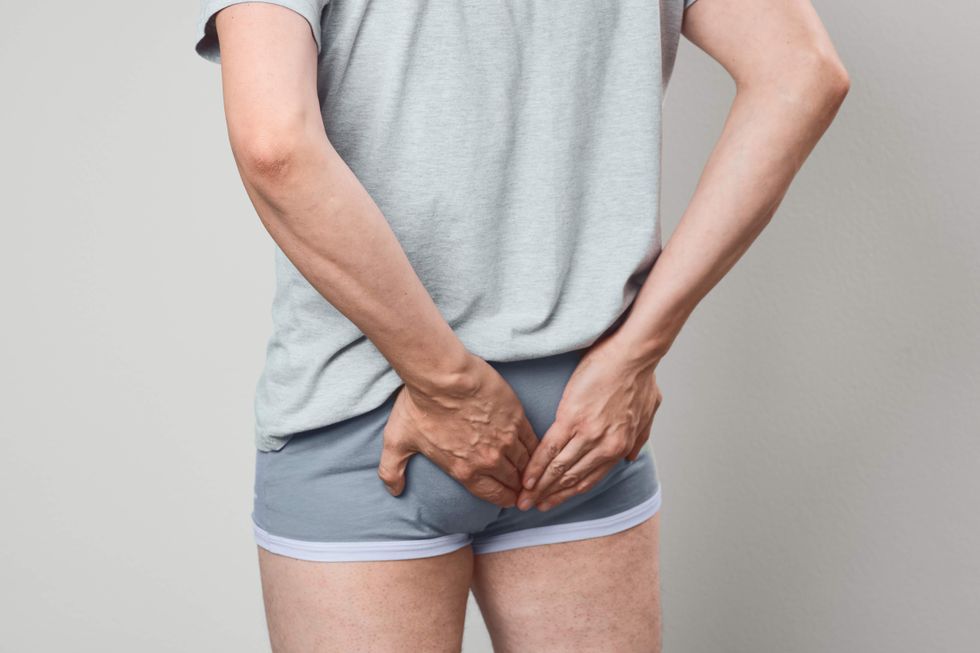
A rectal prolapse — sometimes colloquially called an anal prolapse — occurs when the final portion of the large intestine, or rectum, begins to protrude through the anus because the connective tissue of the rectum weakens.
“It can range from an internal prolapse that isn’t externally visible to a full-thickness prolapse that appears as a circular, reddish mass outside the anus,” explains renowned anal surgeon Dr. Evan Goldstein, who specializes in helping people bottom without pain at his practice, Bespoke Surgical. “If you’ve ever heard the term ‘rose bud,’ that’s what this is. While some people intentionally ‘bloom’ during anal play, a true rectal prolapse is a medical condition that can worsen over time and affect bowel control, so it’s important to have persistent or recurring symptoms evaluated by a specialist.”
Wanting to be gaping for your partner or “bloom” after vigorous sex can be done safely and without damage to your rectum, but if there is rectal tissue outside of your body, it’s time to seek medical help. At first, a rectal prolapse can feel like pressure, fullness, irritation, or a pulling sensation, but as it progresses, the exposed tissue can become swollen, irritated, painful, or ulcerated. A doctor can teach you how to push the tissue back inside your body, but “if the prolapse becomes difficult or impossible to push back inside, or if the tissue changes color,” it’s time to seek immediate medical attention because it could indicate that its blood supply is compromised, Goldstein says.
According to Dr. Carmen Fong, a colorectal surgeon and the chief medical officer at Bummed, a telehealth platform that makes prescription creams to treat hemorrhoids and anal fissures, a rectal prolapse can be very small or so large that it resembles “a pink elephant trunk” sticking out of your anus.
“This is more common in older people who have a weak sphincter at baseline,” Fong says. “What most people think of as a ‘rectal prolapse’ or call an ‘anal prolapse’ is …dun dun dun… mucosal prolapse, or hemorrhoid prolapse. This is usually more of a starburst appearance, only one to two centimeters instead of a pink elephant trunk.”
People often mix up prolapsing hemorrhoids — which look like separate lobes of tissue that protrude during or after a bowel movement, accompanied by bright red bleeding, itching, or irritation — with rectal prolapse, where the entire wall of the rectum telescopes down and out “so what you see is a smooth, circular mass with concentric rings,” Goldstein says.
“Different anatomy, different problem, and very different treatment,” he says. “I bring it up because the people who assume it's ‘just hemorrhoids’ are the ones who wait, and waiting is what turns a manageable issue into a surgical one. Get examined so you actually know what you're dealing with.”
Can bottoming cause a rectal prolapse?

TruTouchLifestyle/Envato
Rectal prolapse is most common in people over the age of 50 and women, especially those who have given birth, and in people with certain disabilities or who have chronic constipation, according to Johns Hopkins. But anal sex can also play a role for people who bottom — though this result is much rarer.
“RAI [receptive anal intercourse] can cause rectal prolapse or mucosal prolapse by: a) weakening the anal sphincter muscles, and b) causing redundant mucosa with excessive friction,” says Fong.
This can happen “from frequent use of very large toys or penises, fisting, aggressive ‘blooming,’ over-douching, or repeatedly straining and bearing down,” explains Goldstein, who focuses on queer sexual health in his practice and is the author of Butt Seriously: The Definitive Guide to Anal Health, Pleasure, and Everything In Between. But the condition is fairly uncommon in the general population, with one study by the American Society of Rectal Surgeons finding that approximately 2.5 out of every 100,000 people are diagnosed with complete rectal prolapse each year, but “we don’t currently have reliable figures quantifying that risk among people who engage in receptive anal sex,” Goldstein says.
“Over time, these practices can weaken the anal and pelvic-floor muscles and place stress on the connective tissues and suspensory ligaments that help hold the rectum in place,” he says. “If those support structures lose enough strength and tone, the rectum can begin to slip downward and eventually protrude through the anus.”
What are the treatment options?
Peakstock/Encato
Peakstock/Encato
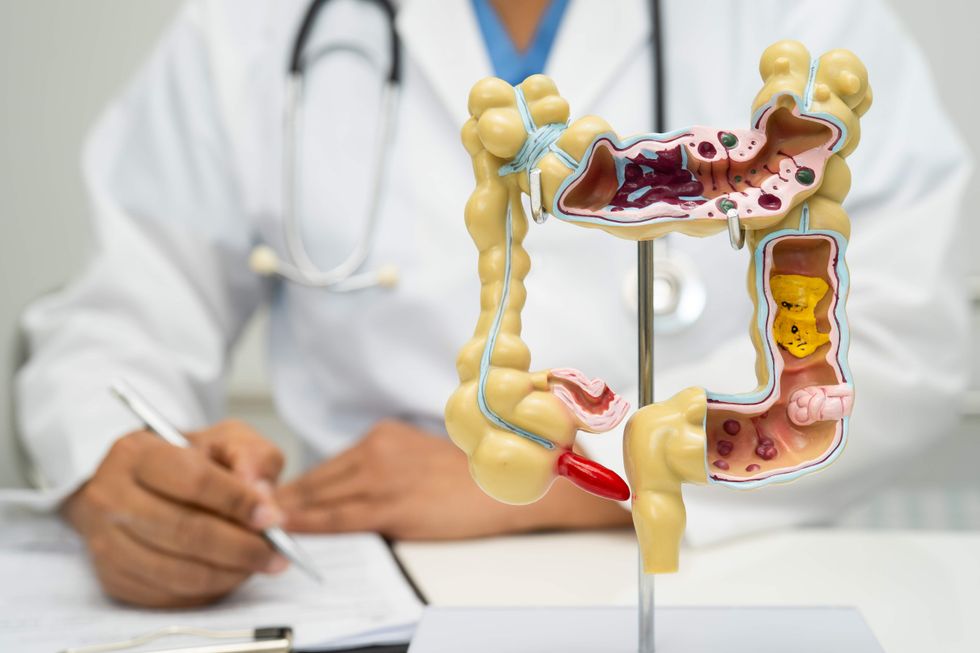
If you suspect you have a rectal prolapse, you’ll need to immediately see a doctor, who will likely have you get a colonoscopy to rule out polyps or cancer, and may do a defecography to detect issues with bowel movements or pelvic floor dysfunction, and an anorectal manometry test, which uses a probe to measure the muscle functions and reflexes of the pelvis, rectum, and anus.
For mild cases, Dr. Goldstein says he starts by having patients increase fiber and hydration, improve bowel habits, avoid straining, and treat chronic constipation or diarrhea.
“Pelvic-floor physical therapy and targeted strengthening exercises may also help improve muscle function and prevent symptoms from worsening, although these measures do not necessarily correct an established structural prolapse,” he says. “At my private practice, we encourage regular manometry testing, which measures the muscle tone, so that we can better understand our patients’ baselines and course correct if we start to notice any changes before they get out of hand. The best approach here is definitely prevention, though reconstruction is available if needed.”
If you have an advanced or severe prolapse, you will likely require surgery. “Surgical options include rectopexy, which repositions and secures the rectum through the abdomen, and perineal procedures that repair or remove the prolapsed section through the anus,” Goldstein says. “The right approach depends on the extent of the prolapse, the patient’s overall health, bowel function, and other pelvic-floor issues.”
Choosing the right doctor
chormail/Envato
Choosing the right doctor is always important — especially if you’re part of the LGBTQ+ community — but according to Goldstein, you’ll want to ask extra questions if you end up needing surgery because while many surgeons can fix a rectal prolapse, very few will take your queer sex life into account.
“These repairs create scar tissue and narrowing, and stitch lines placed without any thought to what you want to accommodate can leave you with pain, tightness, or an inability to bottom the way you used to,” he warns. “That conversation has to happen before you're on the table, because it's extremely difficult to undo afterward.”
Goldstein says surgeons can use specific techniques to help you get back to bottoming once you recover from surgery. “When I plan a case, I'm building the repair around the sex my patient wants to be having — that can mean deliberately making stitch lines larger than what's considered standard so the canal can still accommodate their partners, and it means a structured dilation and scar-work protocol on the back end," he says. "So ask the question directly: How will this affect my ability to bottom, and how are you planning around it? If your surgeon can't answer that, find one who can. This is about the longevity of the bottom, not just closing out one problem.”
Can you keep bottoming while healing?

kiss baffos/Envato
If getting back to bottoming is a priority, this is a situation where slow and steady wins the race. Goldstein says you’ll only worsen symptoms and extend your recovery time if you try to rush things. “Continued penetration, stretching, bearing down, or douching can place additional pressure on already weakened or recently repaired tissues, potentially worsening the prolapse or delaying recovery,” he says. “How long you need to abstain depends on the severity of the condition and whether treatment involves pelvic-floor therapy, an office procedure, or surgery.”
Once you’ve had time to heal, you’ll need to be symptom-free and cleared by your treating specialist before you dive back into bottoming again. “When you do return to bottoming, start slowly, use plenty of lubricant, dilate gradually, avoid force or excessive bearing down, and stop if you experience pain, bleeding, pressure, or protruding tissue,” Goldstein says. And if any of these symptoms do pop up, you’ll need to seek medical treatment right away.
How can you avoid getting a rectal prolapse from bottoming?

yurakrasil/Envato
For bottoms who want to avoid getting a rectal prolapse in the first place, Fong suggests using “lots of lube (water- or silicone-based), gentle stretching, foreplay, dilation, pelvic floor PT — basically butt Kegels,” to prep your body for bottoming without injury.
Goldstein echoes that advice and adds that you should also avoid over-douching and be careful when you engage in more vigorous and physically taxing sex. “Be mindful of how frequently you engage in more intense activities — particularly fisting, very large toys, or blooming — and give your body adequate time to recover between sessions,” he says.
According to Goldstein, pelvic floor therapy can also be a huge help. “I also often speak about how, just like you are meant to alternate muscle groups at the gym, you should be practicing Kegels on your off days to maintain optimal muscle tone,” he says. “This is a great way to prevent yourself from becoming too relaxed.”
But if you do all of this and still experience symptoms, talk to your health care provider right away. “Persistent pressure, bleeding, leakage, difficulty controlling your bowels, or tissue protruding from the anus are all signs it’s time to see a specialist,” Goldstein warns. “The longer the wait, the longer the treatment and recovery time will be.”
Sources cited:
Dr. Evan Goldstein is a renowned anal surgeon at his practice, Bespoke Surgical, and the author of Butt Seriously: The Definitive Guide to Anal Health, Pleasure, and Everything In Between.
Dr. Carmen Fong is a colorectal surgeon and the chief medical officer at Bummed, a telehealth platform that makes prescription creams to treat hemorrhoids and anal fissures.