


For nearly five decades, Soft Cell has radically reshaped electronic music with its signature collision of raw emotion, soulful melodrama, and synthesizer sleaze. From the neon-drenched grooves of their acclaimed 1981 debut, Non-Stop Erotic Cabaret, to an illustrious 27-album solo run, Marc Almond’s distinctive voice and theatrical flair have stood as a beacon for alternative pop and queer culture for over four decades.
Now, as the synth-pop legends prepare to release their sixth and final studio album, Danceteria, the Soft Cell frontman finds himself reflecting on an album that’s not only just a triumphant artistic climax, but also a bittersweet farewell. Completed just days prior to the tragic death of founding member Dave Ball — who died on October 22, 2025 at the age of 66 — Danceteria stands as a definitive last chapter for one of Britain’s most iconic synth-pop acts.
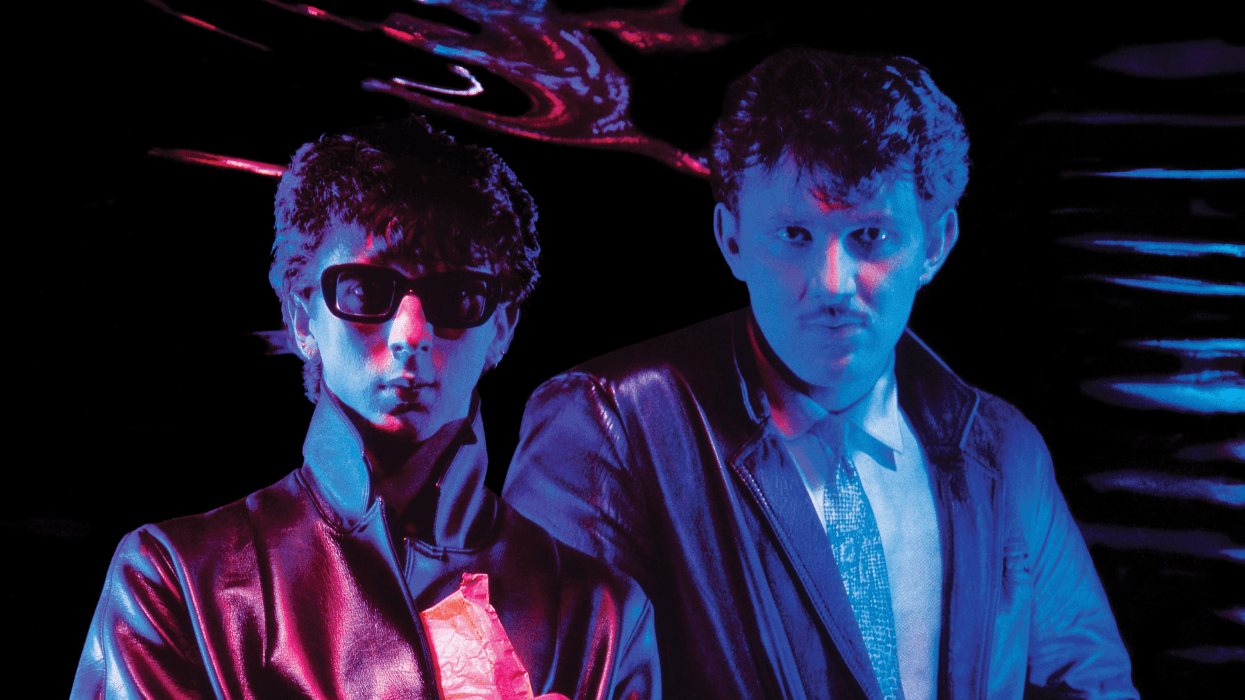
 Danceteria album cover artRepublic of Music
While Soft Cell will always be remembered as the quintessentially British duo who brought us radio hits like “Tainted Love” and underground club bangers like “Sex Dwarf,” the band’s origins — and the spirit of Danceteria — are actually deeply rooted in the concrete jungle of New York City. So it’s no wonder the album is a glowing homage to the city that altered their creative DNA and catapulted them to fame.
"This album takes us back to New York in 1982 when we first went there to record the first of three albums," Almond told Out during an exclusive interview. "The album Danceteria is a love letter to New York, to the America of those times, and the creativity we experienced and how it shaped us, bringing it all to a full circle."
Even though the duo had built their foundational sound in the U.K., stepping into the chaotic energy of early-'80s Manhattan blew their artistic doors wide open. "Though we were a British duo first and foremost, New York really shaped us and opened up a new world of experience which reflected in both the music and lyrics," Almond says. "A lot of our influences came from the USA anyway… New York punk, Devo, Suicide, Lou Reed and the Velvet Underground, and then the disco period with Moroder and Sylvester. Everything about it was new and exciting, and an incredible influence on us. We had both only known New York through films, TV and music, but to be there experiencing it was something mind-blowing."
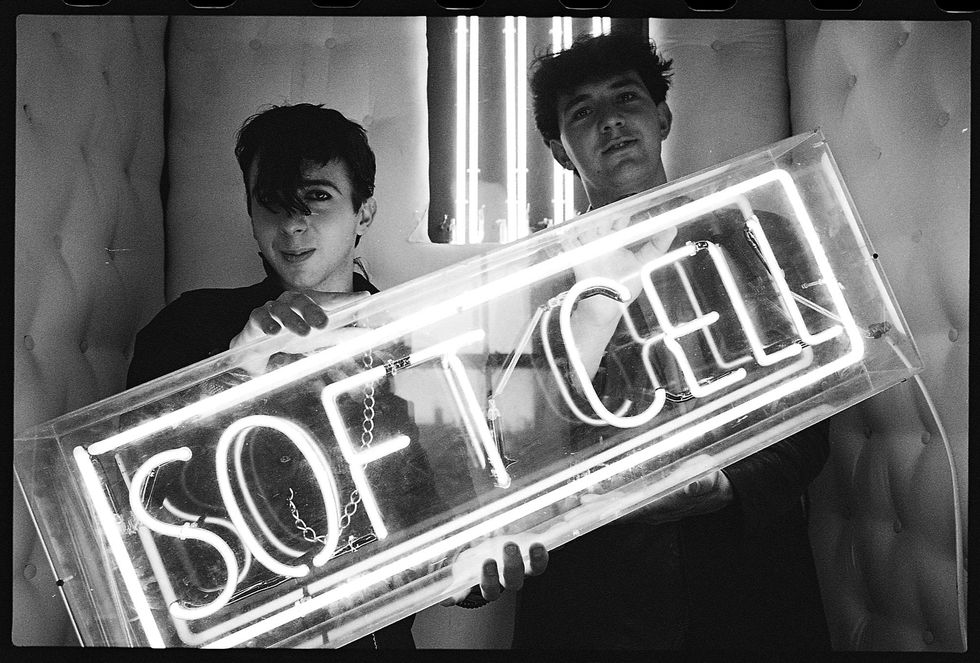 Marc Almond (left) and Dave Ball in the early days of Soft CellPeter Ashcroft
The Big Apple’s magnetic influence is totally apparent throughout the album’s lyrics and track list. Songs like "Times Square" and "The Rainbow Room" paint vivid sonic pictures of the city’s vibrant nightlife. The title track itself — which is named after the famed multi-story Manhattan nightclub that served as a melting pot for post-punk, disco, and hip-hop in the early 1980s — drops listeners right onto the sticky, strobe-lit dance floors of the era, complete with a call-out to the Queen of Pop herself. On "Danceteria," Almond sings: "Madonna was singing to a boom box beat / my head had gone numb / but I was moving my feet."
The line is obviously a nod to a pivotal moment of Madonna’s early career, particularly her maiden performance of "Everybody" at Danceteria (yes, Madonna’s new track of the same name is also about the storied nightclub). So could it be that Almond witnessed the Material Girl’s live debut? When asked if he was present for that exact moment, Almond answers with characteristic candor: "To be honest, I have no idea what I am referring to directly,” he confesses. “It is all a haze of memories and drugs from that period. Maybe more than likely, who knows?"
Though they had mutual friends and dwelled within the same nightlife circles, Almond clarifies that while they never developed a formal friendship, his admiration for Madonna has never wavered. "We never were in touch,” he admits. “I think we met a couple of times and she was so sweet and full of ambition and humility, always generous with her time. But I have remained a fan throughout her whole career. She is a pioneer. In many ways, she is the female David Bowie."
Beyond the club anthems, the album also explores the mythic allure of the United States. One of the standout tracks, "Wave to America," offers a sweeping look at the American dream from an outsider's lens. "‘Wave to America,’ a nostalgia trip of cliches to America, is a rollercoaster ride which is what I felt on my first ever visit," Almond shares. "‘Wave To America,’ for me, is also about the America of my own past, which is lost to me now."
Throughout Soft Cell’s history — and Almond’s extensive solo career — collaborations have played a vital role. Over the years, Almond has shared the mic with an exceptional lineage of artists, including Siouxsie Sioux, Jimmy Somerville, Pet Shop Boys, and Nico, just to name a few. On Danceteria, the tradition continues with "Out Come the Freaks," featuring LaBelle vocalist Nona Hendryx (to the kids scratching their heads, LaBelle sang the original “Lady Marmalade.”)
When asked how he selects his duet partners, Almond notes that it requires far more than simply picking out famous names. "All collaborations are a balancing act between artists — it is always tricky to get it right,” he says. “I think, on the whole, I have been very lucky to be able to work with some of the names I have.” Pointing to another standout pairing from his career, he adds, "Anohni is one such artist. She is incredibly talented and so full of love and humility. Perhaps my favorite duet was with her."
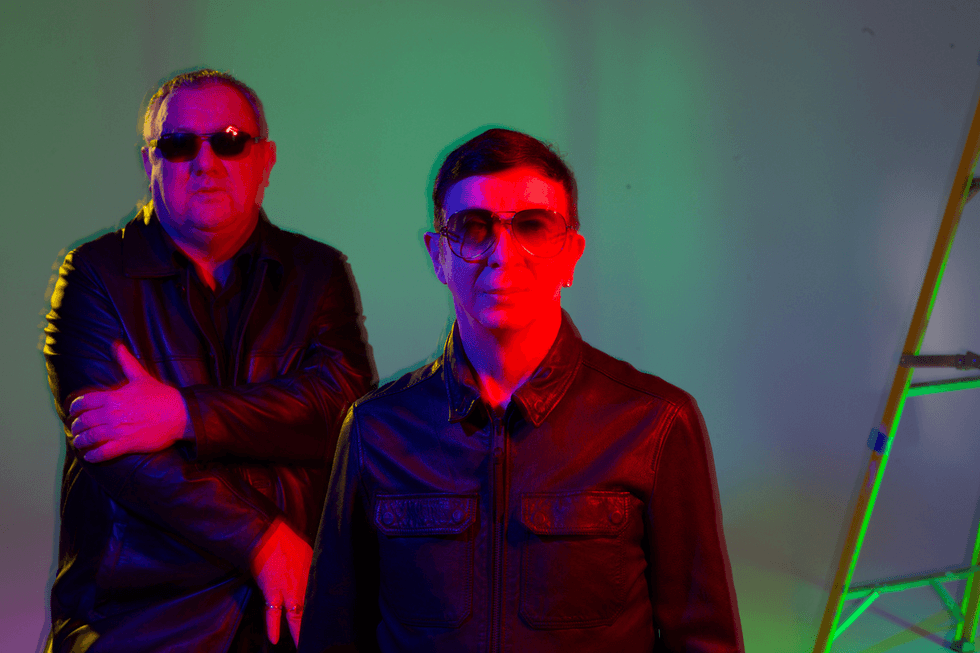
But of all his musical collaborators throughout the years, it is Ball who has the longest recording history with Almond. It’s been 47 years since the two art school students from Leeds Polytechnic formed Soft Cell, so as you can imagine, Ball’s passing has packed a profound emotional weight.
For Almond, the grief is eased by the comfort that his longtime creative partner got to hear their swan song in its absolute entirety. "He sat and listened to the finished album two days prior to passing away and he was incredibly proud and enthusiastic about it," Almond reveals. "We talked about how excited we were about this record…more so than the last. We felt more connected together on this one and were looking forward to promoting it and even doing a U.K. tour, which was to have been in March."
 Mike Owen
While Ball had suffered from health issues in recent years, his loss remains a watershed moment. "It was obvious to me though that Dave seemed quite ill, more than usual—I’d seen him very ill before, so I was hopeful he'd soon be on and up again. I was hoping that this record would give him a boost. I am so happy he got to hear it finished."
It was also Ball's untimely death that prematurely marked the end of Soft Cell. "There will be no more new Soft Cell studio recordings after Danceteria — I wouldn't record as Soft Cell without David," Almond firmly states. "I will keep the music alive with shows and tours as David would have insisted that I do. I think it is a fitting tribute and, in some ways, a perfect epitaph to Dave."
As an openly gay artist performing during the 1980s alongside contemporaries like Boy George, Bronski Beat, and Erasure, there’s no denying that Almond helped clear a path for generations of LGBTQ+ musicians. But looking back now, Almond doesn't sugarcoat just how hostile the world was for queer people back then.
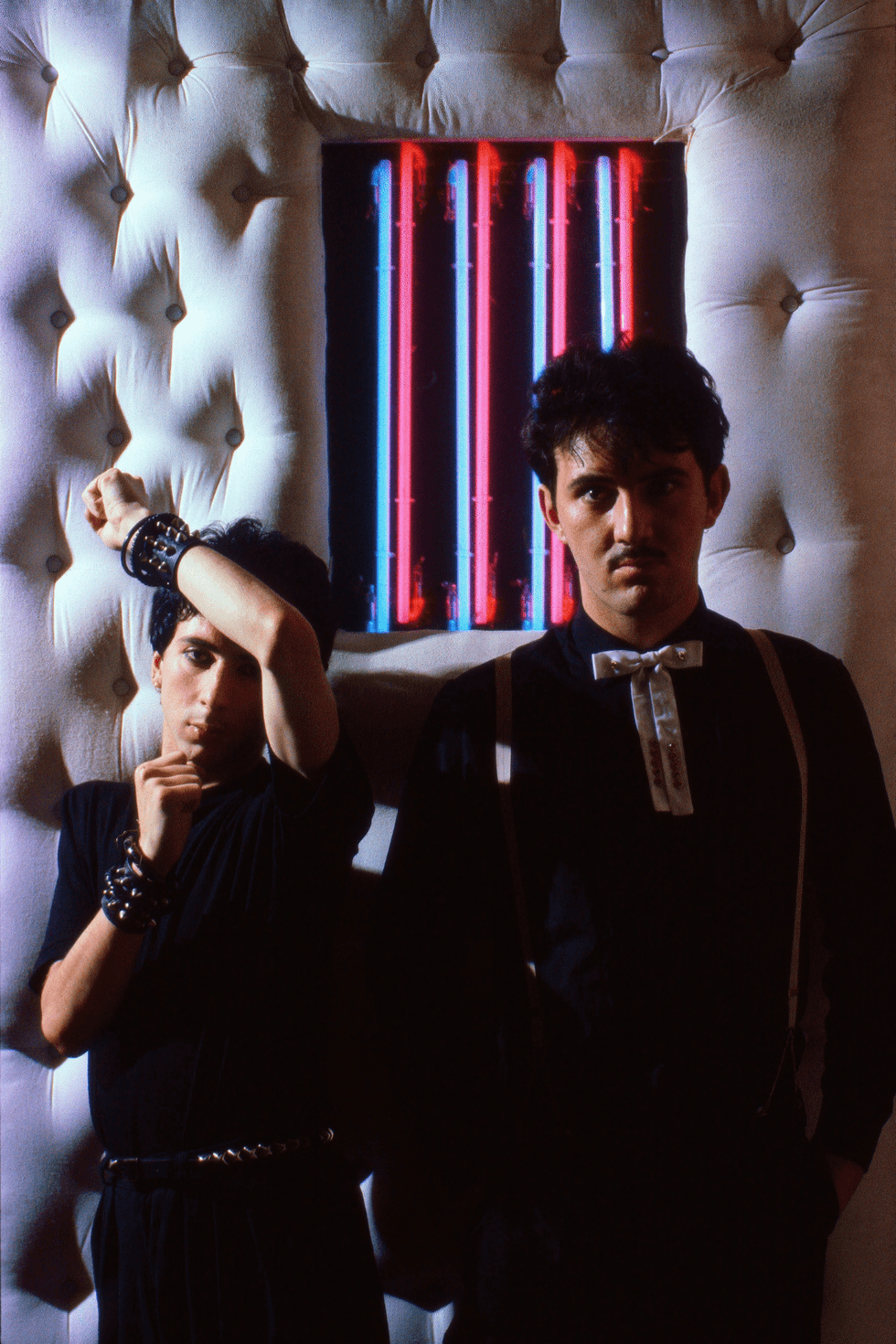 Marc Almond (left) and Dave Ball during Soft Cell’s ’80s heydayPeter Ashworth
"Unless you lived through that period of the late ‘70s to the mid ‘90s, it is all but impossible to appreciate the level of homophobia that gay men and women faced, and then the onset of AIDS added levels of personal loss and suffering, heroism and struggle," Almond says.
"Many gay people were poisoned by that time, myself included, searching somehow for an antidote to it. Others were nailed into their closets, unable to come out or accept themselves as valued or worthy. The ‘70s promised so much change — a new decade with the decriminalizing of homosexuality, the androgyny of Bowie and Bolan, the gay rights movement. But it would be another 40 years before any tangible change would really happen in society."
Even though the gay community has achieved some level of acceptance since the ‘80s, Almond remains vigilant, noting that prejudice simply reshapes itself to fit modern political agendas. "Even today, it is still there. Homophobia hasn’t gone away. It has just taken other faces — the right wing, family values, trans oppression. There is no shame in being what you are. You are the only one who gets to say who you are."
He continues: "Every generation struggles not only to find their place but also a context. I know older gay people who are still not out, unable to embrace this changing world, unfamiliar with this new openness, their closets sealed shut by decades of shame or abuse. Try to see the world from their point of view too, you might learn something about your own past."
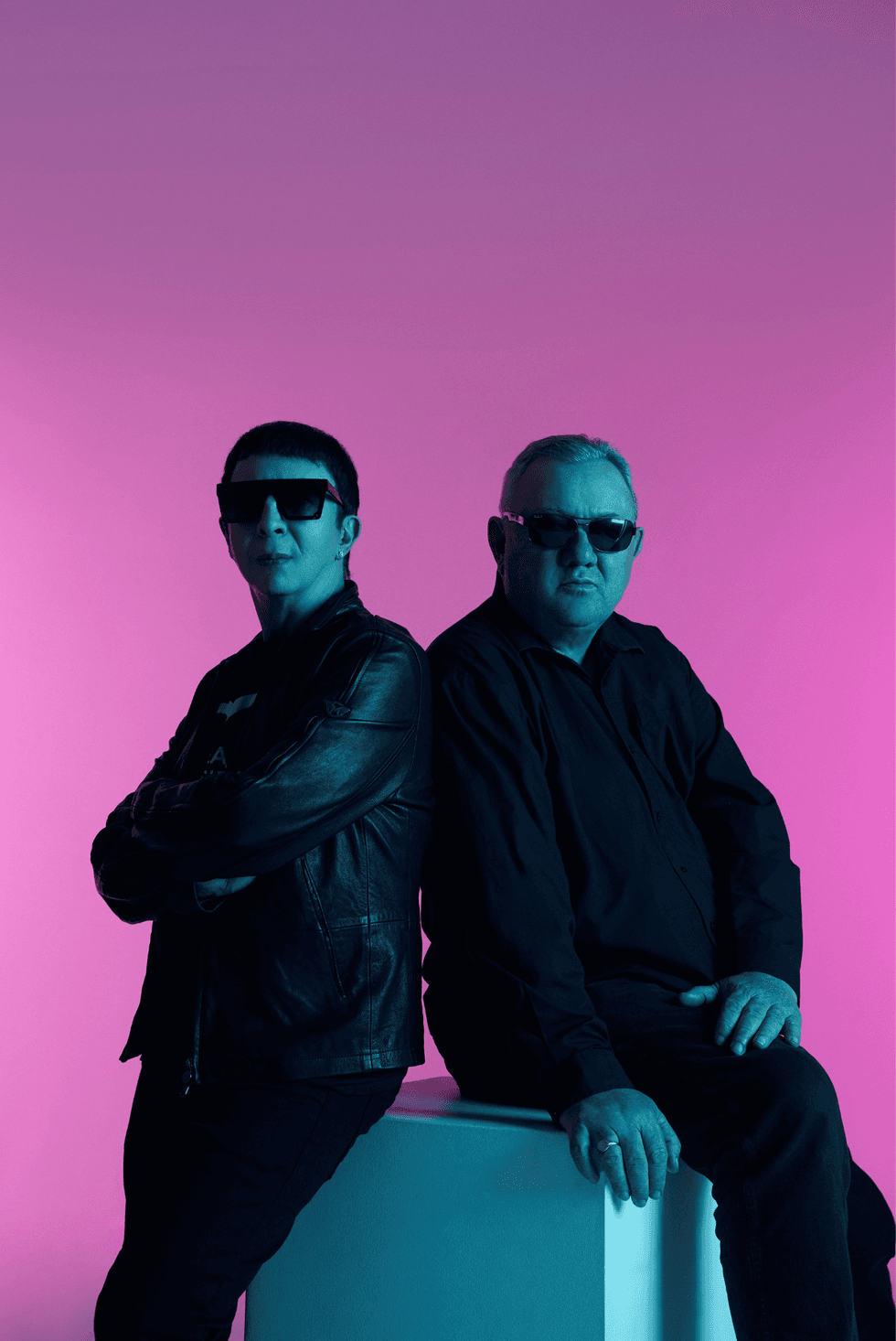 Soft CellAndrew Whitton
Seeking peace away from the chaos of modern politics, Almond relocated to Portugal a few years ago — a move that has offered him personal sanctuary. "I moved to Portugal because it is a beautiful country, and the people are so welcoming," he shares. "It feels a world away from the madness of the current world, and that is where I want to be. It is also one of the most tolerant places to live, being one of the first countries globally to explicitly ban discrimination based on sexual orientation in its Constitution and brought in a landmark gender-recognition law that allowed transgender individuals to change their legal gender on official documents without requiring medical evaluation. I want to be in such a progressive society, away from the hate and bigotry."
When looking at queer figures in culture today who inspire him, surprisingly, Almond’s favorite is not someone from within the music sphere, but someone from the television industry. "Ryan Murphy is extraordinary and has changed television in so many ways with groundbreaking work. Just brilliant," Almond gushes. "Telling stories, gay stories, human stories, retelling them in the mainstream, and that is an incredible feat. Perhaps with people like Ryan we are at the forefront of telling our own narrative. It’s not at the hands of other people who are outside the community anymore."
No conversation with Almond is ever complete without touching upon his greatest hits. The most famous of all is Soft Cell’s chart-conquering 1981 smash "Tainted Love,” a track often cited as not just a synth-pop synth-soul masterpiece, but also one of the defining singles of the era. While some artists grow bitter toward their signature hits after decades of repetition, Almond has long made peace with the track that launched his career.
"I did for a while, but not anymore," Almond admits regarding any past love/hate relationship with the single. "How could we have known it would become stratospheric — breaking records and becoming one of the biggest songs in music history? I came to realize that this one song has made so much possible for me — those three minutes changed everything irreversibly and for that I will always be grateful."
With Danceteria serving as Soft Cell’s final bow, fans can take comfort in knowing that Almond himself isn't stepping away from the recording studio anytime soon. While Soft Cell's studio discography is officially complete, Almond has a two-album solo recording deal, which means there’s still plenty of music to come. Not only that, but he has plenty of upcoming tour dates keeping him on the road between now and December. When asked how long he intends to keep making music and taking the stage, his answer is as direct, timeless, and resolute as his career itself:
"I see myself performing until I can’t."
Danceteria drops on September 25.