


Last September marked five decades since The Rocky Horror Picture Show, adapted from Richard O’Brien’s still-groundbreaking 1973 musical, released in U.S. theaters. But this month, fans can celebrate a perhaps even more momentous occasion in the beloved film’s lore with the 50th anniversary of its first midnight screening in New York.
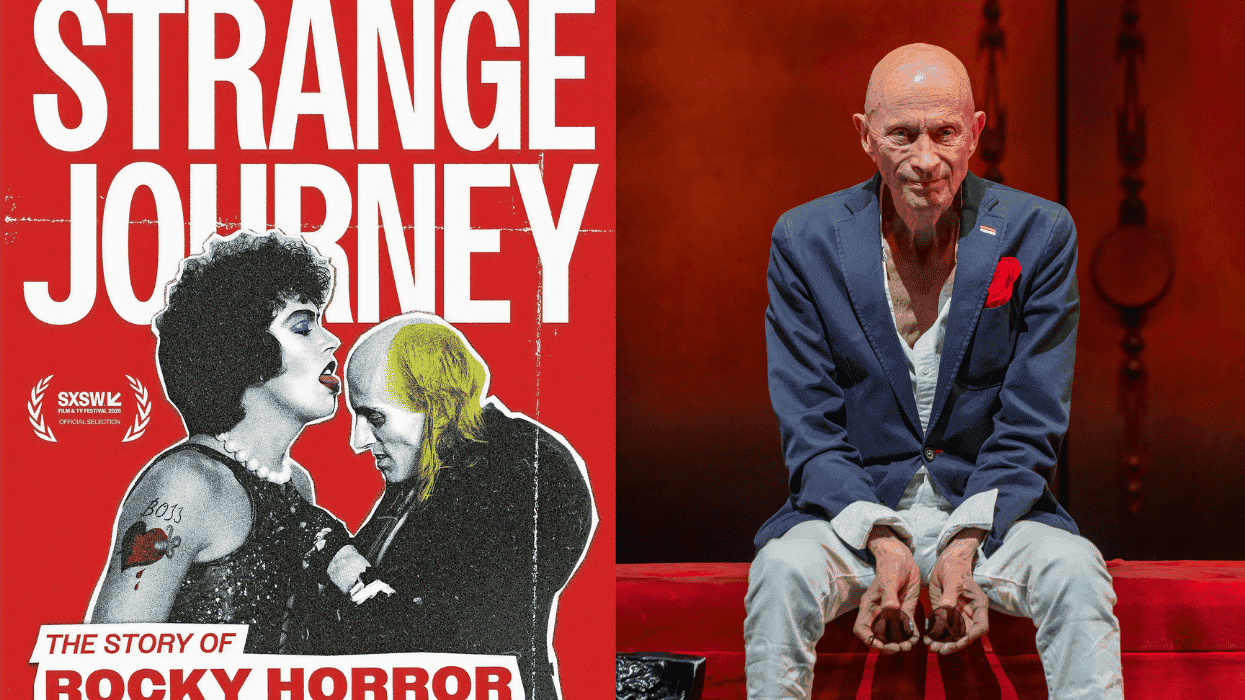
Coinciding with the nostalgic moment in cinematic history is the release of a new documentary, Strange Journey: The Story of Rocky Horror, about the making and legacy of Richard O’Brien’s musical pastiche for stage and screen. From director Linus O’Brien, Richard's son, the feel-good title featuring famous faces, archival footage, and scenes from audiences miming the film in modern-day movie houses is a love letter to the fans who have kept Rocky Horror alive. But it’s also a son’s tribute to his father’s one-of-a-kind mind.
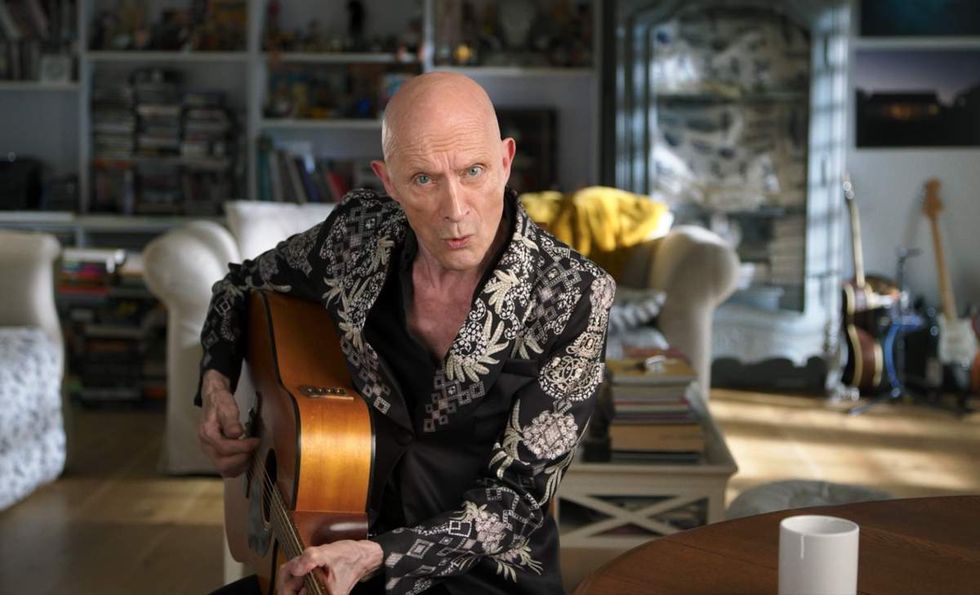 'Rocky Horror' creator Richard O'BrienWarren Kommers
“My dad, he doesn’t promote himself; he doesn’t look to become famous. But he’s ended up writing maybe one of the most famous, or in the top 10, classic musicals of all time,” Linus says during a video call, with his father on the line. He “underrates his own talent and ability, so it’s just a very, very pleasing experience for me to be able to celebrate him and his work.”
In Strange Journey, Linus takes viewers back to the very start, so they can get a true appreciation of his father’s operatic homage to B-movies, romance comics, and Mary Shelley’s Frankenstein — beginning with what it took to first bring The Rocky Horror Show to the London stage in 1973.
After an opening shot of Richard musing about his unlikely success in front of a statue of his Rocky Horror persona, Riff Raff, the documentary dives into the New Zealand transplant’s early adulthood, scratching it out in London’s theater scene while working on his future cult hit. Through the voices of collaborators like director Jim Sharman, composer Richard Hartley, and actor Tim Curry — who originated the role of Rocky Horror protagonist Dr. Frank-N-Furter onstage — it tells how Richard, a new dad questioning his future as an actor, eventually got the production staged upstairs at the Royal Court Theatre, where its shoestring budget allowed for scaffolding, a box painted black, and a sheet backdrop as the set. The director’s focus, though, is on the synergy between Richard and the young creatives who became vehicles and inspirations for the rock opera about a fateful encounter between a pair of Waspy lovebirds, Janet and Brad, and a sexed-up mad scientist from the planet Transexual, Transylvania.
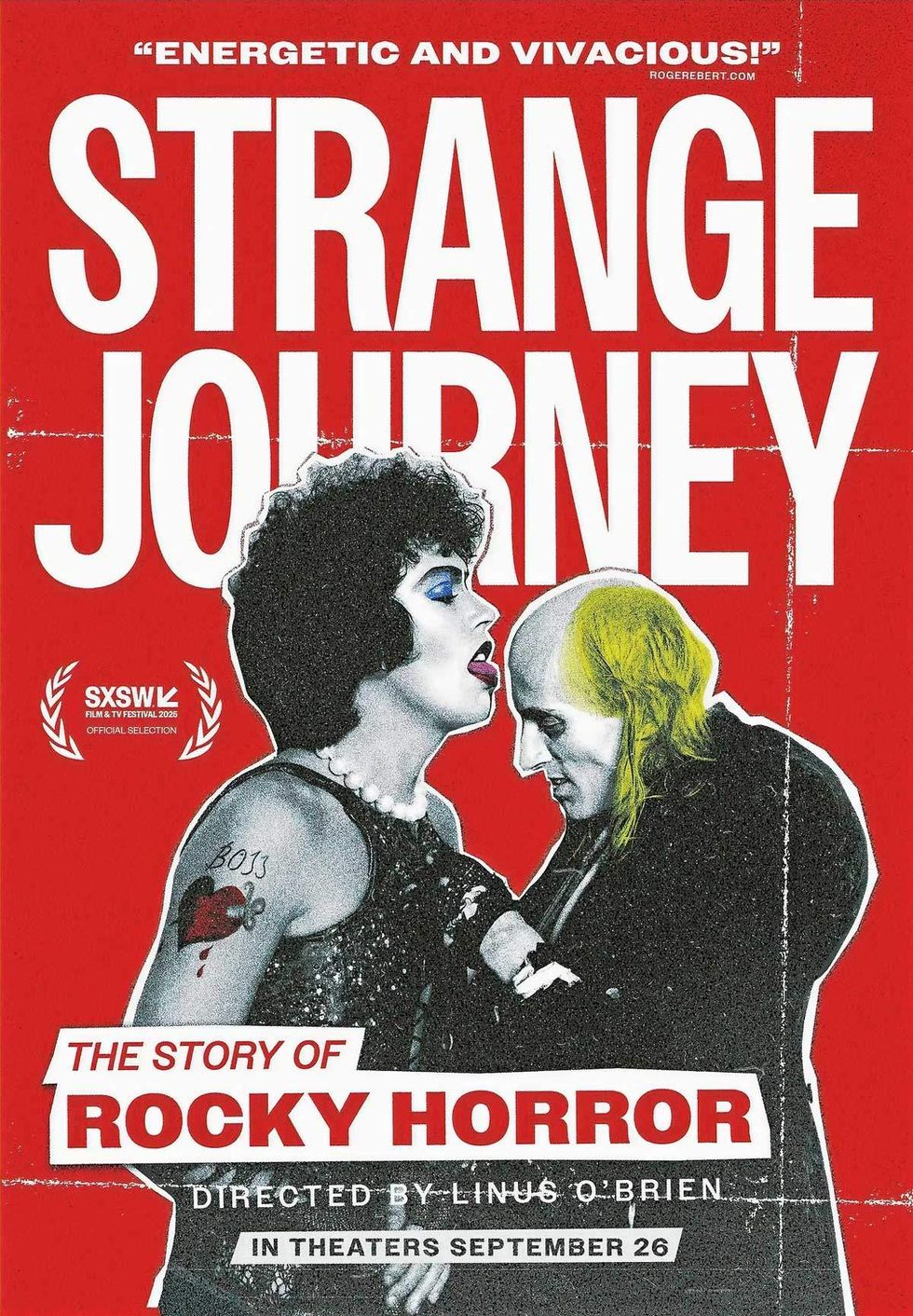 Poster art for 'Strange Journey: The Story of Rocky Horror'
In revealing tidbits from Rocky Horror’s genesis that deepen one’s appreciation for its explosion of ideas — like the fact that the iconic songs “The Time Warp” and Janet’s “Touch-A, Touch-A, Touch Me” were written almost overnight — Linus brings audiences into his father’s boundlessly creative world.
“My dad probably wrote about 60 percent of the story and the songs before they went into rehearsal, and then he wrote the other 40 percent during rehearsal. During the rehearsal period, which my dad has talked about, you had all this energy in the theater, this kind of joy, with everyone contributing a few ideas here and there,” Linus says, illuminating why he spends a good portion of the film on Rocky Horror’s original staging. “And I think the energy and the joy of that period has reverberated and continues to reverberate through all these years.”
Referring to troupes of actors that still specialize in real-time performances of the film — a tradition birthed from that first midnight screening in New York — he adds, “The joy that you’re seeing in the shadow cast, they are literally feeling that through the work from that rehearsal period. And like ripples in a pond, it’s just going to keep on going. Long after we’re all gone, somewhere, some people will be performing Rocky.”
 Susan Sarandon reminisces about her iconic role as Janet in 1975's 'Rocky Horror Picture Show.'Warren Kommers
True to his son’s word, Richard, whose protectiveness over Rocky Horror made him wary of doing a documentary in the past, talks about his work in less lofty terms. For instance, when I ask him how he managed to churn out some of the show’s unforgettable musical numbers in mere hours, the 84-year-old songwriter graciously tells me how he came to write “Touch-A, Touch-A, Touch Me” as if it had been the simplest thing in the world.
“So there we are with Julie Covington without a song,” Richard says, explaining that he couldn’t pass up a chance to write something for the “Don’t Cry for Me Argentina” singer and the musical’s first Janet. “But I know who she is: It’s Janet. I know where she is in the piece at that time: She’s in the lab. Who’s she with? She’s with Rocky. Lots of decision-making is already made, isn’t it?
“We know where we are and what’s required — what sort of a song she would be singing,” he says, describing the yearning ballad Janet uses to seduce Frank-N-Furter’s muscled monster, Rocky, as “teenage.” “It kind of takes care of itself in a way. Do you know what I mean? A lot of the work’s already done.”
Richard is similarly modest when talking about his inspiration for Rocky Horror, saying that Shelley “has to take a lot of credit,” along with cult classic sci-fi and horror films and romance-driven comics. “It was really collecting themes in a way, rather than writing in a linear sense. It was decoupage with words,” he says with a laugh, when I pry for more details.
While Richard’s natural inclination is to underplay his achievements, Linus’s drive to exploit them wins out in Strange Journey, which was produced by the team behind HBO’s Yacht Rock and Woodstock 99, as well as World of Wonder’s Fenton Bailey and Randy Barbato. After moving on from the musical’s explosion into the London theater scene — which was followed by bicoastal stagings in the U.S. and multiple movie offers, including one from Mick Jagger — the director turns his audience’s attention to perhaps his father’s greatest accomplishment: inspiring easily one of the most passionate film fanbases of all time.
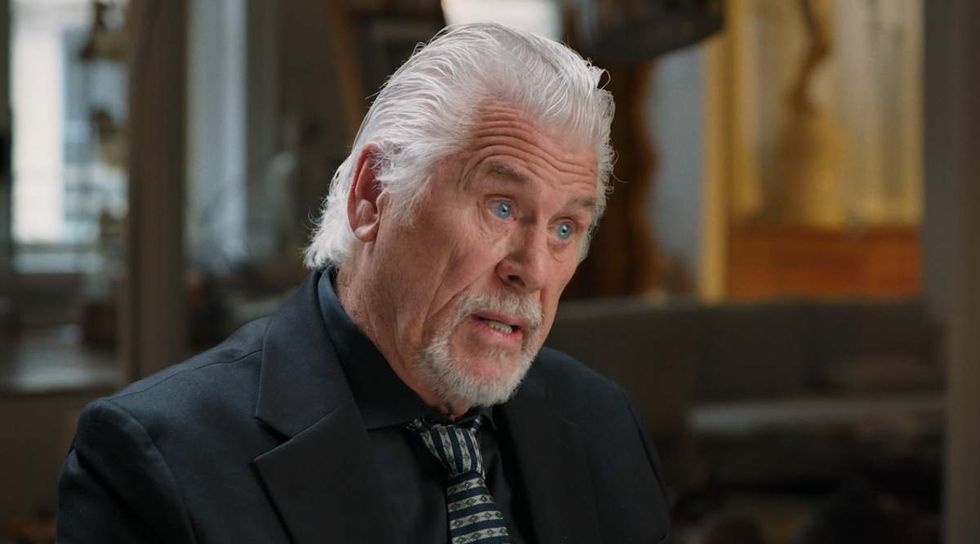 Barry Bostwick discusses the film’s legacy in 'Strange Journey.'Warren Kommers
Counterintuitively, that part of the story begins with The Rocky Horror Picture Show, the film adaptation of the musical distributed by 20th Century Fox, nearly becoming a historic flop.
When it was first unveiled to mystified audiences in 1975, the film version of Rocky Horror — which starred much of the original stage cast, alongside Susan Sarandon and Barry Bostwick as Janet and Brad — tanked at the box office. Even in the mid-'70s, the average moviegoer, it seems, found the bawdy rock opera led by Curry’s leggy “sweet transvestite” and dripping with references to Hammer horrors to be a bit too much. But rather than label it a disaster, two publicists convinced the studio to rethink the film’s marketing and open it as a midnight movie in New York.
The Waverly Theater, now the IFC Center, began late-night showings of Rocky Horror in April of ’76 and quickly attracted a crowd who was drawn to its inclusive, boundary-pushing themes — and who eventually began calling out lines, following along with props, and dancing to its catchy tunes in real time. Soon, the screenings, which spread across the country, had moviegoers showing up in drag to pay homage to the demented residents of Frank-N-Furter’s gothic dwelling. And then, full-on shadow casts were formed, beginning a tradition that’s alive and well today.
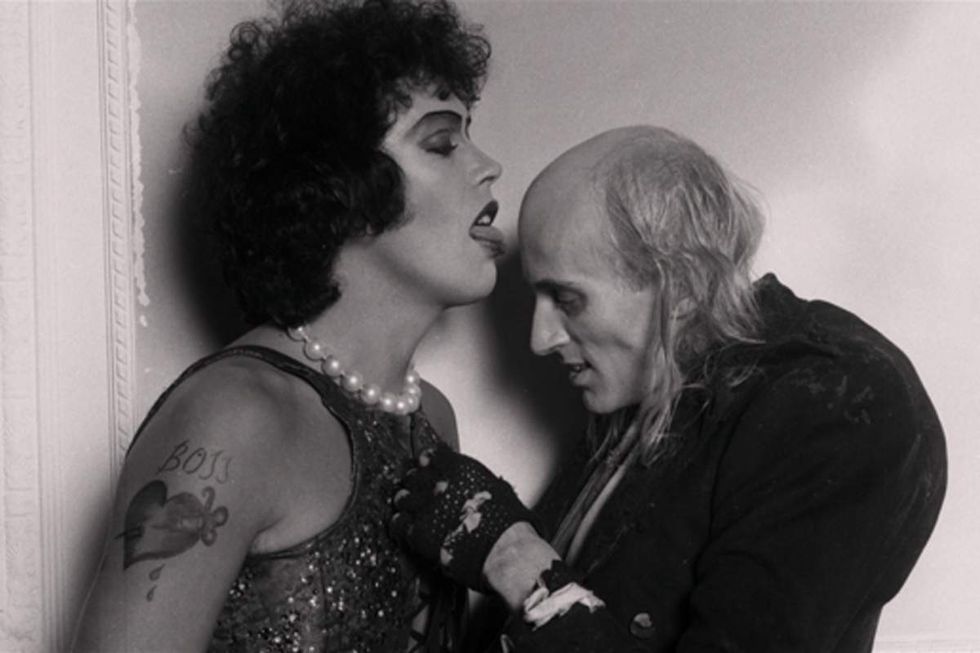 Tim Curry and Richard O'Brien as their 'Rocky Horror' characters in the 1975 film adaptation.Mick Rock
For Richard, the turnaround was an unexpected surprise, especially given that he had started accepting his Rocky Horror journey would come to a close when the play’s brief Broadway debut ended in the spring of ‘75. Though, of course, he had no way of knowing exactly how much of a turnaround the movie would make, as Linus gleefully underscores in the documentary.
“Tim did actually say that he took it to heart when it didn’t do any business,” Richard says, reiterating Curry’s account of events in Strange Journey. “But it didn’t worry me. I just thought, ‘Well, then, move on to the next thing.’ I was surprised that we’d made the movie in the first place. It was always a surprise to me; every day was a surprise.”
Chuckling as if he was just reminded of how ridiculous and marvelous the whole thing was, he adds, “So you know, [I thought], ‘That’s the way life is. One door closes and on we go.’ But here we are.”
Many of the famous faces Linus interviews in the documentary, from Sarandon to Rocky Horror producer Lou Adler, speak in similarly nostalgic terms about what fans have done for the film — which includes making it arguably the longest-running theatrical release of all time. Though, some of the talking heads, including drag artist Trixie Mattel and funny man Jack Black, delightfully discuss the film from an admirer’s point of view. And as Linus brings the brief 90-minute documentary to a close, he increasingly turns the spotlight on those voices, as well as footage of their much-less-famous counterparts coming out in droves to do the “The Time Warp” together once again.
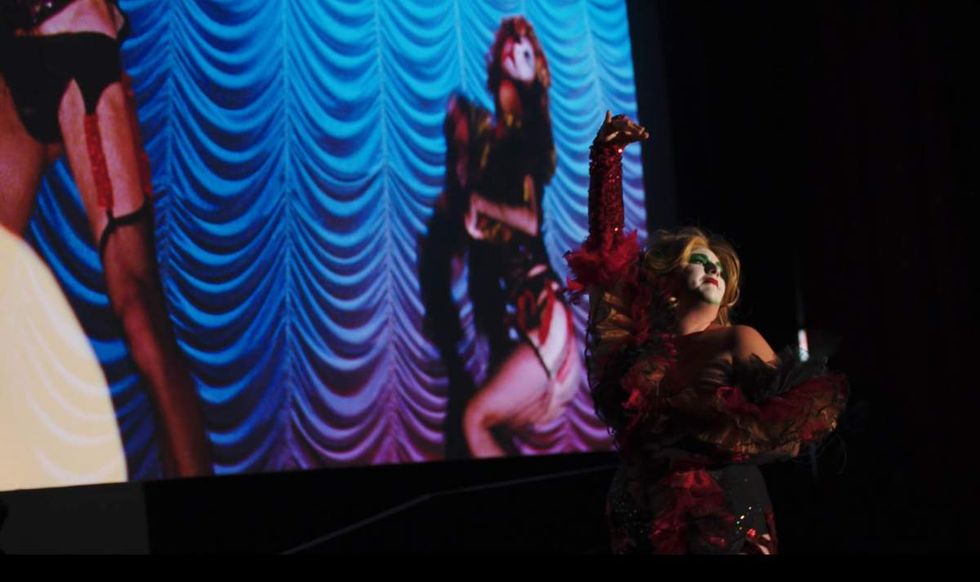 A 'Rocky Horror' shadow cast member performs on stage in unison with the film on screen.Warren Kommers
Fittingly, one of the last moments we see Richard talking to his son behind the camera is when he’s delivering an affecting speech about his first time seeing Rocky Horror with a crowd and thinking, “This is theater at its very best.” Recalling how a performer named Dori Hartley captured his and the Long Island audience’s attention with a rendition of Frank-N-Furter’s crushing farewell number “I’m Going Home,” Richard says he was struck by the idea that, “You couldn’t, we couldn’t have, rehearsed and organized this. This is a spontaneous moment where live theater and audience, live audience, and cinema have come together like that, in a way that I’ve never seen before.”
“That’s my favorite moment in the documentary. It gives me goosebumps when I hear it, because it really captures what the shadow cast and the interaction can be,” says Linus, who after years of attending musical restagings and inventively themed screenings — and receiving grateful messages from his father’s devotees — has become Rocky Horror fans’ biggest fan.
“Some people think it’s just about throwing stuff and shouting at the screen. No, no, it’s much more than that,” he says. “It’s a gift that literally keeps on giving.”
Strange Journey: The Story of Rocky Horror, released by Magenta Light Studios, is currently showing in select theaters, with an expansion to follow.