


A new queer movie is sending shockwaves throughout the entertainment industry.
The past few months have already seen a share of boldly queer surprises. Alexander Skarsgård pushed boundaries with the depiction of a BDSM romance in the A24 film Pillion. Plus, who hasn't escaped the constant celebration of Heated Rivalry's mainstream level of success that turned Connor Storrie and Hudson Williams into household names overnight?
But at a time where LGBTQ+ voices are fighting hard to be heard in Hollywood and Washington D.C., a polarizing new movie is creating conversations that are leaving many uncomfortable or downright shocked.
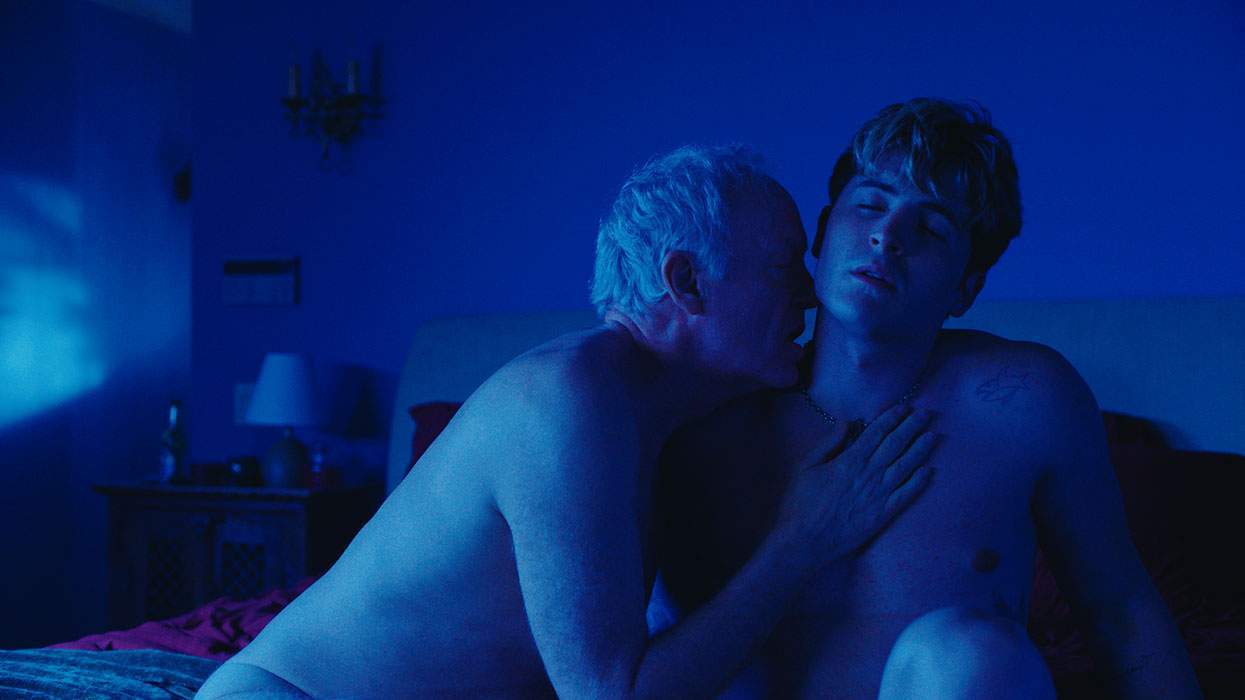
Blue Film is a new queer indie drama that explores controversial and taboo themes about desire and abuse. Written and directed by Elliot Tuttle, the film centers on a queer camboy and sex worker in his mid-20s named Aaron Eagle (Kieron Moore) who accepts a $50,000 offer to spend one night with an older, mysterious client named Hank Grant (Reed Birney).
Although Blue Film is now being picked up by Obscured Releasing for national distribution, the controversial movie had a very rocky start when it first premiered. Initially, film festivals such as Sundance and SXSW rejected the drama, and audience members walked out of certain screenings at the Edinburgh International Film Festival due to the graphic depiction of erotic gay sex and taboo relationships.
The majority of the plot takes place between these two men as they shift between unsettling conversations and difficult sex scenes over the course of a single night at a Los Angeles Airbnb. However, as the viewer comes to learn, Aaron and Hank's unnerving relationship was established prior to the events that are depicted in Blue Film.
It turns out that the two men have history; Hank is a former middle school English teacher of Aaron's. During Aaron's younger years, Hank was accused of sexually abusing another student at the school he worked for. As the men hash out their past lives and dissect the daily struggles that come with their traumas and complex identities, the two start to realize who they really are at their cores.
Back in 2023 and at only 23 years old, Tuttle wrote Blue Film based on his own personal experiences navigating his sexuality. Shot in just 13 days, the movie is a bold break into the industry for his debut feature. Fast forward to today, the 26-year-old director is proud to use his authentic voice as a gay man to drive the film's powerful themes.
"We've had a really long journey bringing this to an audience. Aaron feels very personal to me. There's a lot of my feelings written into the part, especially as a gay man in the modern world. If I had a nickel for every time a gay guy has told me that he lost his virginity at 16 to a much older man... it's a very common dynamic, especially as queer people. The events of the film feels true to me as it has definitely happened before," Tuttle tells Out.
Kieron Moore, who plays camboy Aaron Eagle, is on an impressive streak with hit queer projects — Blue Film follows his breakthrough performance in the gay Netflix series Boots. Despite the fact that Aaron serves as the most challenging role Moore as had to tackle yet, the experience served as motivation for the rising star to really push his limits in front of the camera.
"Most artists I know would agree that this is a dream character. It's the complexities of humanness. Everyone's got a bit of Aaron in them. We all experience shame. I was scared at first. Could I do it justice? I just really wanted to serve the writing the best I could. I wanted to prove to myself what I was capable of. This felt like the perfect opportunity to do that. It's given much more than I could have ever imagined as an actor, but as a human being as well," Moore says.
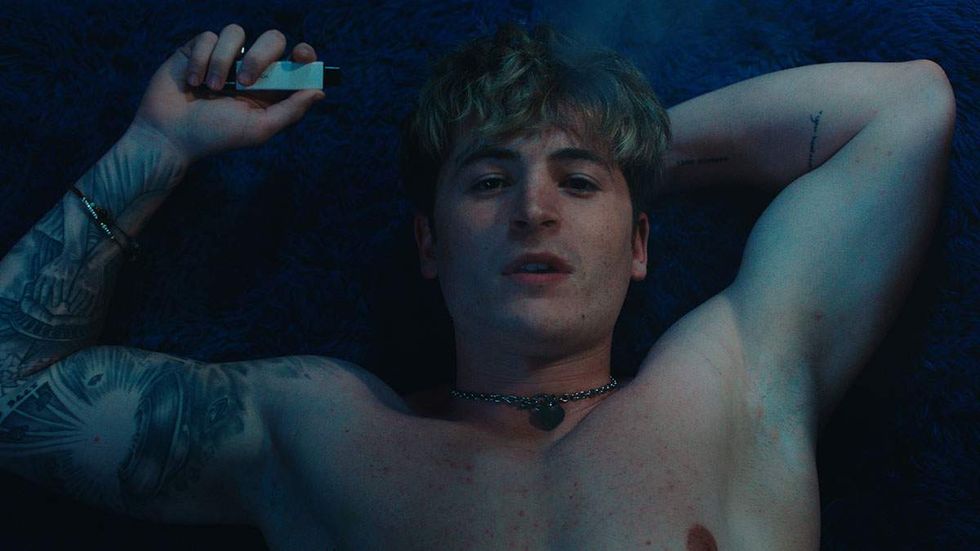 Kieron Moore as Aaron in Elliot Tuttle's 'Blue Film'Courtesy Obscured Releasing
It's understandable that Hank's demons would turn off a viewer on first glance, but Aaron's own internal battles are just as pivotal to the movie's plot, as both men confront their deepest insecurities and issues with one another.
"Aaron is a self-proclaimed pervert," Moore elaborates. "He thinks he's the worst thing imaginable. His one true wound is his ability to love. It's really common on the variations of masculinity and humanness. Somehow our weaknesses defines us and don't make us stronger. It has glimmers of a love story, especially for Aaron. This is the first time he gets completely deceived and finally faces himself."
The mixed reactions to early screenings of the film might discourage some actors, but Moore has already received the stamp of approval from the one person who truly matters: his mother. Despite Blue Film's graphic nature, the rising star has an incredible support system that's unafraid by the public perception.
"My mom loves the movie. She knew the intensity behind it. She really resonated with a lot of the themes. She's the one who's made me so fearless about the movie coming out. She said, 'I knew you could act, but I didn't know you could act like that!' Whatever anyone says, I can be proud. There's a presence in the film I'm deeply enamored by. Love comes in all shapes and sizes, and an act of love is listening," Moore says.
Theater veteran and Mass star Reed Birney plays the disgraced educator Hank Grant. Hank, a pedophile, is learning to navigate his mental disorder and turns to Aaron to help him solve his existential identity crisis. As their relationship is explored, Hank opens up on his harbored romantic feelings for his former student. While the historical element and age gap may leave some viewers stunned, uncomfortable, and/or deeply moved, it's worth nothing that it's not illegal for the two to engage in sexual intercourse at this point in their lives, a thorny terrain that was compelling ground for these creatives to explore. And while they knew the film's subject matter was sensitive, even they have been somewhat surprised by the blowback.
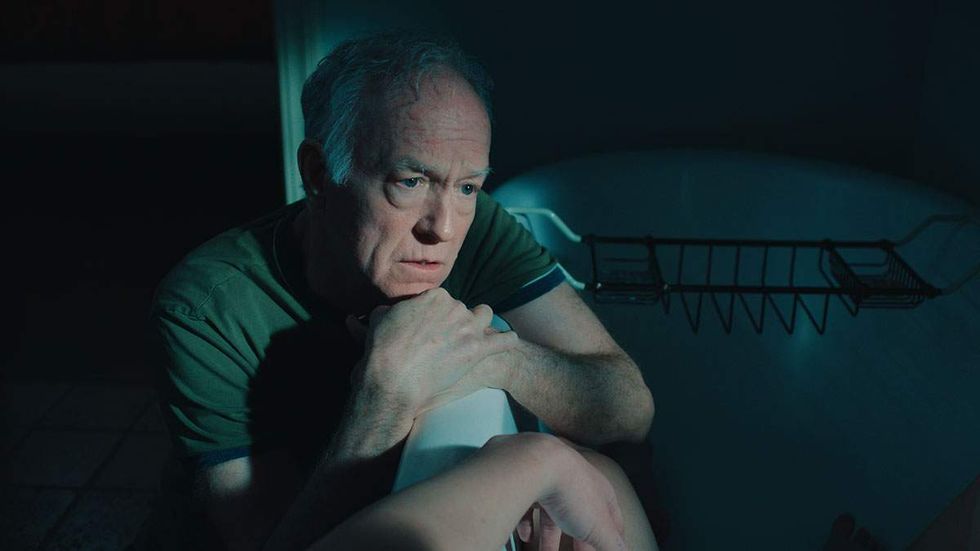 Reed Birney as Hank in Elliot Tuttle's 'Blue Film'Courtesy Obscured Releasing
"I didn't expect it to be as controversial as it is. I never thought it would be problematic," Birney says. "This role uses everything in my toolbox. We think of pedophiles as monsters and the behavior can be monstrous, but this man knows he's dangerous. This day with Aaron is the last chance he has to express himself sexually. It was irresistible. What is it like to be a pedophile? What is it like to live your life with that terrible torture? I think it's really astonishing writing. Let's see if we can push boundaries further."
"A film has never needed to be a moral representation of its characters," Tuttle adds. "I can't think of a film where every character is a moral guiding force. It's not the way any of us live our lives. That's not what art is for. None of us are perfectly moral. The film is not necessarily a sympathetic or devilish portrait of either of these characters. These people simply exist and speak to each other."
It's not a surprise that audiences may confuse a cinematic depiction of pedophilia with endorsement, but beyond the surface, both Tuttle and Birney show Hank as a human above all else. His illness isn't meant to romanticize his immorality or excuse his crimes. Rather, the two are forced to confront dark truths about themselves as they bond over something people experience daily — modern loneliness.
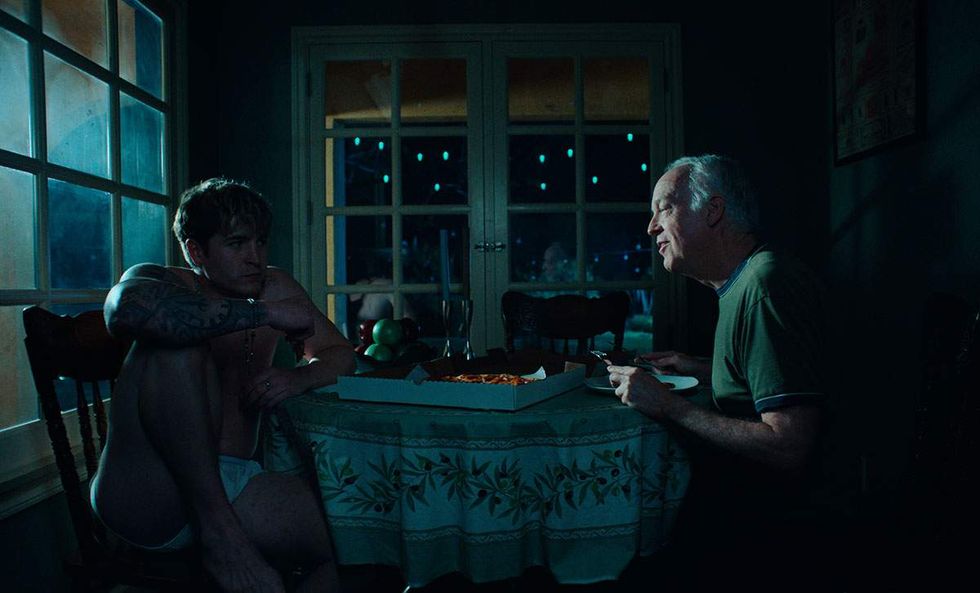 Kieron Moore and Reed Birney in Elliot Tuttle's 'Blue Film'Courtesy Obscured Releasing
"That discourse is disappointing to me. I want people to be moved or to feel something. We are all on the same page that pedophilia is immoral or bad. It feels like a common sense thing. I think the most important thing that queer people can do is create from a place without fear and make exactly what they want to make," Tuttle says.
Regardless, the Blue Film creatives hope that this story — and how uncomfortable it makes some viewers — makes a real-world impact.
"I hope this movie will spark numerous conversations. Everyone's entitled to their emotions and the subject matter. I would encourage people to try and sit with that discomfort. Push your own boundaries, and test your morality. You want a polarizing film! I don't want lukewarm. Strong opinions are great opinions," Moore says.
"I know people will come and won't be able to get past their triggers. The quality of the film is undeniable. I think it's valuable to have a piece of art that makes us feel anything. Why does Aaron stay? He needs the money at first, but this healing happens. I think it's a beautiful love story. That's really what it is. They're so deeply lonely and need each other," Birney says.
Blue Film will be released in a limited number of theaters in New York City and Los Angeles on May 8.
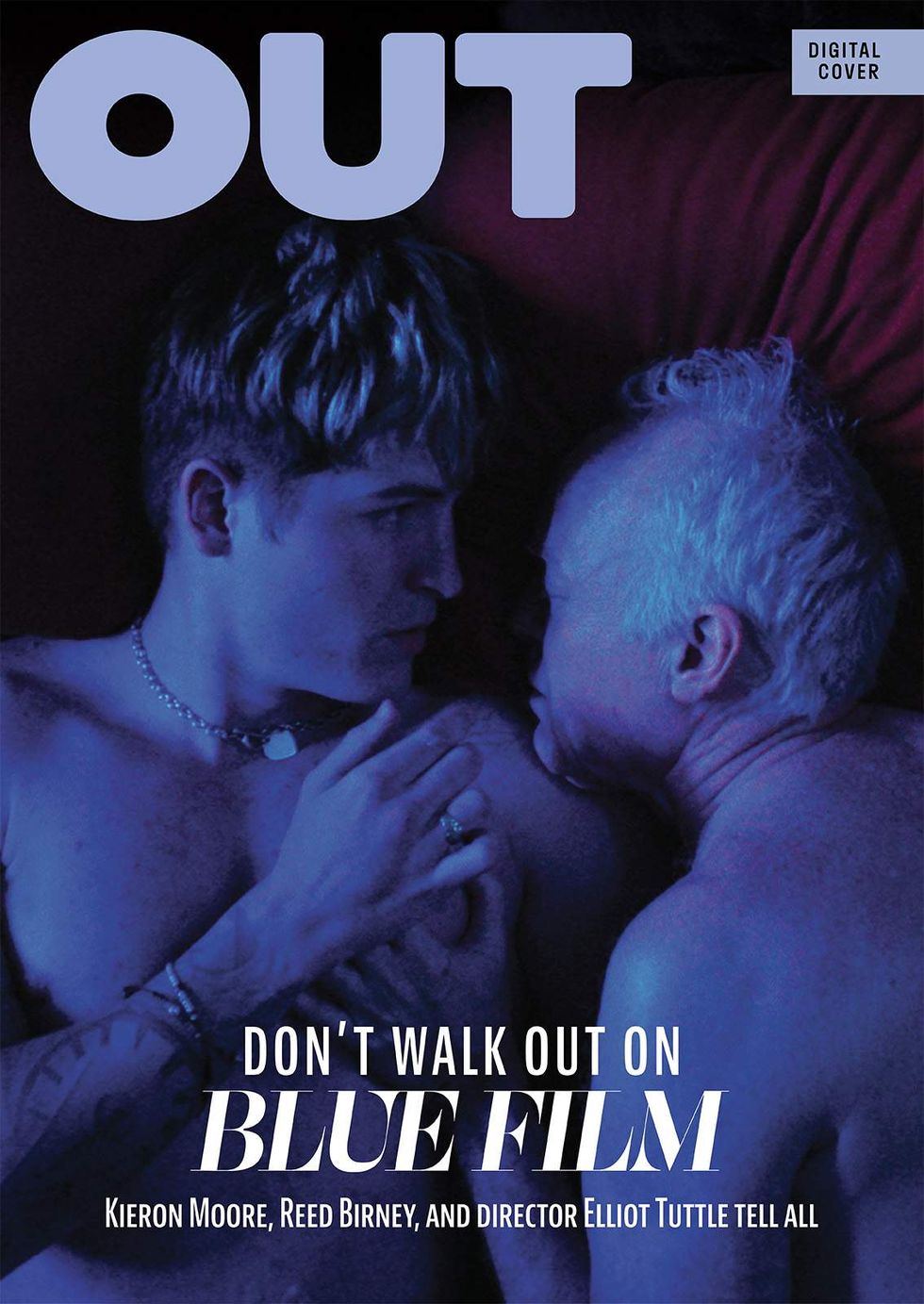 Kieron Moore and Reed Birney in Elliot Tuttle's 'Blue Film'Courtesy Obscured Releasing