
This story originally appeared on Them.
“In 1972, my feeling was that this was a gay town and that I was here at the pleasure of somebody else, which is sort of the opposite of everywhere outside of here at that time.”
That’s how late chef, author, and television host Anthony Bourdain described his first summer in Provincetown, Massachusetts in a 2014 episode of his program Parts Unknown. That upside-down feeling of queer culture being dominant is exclusive to a select number of locales in the United States — Wilton Manors and Fire Island come to mind — and to even fewer back then, when a young and reckless Bourdain first careened into town.
When New York Times food reporter Pete Wells went looking for the version of P-town Bourdain likely experienced in his summers there, he, too, found a queer picture: “It was a safe harbor for poets, artists, drifters, clamdiggers, gay men, lesbians, drag queens, hippies, and dropouts of all kinds,” Wells wrote. Bourdain, as Wells noted, once described the cooks at local fine dining establishment Ciro’s as speaking with “a high-pitched, ultra-femme, affected drawl, salted with terms from eighteenth-century English literature and Marine Corps drill instructor-speak.”
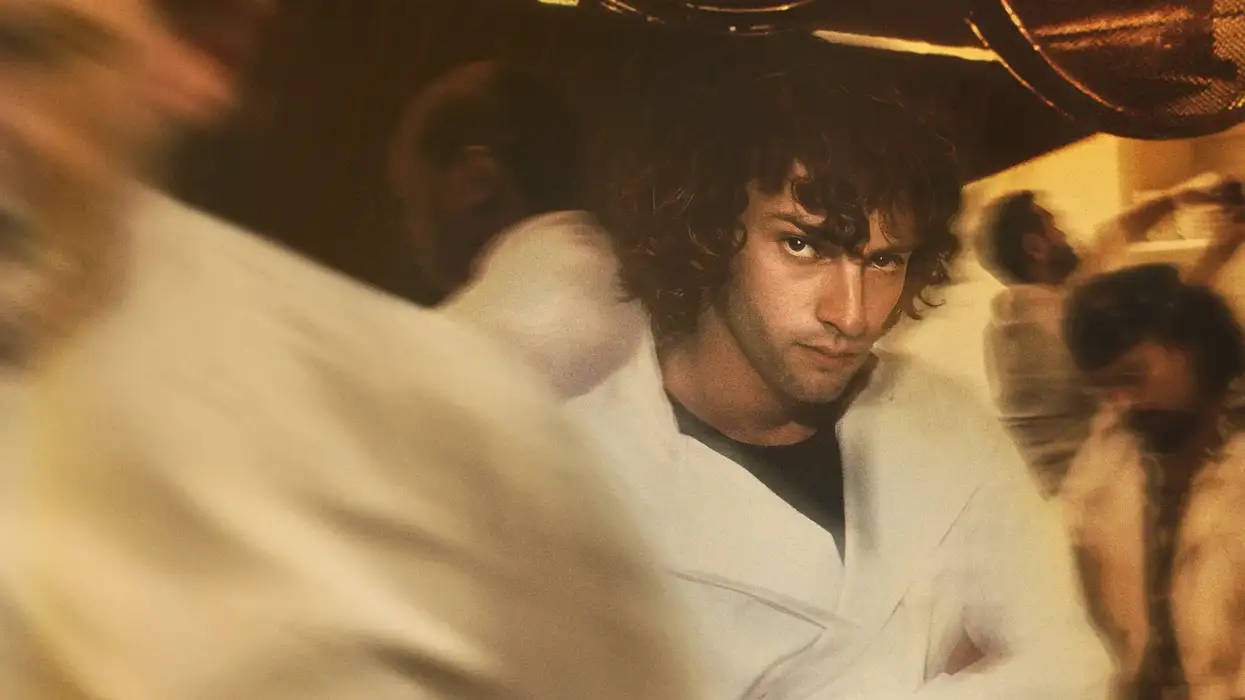
And yet the version of Provincetown presented in the new biopic Tony, while faithful in many respects, does not bear much resemblance to these descriptions. NPR pop culture critic John Powers called it “strangely un-gay,” an apt description of a film in which I could count on one hand the number of moments in which LGBTQ+ people are outwardly acknowledged — including the use of the F-slur in a very heterosexual kitchen environment. The language may be period-appropriate, sure, but was Bourdain’s experience of the Cape really so steeped in straightness? Not according to Parts Unknown, which painted the young chef’s time as far more bohemian, including casual sightings of John Waters.
I am perhaps higher on Tony than Powers — but not higher than Bourdain frequently was in Provincetown, wink wink. Matt Johnson’s directing is intimate and warm, and Dominic Sessa continues to establish himself as the most talented actor under 30 working in Hollywood. While the film hits the conventional beats expected of the subgenre, it does so with a bit more acid and honesty than usual.
Anthony Bourdain was, of his own admission, not a charming fellow in those days: “Selfish, larcenous, druggy, loud, stupid, insensitive and someone you would not want to have known,” were his exact words in a Reddit “Ask Me Anything” segment. “I would have robbed your medicine cabinet had I been invited to your house.” The film doesn’t shy away from showing him at his worst, making women uncomfortable, lying to almost everyone, and metaphorically biting the hand that literally feeds him. Tony goes there, without losing sight of the underlying humanity and curiosity that would go on to define Bourdain’s work on Parts Unknown — and that would continue to make him so beloved after he died by suicide in 2018.
But it is odd, certainly, that the film relegates one of the main forms of cultural exchange Bourdain would have experienced in Provincetown to the background. “Sodom and Gomorrah by the sea over there” was how he playfully described the city years later — which certainly seems to imply an abundance of gay love and affection!
To avoid spoilers, Tony does show a young Bourdain registering a gay couple engaged in PDA when he first arrives in town — and the film later finds him accepting a queer family at a clam bake. But these are fleeting moments — and non-verbal ones at that. Let’s just say those were not the only clams that would have been baking in Gomorrah at that point, as Bourdain — who reportedly did a lot of nude sunbathing, would have witnessed firsthand. A man known for his way with words probably would likely have offered a comment on all the queer people, even if not a politically correct one.
This is not, to be clear, a film that belongs in a kitchen dumpster with all the discarded lobster shells. Tony is well-done, and in an era when LGBTQ+ representation on film is declining, I’ll take milquetoast moments over none at all. But it is simply… odd to see this version of Provincetown, plucked out of context, a bit gray-washed, devoid of the color that once captivated the movie’s chief subject. I want to see a version of Tony set in the “gay town,” the upside-down place that birthed Bourdain as we came to know him.
Get the best of what’s queer. Sign up for Them’s newsletters.